Last updated: 12 October 2026.
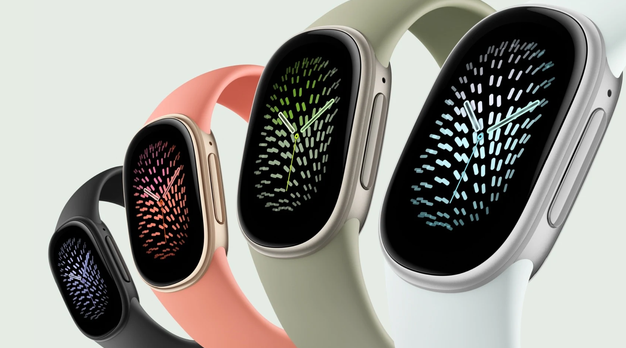
The current Fitbit tracker with a screen is the Google Fitbit Edge, launched on 12 October 2026 at $179, £159.99 or €179.99. This guide explains whether it is worth upgrading from a Charge 6, Charge 5 or Charge 4, and what you gain and lose in each case.
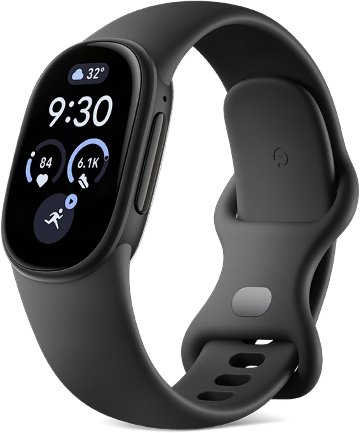
Google Fitbit Edge
Fitness tracker with a screen and GPS
Is there a Fitbit Charge 7?
No. The Fitbit Edge is the Charge 6’s successor and fills the place a Charge 7 would have taken. Google has dropped the Charge name, so if you were waiting for a Charge 7, look at the Edge instead. Read how it emerged in our Fitbit Edge leak coverage.
The short answer
- From a Charge 6: upgrade if you want to leave your phone at home on walks, runs and rides, see your stats at a glance and track hills. Stay put if you pay with your wrist.
- From a Charge 5: upgrade. It is easier to use with sweaty hands, tracks hills and stairs, maps your routes more reliably and should last longer. You lose wrist payments.
- From a Charge 4: upgrade. Almost everything is better, from a bright colour screen to heart health checks and personal coaching. You lose wrist payments.
Charge 6 to Edge
What you gain
- Stats you can actually read. The screen is 46% bigger, so pace, heart rate and messages are easier to read mid-workout, and the always-on option means no wrist flick to check the time.
- Leave the phone at home. GPS should finally be usable on its own. Google claims a new GPS chip and an improved antenna design make it 40% more accurate than the Charge 6, and it uses more satellite systems outside the US. GPS is dynamic: connected (using your phone’s GPS) or standalone.
- Hills and stairs count. An altimeter tracks the climbing on your walks, runs and rides and counts floors through the day, which the Charge 6 could not.
- Workouts log themselves. The Edge recognises up to 100 workouts automatically, so a forgotten start button no longer means a lost session. Structured workouts use connected workout execution, which requires a nearby phone.
- A coach on your wrist. Live guidance tells you when to push, ease off or hold pace, and the Google Health Coach builds a plan around you. Coaching needs Google Health Premium at $9.99 or £7.99 a month after three free months.
- Easier to use when it matters. A real clicking button works with sweaty or gloved fingers, and you can fire off quick replies to messages on Android (iOS restrictions block this on iPhone).
- A tracker that lasts. You can replace the battery yourself, so the Edge should keep going long after a sealed tracker would be binned. Five minutes on the charger gives a full day.
- One account, several wearables. Switch between the Edge, a Pixel Watch and a Fitbit Air without losing your data. The Pixel Watch works only with Android, and the Apple Watch has only just begun to work with a non-Apple phone, so the Edge and Air are the switching option for iPhone owners.
What you lose
- Wrist payments. There is no NFC, so Google Wallet is gone.
- On-demand stress scans. The EDA Scan app has gone, although stress is still tracked in the background.
- Your old bands. The band attachment has changed, so Charge 6 bands will not fit.
- Some heart rate detail. The Edge records heart rate every 2 seconds rather than every second during exercise, which can blur fast changes in effort during intervals.
Verdict: worth it if you walk, run or ride outdoors and want to leave the phone behind and track your hills. If you pay with your wrist every day, keep the Charge 6.
Charge 5 to Edge
What you gain
- Control without fumbling. The Charge 5 is touch-only, which is awkward with wet or gloved hands. The Edge has a real button and a bigger screen.
- Leave the phone at home. GPS on the Charge 5 was unreliable. Google claims the Edge’s new GPS chip and improved antenna design make it 40% more accurate than the Charge 6.
- Hills and stairs count. The altimeter tracks climbing and floors, which the Charge 5 cannot.
- Workouts log themselves. Up to 100 workouts are recognised automatically, with coaching, and structured workouts use connected workout execution, which requires a nearby phone.
- Use it with gym kit. The Edge sends your heart rate to compatible treadmills, bikes and rowers.
- A tracker that lasts. The battery is user-replaceable, and IP68 dust resistance helps it survive outdoors.
What you lose
- Wrist payments. There is no NFC.
- On-demand stress scans. The EDA Scan app has gone, although stress is still tracked in the background.
Verdict: a clear upgrade. The Charge 5 is now five years old, and the Edge is better for everyday fitness in every way that counts.
Charge 4 to Edge
What you gain
- A screen you will want to look at. A bright colour AMOLED display replaces the Charge 4’s small monochrome screen.
- Heart health checks. ECG checks for signs of atrial fibrillation, and SpO2 and skin temperature tracking flag changes in your health and recovery.
- Leave the phone at home. GPS uses more satellite systems than the Charge 4’s GPS-only chip, which should help in towns and under trees.
- Modern coaching and smarts. The Google Health Coach, 40+ automatically recognised workout types, and quick replies on Android.
- A tracker that lasts. The battery is user-replaceable, and the Edge is dust-tight as well as waterproof.
What you keep
- Hill and floor tracking, a physical button and up to 7 days of battery life.
What you lose
- Wrist payments. There is no NFC.
Verdict: upgrade. The Edge is the first Charge successor since the Charge 4 to bring back the altimeter, so you lose nothing you use for exercise.
Charge 3, Charge 2 or Charge HR to Edge
What you gain
- Leave the phone at home. None of these older Charges has GPS of its own. The Edge records walks, runs and rides on its own.
- A screen you will want to look at. A bright colour AMOLED display replaces the small monochrome screen.
- Heart health checks. ECG, SpO2 and skin temperature tracking, none of which these Charges offer.
- Swim with it. The Charge 2 and Charge HR are only splash-proof. The Edge is water resistant to 50 metres and tracks swims.
- Modern coaching. Automatic workout recognition, the Google Health Coach and quick replies on Android.
What you keep
- Hill and floor tracking, which every one of these Charges had.
Verdict: upgrade. A tracker this old will also have a worn battery, and the Edge’s can be replaced when it wears out.
Side by side
| Edge | Charge 6 | Charge 5 | Charge 4 | |
|---|---|---|---|---|
| Display | 1.34in AMOLED | Colour AMOLED | Colour AMOLED | Monochrome PMOLED |
| GPS | GPS, Galileo, GLONASS, BeiDou and QZSS (GPS and Galileo in the US) | GPS and GLONASS | GPS and GLONASS | GPS |
| Altimeter | Yes | No | No | Yes |
| Button | Yes | Yes | No | Yes |
| NFC payments | No | Yes | Yes | Yes |
| EDA | No | Yes | Yes | No |
| ECG | Yes | Yes | Yes | No |
| Battery | Up to 7 days, user-replaceable | Up to 7 days | Up to 7 days | Up to 7 days |
Should you buy the Fitbit Air instead?
The Fitbit Air costs $99.99 (£84.99) and has no screen and no built-in GPS. It suits sleep and recovery tracking rather than workouts. If you want to see your stats during a walk, run or ride, or leave your phone at home, the Edge is the better choice. Read Fitbit Edge vs Fitbit Air for the full comparison.
Google Fitbit Edge
Fitness tracker with a screen and GPS
Quick answers
Is there a Fitbit Charge 7?
No. The Fitbit Edge replaces the Charge 6 and is the tracker a Charge 7 would have been.
Should I upgrade from the Charge 6 to the Fitbit Edge?
Yes, if you want to leave your phone at home, read your stats more easily and track hills. No, if you pay with your wrist every day.
Does the Fitbit Edge have contactless payments?
No. It has no NFC, unlike the Charge 4, 5 and 6.
Which Fitbit Charge models track hills and stairs?
The Charge 4 and the Fitbit Edge have an altimeter. The Charge 5 and Charge 6 do not.
Further reading
- Fitbit Edge: all you need to know
- Fitbit Edge specifications
- Fitbit Charge 6 specifications
- Fitbit Air specifications
- Best fitness tracker 2026
- Google Fitbit hub
2026 Seasonal Gifts
- Garmin CIRQA: Garmin’s screenless band, which uses your phone as the display. I tested it.
- HoloSwim 3 Pro: Swim goggles with GPS and your pace in the lens, so you can swim without a watch. Code THE5KRUNNER takes 10% off. I tested them.
- Kineon MOVE+: Red and infrared light for sore knees, Achilles and other joints after hard training. I use it.
Small things I always use
- Garmin 90-degree charging adapter: Charges your Garmin with any USB-C cable. Essential when travelling. I use one.
- Body Glide: The blue anti-chafing stick swimmers and runners carry. I use it.
- Speedo earplugs: Fewer ear infections and no cold-water dizziness. I use them.
- Dryrobe Advance: My winter changing robe for open-water swims. I use one. A cheaper option is the AONYIYI changing robe.
- Maurten: Race fuel that stays easy on the stomach. I use them.
- Beet It Sport nitrate shots: Beetroot shots I take in the days before a race. I use them.
- Garmin charging puck: The quickest way to top up before a session. I use one.
- Injinji: Toe socks that stop rubbing, so you run more. I use them.
- Ultimate toe protectors: Stop black toenails on long runs. They work. I use them.
- Compressport R2 v2 calf sleeves: My calf sleeves of choice. I use them.
- Cellucor C4: My pre-workout before hard sessions.
- TPU tubes: Schwalbe Aerothan, Tubolito and Pirelli SmarTube. Light, tiny spares. I use all three.
- G8 insoles: Adjustable arches, perfect position. I use them.
- Cycplus Cube: A 97g electric pump that gets a road tyre rideable in two minutes. I carry one. 5% off with code THE5KRUNNER.
Health, recovery and sleep
- Fitbit Air: A screenless band for steps, sleep and heart rate, with no subscription needed. It was closest to my hand count in a 9,000-step test. I tested it.
- FreeStyle Libre 3 Plus: Shows how my blood sugar responds to diet. Occasional use.
- hDrop: Measures my sweat loss in summer and indoors. I use it.
- Fourth Frontier Zone: Checks my heart under load in hard sessions.
- Oura Ring 5: My partner’s recovery tracker of choice.
- Eight Sleep: A cooling mattress cover my partner and I use nightly.
- Chilipad 2.0: Cools or heats your side of the bed on a schedule, with no subscription. US only. I am testing it.
Watches and sensors
- Polar H10: My daily driver for waking HRV.
- Polar Verity Sense: My backup arm-worn HR sensor.
- Nomad bedside charger: Charges my iPhone and Apple Watch overnight. I use it, and many of their bands.
- Train.Red: The best muscle oxygen sensor I’ve used. Occasional use.
- Tymewear: Accurate heart rate and reliable ventilatory zones. I use it to pace endurance rides over an hour.
- Garmin Forerunner 970: A pro-grade triathlon watch. I use this.
- Apple Watch Ultra 4: My daily smartwatch. No phone needed on rides.
On the bike
- Continental GP5000 for everyday riding, and Aero 111 on the front for special occasions. I use both.
- Helmets: Specialized S-Works Evade 3 for road riding, and Rudy Project Wing for TT-style races. I use both.
- Ravemen FR300: A front light that mounts under your Garmin or Wahoo. I use one.
- Ravemen FR1000: The light and the computer mount in one unit, so nothing else goes on the bars. Better than mine.
- Ravemen FR1500SE: 1,500 lumens hanging under your Garmin, for proper night rides.
- Ravemen FR1100SE: 1,100 lumens under your Garmin, and up to 46 hours on slow flash.
- Ravemen FR500: A brighter FR300 with the same mount.
- Wahoo TRACKR Radar: I use it on one bike and Varia on the other. They perform the same.
- Garmin Varia RTL515: Radar that warns you of cars from behind. I use this model.
- Wahoo ELEMNT Roam 3: The bike computer that’s easy to use. I use mine on most rides.
- Favero Assioma Pro RS2: Accurate power pedals that swap easily between bikes. I use this model.
Home and indoor training
- NPE Runn: Makes my basic treadmill smart, sending more accurate speed and distance to my watch and Zwift. I use it.
- Google Wifi: Keeps Zwift connected in my pain cave. I use it.
- Apple TV 4K (4th generation): Zwift on the big screen. I use two.
- Google Nest Doorbell (wired, 2nd gen): My video doorbell, running in both Google Home and Apple Home via Starling. I use it.
Reader-Powered Content
This content is not sponsored. It’s mostly me behind the labour of love, which is this site, and I appreciate everyone who supports it.
Support the site: Follow (free, fewer ads) · Subscribe (paid, ad-free) · Buy Me A Coffee
Written by real people, with AI assistance. Fact-checked and verified for originality. See the Editorial Policy. FTC: Affiliate Disclosure — some links pay commission. As an Amazon Associate, I earn from qualifying purchases.
