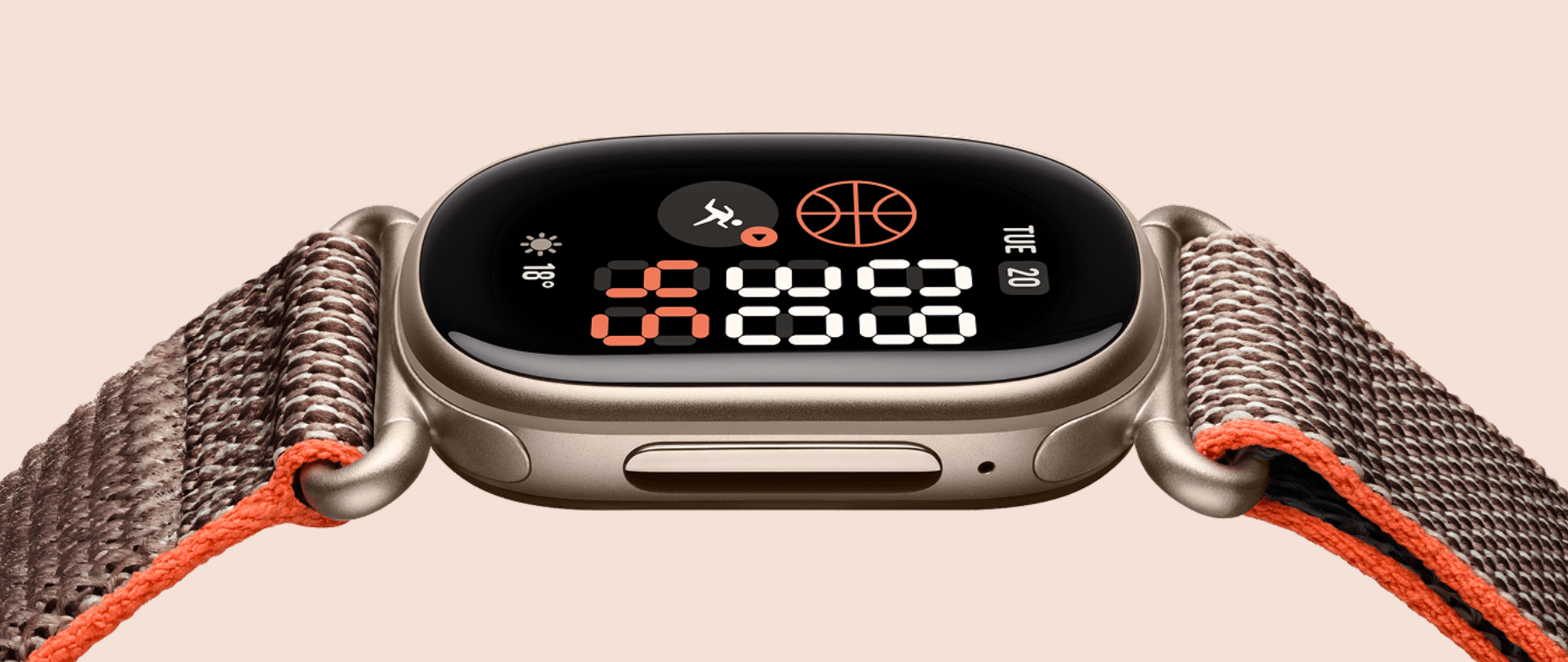
Google has launched the Fitbit Edge, the successor to the Charge 6 and the tracker many expected to be called the Charge 7. It is on pre-order now at $179, £159.99 or €179.99, and Amazon lists shipping from 27 October 2026.
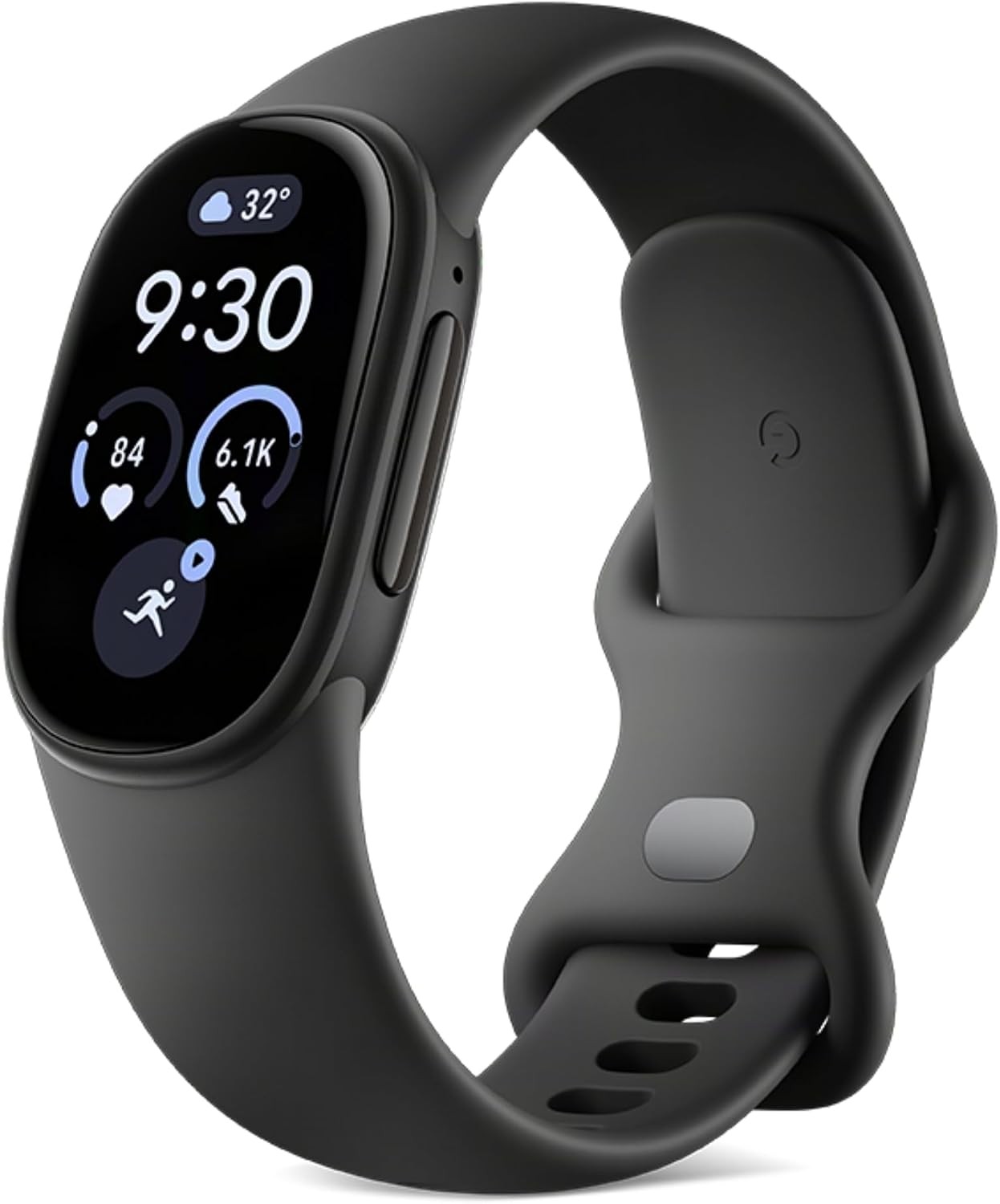
The Edge offers a larger 1.34-inch AMOLED screen, built-in multi-system GPS, an altimeter, and a physical button in a 17.7g aluminium case. Battery life is up to seven days, and it’s worth especially noting that the battery is user-replaceable, so the tracker should outlast most wearables. On the downside (a big one), you lose NFC payments and the EDA stress sensor, and heart rate is stored at 2-second intervals, the same as the Fitbit Air.

What you get
- A screen for your workouts. The 1.34-inch AMOLED display is 46% larger than the Charge 6’s and shows live workout metrics on the wrist, with an always-on option.
- Phone-free GPS. Built-in GPS lets you leave the phone at home on runs and rides. It uses GPS, Galileo, GLONASS, BeiDou and QZSS outside the US, and GPS and Galileo in the US. Google claims its new GPS chip is 40% more accurate than the Charge 6’s.
- Hills and floors. A new altimeter tracks elevation and floors climbed, something the Charge 6 couldn’t do.
- Smarter workout tracking. 40+ workout types are recognised automatically, and structured workouts are supported.
- Works with your other Fitbits. Switch between the Edge, a Pixel Watch and a Fitbit Air on the same account. Cross-phone support is rare: the Pixel Watch works only with Android, and the Apple Watch has only just begun to work with a non-Apple phone. The Edge works with both, so iPhone owners can now pair it with a Fitbit Air and switch between them.
- A week between charges. Up to 7 days of typical use, a full charge in about 90 minutes, and a day of use from 5 minutes on the charger. It uses the Fitbit Air’s charger, which connects at the sensor array the two share.
- A tracker you can keep. The 65mAh battery is user-replaceable, which is rare at this size.
- Tough enough for anything. 5 ATM water resistance and IP68 dust resistance, and it tracks pool and open-water swims.
- Coaching on the wrist. The Gemini-based Google Health Coach builds plans and gives real-time guidance during workouts, with three months of Google Health Premium included, then $9.99 or £7.99 a month.
- Health checks. ECG for signs of atrial fibrillation, irregular rhythm notifications, SpO2, HRV, resting heart rate, and skin temperature, which also feeds menstrual cycle tracking.
- Everyday smarts. Notifications with quick replies (Android only, because of iOS restrictions), weather, a Morning Brief and media controls for any Bluetooth player.
Google Maps turn-by-turn directions, coach-built workouts started from the tracker, and Health Guardian alerts are coming later in autumn 2026.
What you lose
- No contactless payments. NFC is gone, so Google Wallet is gone too.
- No EDA. The EDA sensor and EDA Scan app are removed, although stress is still monitored in the background.
- Same prior-gen heart rate sensor as the Air. Heart rate is stored at 2-second intervals, which limited the Air’s accuracy in our Fitbit Air testing. The Charge 6 stored 1-second data during exercise, as does the Pixel Watch.
- No Wi-Fi. Connection is Bluetooth 5.4 only.
Key specifications
- Display: 1.34in AMOLED, always-on option
- Size and weight: 39.22 x 25.56 x 11.58mm, 17.7g without band
- Case: 100% recycled aluminium, mechanical button
- Sensors: multi-system GNSS, optical heart rate, accelerometer, gyroscope, altimeter, SpO2, skin temperature, ECG, ambient light
- Chip: Ambiq AP5 MCU
- Battery: up to 7 days, 65mAh, user-replaceable
- Water and dust: 5 ATM and IP68
- Phones: Android 11+ and iOS 16.4+
Full details are on our Fitbit Edge specifications page.
Price and availability
The Fitbit Edge costs $179 in the US, £159.99 in the UK and €179.99 in Europe, $20 or £20 more than the Charge 6 at its launch. It is available for pre-order from the Google Store and Amazon, with Amazon shipping starting 27 October 2026. Colours are Matte Black/Obsidian, Satin Silver/Fog, Satin Pyrite/Olive and Champagne Gold/Canyon, plus a Stephen Curry Special Edition at $219. The band attachment mechanism is new, so Charge 6 bands won’t fit. Both small and large bands are in the box.
Our view
The Edge fixes the Charge 6’s weak points for fitness use: a cramped screen, two-system GPS and no altimeter. If you walk, run or ride and want a light fitness tracker with real GPS and a week of battery, it is the obvious Fitbit to buy, and a bonus is that it looks great! At least I think so. If you rely on contactless payments or want the most accurate heart rate in intervals, look elsewhere, or pair it with a chest strap. Real-world GPS accuracy and battery life with every sensor on still need testing.
Dropping Google Wallet is an odd choice. Payments earn Google revenue and lock you into its ecosystem, and that logic still holds. The price rise is steep in absolute terms, but rivals’ prices have risen too since the Charge 6 launched, so it is not as bad as it looks. The Edge also looks far better than any Charge before it, which should widen its appeal. It is not a Whoop rival. It bridges the gap between step trackers and entry-level sports watches, and on paper it bridges it well. The bigger case makes the screen easier to read, though some Charge 6 owners may find it too large. Launching with plenty of bands is a smart move, and it works fully without a subscription.
Deciding between the two current Fitbits? Read Fitbit Edge vs Fitbit Air. Coming from an older Charge? See our Fitbit tracker upgrade guide.
Quick answers
Is the Fitbit Edge the Fitbit Charge 7?
Yes, in all but name. The Edge replaces the Charge 6 as Google’s screen-equipped Fitbit tracker. There is no product called the Charge 7.
How much does the Fitbit Edge cost?
$179 in the US, £159.99 in the UK and €179.99 in Europe.
What is the Fitbit Edge release date?
Google announced it on 12 October 2026. It is on pre-order now, and Amazon lists shipping from 27 October 2026.
Does the Fitbit Edge have GPS?
Yes. Built-in GPS lets you track walks, runs and rides without your phone. It uses GPS, Galileo, GLONASS, BeiDou and QZSS outside the US, and GPS and Galileo in the US.
Is the Fitbit Edge waterproof?
Yes. It is water resistant to 50 metres (5 ATM) and dust-tight (IP68), and it tracks pool and open-water swims.
Do Fitbit Charge 6 bands fit the Fitbit Edge?
No. The band attachment is new, so Charge 6 bands will not fit.
What is the newest Fitbit?
The Fitbit Edge, launched on 12 October 2026. It replaces the Charge 6 and sits above the screenless Fitbit Air.
Does the Fitbit Edge have NFC or Google Wallet?
No. NFC has been removed, so it doesn’t support contactless payments.
What is the Fitbit Edge battery life?
Up to 7 days of typical use. A full charge takes about 90 minutes, and the battery is user-replaceable.
Last Updated on 12 October 2026 by tfk the5krunner
Small things I always use
- Garmin 90-degree charging adapter: Charges your Garmin from any USB-C cable. Essential when travelling. I use one.
- Body Glide: The blue anti-chafe stick swimmers and runners carry. I use it.
- Speedo earplugs: Fewer ear infections and no cold-water dizziness. I use them.
- Dryrobe Advance: My winter changing robe for open-water swims. I use one. A cheaper option is the AONYIYI changing robe.
- Maurten: Race fuel that stays easy on the stomach. I use them.
- Garmin charging puck: The quickest way to top up before a session. I use one.
- Injinji: Toe socks that stop rubbing, so you run more. I use them.
- Ultimate toe protectors: Stop black toenails on long runs. They work. I use them.
- Compressport R2 v2 calf sleeves: My calf sleeves of choice. I use them.
- Cellucor C4: My pre-workout before hard sessions.
- TPU tubes: Schwalbe Aerothan, Tubolito and Pirelli SmarTube. Light, tiny spares. I use all three.
- G8 insoles: Adjustable insoles that are good. I use them.
- Cycplus Cube: A 97g electric pump that gets a road tyre rideable in two minutes. I carry one. 5% off with code THE5KRUNNER.
Watches and sensors
- Polar H10: My daily driver for waking HRV.
- Polar Verity Sense: My backup arm-worn HR sensor.
- Nomad bedside charger: Charges my iPhone and Apple Watch overnight. I use it, and many of their bands.
- Train.Red: The best muscle oxygen sensor I’ve used.
- Tymewear: Accurate heart rate and reliable ventilatory zones. I use it to pace endurance rides over an hour.
- Garmin Forerunner 970: A pro-grade triathlon watch. I use this.
- Apple Watch Ultra 4: My daily smartwatch. No phone needed on rides.
- Garmin Fenix 9 Pro: I’ve just bought one.
On the bike
- Continental GP5000 for everyday riding, and Aero 111 on the front for special occasions.
- Helmets: Specialized S-Works Evade 3 for road riding, and Rudy Project Wing for TT-style races. I use both.
- Ravemen FR300: A front light that mounts under your Garmin or Wahoo. I use one.
- Wahoo TRACKR Radar: I use it on one bike and Varia on the other. They perform the same.
- Garmin Varia RTL515: Radar that warns you of cars from behind. I use this model.
- Wahoo ELEMNT Roam 3: The bike computer that’s easy to use. I use mine on most rides.
- Favero Assioma Pro RS2: Accurate power pedals that swap easily between bikes. I use this model.
Home and indoor training
- NPE Runn: Makes my basic treadmill smart, sending more accurate speed and distance to my watch and Zwift. I use it.
- Google Wifi: Keeps Zwift connected in my pain cave. I use it.
- Apple TV 4K: Zwift on the big screen. I use two.
- Google Nest Doorbell (wired, 2nd gen): My video doorbell, running in both Google Home and Apple Home. I use it.
Health, recovery and sleep
- FreeStyle Libre 3 Plus: Shows how my blood sugar responds to diet.
- hDrop: Measures my sweat loss in summer and indoors.
- Fourth Frontier Zone: Checks my heart under load in hard sessions.
- Oura Ring 5: My partner’s recovery tracker of choice.
- Kineon MOVE+: Red light therapy for niggles. It works.
- Eight Sleep: A cooling mattress cover my partner and I use nightly.
Reader-Powered Content

This content is not sponsored. It’s mostly me behind the labour of love, which is this site, and I appreciate everyone who supports it.
Support the site: Follow (free, fewer ads) · Subscribe (paid, ad-free) · Buy Me A Coffee ❤️
Written by real people, with AI assistance. Fact-checked and verified for originality. See the Editorial Policy. FTC: Affiliate Disclosure — some links pay commission. As an Amazon Associate, I earn from qualifying purchases.
tfk is the founder and author of the5krunner, an independent endurance sports technology publication. With 20 years of hands-on testing of GPS watches and wearables, and competing in triathlons at an international age-group level, tfk provides in-depth expert analysis of fitness technology for serious athletes and endurance sport competitors. ID
