The only axis that can match Apple
Google closed its $2.1 billion acquisition of Fitbit in January 2021, inheriting the largest fitness-tracking user base outside Apple and a brand that, at its peak, had defined the consumer fitness-tracker category. It had spent the previous decade trying to build Wear OS into a credible smartwatch platform.
The 2021 partnership with Samsung was the defining moment that determined what Wear OS would become. Samsung brought manufacturing scale, a Galaxy Watch user base, and a chipset investment that Wear OS had never had on its own. The arrangement also had a cost: third-party brands found themselves with delayed access to OS versions. Wear OS 3 launched on Samsung Galaxy Watch 4 in August 2021; Fossil’s Gen 6 did not receive it until late 2022, and only reached Wear OS 3.5 in November 2023, by which point Samsung was already shipping Wear OS 4 hardware. Fossil stopped making smartwatches in 2024. Mobvoi has effectively exited. Tag Heuer left quietly. Of the brands once building on the platform, only OnePlus and Xiaomi remain nominally active, both lagging the current version by a significant margin.
Wear OS has effectively consolidated around Google and Samsung, the only brands consistently shipping flagship hardware on the latest platform releases. Between them, they produce the strongest Western smartwatch ecosystem competing with Apple. That is the context in which Fitbit Air, Galaxy Watch, Google Health, and Pixel Watch all sit.
Fitbit Air: the hardware strategy made explicit
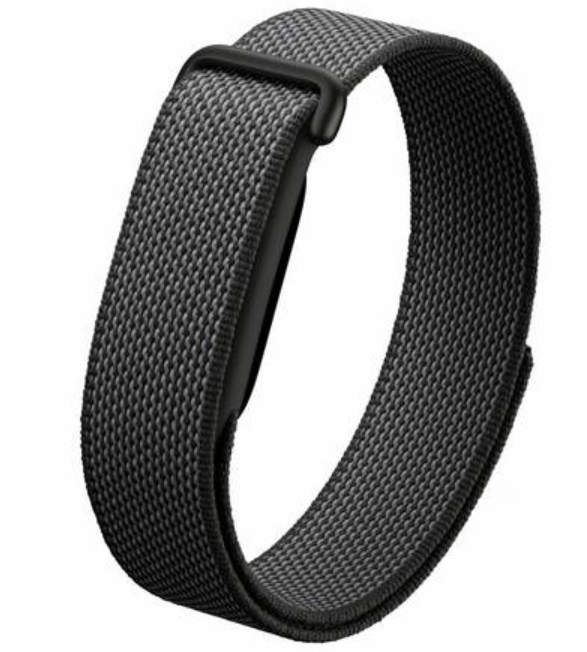
The Fitbit Air launched in May 2026 at $99 with no subscription requirement. Based on bill-of-materials estimates, breakeven sits at roughly six to ten million units annually. At that price, the margin on the device appears thin to negative. The strategic value lies in user acquisition and ecosystem growth. Arguably, the Air resembles the ecosystem-expansion playbook Google used with Gmail, Maps, and Photos.
As for the fitness tracker’s accuracy record, the reasons are documented in detail across the cluster of articles below. Worn on the wrist, the Air produced cadence-locked heart rate during treadmill intervals, averaging 157 bpm against a reference of 131 bpm, and lost open-water swim data entirely at launch. The 2-second sampling rate is part of the underlying explanation: less-frequently sampled readings make the optical sensor less responsive to rapid changes in effort, and the n-values in post-session analysis are materially reduced compared to devices that output at a standard 1 Hz rate. When worn at the bicep with a third-party sleeve, the picture changes substantially. Bicep placement returned near-zero bias against chest-strap ECG references in steady-state efforts. High-intensity and mixed-modality sessions remain the weak point regardless of placement.
The Air is not a sports watch and never positioned as one. It is a recovery and readiness tracker with a Whoop-style proposition at a third of the subscription cost. For that use case, with appropriate placement, it works. For athletes who need an accurate heart rate during intense intervals, the evidence so far does not support it.

Google Health: the platform layer
The Fitbit app became Google Health on 19 May 2026, completing a migration that began the day the acquisition closed. The rebrand is more than cosmetic: the new app integrates Gemini AI as a health coach, available on iOS and Android, and positions Google Health Connect as the central data aggregation layer for Android. Garmin Connect, Strava, and other third-party fitness platforms all feed into Health Connect, giving Google a structural position as the data layer beneath the ecosystem rather than simply another fitness app competing for screen time.
At launch, the app has visible design problems. Key metrics are buried beneath Gemini-generated text. The layout prioritises the conversational AI interface over the data that the serious user came to read. Whether Google closes that gap quickly matters more than the launch state, but it is worth noting that the same critique applied to the Fitbit app for years without resolution.
The Gemini AI coach launched on iOS in February 2026, reaching six countries and putting Google meaningfully ahead of Garmin Connect’s AI features at that point. The data migration deadline for legacy Fitbit account holders passed in May 2026. There is no Fitbit app.
Pixel Watch: premium Android smartwatch
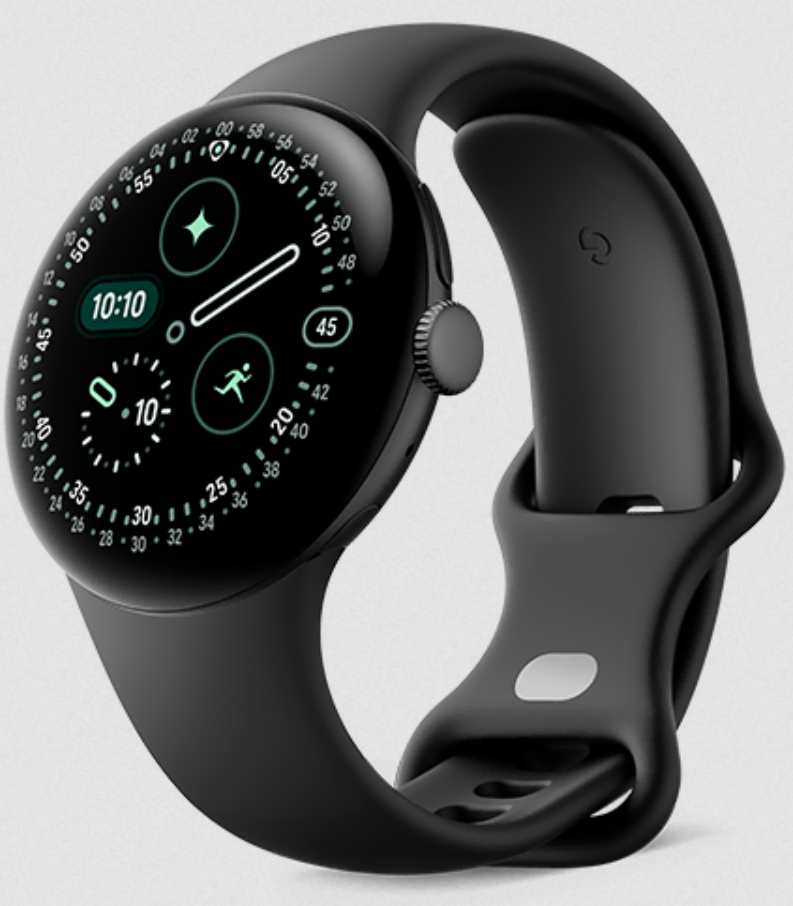
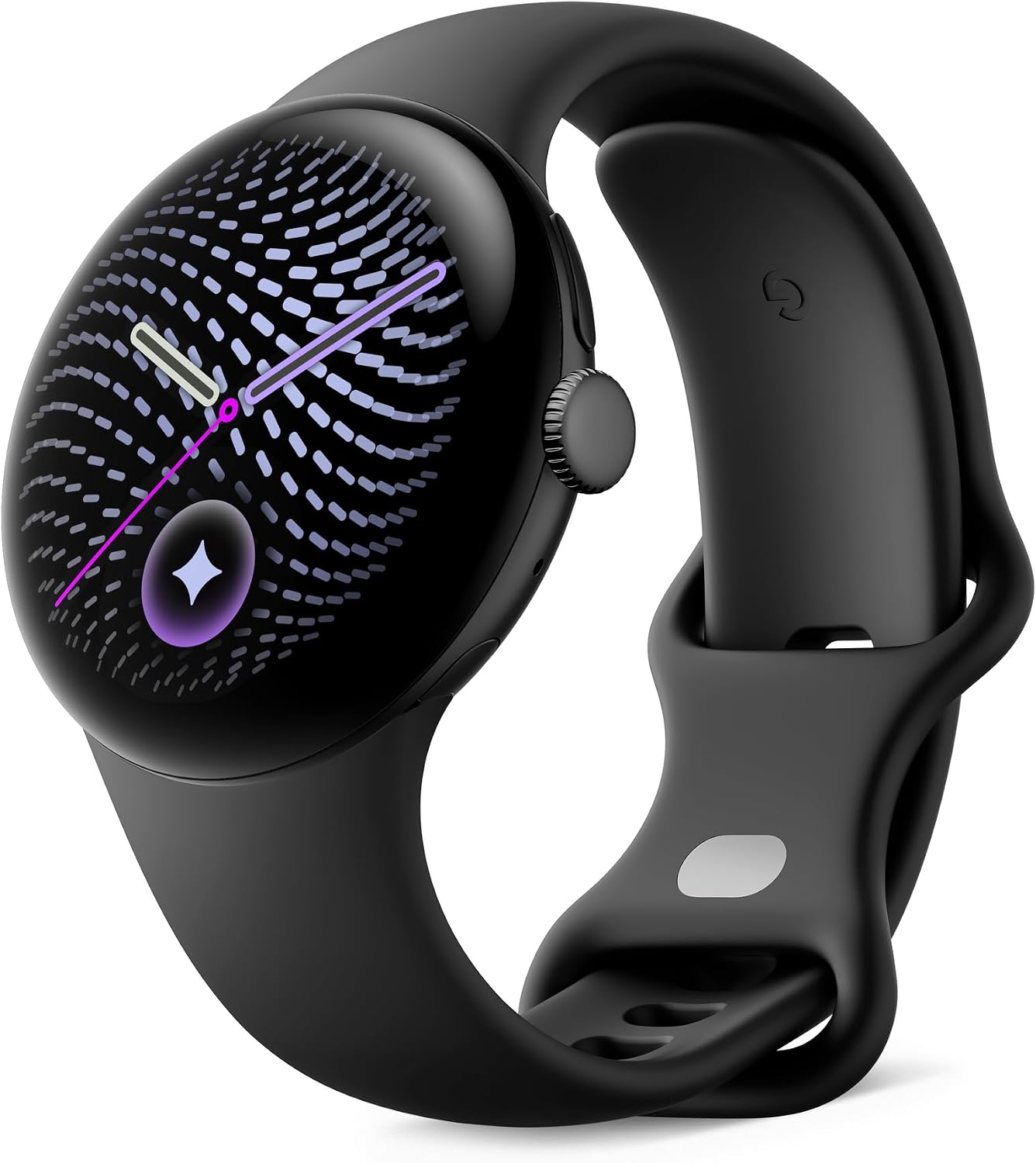
The Pixel Watch 4, running Wear OS 6, is Google’s clearest statement of what a premium Android smartwatch looks like: accurate health sensors, deep Google ecosystem integration, and a software experience that finally matches Samsung’s Galaxy Watch for polish. It is not a Garmin Forerunner alternative. The sports tracking is competent rather than specialised, and the battery life remains a constraint for athletes who train for long periods. It is a well-executed smartwatch that tracks sport, not a sports watch that also handles notifications.
The Pixel Watch 5 launched on 12 August 2026 and reached shops on 20 August. It looks identical to the Watch 4: same case, same display, same two-day battery. The changes are internal and software-led: a faster Snapdragon W5 Gen 2 Accelerated chip, double the storage, Wear OS 7.0 with Gemini Intelligence, and cloud-based GPS post-processing that reprocesses a run’s track against Google’s 3D map data after the workout finishes. Blood pressure and insulin resistance trends arrive via a software update in autumn 2026, giving pattern insights rather than clinical readings. Prices rose $50 on the 41mm and $30 on the 45mm versus the Watch 4. The Fitbit brand’s future hardware is more likely to sit below the Pixel tier, producing fitness-first devices at accessible price points, with the Air being the current template for the entry level.
Fitbit Air: accuracy tests and known issues
- Fitbit Air review: 31 cons, 21 pros — the full verdict, including a detailed breakdown of what works and what does not at $99
- Fitbit Air accuracy: the spec nobody explained — what the 2-second sampling rate actually means for sport, and why most reviews missed it
- Fitbit Air cadence lock — treadmill interval test showing 157 bpm average against a 131 bpm reference; implications for training load data
- Fitbit Air arm sleeve: bicep HR accuracy confirmed — near-zero bias at the bicep using a Whoop Any-Wear sleeve; how to replicate it
- Fitbit Air lost my data: open water swim — data loss issue, workaround, and accuracy result against ECG reference
- Fitbit Air vs Amazfit Cheetah 2 Ultra: bike sprint HR test — road cycling sprint comparison; limits of agreement against Whoop MG and Polar Verity Sense
- Fitbit Air vs Whoop MG: HYROX accuracy test — five devices across a HYROX simulation; Air produced the widest error range on test
- Fitbit Air vs watchOS 27: HR and HRV compared — five devices, three reference methods; HRV sampling compared across platforms
- 150 minutes with Fitbit Air, Whoop and an ECG strap — extended ride data against Fourth Frontier ZONE ECG reference
Fitbit Air: buying and context
- Who will buy the Fitbit Air? — the three buyer groups and which path applies
- Garmin Cirqa vs Fitbit Air: Has Google already won? — ecosystem analysis and the Whoop switcher question
- Fitbit Air band vs Whoop: it’s all in the app — pre-launch analysis; two years of Fitbit app updates as the more revealing story
- Top 5 wearable watersheds: the Air is the sixth, where the Air sits in the history of devices that shifted the category
- Why Fitbit Air is Google Photos for your health — the data strategy behind the $99 price point
- How much does it cost to make a Fitbit Air? — BoM analysis and the breakeven calculation
Google Health and the platform
- Google Health app: how to get it before the 19 May release — Public Preview access, what changed in the four-tab layout
- Google Health: we have a design problem — the weak spots the Air launch exposed in the app
- Fitbit Gemini AI Coach on iOS: live in 6 countries — what the coach does, how it compares to Garmin Connect+
- Fitbit AI Coach: the LLM shift that leaves Garmin and Strava behind — the structural advantage of building the coach on Gemini
- Fitbit owners: three months to save your data — the account migration deadline and what was at risk
- What is Google Health Connect? — the Android data-sharing layer explained; still the clearest introduction to why it matters
Pixel Watch
- Google Pixel Watch 4 review — full review including the Wear OS 6.1 update; 9 cons, 5 pros
- Pixel Watch 5: release date, specs and every leak so far — tracks every confirmed detail and credible rumour through to the August 2026 announcement.
- Google Pixel Watch March 2026 update: what’s new
- Every Pixel Watch 4 watchface — guide to all official designs and customisation options
Wear OS: platform and context.
- Google Wear OS 7: impact on Garmin, Strava and sports usage — battery improvements, Gemini integration, and the unified workout tracking screen
- Fossil quits Wear OS — what the exit means for the platform and who benefits.
- Wear OS 5: finally, something — the version that began to close the gap with watchOS
- Google and Samsung tie up Wear OS — the 2021 partnership that redefined the platform.
- New Stryd app for Wear OS — running power on Pixel and Galaxy Watch
Wear OS hardware: the archive
These posts document the third-party Wear OS hardware era, with most of it ending between 2021 and 2024.
- Suunto 7 review — the most capable sports watch ever built on Wear OS; discontinued when Suunto returned to its own platform
- Suunto 7 accuracy — GPS and HR accuracy data
- Fossil Gen 5 review — the high point of Fossil’s Wear OS line before the platform update problems began
- Fossil Gen 6 — launched on Wear OS 2 despite Wear OS 3 being available to Samsung; the clearest illustration of the tiering problem
- Mobvoi TicWatch S2 review — sporty Wear OS from the brand that lasted longest outside the Google-Samsung axis
- Casio G-Shock G-Squad Pro: Casio nails Wear OS? — opinion piece on the most credible non-Samsung Wear OS hardware of its generation
Explore the full resource library
This site covers endurance sport technology across a range of dedicated reference sections. Each one collects the most relevant articles, tests, and analysis on its topic in one place.
Buyer guides
- Best sports watch — tested recommendations by sport and athlete type: triathlon, running, marathon, cycling, hiking, and women
- Best Garmin watch — Forerunner versus Fenix by series, sport, and budget
- Best wearables — recovery trackers, heart rate monitors, running power meters, and female athlete tech
- Best cycling products — computers, smart trainers, power meters, and cycling heart rate monitors
Brand and product guides
- Amazfit — the full Amazfit range from Balance to Cheetah to T-Rex, accuracy tests, HYROX partnership, and Zepp Health analysis
- Apple Watch — athlete-first coverage of Apple Watch across running, cycling, and triathlon
- COROS — watches, features, and firmware across the full COROS range
- Garmin — the company, the platform and the full range, and the starting point for choosing across every Garmin product line
- Garmin Edge — bike computers from entry-level navigation to flagship endurance and mountain biking
- Garmin Fenix — every model, feature, and firmware development for Garmin's flagship outdoor watch
- Garmin Fenix 8 Series — which variant to buy, upgrade advice, accuracy data, and the full Fenix 8 review and firmware coverage
- Garmin Forerunner — the full Forerunner line covered from entry level to triathlon flagship
- Garmin Instinct — rugged GPS watches for endurance and adventure athletes
- Garmin Features Explained — how Garmin's metrics work, from Training Load and Body Battery to Race Predictor and HRV Status
- Google Fitbit — Fitbit Air, Google Health, Pixel Watch and the Wear OS platform
- Polar — watches, sensors, Polar Flow and training science across the full Polar range
- Suunto — Race, Vertical, Run and the SuuntoPlus ecosystem
- Strava — features, privacy, segments, and how Strava fits into a serious training setup
- Wahoo — KICKR trainers, ELEMNT bike computers, and the Wahoo ecosystem
- WHOOP — strain, recovery, sleep and the full WHOOP ecosystem
Specifications database
- Full Specifications Database — detailed spec sheets, battery life, sensor lists and generation-on-generation comparisons for current Garmin, COROS, Amazfit, Samsung, Google Fitbit, Huawei, Polar, Suunto, Wahoo and Apple Watch models
Glossary
- Sports Technology Glossary — non-branded terminology across running, cycling, swimming, triathlon, hiking, strength training, HYROX, sensors, ecosystems, and brands
Sport and topic guides
- Running Watches — how to choose by discipline: road racing, trail, track, beginner, and multisport
- Triathlon and Multisport Technology — watches, sensors, and race-day tools for swimmers, cyclists, and runners
- HYROX — training science, race analysis, and technology for the functional fitness race format
- parkrun — technology, training, and performance for the weekly 5K
- Hiking Technology — navigation, safety, and trail tech for walkers and hikers
- Heart Rate Monitoring — optical sensors, chest straps, accuracy comparisons, and how to set training zones
- GPS Accuracy — how satellite systems perform across brands, terrains, and conditions
- Sports Watch Battery Life — battery claims, real-world tests, and how to manage battery life across Garmin, Apple, Amazfit and Coros
- Recovery Trackers — WHOOP, Oura, and the science of readiness scoring
- Female Athlete Tech — wearables, physiology, and performance for female endurance athletes, covering cycle-synced training, RED-S, HR accuracy, and VO2max
- Sports Science — peer-reviewed research on HRV, VO2max, lactate threshold, running power, wearable accuracy, and supplementation
- Testing Methodology — how this site tests GPS accuracy, heart rate, battery life, and other performance claims
Content series
- Release Radar — confirmed launches, leaks, and rumours across Garmin, Apple, COROS, Polar, Suunto, and Wahoo
- Deep Dive Feature Files — weekly firmware feature updates across all brands (bug fixes excluded)
- Fix Files — weekly firmware bug fix tracking across all brands
