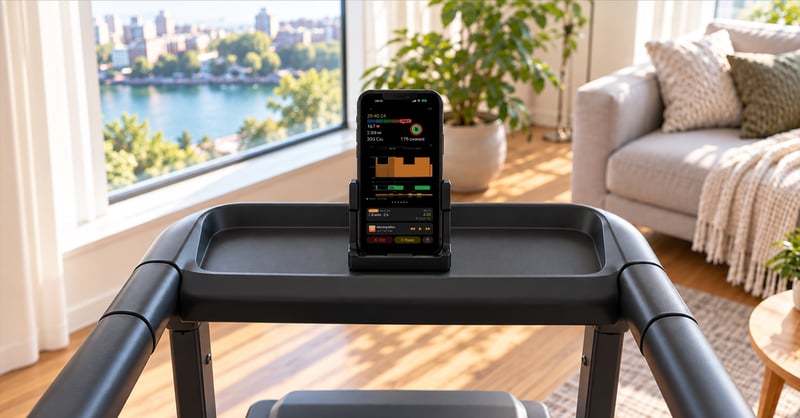
Why an Apple Watch treadmill run can come out more than a mile wrong
Outdoors, an Apple Watch measures a run with GPS. On a treadmill there is no GPS, so the watch estimates distance from its accelerometer and the stride length it has learned on outdoor walks and runs. Apple’s own advice is to calibrate outdoors for 20 minutes at each speed the runner uses. A treadmill session at speeds the watch has not been calibrated for leaves it estimating a stride it has never measured.
The treadmill under the runner knows how much belt has passed. Unless it is one of the gym machines that pair with Apple Watch through Apple’s GymKit, the treadmill has no say in the number that ends up in Apple Health.
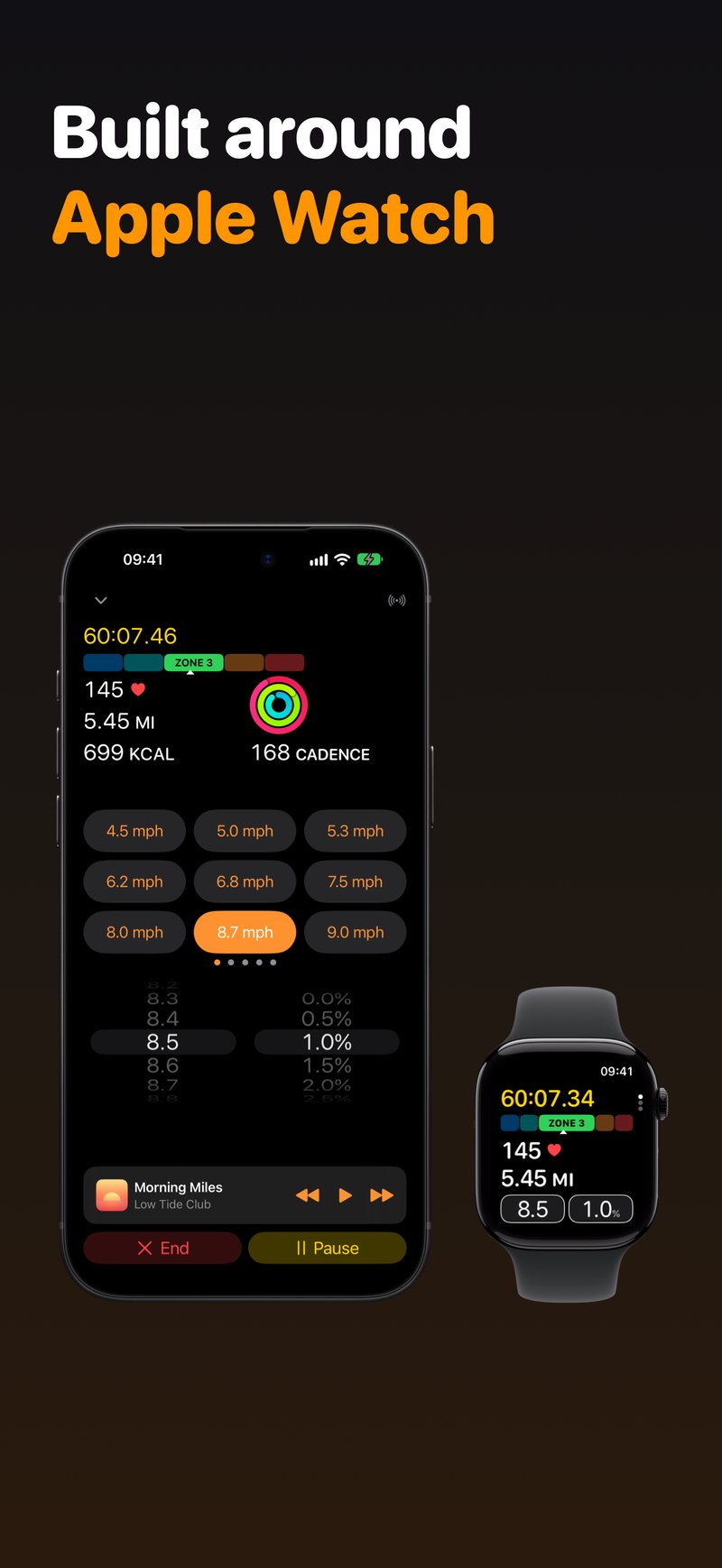
Vsevolod Klementjev, the developer of Klemy Treadmill, ran into this on his gym’s treadmills in winter. His Apple Watch often got speed and distance wrong, sometimes by more than a mile (1.6 km). He could not find an app that let him match the treadmill’s speed by hand, so he made one.
He makes three apps on his own, in Latvia: Klemy, a strength training log, plus Klemy Treadmill and Klemy Cycling. He has made iOS apps for more than 15 years, mostly games. He took up the gym in 2023 to train for a hiking trip to Iceland and started running in 2024. He wanted private apps without feeds, accounts or ads, and he uses all three himself. Some days he walks on a walking pad while he works.
How Klemy Treadmill gets the distance right
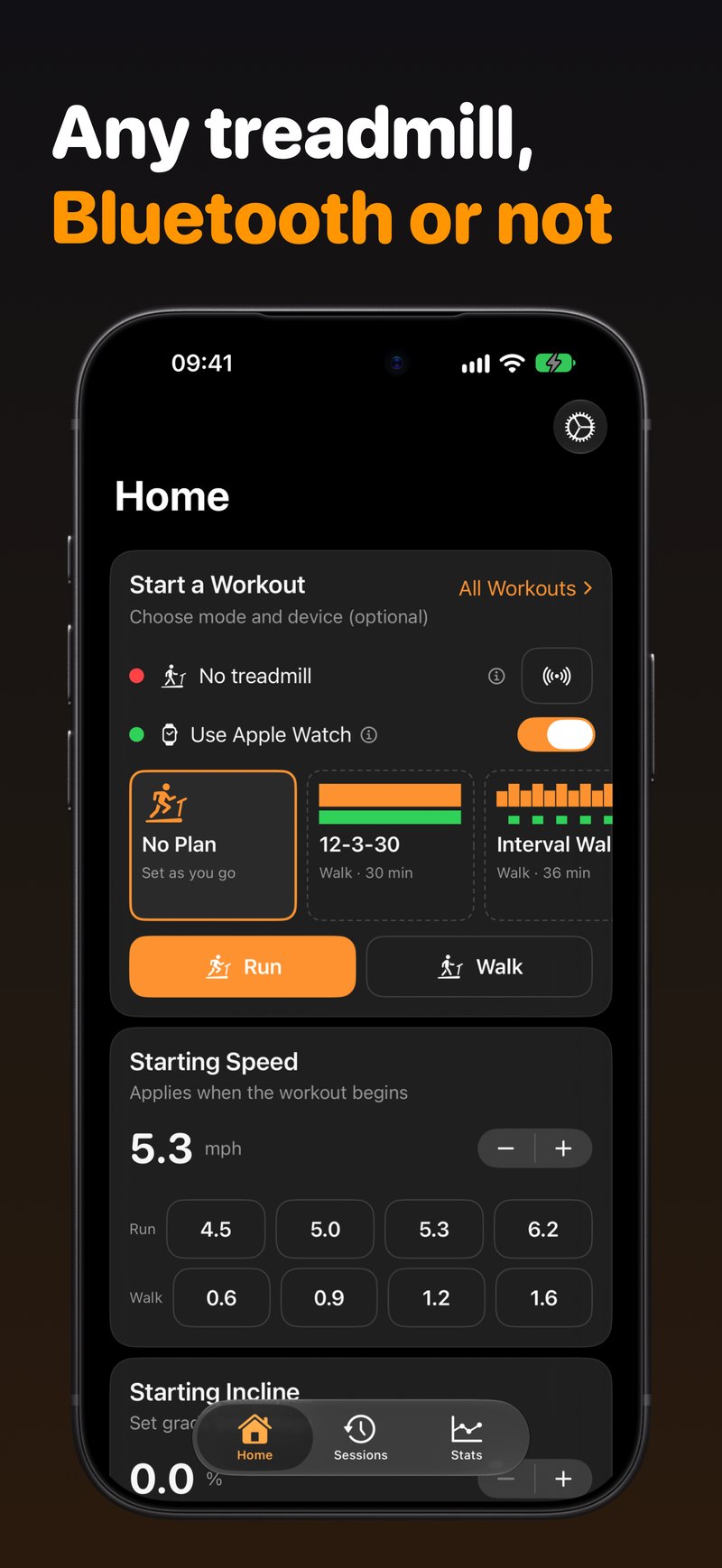
TL;DR: Klemy Treadmill does not let the watch guess. It switches off the Apple Watch’s own treadmill distance and speed for the workout. On a Bluetooth treadmill it records the distance the treadmill reports. On any other treadmill the runner sets the same speed in the app as on the console, and the distance is that speed multiplied by the time spent at it.
The app gets its numbers one of two ways:
- A treadmill with Bluetooth FTMS. FTMS (Fitness Machine Service) is the Bluetooth standard for connected treadmills, walking pads and smart trainers. Klemy Treadmill connects from the iPhone or straight from the Apple Watch and records the distance the treadmill itself reports, along with its speed and incline. For a treadmill whose own distance reads oddly, a Speed-Based Distance setting calculates the distance from the reported speed instead.
- Any other treadmill. The runner sets the speed in the app with speed shortcuts, the speed picker or Siri. Every five seconds the app adds the distance covered at that speed. While the runner is still changing the speed, the app waits, then credits that time at the speed they settle on, so nothing is dropped. Paused time never counts.
Incline does not change either method. Treadmill distance is the length of belt that passes under the runner, and that is the same at 0% or 12%. What incline changes is the climb. Unless the treadmill reports its own climb, Klemy Treadmill works out elevation gain as the distance multiplied by the incline, so 1 km (0.62 mi) at 5% is 50 m (164 ft) climbed, and saves it with the workout.
Each stretch at one speed is a single multiplication, and a change starts the next stretch. A runner who takes the belt from 8 to 12.5 km/h (5.0 to 7.8 mph) and sets 12.5 in the app gets distance at that speed from there on.
On a treadmill without Bluetooth, the record is only as good as the speed the runner enters, how promptly they enter it, and the console’s own speed.
A worked example: Apple Watch alone against Klemy Treadmill
Vsevolod kept the numbers from two of his own runs on the same type of gym treadmill, which has no Bluetooth. They are two separate runs of about an hour each, on different days, not one run measured twice. By the console, the watch run averaged about 7.5 km/h (4.6 mph) and the Klemy Treadmill run about 9.6 km/h (5.9 mph), and the second used an early version of the app, then called Treadmill. The first was recorded by the Apple Watch alone, as an Indoor Run in Apple’s Workout app. On the second, he set his speed in Klemy Treadmill each time he changed it on the console.
| Run | Console | Recorded | Recorded vs console |
|---|---|---|---|
| Apple Watch alone | 7.44 km (4.62 mi) in 59:50 | 8.64 km (5.37 mi) in 1:00:00 | +1.20 km (+0.75 mi), +16% |
| Klemy Treadmill | 9.56 km (5.94 mi) in 59:56 | 9.66 km (6.00 mi) in 1:01:01 | +0.10 km (+0.06 mi), +1% |
On its own, the watch added 1.20 km (0.75 mi) to an hour on the belt. Klemy Treadmill was 0.10 km (0.06 mi) over, with its timer running 65 seconds longer than the console’s, so the two agree to within 1%.
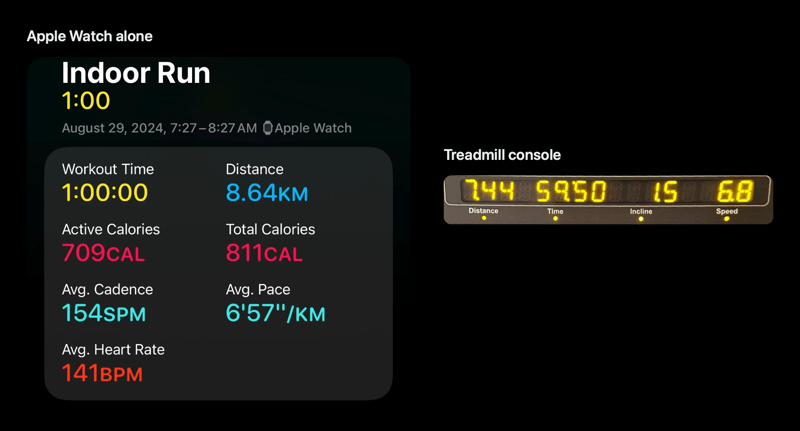
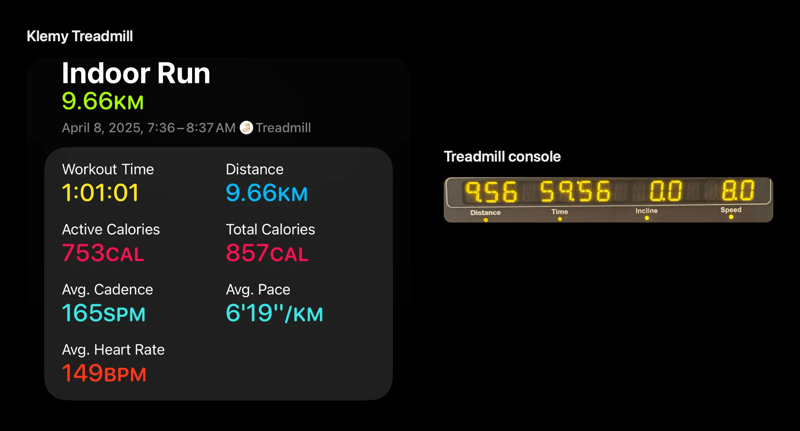
His gym’s treadmills have no Bluetooth, so neither run used it. On a Bluetooth FTMS treadmill, Klemy Treadmill records the treadmill’s own distance.
A planned run with speed changes adds up the same way. Norwegian 4×4, one of Klemy Treadmill’s ready-made runs, has nine changes in 43 minutes at its default speeds:
| Part | Time | Speed | Incline | Distance |
|---|---|---|---|---|
| Warm-up | 10 min | 9.0 km/h (5.6 mph) | 1% | 1.50 km (0.93 mi) |
| 4 hard efforts | 4 x 4 min | 12.5 km/h (7.8 mph) | 2% | 3.33 km (2.08 mi) |
| 4 recoveries | 4 x 3 min | 8.0 km/h (5.0 mph) | 0% | 1.60 km (1.00 mi) |
| Cool-down | 5 min | 6.5 km/h (4.0 mph) | 0% | 0.54 km (0.33 mi) |
| Total | 43 min | 6.97 km (4.35 mi) |
A runner who sets each new speed in the app as on the console finishes with about 6.97 km, and anyone can check every row with a calculator. Set to miles, the plan runs at its own round mph speeds, so it comes to 4.35 mi rather than an exact conversion of the kilometres.
Planned walks and runs, with or without Bluetooth control
Klemy Treadmill comes with ten ready-made walks and runs: 12-3-30, Interval Walk, Hill Walk, Rolling Hills Walk, Easy Run, Zone 2 Run, Norwegian 4×4, 30/30s, Hill Repeats and Tempo Progression. Runners can also build their own from a warm-up, intervals and a cool-down, with a speed and incline for every step. How a planned session runs depends on the treadmill:
- On a treadmill that takes Bluetooth control, the app changes the speed and incline at every step and the runner just runs. Zone 2 Run adjusts the speed to keep heart rate in zone 2.
- On a treadmill without Bluetooth, or one that does not take speed commands, the plan runs as a guide. A countdown starts ten seconds before each change and shows the speed and incline to set next, and the Apple Watch can tap the wrist as the countdown starts and again at the change. The runner sets the new speed on the console, and on a treadmill without Bluetooth in the app too.
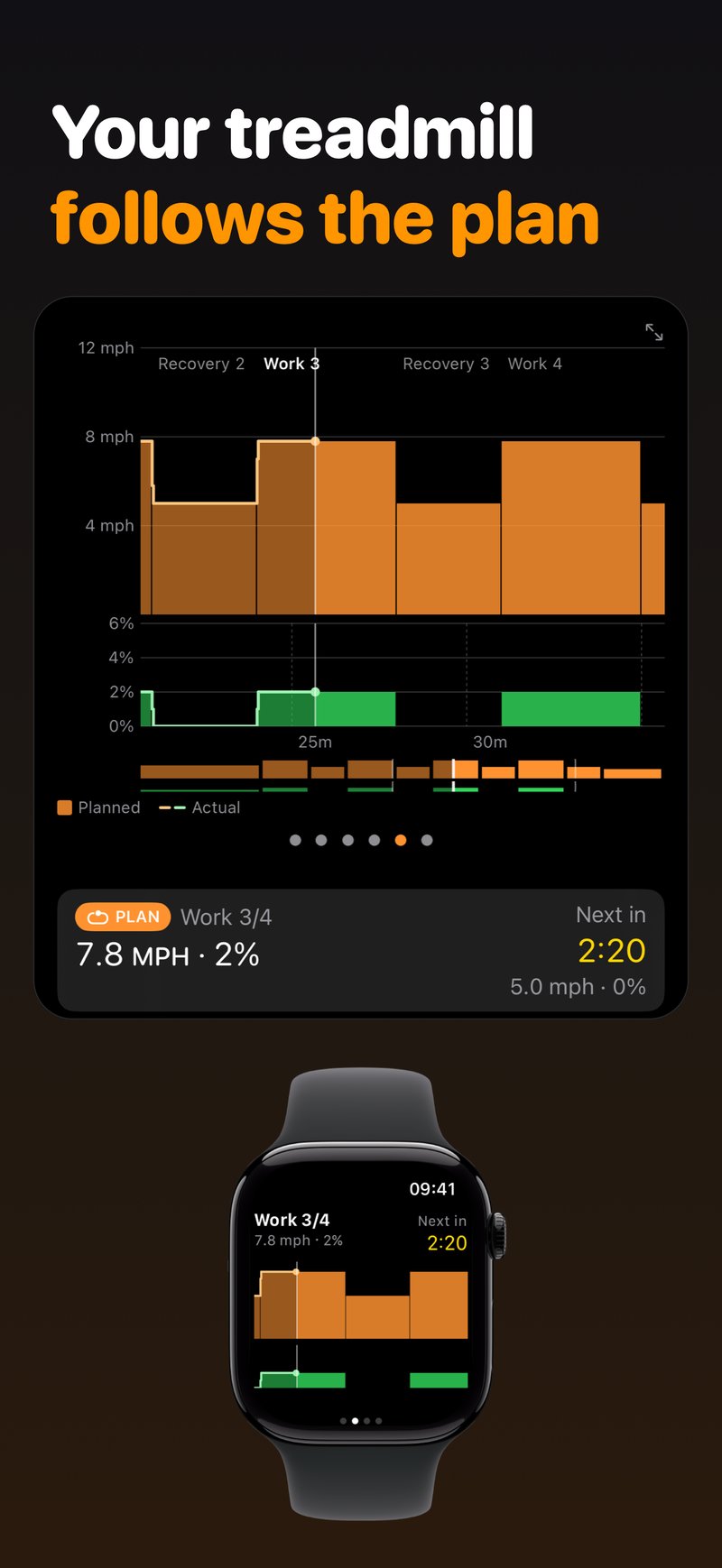
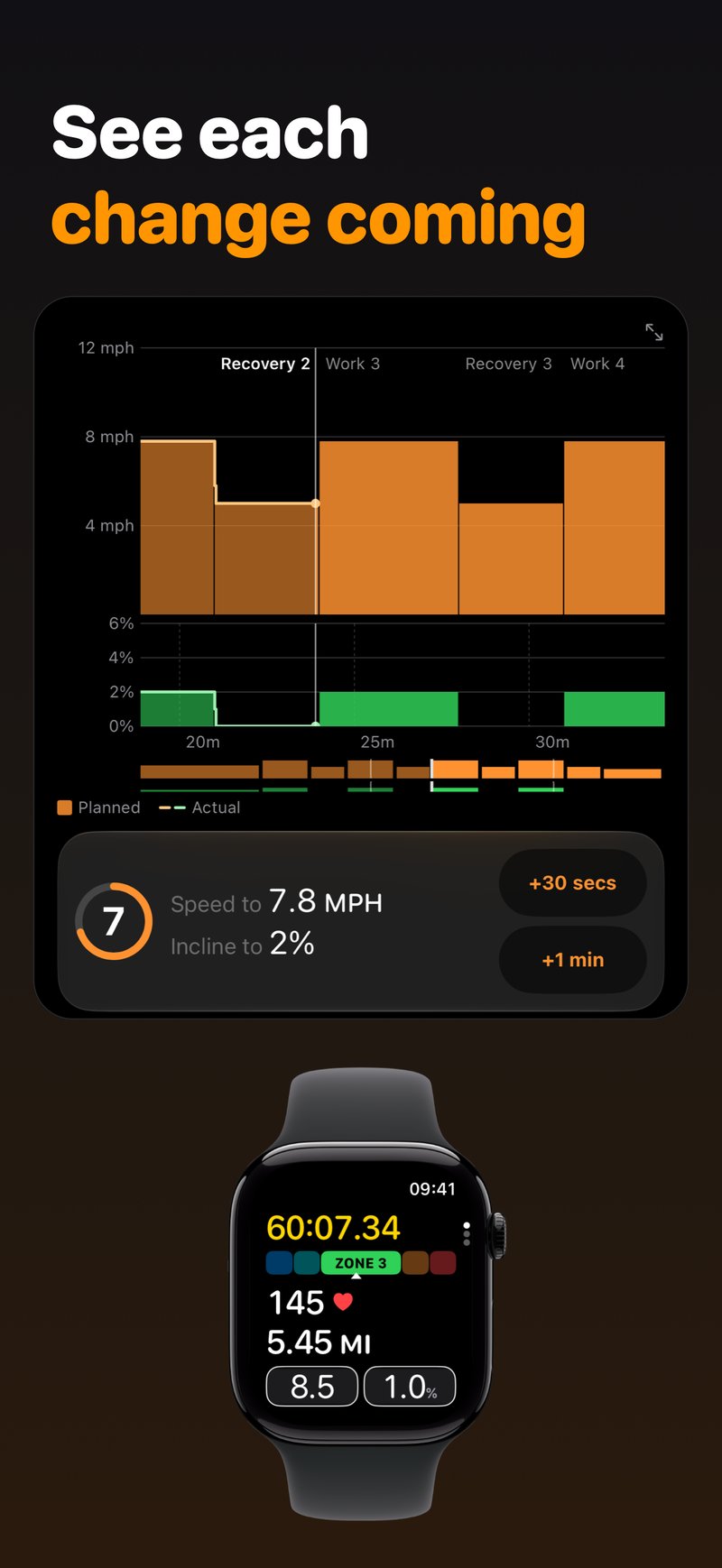
On both, a live chart shows what comes next on iPhone and Apple Watch. A runner who needs a moment can push the next change back 30 seconds or a minute.
Klemy Cycling: smart trainer rides in ERG, slope and resistance
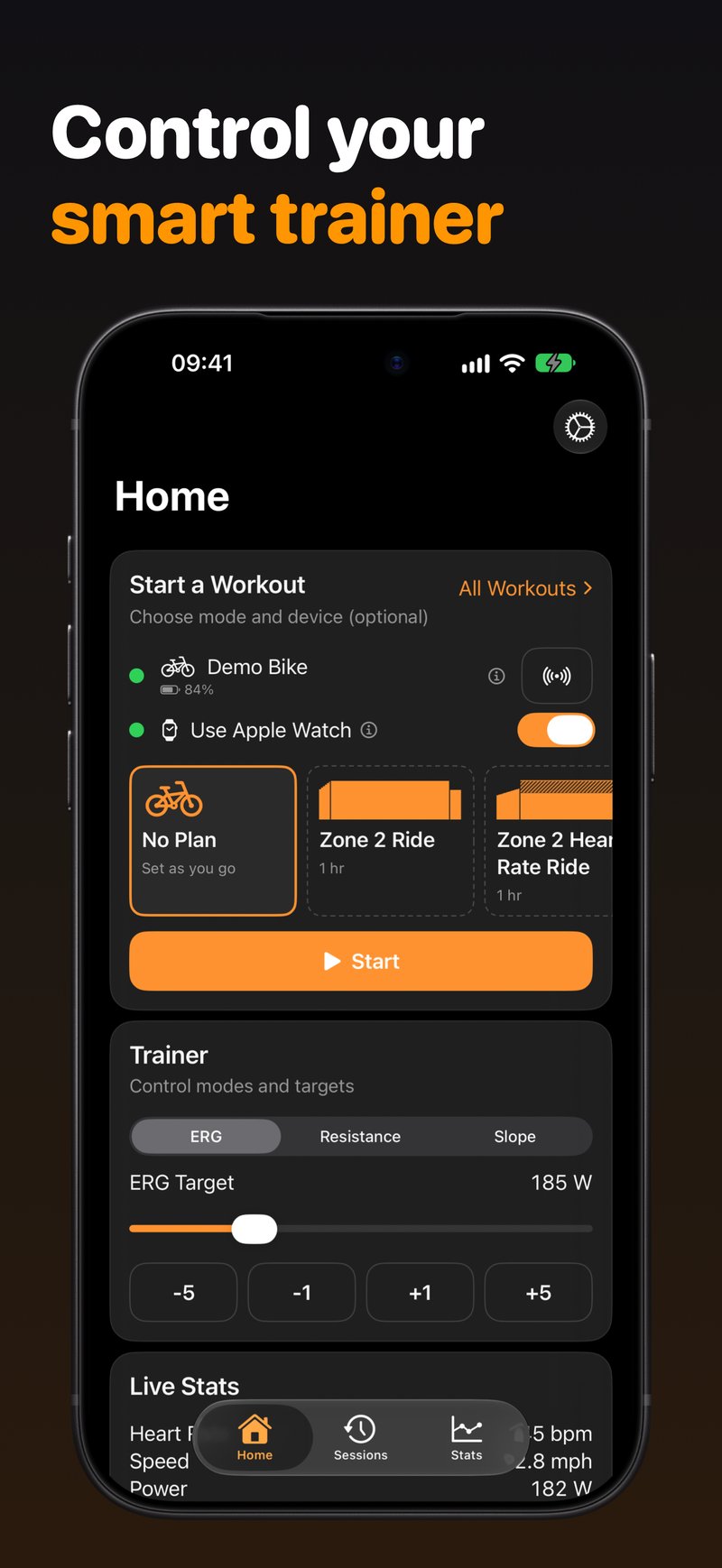
Klemy Cycling grew out of the treadmill app after Vsevolod bought his first bike in 2025. It runs planned rides on a Bluetooth FTMS smart trainer and sets the trainer at every step: ERG watts, slope or resistance.
The ready-made rides are Zone 2 Ride, Sweet Spot 2×20, VO2 5×5, 40/20s and Over-Unders, each scaled to the rider’s FTP, plus a Ramp Test that climbs every minute until the rider stops, and Zone 2 Heart Rate Ride, which sets the watts to keep heart rate in zone 2. Riders can build their own rides with ERG watts, power ramps, slope or resistance for each step.
During a ride the app shows power, cadence, speed, heart rate, distance and energy, with heart rate and power zones. Mode and target shortcuts change ERG, slope or resistance mid-ride, and Siri can do the same. A ride can start on the Apple Watch alone, which connects to the trainer itself and taps the wrist before each change. A Bluetooth power meter or speed and cadence sensor can be paired alongside the trainer.
Integrations and compatibility
Bluetooth and sensors
- FTMS (Fitness Machine Service): treadmills, walking pads, smart trainers and smart bikes, for reading data and for control.
- Cycling Power Service power meters and Cycling Speed and Cadence sensors, in Klemy Cycling.
- Heart Rate Service: Bluetooth chest straps and other heart rate sensors.
- Compatible Bluetooth core body temperature sensors, on their own Bluetooth service: body temperature, skin temperature and heat strain.
Treadmills and trainers
- Klemy Treadmill works with any treadmill or walking pad. Without Bluetooth, the runner sets the speed.
- Klemy Cycling needs a smart trainer or smart bike that speaks Bluetooth FTMS. A trainer that only speaks its maker’s own protocol is not supported.
Apple devices
- iPhone with iOS 26 or later and iPad with iPadOS 26 or later.
- Apple Watch with watchOS 26 or later: Series 6 or later, SE (2nd generation) or later, and every Apple Watch Ultra.
- Both apps run on the Apple Watch alone, on the iPhone alone, or on both together.
- Heart rate comes from Apple Watch, a Bluetooth strap or supported AirPods.
Apple Health and the rest of iOS
- Klemy Treadmill saves the workout with walking and running distance, running or walking speed, steps, heart rate, active energy, and the climb as Floors Climbed plus the workout’s elevation gain.
- Klemy Cycling saves cycling distance, speed, cadence and power, with heart rate and active energy.
- Body temperature from a compatible sensor goes to Apple Health too.
- Workouts export as FIT or TCX files for a training log.
- Live Activities and widgets.
- Siri sets speed and incline in Klemy Treadmill, or mode, watts, resistance or slope in Klemy Cycling.
- Customisable workout layouts on iPhone and iPad.
- Metric or imperial units, in 12 languages.
Privacy
There is no account, no sign-up and no tracking. Workouts go to Apple Health and the rest syncs through the user’s own iCloud.
What Klemy Treadmill and Klemy Cycling cost
Both apps are free to download, with three free workouts a month, and the iPhone and the Apple Watch each count their own three. Each app is bought separately:
| Option | Monthly | Yearly | One-time |
|---|---|---|---|
| Single user | $4.99 / £4.99 | $24.99 / £24.99 | $79.99 / £79.99 |
| Family Sharing | $7.99 / £7.99 | $39.99 / £39.99 | $119.99 / £119.99 |
The yearly plan starts with a one-week free trial for new subscribers.
Quick answers
Does Klemy Treadmill work on a treadmill without Bluetooth?
Yes. On any treadmill or walking pad, the runner sets the speed in the app and Klemy Treadmill calculates distance and pace from it. Planned workouts run too: a countdown shows the next speed and incline to set.
Why does Apple Watch get treadmill distance wrong?
Without GPS, Apple Watch estimates treadmill distance from its accelerometer and the stride length it learned outdoors. At speeds it has not been calibrated for, the estimate can drift. In the developer’s own test, Apple Watch alone added 1.20 km to an hour on the belt.
Which smart trainers does Klemy Cycling support?
Any smart trainer or smart bike that speaks Bluetooth FTMS, the Fitness Machine Service standard. Klemy Cycling reads power, cadence and speed from it and controls it in ERG, slope or resistance mode. A separate Bluetooth power meter or speed and cadence sensor can be added, but a ride needs an FTMS trainer or smart bike to set the resistance.
Does Klemy Treadmill need both an iPhone and an Apple Watch?
No. A run can go on the Apple Watch alone, which connects to a Bluetooth treadmill itself, or on the iPhone alone, with heart rate from a Bluetooth strap or supported AirPods.
More information: klemix.com/treadmill, Klemy Treadmill on the App Store and Klemy Cycling on the App Store.
Author: Vsevolod Klementjev, developer of Klemy Treadmill and Klemy Cycling, edited by the5krunner.
If you enjoyed reading this, here is another in the Indie Spotlight series: Indie App Spotlight: CAMIX 9 is a Garmin face built from owners’ complaints.
Last Updated on 25 October 2026 by tfk the5krunner
Small things I always use
- Garmin 90-degree charging adapter: Charges your Garmin from any USB-C cable. Essential when travelling. I use one.
- Body Glide: The blue anti-chafe stick swimmers and runners carry. I use it.
- Speedo earplugs: Fewer ear infections and no cold-water dizziness. I use them.
- Dryrobe Advance: My winter changing robe for open-water swims. I use one. A cheaper option is the AONYIYI changing robe.
- Maurten: Race fuel that stays easy on the stomach. I use them.
- Beet It Sport nitrate shots: Beetroot shots I take in the days before a race. I use them.
- Garmin charging puck: The quickest way to top up before a session. I use one.
- Injinji: Toe socks that stop rubbing, so you run more. I use them.
- Ultimate toe protectors: Stop black toenails on long runs. They work. I use them.
- Compressport R2 v2 calf sleeves: My calf sleeves of choice. I use them.
- Cellucor C4: My pre-workout before hard sessions.
- TPU tubes: Schwalbe Aerothan, Tubolito and Pirelli SmarTube. Light, tiny spares. I use all three.
- G8 insoles: Adjustable insoles that are good. I use them.
- Cycplus Cube: A 97g electric pump that gets a road tyre rideable in two minutes. I carry one. 5% off with code THE5KRUNNER.
Watches and sensors
- Polar H10: My daily driver for waking HRV.
- Polar Verity Sense: My backup arm-worn HR sensor.
- Nomad bedside charger: Charges my iPhone and Apple Watch overnight. I use it, and many of their bands.
- Train.Red: The best muscle oxygen sensor I’ve used.
- Tymewear: Accurate heart rate and reliable ventilatory zones. I use it to pace endurance rides over an hour.
- Garmin Forerunner 970: A pro-grade triathlon watch. I use this.
- Apple Watch Ultra 4: My daily smartwatch. No phone needed on rides.
- Garmin Fenix 9 Pro: I’ve just bought one.
On the bike
- Continental GP5000 for everyday riding, and Aero 111 on the front for special occasions.
- Helmets: Specialized S-Works Evade 3 for road riding, and Rudy Project Wing for TT-style races. I use both.
- Ravemen FR300: A front light that mounts under your Garmin or Wahoo. I use one.
- Wahoo TRACKR Radar: I use it on one bike and Varia on the other. They perform the same.
- Garmin Varia RTL515: Radar that warns you of cars from behind. I use this model.
- Wahoo ELEMNT Roam 3: The bike computer that’s easy to use. I use mine on most rides.
- Favero Assioma Pro RS2: Accurate power pedals that swap easily between bikes. I use this model.
Home and indoor training
- NPE Runn: Makes my basic treadmill smart, sending more accurate speed and distance to my watch and Zwift. I use it.
- Google Wifi: Keeps Zwift connected in my pain cave. I use it.
- Apple TV 4K: Zwift on the big screen. I use two.
- Google Nest Doorbell (wired, 2nd gen): My video doorbell, running in both Google Home and Apple Home. I use it.
Health, recovery and sleep
- FreeStyle Libre 3 Plus: Shows how my blood sugar responds to diet.
- hDrop: Measures my sweat loss in summer and indoors.
- Fourth Frontier Zone: Checks my heart under load in hard sessions.
- Oura Ring 5: My partner’s recovery tracker of choice.
- Eight Sleep: A cooling mattress cover my partner and I use nightly.
Reader-Powered Content
This content is not sponsored. It’s mostly me behind the labour of love, which is this site, and I appreciate everyone who supports it.
Support the site: Follow (free, fewer ads) · Subscribe (paid, ad-free) · Buy Me A Coffee
Written by real people, with AI assistance. Fact-checked and verified for originality. See the Editorial Policy. FTC: Affiliate Disclosure — some links pay commission. As an Amazon Associate, I earn from qualifying purchases.
tfk is the founder and author of the5krunner, an independent endurance sports technology publication. With 20 years of hands-on testing of GPS watches and wearables, and competing in triathlons at an international age-group level, tfk provides in-depth expert analysis of fitness technology for serious athletes and endurance sport competitors. See the gear tfk uses. ID
