Built from where the athlete lives and trains over time; no study has tested the estimate
Altitude camps, mountain holidays and races above 800 m
Needs the watch worn and syncing around the clock, and a long flight can skew the overnight reading
Plain English: An estimate of the altitude an athlete’s body has adjusted to, shown in metres or feet rather than as a score. It rises the longer someone lives and trains above 800 m, and falls once they come back down. A higher figure means the body copes better with thin air, so the watch makes allowances for slower running up there.
In practice: I’ve not used this feature
Quick answers
How does Garmin altitude acclimation work?
The watch tracks the athlete’s average altitude over every 24 hours, including an overnight check, and starts acclimation once that average is above 800 m. It then shows the altitude the body is adapted to and adjusts VO2 max and Training Status accordingly. Training sessions at altitude add to the picture as well.
How long does altitude acclimation take on Garmin?
Garmin assumes full adaptation to a living altitude takes about 21 days, with faster gains at the start. Training at a higher altitude speeds it up: five days of training at 3,000 m can bring adaptation to 2,000 m, which would otherwise take up to 21 days at 2,000 m. Adaptation decays within 21 to 28 days after returning to a lower altitude.
Why does my Garmin say altitude acclimation is inactive?
The glance shows Inactive when the athlete is outside the range Garmin calculates, which runs from 800 m to 4,000 m. Living below 800 m keeps it inactive, and Garmin does not calculate above 4,000 m.
Does a flight affect Garmin altitude acclimation?
It can. The watch takes an altitude reading overnight, so a night flight can feed it a cabin altitude instead of the ground the athlete is living on. The effect fades as normal days are recorded.
Altitude Acclimation – a deep dive
When Altitude Acclimation is actually useful
I’ve not used this feature
Introduction
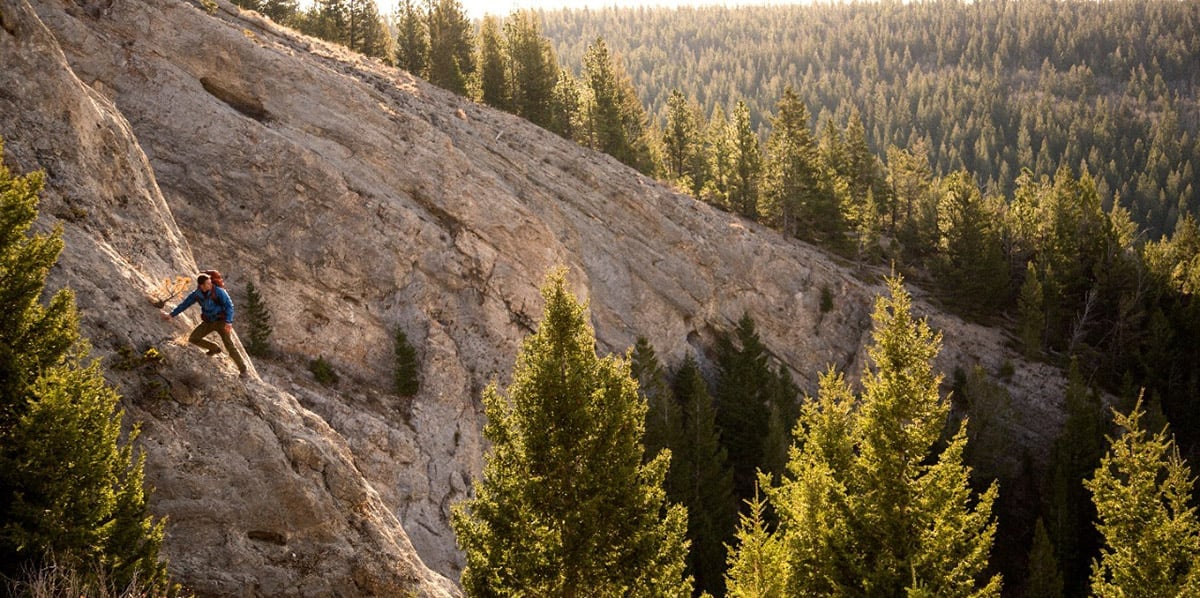
Garmin Altitude Acclimation estimates the altitude an athlete’s body has adapted to and uses that figure to correct VO2 max and Training Status when the daily average altitude is above 800 m. Garmin’s reasoning is that high altitude training can cause a temporary decline in VO2 max. Compatible watches and Edge bike computers also give acclimation notifications.
Garmin documents altitude and heat acclimation together, but the altitude side goes further, because it follows where the athlete sleeps as well as where they train. It still estimates adaptation from time and altitude, without measuring the red blood cell changes that make altitude training work.
What Altitude Acclimation actually means
The watch reports acclimation as an altitude, the elevation the athlete’s body is acclimated to, with an arrow showing the change from the previous day. The scale runs from 800 m to 4,000 m. Garmin publishes no bands or ratings, and third-party guides that give percentage bands for it have no Garmin source.
The watch uses the figure to adjust what it expects of the athlete. Garmin’s technology page puts the oxygen in the air at 3,000 m at about 70% of sea level, so pace at a given heart rate falls, and acclimation stops that fall from being read as lost fitness.
How Garmin calculates Altitude Acclimation
The feature uses the athlete’s daily average altitude over 24 hours, so the watch needs to be worn and syncing throughout the day. It works best with Wi-Fi enabled and the watch on or in sleep mode, because it wakes overnight to check altitude. The Garmin Connect app’s location access must be set to Always. Total adaptation to living altitude takes about 21 days and is faster at the beginning. Training at a higher altitude speeds it up, and adaptation decays within 21 to 28 days.
Garmin told DC Rainmaker at launch that it separates training altitude from living altitude, as altitude studies do, and that the overnight reading decides the living altitude. Garmin does not publish how training sessions and nights are weighted. Every figure it gives is a duration, so the most plausible reading is a time-at-altitude model with a decay.
What affects the reading
A watch left on the charger overnight in a mountain hut misses the night that counts most.
The altitude figure comes from the watch’s GPS and altimeter, so a poorly calibrated altimeter can shift it. Travel is the other risk: an overnight reading on a red-eye flight picks up cabin altitude rather than ground altitude.
How accurate is Garmin Altitude Acclimation
No study has tested Garmin’s estimate. Its inputs are altitude and time, so it can show how long an athlete has been high, and roughly how high, but not how their body has responded. Two athletes in the same camp would see much the same figure, although altitude response varies widely between people.
On watches that have it, the Altitude Acclimation glance gives the physiological check the estimate lacks. Its weekly averages of Pulse Ox, respiration rate and resting heart rate show how the body is responding, which the acclimation figure does not.
Competitor equivalents
- COROS shows Altitude Performance, an indicator of the body’s response to altitude, above 8,250 ft (about 2,500 m) alongside its blood oxygen reading.
- Polar has no altitude acclimation figure.
- Apple has no altitude acclimation figure, and its Vitals app only notes elevation change as one cause of out-of-range overnight readings.
- Suunto has no altitude acclimation figure, offering altitude, barometer and blood oxygen readings instead.
Which Garmin devices support Altitude Acclimation
Heat and altitude acclimation first appeared, without announcement, on the MARQ watches in 2019 and were first described at the launch of Forerunner 945 in April 2019. The starting threshold was 850 m in 2019, and Garmin’s current figure is 800 m. A dedicated Altitude Acclimation glance reached Fenix 6 in a June 2020 update. Current owners’ manuals list the feature for Fenix 9, Fenix 8, Fenix E, Forerunner 970, Forerunner 570, Venu X1, and Instinct 3; it also appears on Forerunner 965, Forerunner 955, Epix (Gen 2), Instinct 2, and Edge 540. Forerunner 70, Forerunner 170, Forerunner 165 and vivoactive 6 do not have it.
Where to find Altitude Acclimation on Garmin
- Training Status glance: the current acclimation with an arrow for the change from the previous day.
- Altitude Acclimation glance: on some watches, the current elevation, weekly acclimation, and weekly averages of Pulse Ox (with all-day Pulse Ox switched on), breathing rate and resting heart rate. Add it to the glance loop in Watch Settings.
- Garmin Connect app: History under More > Performance Stats > Training Status.
Common problems and misreadings
An Inactive glance at a ski resort or on a trek usually means the daily average, which includes the night, is still below 800 m or has gone above 4,000 m.
Turning on all-day Pulse Ox to fill the glance shortens the time between charges on a long trip.
How to improve Altitude Acclimation
Time spent at altitude is the only thing that raises the figure, and Garmin’s own figures show that sleeping high and training higher both help. A runner living at 2,000 m who trains at 3,000 m gains adaptation faster than one who lives and trains at 2,000 m.
The quickest way to raise the figure is not necessarily the best way to prepare for a race. Living high and training low, so that sessions stay at full intensity while the nights at altitude drive the adaptation, was shown to improve sea-level performance by Levine and Stray-Gundersen in 1997. The gains fade over about four weeks once back at sea level, so the race needs to fall within that window after the camp ends.
Scientific basis
Levine BD, Stray-Gundersen J. Journal of Applied Physiology, 1997. PMID 9216951. Runners who lived at 2,500 m and trained at 1,250 m improved sea-level performance more than those who lived and trained at either altitude alone, the split between living and training altitude that Garmin builds in.
Chapman RF, Karlsen T, Resaland GK, et al. Journal of Applied Physiology, 2014. PMID 24157530. Distance runners living at 1,780, 2,085, 2,454 or 2,800 m for four weeks responded differently by living altitude, and responses varied widely between individuals, which a time-and-altitude estimate cannot capture.
How Altitude Acclimation connects to other Garmin features
Altitude Acclimation corrects VO2 max and Training Status, and shares the Training Status glance with Heat Acclimation. Its own glance draws on Pulse Ox, respiration rate and resting heart rate. For mountain kit and navigation, see the hiking technology hub.
Small things I always use
- Garmin 90-degree charging adapter: Charges your Garmin with any USB-C cable. Essential when travelling. I use one.
- Body Glide: The blue anti-chafing stick swimmers and runners carry. I use it.
- Speedo earplugs: Fewer ear infections and no cold-water dizziness. I use them.
- Dryrobe Advance: My winter changing robe for open-water swims. I use one. A cheaper option is the AONYIYI changing robe.
- Maurten: Race fuel that stays easy on the stomach. I use them.
- Beet It Sport nitrate shots: Beetroot shots I take in the days before a race. I use them.
- Garmin charging puck: The quickest way to top up before a session. I use one.
- Injinji: Toe socks that stop rubbing, so you run more. I use them.
- Ultimate toe protectors: Stop black toenails on long runs. They work. I use them.
- Compressport R2 v2 calf sleeves: My calf sleeves of choice. I use them.
- Cellucor C4: My pre-workout before hard sessions.
- TPU tubes: Schwalbe Aerothan, Tubolito and Pirelli SmarTube. Light, tiny spares. I use all three.
- G8 insoles: Adjustable arches, perfect position. I use them.
- Cycplus Cube: A 97g electric pump that gets a road tyre rideable in two minutes. I carry one. 5% off with code THE5KRUNNER.
Health, recovery and sleep
- Kineon MOVE+: Red and infrared light for sore knees, Achilles and other joints after hard training. I use it.
- FreeStyle Libre 3 Plus: Shows how my blood sugar responds to diet. Occasional use.
- hDrop: Measures my sweat loss in summer and indoors. I use it.
- Fourth Frontier Zone: Checks my heart under load in hard sessions.
- Oura Ring 5: My partner’s recovery tracker of choice.
- Eight Sleep: A cooling mattress cover my partner and I use nightly.
Watches and sensors
- Polar H10: My daily driver for waking HRV.
- Polar Verity Sense: My backup arm-worn HR sensor.
- Nomad bedside charger: Charges my iPhone and Apple Watch overnight. I use it, and many of their bands.
- Train.Red: The best muscle oxygen sensor I’ve used. Occasional use.
- Tymewear: Accurate heart rate and reliable ventilatory zones. I use it to pace endurance rides over an hour.
- Garmin Forerunner 970: A pro-grade triathlon watch. I use this.
- Apple Watch Ultra 4: My daily smartwatch. No phone needed on rides.
On the bike
- Continental GP5000 for everyday riding, and Aero 111 on the front for special occasions. I use both.
- Helmets: Specialized S-Works Evade 3 for road riding, and Rudy Project Wing for TT-style races. I use both.
- Ravemen FR300: A front light that mounts under your Garmin or Wahoo. I use one.
- Ravemen FR1000: The light and the computer mount in one unit, so nothing else goes on the bars. Better than mine.
- Ravemen FR1500SE: 1,500 lumens hanging under your Garmin, for proper night rides.
- Ravemen FR1100SE: 1,100 lumens under your Garmin, and up to 46 hours on slow flash.
- Ravemen FR500: A brighter FR300 with the same mount.
- Wahoo TRACKR Radar: I use it on one bike and Varia on the other. They perform the same.
- Garmin Varia RTL515: Radar that warns you of cars from behind. I use this model.
- Wahoo ELEMNT Roam 3: The bike computer that’s easy to use. I use mine on most rides.
- Favero Assioma Pro RS2: Accurate power pedals that swap easily between bikes. I use this model.
Home and indoor training
- NPE Runn: Makes my basic treadmill smart, sending more accurate speed and distance to my watch and Zwift. I use it.
- Google Wifi: Keeps Zwift connected in my pain cave. I use it.
- Apple TV 4K: Zwift on the big screen. I use two.
- Google Nest Doorbell (wired, 2nd gen): My video doorbell, running in both Google Home and Apple Home via Starling. I use it.
Reader-Powered Content

This content is not sponsored. It’s mostly me behind the labour of love, which is this site, and I appreciate everyone who supports it.
Support the site: Follow (free, fewer ads) · Subscribe (paid, ad-free) · Buy Me A Coffee
Written by real people, with AI assistance. Fact-checked and verified for originality. See the Editorial Policy. FTC: Affiliate Disclosure — some links pay commission. As an Amazon Associate, I earn from qualifying purchases.
