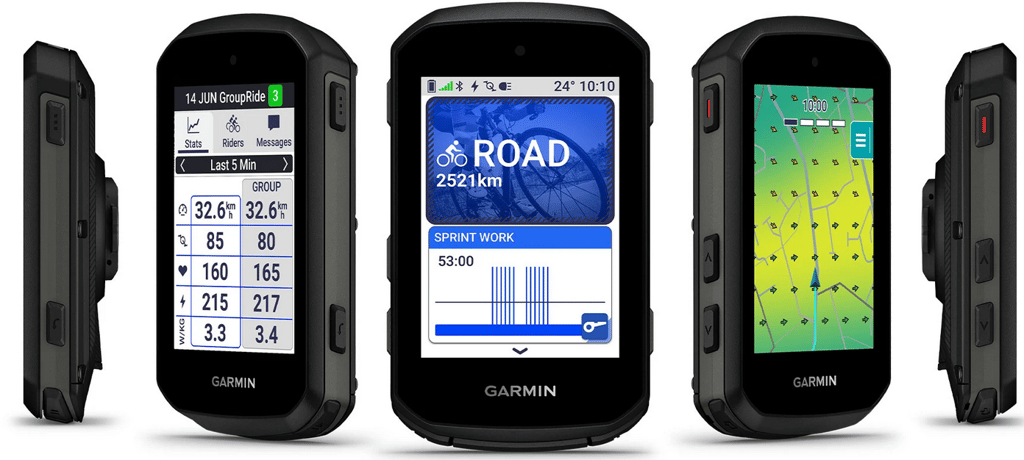
 Garmin Edge 850 and 550 – Battery Life Decimated
It’s 2025, and you’re about to buy a new bike computer. Will you seriously consider one with a battery life of “up to 12 hours”? I wouldn’t.
Sure, Garmin tends to be conservative with its claims, but your battery performance will degrade over the next three or more years that you own it.
Will you be persuaded to upgrade in 2-3 years because of an unusable battery life?
Garmin also offers you an “up to 36 hours” battery life in battery saver mode, but we all know we never want to use those modes.
Then there is the rather odd shape. The new shape is the same as on the Edge 1050. I admit to disliking it at first, but it grew on me.
Garmin has more features than a cat has excuses to ignore you. Is that your thing? Maybe the two key downsides are offset by an awesome screen?
Let’s take a deeper look at the issues and what’s new.
Edge 550, 850 Overview – Range and Competition
These two Edges are Garmin’s mid-sized bike computers. Not mid-range, mid-size. Edge 1050 is the larger version, but all three are at the top-end of what Garmin offers.
Edge 850 has a touchscreen interface, and Edge 550 is button-only. Both get a slight discount on the Edge 1050 because of the smaller size, hence smaller battery, and the latter also because of its lack of a touchscreen.
Garmin has cheaper and smaller bike computers like the Edge MTB and Edge 130+, which are perfectly fine, but you’re here because you want a top-end bike computer.
Credible, direct competition is somewhat limited.
- Edge 550 – competes with Wahoo Bolt 3. Also, it competes with the Edge 540 that preceded it.
- Edge 850 – competes with Hammerhead Karoo 3, Wahoo Roam 3 and older Edge 840.
- Edge 1050 – competes with Wahoo ACE (ACE is much bigger)
I’ll cut to the chase: Edge 1050 wins and Bolt 3 wins in their respective category. The touchscreen category is a closer-run affair, with all being sensible calls for different rider needs. I’ll come back to this later.
Edge 550, 850 – Time to kill the battery
One pervading criticism of Garmin devices is that the company scrimps and saves on the processor. Not so this time around. The newer, faster processor delivers a good in-ride experience. However, it also consumes a bit more juice as a result.
Similarly, Garmin has probably boosted its GNSS chip to the latest from Synaptics. A formidable, market-leading choice for GPS accuracy and 5Hz recording frequency. Whilst the latter will decimate the battery further, you probably won’t use it much, and you might be surprised to learn that there might even be a small saving from Synaptic’s newest, power-efficient generation of GPS chip.
Garmin’s new high frequency precision recording – what 5Hz recording means for sports
Yes. The power problem comes from the display.
Garmin’s older Memory-in-Pixel (MIP) displays are power-efficient. There is probably even a newer generation of MIP technology that could have been used as an alternative. Still, the company has opted for a transmissive LCD – it shares the brilliance of an AMOLED display but isn’t one.
Garmin is banking on more people liking ‘pretty’ than liking ‘battery’. That’s the gamble.
To a large degree, the ‘pretty’ call has worked on smartwatches, especially when combined with novel ways to eke out extra power savings. However, the fundamental display needs for cycling differ and are fourfold.
- Bike rides tend to be longer. They use more juice.
- Bike computers typically need a larger display, which uses more juice.
- Bike displays often need to compete with strong, direct sunlight – the brightness must be higher. Guess what? It uses more juice.
- Cyclists tend to need always-on displays. I’m not going to say it! #JuiceEater.
The screen size is also slightly increased from 2.6 to 2.7 inches compared to the Edge 540/840. That isn’t going to help either.
We all know that Garmin has many features you can tweak, like display brightness, which will save power but at the expense of readability. Are you prepared to make this compromise with a $500 bike computer? It’s your call.
Garmin Edge 550 850 Battery Performance In Numbers
Garmin’s official battery claims are short and to the point:
Up to 12 hours (demanding use)
Up to 36 hours battery saver mode
Contrast this to Edge 840/540, which offered an excellent 26 hours for demanding use and 42-48 hours in battery saver mode. Then compare to the larger Edge 1040, which boasted 35 hours for demanding use and up to 70 hours in battery save mode.
Even the larger Edge 1050, coming in with 20 hours, is perfectly fine. Add in some battery degradation over time, and the Edge 1050 will still get everyone through a full day of cycling.
What about the competition?
Hammerhead Karoo 3: Claims 15 hours in demanding use and 30-35 hours in battery save mode. Hammerhead has worked hard to get the 15 hours, but lowering that figure to dangerous daily levels in real-life usage, with a tad too high brightness.
Wahoo Roam 3 claims up to 20-25 hours; you can get that performance. However, like Karoo, it’s easy to burn through its battery more quickly if you’re not careful. I use the Roam 3 a lot, and its battery life has never gotten down to 12 hours, which is now the best that Edge has to offer.
In short, the Edge battery life is too low for 2025’s cycling needs. It’s expensive and risks spoiling your ride and forcing you to deal with the hassle you don’t need.

Garmin Edge 550 850 – a look on the Bright Side
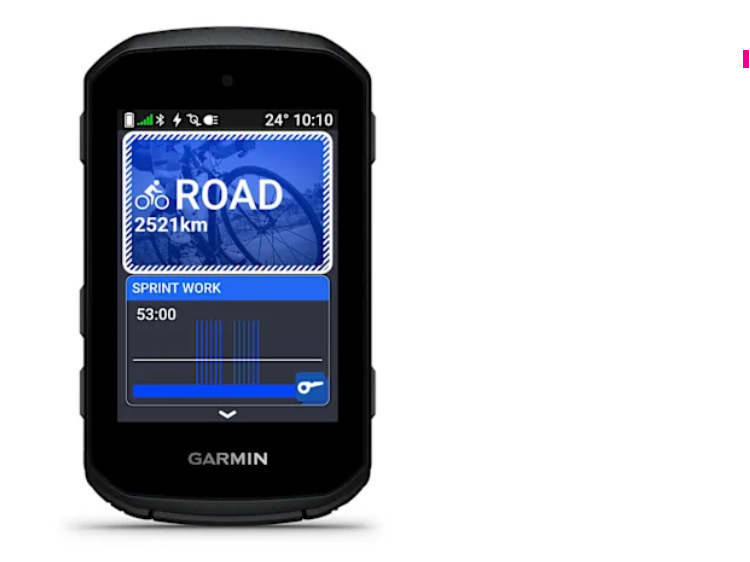
Look, the new transflective LCDs do have an excellent image. Maybe even too good. More colours, brilliancy and vibrancy. Do you really need that?
Maybe you do.
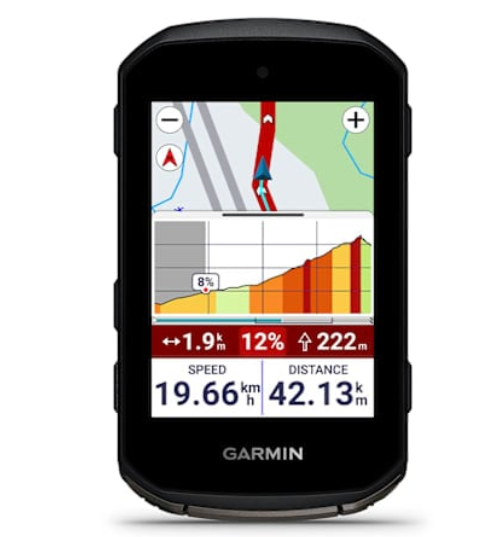
If you ride in bright sunlight or do lots of navigation and want a superior map-view, go for it. Fill your boots. If you do relatively short rides and remember to keep your Garmin topped up, you will wonder what all the fuss is about. You will be golden. You will love the superb display. Go for it.
Garmin Edge 550 850 – every silver lining has a cloud
Let me sow some more seeds of doubt.
Recchargeable batteries only have a certain number of charge cycles. Let’s say charging from zero to hero (100%) is a charge cycle. If you have a battery-eating device, you use those charge cycles more frequently than someone with the same battery capacity in a different, more power-efficient device.
Battery degradation is one strategy that Apple probably uses to get its Watch owners to upgrade once the battery health hits 80%. It’s a good strategy that Garmin might be inadvertently adopting here, too. When your battery needs replacing, will you actually replace it, or will you upgrade the device? Probably the latter. At that point, you will probably not have hard feelings towards the brand, as it’s the fault of the battery; that’s what batteries do. Hmmm
Garmin – What it can do to improve battery charging & longevity – simple fixes
The second seed of doubt is range anxiety, charge anxiety or just plain old battery anxiety. You will likely have to charge your battery after every second or third ride. Will you remember to do that?
Finally, you realise your solution is to leave the battery on charge when you come home from a ride. On some level, that appears to be a good plan, right? Your battery will always be charged. However, letting your charge go below 20% or above 80% worsens the battery degradation characteristics. If Garmin had a feature that capped charging at 80% your battery would last longer. It doesn’t have that feature (Apple do this with their iPhones, plus some clever variations). I think Garmin will add this feature, just not this year.
A Battery You Can Change
As I was reminded in the comments below, Edge 550/850 now have a user-replaceable battery, providing Garmin still sells the spares in three, or so, years’ time, you will be able to change the battery.
This offers a good and welcomed solution to the degradation problem but will not help the day-to-day battery life.
Other Key considerations and new features
Check out my comprehensive Garmin Edge 1050 Review – Edge 550 and 850 get all the features of that model, plus these.
The Edge 850 gets 64GB, and the 550 gets 32GB of storage, allowing for more pre-loaded map content, a bump from previous generations. This is not super important, but Garmin is a mapping company that has previously added new map layers, such as the new weather overlays. So this extra storage adds the capabilities to support new layers now and in the future.
The faster processor is a win. Several Garmin devices from across its range have slow map rendering. This can be galling for expensive, premium-priced products when you see a $100 competitor rendering maps perfectly. Garmin is massively improved here with the new Edges.
5Hz recording is a feature first reported by this site months ago, before its eventual announcement. More frequent positional recordings per second (five) benefit high-speed usage. It primarily benefits sports like speed sailing or downhill/Enduro riding, but won’t make much difference on gently winding roads, even at 60km/h. However, if enabled, it will add precision to course points (timing gates) or even Strava segment start and finish points.
Some of the newly announced 2025 features have also been added. The new smart fuelling/hydration plans dynamically consider new factors like weather. Indeed, the power guide features have also been further tweaked to include the effects of heat and altitude on performance.
Edge 550 vs Edge 850 – More than the touchscreen
The button interface of Edge devices is extremely awkward. Garmin has improved the flow for the Edge 550, but there is a big learning curve. If you put a new Edge 550 in front of a newbie to Garmin, even after explaining the functions of the buttons, they would find it extremely difficult to do common tasks (I’ve experimented with that with family members).
Don’t buy the Edge 550.
You bag more with the Edge 850 than I’ve let on. In addition to the touchscreen, you still have buttons, as they are often helpful, and you get a built-in speaker (enabling voice commands), a digital bell (gimmick), and Garmin Pay for contactless payments for your coffee and cake stops.
Thoughts for The Future
Putting my professional hat on for a moment. This is a bonkers-conkers move by Garmin.
I hope riders heed the general advice of most independent reviews that question the battery life vs screen quality call and buy the older 840 or newer Edge 1050. They’re solid.
This is a bitter pill that Garmin asks you to swallow. However, it can do two things to sweeten the deal.
- Minor – introduce battery charging management to reduce battery longevity degradation characteristics – in simple terms, give you the option to stop charging above 80%.
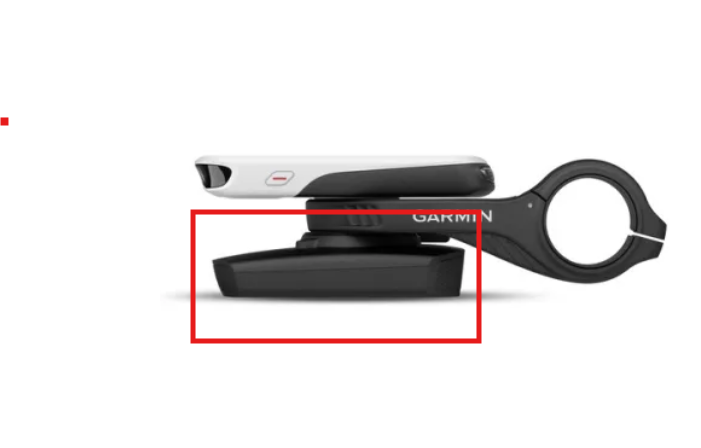
- Bundle in a heavily discounted Garmin charge power pack – both Edge 550 and 850 support it
A further possibility is firmware updates. However, I doubt these will come as Garmin already has had over a year to work on optimising the same display type on Edge 1050. Don’t hold your breath.
Let’s Talk About The Money
The price increases are startling. The 550 sees a 42% price increase and the 850 a 33% increase in the US, compared to predecessors with Edge 850 at $599, and Edge 550 at $499.
You’re paying a lot more for a slightly faster, perhaps uglier bike computer, albeit with one of the best displays on the market. You have to question that. Big time.
Most Garmin Edge 550 and 850 reviews make the same points. Try Shane.
Further Sources and Resources
- Choice of retailers: Garmin Edge 550 – other retailers or direct from Garmin
- Choice of retailers: Garmin Edge 850 – other retailers or direct from Garmin
- Recommended accessory: Garmin Charge at Amazon, other retailers or direct from Garmin
- Recommended accessory: Garmin HRM 600 at Amazon, plus select partners or direct from Garmin
- Recommended accessory: Garmin Varia RTL515 at Amazon, plus select partners or direct from Garmin
- Garmin Edge 550 850 Press Release.
- Official – Garmin Edge 850 / 550 Product Page
- Garmin Edge 850 Manual
- Garmin Edge 550 Manual
- Garmin Edge 850 – Software Updates
- Garmin Edge 550 – Software updates
- Garmin Edge 1050 Review
- Garmin Edge 840 540 Review
- Hammerhead Karoo 3 Review
- Wahoo Roam 3 Review
- Wahoo Bolt 3 Review
https://youtu.be/YMV-7fa_B0s
Last Updated on 23 February 2026 by the5krunner
Reader-Powered Content

This content is not sponsored. It’s mostly me behind the labour of love, which is this site, and I appreciate everyone who supports it.
Support the site: Follow (free, fewer ads) · Subscribe (paid, ad-free) · Buy Me A Coffee ❤️
All articles are written by real people, fact-checked, and verified for originality. See the Editorial Policy. FTC: Affiliate Disclosure — some links pay commission. As an Amazon Associate, I earn from qualifying purchases.

tfk is the founder and author of the5krunner, an independent endurance sports technology publication. With 20 years of hands-on testing of GPS watches and wearables, and competing in triathlons at an international age-group level, tfk provides in-depth expert analysis of fitness technology for serious athletes and endurance sport competitors.

I finally bought a bike computer, mainly because the amoled displays on watches are next to worthless for biking.
I bought a wahoo bolt v2. They are dirt cheap (less than 200 euro). Only drawback I found so far that it is a bit slow in rotating the screen after a corner.
I like gadgets but for sport I just need something that works. And sportgadgets have derailed into useless and flaky metrics. Which sells well, so manufacturers are happy.
And me to with a cheaper sunto race s and wahoo bolt v2 (plus non garmin bike radar, and 4iiii power meter and a stryd. So well into gadgets;)
as fr 970, edge 1050 and hrm 600 user…
I could make switch to some other brand if pool swim was good enough. Suunto can’t track my swims properly(i own race 2)
Garmin have lost the plot here. 600 bucks for a mid range bicycle computer with the worst battery life on the market.
yeah im with you
midsze, not midrange tho.
the replaceable battery alleviates the situation
When you compare battery life of 550 and 850 to Wahoo and Hammerhead running with the same screen brightness (nit wise) then Garmin wins by a long shot. You can lower the brightness when you need longer battery life.
Price increase is a downer. But battery life, for the vast majority of users, shouldn’t be an issue. Maybe it’s just that I no longer do double centuries where I’m on the bike for 10+ hours, but the battery life is fine since it doesn’t degrade significantly due to navigation or being on the map page. I remember double centuries I’d do a decade ago and have the current Edge of the time only last 6 to 7 hours because I wanted to be on the map page.
I live in the desert with bright sun and my 1050 is by far the most visible display I’ve had on the handlebars. With the 840 MIP display, every time I twist and turn on the MTB so my body is shading the device, the screen becomes invisible. The 1050 is still vibrant. 840 is better when the sun is directly on it, but the 1050 is still very readable. It never goes invisible like the 840.
The 850 seems like the perfect combination of size, functionality, and readable screen. Plus absolutely love the speaker and full set of buttons. I actually like the narrower form factor over the squatty 840.
I almost like that the battery is long enough for any ride I do, but short enough I should charge it after every ride. My AXS batteries last a bit too long where I can easily forget to charge them. Plus, for that twice a year 8 hour plus ride, I can turn down the backlight.
I’ll definitely be checking out the 850.
not quite.
yes there is the issue of super longrides which we perhaps all might do very occasionally.
but its more the range anxiety that causes daily worries. eg you are on 40%…do you charge before you go out?
agreed the visibility is good
Its also, throw the 840 in my bag and forget about charging type of deal. With 30plus hours of battery life I don’t have to worry about it. I can pull it out with like 10% and still do a long ride. Someone doing like 3 2 hour rides a week (probably most riders with a job) almost never had to charge the 840.
I really don’t understand the need to make bike computers so small. The added weight of doubling the battery size is nothing in terms of percent bike/person weight. I just bought my friends 840 from him because he got the 850. Have the 1030 plus and it is dinosaur slow compared to the 840. And yes, I still where a mips watch also, 265. I would have bought the instinct 3 solar if they hadn’t added the stupid orange color. Just make a dang all black watch garmin!
i cant ague with any of that.
I was waiting for this announcement. I figured they would likely have 1050-style screens, and figured the battery life would be worse. But for it to be THAT bad was a surprise. Went and bought an 840 the next day. Half the price, double the battery life.
same
After using for 4 months, I got fed up with Garmin 540 when in preloaded course its ClimbPro screen switched to the “sharp turn map” screen and just froze there for a minute or so twice in the final climb of my bike race. I could not navigate out of that, just stare at it…
850 is a real downer due to the battery 😔
I’m torn now between Roam 3 and Karoo 3. Taking into account that the latter one (new) can be bought around or below 400 EUR, it’s very tempting to go Karoo way. Although the battery is going to be closer to 850 and far away from 540 🙈
yep battery is still a bit of an issue on karoo. it’sa very sweet bike computer tho
I’m a usual Wahooligan (whoohoo), went from roam v2 to v3, then Karoo, then Roam, then back to karoo (yup…).
I’ve made my longest ride this saturday with the Karoo – 6h30 on the saddle, 10h45 elapsed with around 2h auto-pause, and 2h where I’ve shut down the device (it can continue the same activity). Started at 98 or 99%, ended with 56%. Screen around 10%, which more more than perfect on this cloudy day (and gravel ride, under treee cover). SO that’s acceptable.
But what TFK says, i.e the “mental charge” of “will I have enough battery” is something not to be neglected.
Maybe that will improve with using the device more often.
Then the “charging” thing…well…that’s an habit we have with phones, smartwatches…I would prefer not to add the bike computer on this, but hey…
Otherwise, that’s a really nice device, for sure. Better than a Roam v3? Can’t tell, depends on the scenario. Usability is really good.
@noname: But battery life is even worse on the Roam 3 and Karoo 3 than on the 550/850…
Worst of both worlds: runtime less than most (all?) android based competitors, yet all the slow-moving software development of super efficient bare metal embedded c++. They are clearly not setting themselves up for victory.
They really need a “solar” option. I would not even care if it did not actually recharge a tiny bit from the sun, just something that does not multiply its energy hunger in fair weather.
Yes, the “solar” Fenix 8 probably did not launch as well as the shiny ones. But the subset of people who value runtime more than “shiny new” has little overlap with the type of person who gets a kick out of buying on launch day, just “because new”. But long term success does not come from alienating those who like what you’re actually good at.
remember there is no solar amoled tech (yet)
You suggest a battery pack for this scenario but surely most people would be better off with a 1050, which is both lighter than an 850 plus a battery pack and about the same price? A battery pack that included a light (like the Ravemen) would be another matter and perhaps you’ve got some intel on that being on Garmin’s roadmap as the battery pack is ancient, lacks usb-c and has very poor watt hours per gram?
Also, whilst battery degradation is an issue, perhaps your cynicism has got the better of you here? 😉 Garmin seem to have addressed that with what looks like a user-serviceable battery.
Personally, however, I was waiting for the 850 to come out but now I’m disappointed.
I can’t see myself upgrading from my excellent 840, which happily got me through Chase the Sun Italy this year – even though I was much slower due to the heat and mountains than in the UK. The 850 doesn’t seem suitable for an event like this or anything beyond typical club and training rides. I’d previously ruled out the 1050 though due to the lack of side buttons for riding in the winter with gloves.
thank you for the reminder about the serviceable battery. thatjust affects the fix/upgrade decision a few years down the line. a welcomed move of course.
yeah 1050 is cool. some people will want something cheaper and with a smaller screen.
Ravemen is a good option. i use mine on most rides but have never had to resort to its charging abilities. i suspect when i get my usb cable from the saddle bag it will have rusted over and be useless!!
Garmin Charge is old. it would make sense to add a light. no idea if garmin will do it as i dont think they could get away with a premium price for it. maybe tho.
garmin could easily do it.
I guess maybe most people with 1050 budgets will also have Di2 Ultegra or similar with the buttons on top of the shifters to change screens
You, DCR and other reviewers were the ones screaming for bright and colorful displays in everything even though we don’t really need them in watches and bike computers and now you’re surprised that Garmin, once famous for battery life, is becoming an Apple copycat. I hate it and I’m genuinely losing interest in these devices as they’ve stopped being outdoor tools and are becoming flashy, shiny toys. Soon a freaking phone will have a longer battery life than this shit.
guilty as charged!!
toys?…yes!
I just don’t get the wailing and gnashing of teeth over the battery issue. Aside from charging up after 2-3 rides instead of 5-6 (oh the agony!), the only people this will affect are the small number who fall into the following slice of a Venn diagram – those who:
a) spend more than 12 hours in the saddle at a stretch (or 20 hours if you bump the brightness down to a level that still exceeds the visibility of an 840 at 100%); AND
b) don’t have supplementary power for their lights and other devices anyway.
That’s a small percentage if the market. For me, it’s a no brainer – the visibility and form factor far outweigh the battery life considerations, and the fact the battery is user-serviceable makes any worry about degradation of the battery over time go away.
range anxiety froma partial chrage is an issue.
simply:that will occur more often on a device with a shorter battery life. maybe you have the routine to handle that maybe not. yu can effectively make the same arguments for an apple watch with a short battery life (which i do)
I have the 850. Did a 3h indoor ride this week. Brightness set to 0%. Screen is still readable with low light and just fine indoor. Had my powermeter and HR and speed sensor connected. GPS was off.
3h = 6% battery drop (97-91%).
Maybe it’s not right. But I guess I have plenty of battery – at least indoor. I actually turned up brightness to 10% due to so small concumption. Maybe it’ much worse outside? Can’t tell since I moved Indoor for now. GP-Lama said 30% is readable outside…
your indoor setup removes the 2 biggest battery eaters: screen brightness and GPS sensor & processing.
I’m sure the 850 idling in a draw also showcases some impressive battery stats. But is it relevant?
Not sure an indoor ride with 0% brightness indicates much.
I wonder if the replaceable batteries are driven by European right-to-repair legislation, but Garmin are being a bit cynical and nerfing the performance of the replaceable battery to induce people to feel that they should complain about right-to-repair resulting in worse products. This is then a win for Garmin if the legislation is walked back on.
definitely driven by the legislation
has garmin reacted how you say? i hope not and don’t think so
And solar amoled would not be worthwhile at all, seconds of extra runtime per hour in the sun.
What I meant (but apparently forgot to write) is a MIP variant that’s marketed as solar, like they did on the Fenix 8: almost the entire runtime difference comes from the screen tech, not from photovoltaics (less consumption, not more energy to burn), but it’s branded “solar”, not “dull screen”, which really is the better message even if it’s a bit inaccurate.
When you lower the brightness to the same level as competitors you will get 20h of battery.
Actually AMOLED Solar exists, but the production complications and costs are challenging.
The real issue is that solar provides little or no meaningful benefit for devices with these screen technologies that have such high battery burn rates. (BTW, x50 series is not AMOLED and x30/x40 were not MIP.)
“Still, the company has opted for a transmissive LCD – it shares the brilliance of an AMOLED display but isn’t one.” 🙂
where does amoled-solar exist on a smartwatch?
So long nuance hello click bait, how many rides does the average person do over 12 hours? I have an ancient 810 which is good for 7 hours. Most my rides are 4 hours. On adventure rides this goes up to 14 but on those I’m carrying a battery pack etc for phone and camping so plug it in. I can buy a battery for peanuts, I’d much rather they give me the best kit they can
is your battery always fully charged?
if so – you will degrade it more quickly
if not – read the article #rangeanxiety is a thing
if it’s ok for you…buy it!
re clickbait: You do realise that google rewards engagement more than clicks? thank you for the engagement (and the click)
As an 56 years old guy who needs reading glasses I upgraded from the 840 to 850. The display is much much better. The 25 year old me with eagle eyes would not have cared, but the new display is a big win for my older eyes. Suddenly I can read the white on red warnings. And when switching from shade to sunshine everything is much better readable. Maps are clearer. OK this is the Netherlands and the auto brightness was at 10%. Still need more testing, but I haven’t noticed a big battery hit, but then again I ride 2 hours, not 7.
And the speaker is brilliant. Connected the bell to a DI2 button on the shifter. Cool.
question makes sense though seeing anti-consumer practices and malicious compliance of US corporations…
@the5krunner I’m one of of the numerous people that eyed the 1050 when it came out, liked the screen brightness, vibrancy and size (my eyesight is not as razor sharp as it used to be 🙁 ), was put off by the price, somewhat by the size and the lack of physical buttons. Waited for the 850 that I envisioned being a better form factor. Like the screen and physical buttons, find the battery to be an issue. the 1050 is now less expensive. I’m stuck in the middle. Could you do a comparison of both devices, especially legibility on screen when using maps + a few essential metrics. Thanks in advance !
here is a comparison: https://tinyurl.com/yc2a5b8a
1050 is good. lower prices would make it my choice of the 3.
i was very complimentry about the 1050: https://the5krunner.com/2024/11/21/garmin-edge-1050-review/
but…no buttons