Coros to take on Whoop in 2026: The Year of the Whoop Strap Competitor
The surprise of 2026 will be that Coros launches a direct competitor to Whoop, the current leader in the display-free recovery tracker segment.
Perhaps less surprising, and already emerging from CES 2026 launches, is that several more startups will also try their hand at the space. Whoop’s dominance in this growing, profitable space has been evident for 3–5 years. It’s taken companies a year or two to react and then a few more years to get their product plans in place. All those delays are now bearing fruit with the released products. But the same delays let Whoop pull ahead, technically and reputationally; worse still for wannabes, Whoop has patents and a team of lawyers, and is not afraid to use them.
Let’s take a step back to understand what exactly makes Whoop successful. After all, to succeed, a competitor will have to be better than Whoop in more ways than just price.
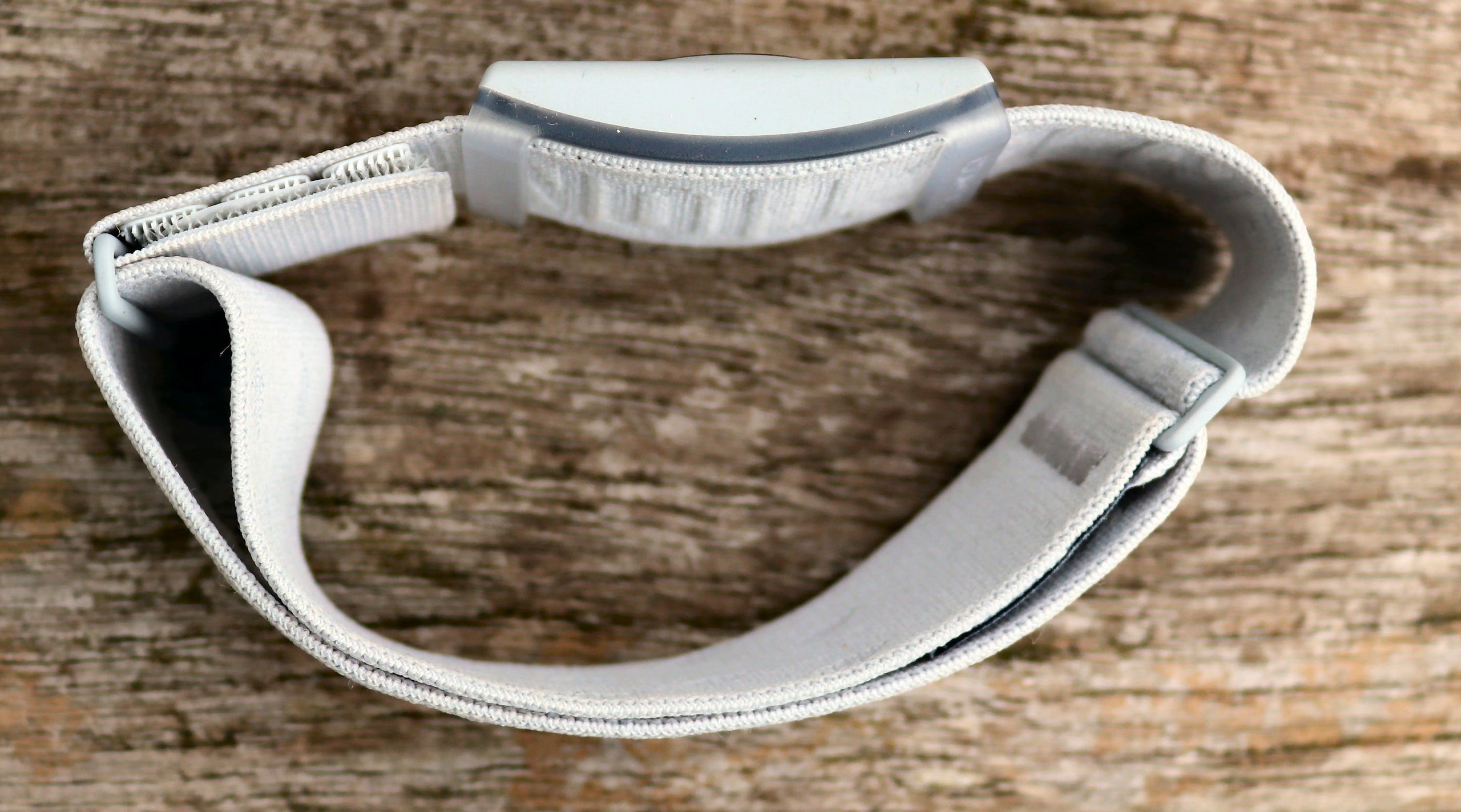
What Has Made Whoop Different?
First up, the product category we are talking about is a display-free band with advanced sensors and multi-week battery life. The app side of the offering is sports and wellness insights and coaching.
In some respects, Whoop’s current position differs from previous years, when its sensors were superior; e.g., its battery life differentiated it from simple broadcasting HR armbands with 15-hour batteries. Now, multi-week battery life is less of a differentiator, and neither are its other sensor capabilities, which have been replicated by the competition or can be easily replicated. The exception to that rule is blood pressure trend info on its Whoop MG strap – it’s hard to get an excellent hypertension algorithm (Whoop uses IP from Aktiia/Hilo, the only company with a blood pressure medical-grade strap).
The subscription nature of Whoop makes it a little different, probably negatively for buyers due to the higher cost, but positively for the business’s financial stability and willingness to invest in R&D.
So, as you can guess, the real differentiators lie in the app. There are multiple points of added value here from Whoop, including: superior usability, good aesthetics, advanced, novel first- and third-party algorithms, and unique capabilities such as VO2max without pace/power, lifestyle logging, and blood panel biomarker correlations.
In fact, the nature and features of Whoop’s app are, in many ways, more similar to those of smart rings than to those of smartwatches. Probably necessarily so, as neither product category has a display to worry about.
Where once Whoop’s app clearly stood out as different, over the last 12–18 months, its competitors have notably started to chip away at its uniqueness; Garmin Lifestyle Logging being a recent example that springs to mind and the leaked Garmin CIRQA a sign that Garmin is going all-in in this market too.
2026 – Whoop’s Differentiators Going Forward
Looking ahead, we can see that Garmin is clearly piecing together the Whoop jigsaw inside Garmin Connect. I’d guess Garmin will probably get the techy bits in place to match Whoop this year. However, from recent experience, Garmin appears incapable of changing the usability and experience of the Connect app to get anywhere close to rivalling Whoop’s app.
We saw from Polar’s Whoop-wannabe that the product can be physically similar, have some issues, but ultimately, it’s the app experience that people trade off for the lower price. Polar’s app does not rival the Whoop experience.
Sensibly, Amazfit has pseudo-copied (read “copied”) many aspects of the Whoop app. It’s aware of what needs to be done to compete.
Other differentiators will also become less distinct. The likes of Ultrahuman are already offering blood panel biomarker scanning, and other wearables like Fourth Frontier X2 produce records (or integrate with) for your doctor consultations. Whoop’s ECG was a catch-up feature, and its blood pressure trend will be copied more quickly now that the FDA has significantly softened its stance on such features and the claims made about them.
2026 Who will make a next-gen Whoop competitor band?
We almost certainly will not see a Whoop 6.0 until 2028. Here is my assessment of the likelihood that key competitors will more deeply take on the Whoop space in the iterim.
Garmin (90%) are very likely to finally release a Whoop-like product in 2026. As mentioned earlier, its hardware will compare favourably to Whoop on a feature checklist (probably the same or better). Still, it will fall short on factors not on the checklist, including usability and AI insights.
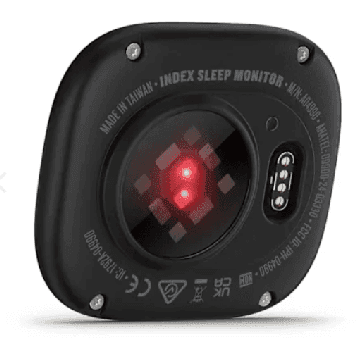
Polar (40%) are unlikely to produce a next-gen Loop. The 2025 model is here for a couple more years. They will soon be showing off a new-look FLOW app, which I’ll cover here (no news yet), but face issues in the US market where Whoop is suing them for trade dress infringement (passing off). There’s a chance Polar will lose that, in which case they would have to withdraw the Loop from the US market until a next-gen replacement is available – that might be bad for them financially in the short term but force them to iterate the Loop a year earlier than they had planned.
Amazfit (50%) probably has the closest product to Whoop, including the app capabilities. However, because they’re called Amazfit and are less widely known as a budget brand, they get less media coverage and fly significantly below the radar. I suspect that will change for them this year. Another positive aspect of Amazfit is its ability to iterate on watch models quickly. Even though the Helio Strap was launched in June 2025, it’s not beyond the realms of possibility that the company will address the hardware issues in the summer of 2026 with a next-gen product. Why? A: It has an incentive; the first one did very well; the tech is not complex; it might smell blood!
Suunto (20%) probably should have a crack at this market, but it seems focused on watches and the software ecosystem. The new owner seems to be cranking out some decent watches, and the app has dramatically improved in recent years. More importantly, its 3rd-party app ecosystem is already pretty good and continues to improve. It’s not as good as Garmin Connect IQ, but it’s probably the 2nd-best in the sports watch market; i.e., Suunto is probably not focused on HRM hardware.
Coros (70%), which brings us finally to Coros. Coros is in a great tactical market position, but it seems strategically constrained by its product choices. With the exception of size variants, it’s filled the obvious slots in the sports watch market (and been innovative about it) — climbing watch, fishing watch, running watch, ultra-running watch, Instinct-Casio-like watch, and so on. It has a traditional armband Heart Rate Monitor from July 2023 and its first bike computer (DURA). Having iterated a surprisingly high number of its range in 2025, none of them will be integrated again in 2026 (Vertix remains). One obvious way forward is only to make a significantly improved bike computer. Its first effort, Dura, was a well-intentioned failure in my eyes, and even if the next gen is better, it just won’t be as capable as a Garmin Edge or as slick to use as Wahoo ELEMNT or as awesome looking as Hammerhead Karoo 3— there is virtually no space in the market for a Coros bike computer other than as a niche enduro off-grid navigation device (which is impossible for it to make without the on device map intelligence it currently lacks).
Oura/Ultrahuman (5%) — The smart ring companies have strong app ecosystems that could relatively easily be modified to support own-branded HRM arm straps. I’ve heard no rumours of this. I doubt it will happen.
Apple (0%) — The nature of a Whoop band is too focused and straightforward; it would not benefit from integration into the broader Apple ecosystem. If there were an Apple-paid-for Health subscription and if the Apple Watch didn’t exist, it would be a different story.
Samsung/Google (2%) — Like Apple, there are too many more important fish to fry.
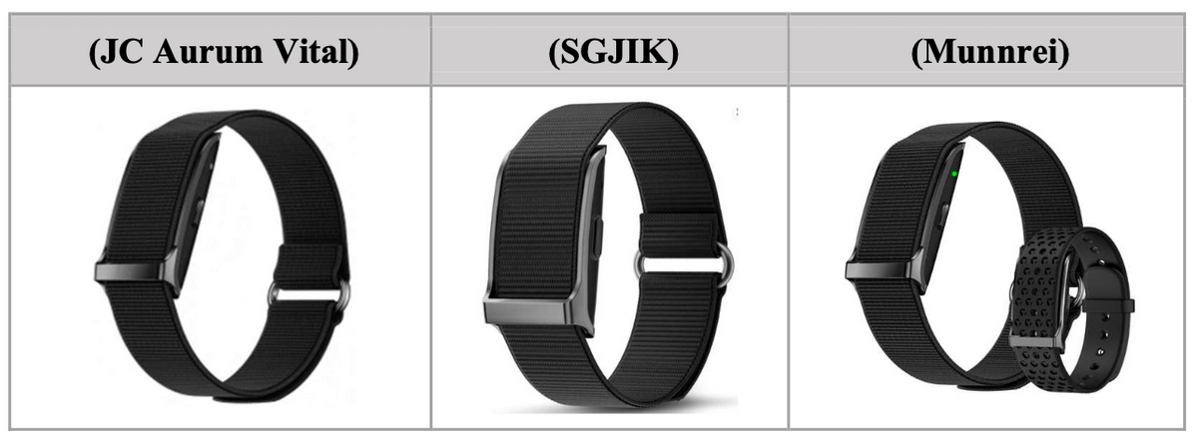
Other New Entrants (100%). The cheaper end of the competition is already here and making its presence known. Luna Band and Speediance Strap were both headlines at CES 2026. In 2025, Whoop took legal action against Serenity Group, Inc. (d/b/a Aurora) and Shenzhen Lexqi Electronic Technology Co., Ltd., after they attempted to release products that looked similar to theirs. More cheap knock-offs will follow; I suspect none will be as technically sound as what the major brands can produce, and none will have a decent set of algorithms or a usable app, but they’ll be cheap.
Conclusion
Competition in the Whoop-space notably heated up in 2025. This trend will definitely continue in 2026.
New entrants are highly unlikely to mount any meaningful commercial challenge, so the interest will lie in watching which existing wearable companies tackle Whoop and exactly how they choose to do it.
The smart ring companies have fewer app issues and likely have all the requisite internal skills and algorithms to compete with Whoop’s app offering. However, tooling up or subcontracting manufacturing for a wholly new product class might be seen as an unwelcome distraction from their core growth trajectory.
Last Updated on 27 January 2026 by the5krunner
Reader-Powered Content

This content is not sponsored. It’s mostly me behind the labour of love, which is this site, and I appreciate everyone who supports it.
Support the site: Follow (free, fewer ads) · Subscribe (paid, ad-free) · Buy Me A Coffee ❤️
All articles are written by real people, fact-checked, and verified for originality. See the Editorial Policy. FTC: Affiliate Disclosure — some links pay commission. As an Amazon Associate, I earn from qualifying purchases.
tfk is the founder and author of the5krunner, an independent endurance sports technology publication. With 20 years of hands-on testing of GPS watches and wearables, and competing in triathlons at an international age-group level, tfk provides in-depth expert analysis of fitness technology for serious athletes and endurance sport competitors.

I recently tried the Amazfit Hello strap for a couple of months.
The sleep algorithm is a joke when comparing to my Oura ring. The automatic workout detection is unreliable and caloric expenditure overshoots at least 50-70% or is doubling my power meter readings.
Heart rate accuracy is good but HRV is another story.
Of course this is my N=1 but if Amazfit is just showing you random numbers based on inaccurate data what’s the point ?
indeed so.
hr , gps and hrv accuracy are pretty much fundamental inputs to all of the myriad of algorithms the various brands use.
the wrist remain a bad place to measure hr an hrv, as ive said here for many years.
the finger (ring) is actually a good place for hr/hrv accuracy at rest (but awful during workouts)