Eight Sleep reaches $1.5bn valuation — and sets its sights beyond the bedroom
Eight Sleep, the New York-based sleep technology company, has raised $50 million in a strategic funding round led by Tether Investments, valuing it at $1.5 billion and pushing its total capital raised to more than $310 million.
The deal, announced on 4 March 2026, gives Eight Sleep unicorn status and marks the second substantial funding round in seven months. In August 2025, the company closed a $100 million round from HSG, Valour Equity Partners, Founders Fund, and Y Combinator. Its Series C in 2021 valued it at $500 million.
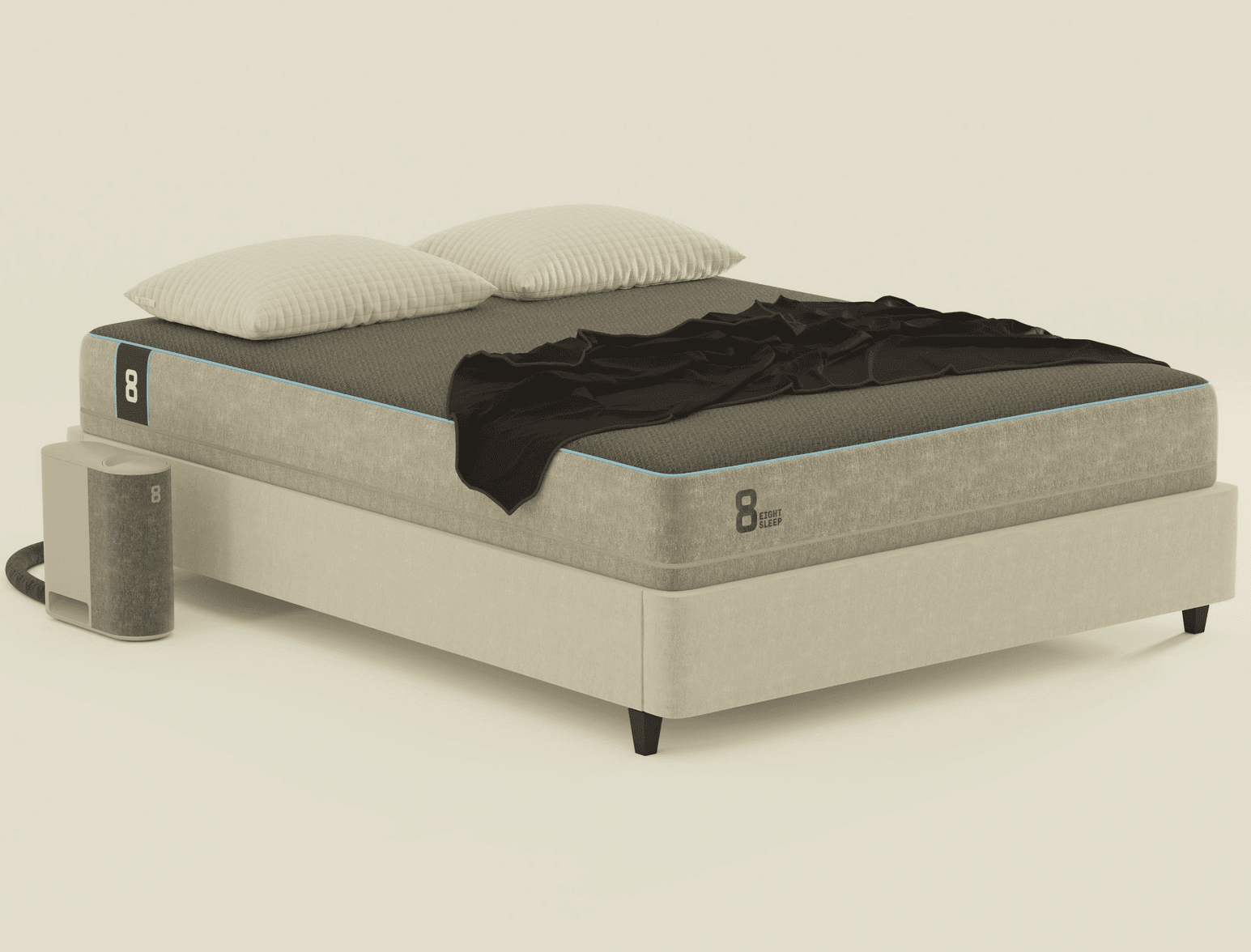
Eight Sleep said it reached free cash flow positivity in 2025 and plans to use the new funding for new products, global expansion, and clinical validation. The company’s Pod — a temperature-regulating mattress cover equipped with embedded sensors — currently ships to more than 34 countries.
An unlikely backer
Tether is best known as the issuer of USDT, the most widely traded stablecoin by volume. The Eight Sleep investment extends a programme in which Tether is deploying more than $10 billion in annual profits across energy, payments, artificial intelligence, and health technology.
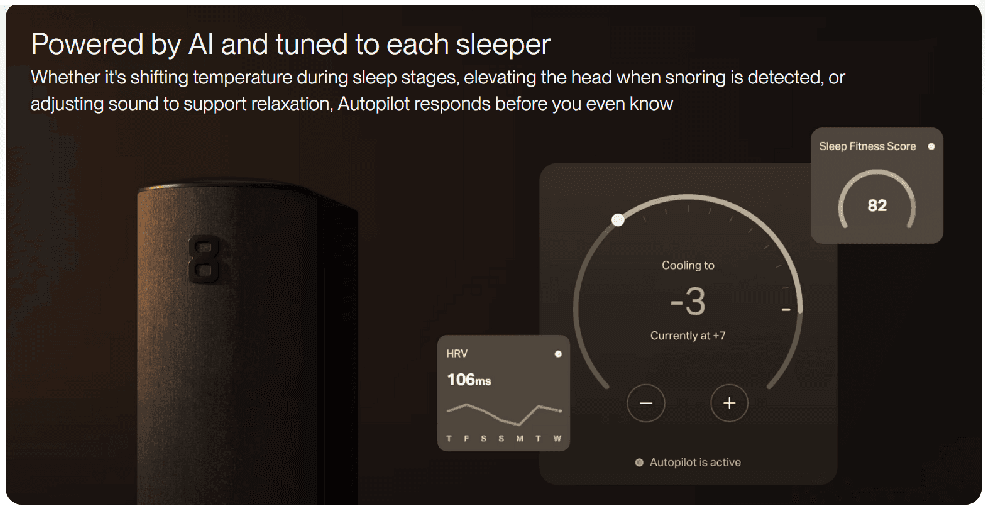
The partnership has both technical and financial dimensions. Eight Sleep intends to build new AI features using Tether’s QVAC architecture, a computing framework that processes data locally on the device rather than transmitting it to centralised cloud servers. The arrangement is designed to address privacy concerns that have accompanied the growth of biometric consumer hardware.
Eight Sleep has the potential to define the future of health tech by building intelligence that learns, scales, and evolves directly with humankind [P Ardoino, CEO Tether]
From sleep to preventive health
Eight Sleep has trained its models on more than one billion hours of sleep data gathered from customers across 35 countries. The company says it is now developing a predictive AI agent that will simulate the effects of variables — exercise timing, meal composition, room temperature, stress — and adjust the sleep environment before disruption occurs, rather than responding to it after the fact.
Matteo Franceschetti, co-founder and chief executive, said the investment would allow the company to take its health intelligence “beyond the bedroom and into every dimension of personal health.” The company has not specified the form factors it intends to pursue outside the bed. However, the statement signals an intention to compete in the broader personal health monitoring market alongside Oura, Apple, and Whoop.
In 2025, the company launched three products — the Pod 5, Pod Pillow Cover, and Thermal Blanket — and completed its most extensive clinical validation programme to date. Two peer-reviewed studies found that the Pod reduces menopausal hot flashes by 56% and restores the body’s circadian temperature rhythm during sleep, improving cardiovascular recovery markers.
Regulatory ambitions
In August 2025, the company filed two applications with the US Food and Drug Administration for medical device classifications — one for sleep apnea detection and one for menopause. Clearance in either category would allow Eight Sleep to position the Pod as a regulated medical device, with the commercial and potential reimbursement consequences that distinction carries.
The company faces established competition in both directions: consumer wellness hardware from Oura and Apple, and regulated sleep medicine from ResMed. Eight Sleep’s stated differentiator is that its biometric sensors are embedded in the bed surface, requiring no wearable device and relying on passive, continuous monitoring. Whether that advantage is durable as the company moves into waking-hours health monitoring remains to be tested.
Further Thoughts
There are several unusual and interesting elements to this story.
Tether’s investment is its first in sleep/health hardware. As part of the deal, Eight Sleep will build its next-generation AI features using Tether’s QVAC architecture — an on-device, privacy-first computing framework that keeps all biometric data local.
The announcement signals an expansion “beyond the bedroom into every dimension of personal health,” but does not mention new wearable form factors such as rings or bands (despite some media reports suggesting it does). Deeper or different integrations with existing ecosystems (nutrition, activity trackers, female-health platforms) are far more likely.
Pursuing rigorous clinical validation and FDA clearance for sleep-apnea detection and menopause features is a logical, high-value move for a premium brand that already dominates contact-free sleep tracking among high-net-worth customers. It already has good internal, original research capabilities.
Having used Eight Sleep for many years and loved the product, I remain unconvinced it can deliver the explosive commercial growth seen by cheaper wearables. At its price point, it faces very different marketing challenges, so the company has wisely chosen to double down on medical-grade validation, superior wellness metrics, and privacy-first trust to deepen penetration in the high-end demographic rather than appeal to new demographics.

Last Updated on 5 March 2026 by the5krunner
Reader-Powered Content

This content is not sponsored. It’s mostly me behind the labour of love, which is this site, and I appreciate everyone who supports it.
Support the site: Follow (free, fewer ads) · Subscribe (paid, ad-free) · Buy Me A Coffee ❤️
All articles are written by real people, fact-checked, and verified for originality. See the Editorial Policy. FTC: Affiliate Disclosure — some links pay commission. As an Amazon Associate, I earn from qualifying purchases.
tfk is the founder and author of the5krunner, an independent endurance sports technology publication. With 20 years of hands-on testing of GPS watches and wearables, and competing in triathlons at an international age-group level, tfk provides in-depth expert analysis of fitness technology for serious athletes and endurance sport competitors.
