Fitbit’s Screenless Air Band vs Whoop in 2026: The Surprises Are in the App
Paraphrasing Clinton, we should look to the existing App, not the teased Fitbit band, to see what Whoop has to worry about.
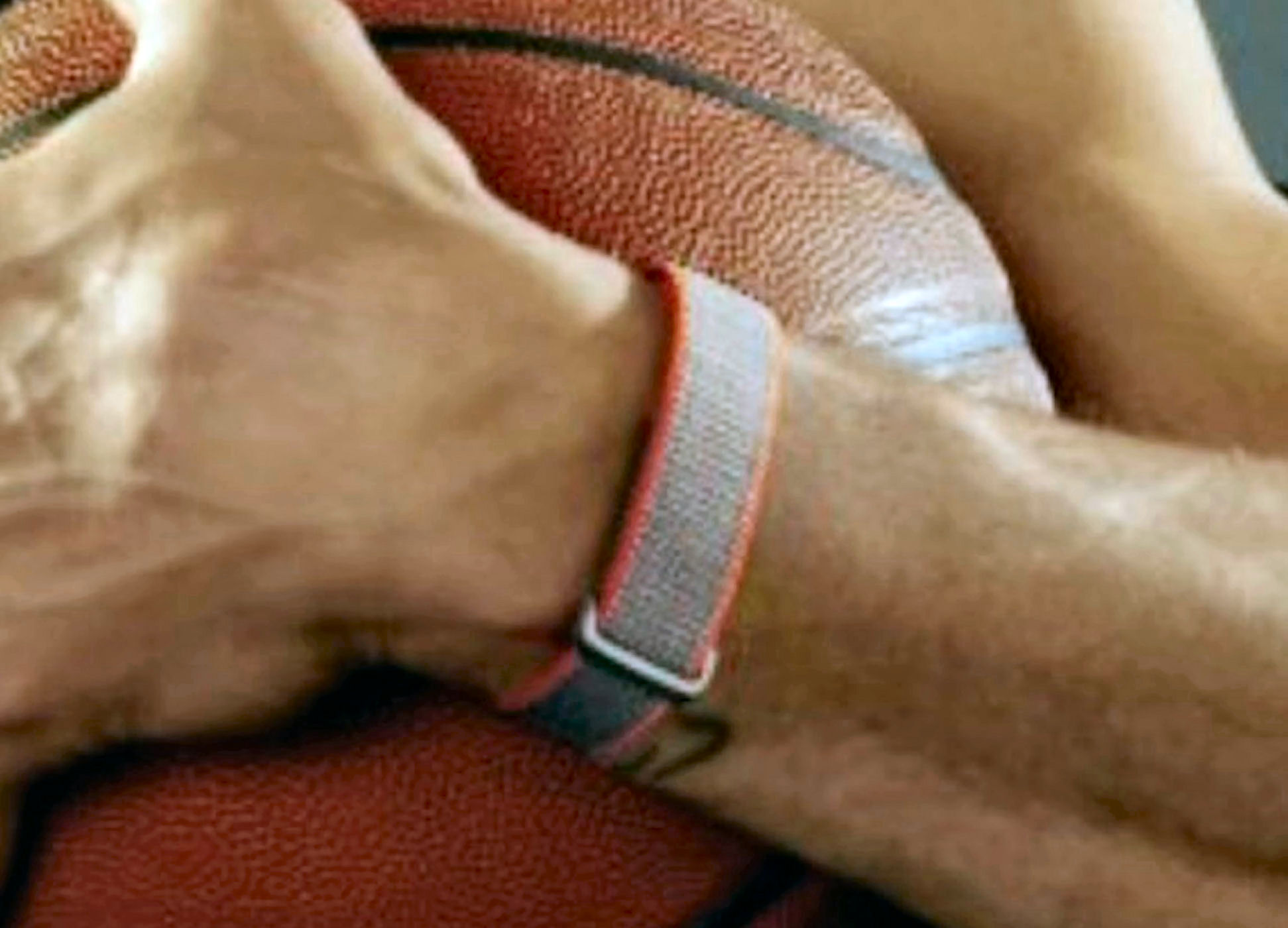
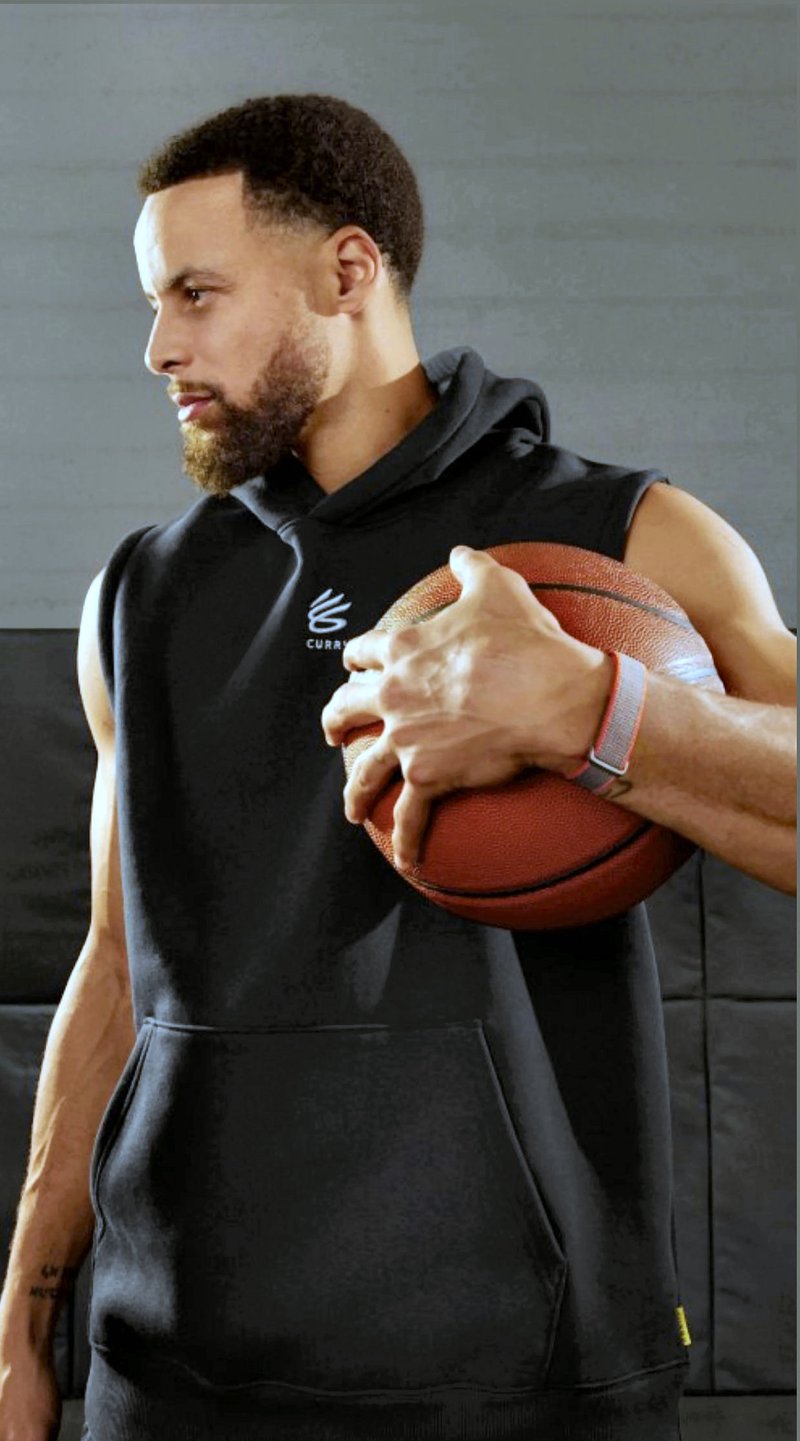
Steph Curry appeared in a Google-sponsored Instagram video on 31 March 2026, wearing a grey-and-orange woven wristband with no visible screen, which was an official tease that Google’s Fitbit rival to Whoop is imminent.
A band is a band. Sensor tech has almost plateaued, and Fitbit’s band will almost certainly carry a standard sensor array: optical heart rate, accelerometer, and skin temperature.
A more instructive angle is to examine the recent evolution of Google’s Fitbit app. That is what will tell us about the new band’s features rather than its relatively predictable specs. More than that, it’s the app that will determine success as it is the app where Whoop leads the field – Polar LOOP – Garmin CIRQA (likely) and Amazfit Helio.
What we know about the screenless band so far
Bloomberg reported that Google is developing a screenless fitness band under the Fitbit brand for release later in 2026. The device will include basic features out of the box, with more advanced capabilities locked behind a Fitbit Premium app subscription. Unlike Whoop’s subscription-only model, Google will charge for the hardware upfront.
No sensor specifications, pricing, or launch date have been confirmed. The design visible on Curry’s wrist is a grey woven fabric band with orange lining and a metal clasp.
The Fitbit app is the real story here.
Hardware sensors in this category have plateaued. Heart rate, HRV, skin temperature, SpO2, and accelerometry are available across every serious player in the wrist-wearables market at broadly similar levels of accuracy.
Whoop’s competitive advantage is its software: the way its app translates and presents continuous biometric data into strain, recovery, and AI coaching insight that athletes find actionable and super-easy to use.
Google has already built the Fitbit app as the primary product, with hardware serving as the sensor layer that supplies it with data. Since October 2025, every significant Fitbit development has been software-related, and the pace of that development gives a clear indication of what the screenless band will deliver at launch.
The Fitbit app timeline: two years of building toward this moment
The following has been added or improved in the Fitbit app, confirmed against primary sources.
- September 2023: Three-tab redesign launched globally. Today, Coach and You tabs replace the previous four-tab layout. Nutrition logging is present from launch.
- October 2023: Gemini AI integration for Fitbit was announced at the Pixel 8 launch event. No features live at this stage.
- March 2024: Personal Health LLM announced at Google’s The Checkup event. Fitbit Labs was introduced as an experimental section within the app for Premium users.
- October 2024: Fitbit Labs opens. Insight Explorer launches: a conversational AI tool that allows natural-language queries against personal health data and supports chart generation. Available to US Android Premium users only; waitlist.
- March 2025: Insight Explorer removed from the app. Fitbit Labs closes.
- August 2025: Personal health coach announced at the Made by Google event. Sign-up portal opens. Four-tab layout previewed: Today, Fitness, Sleep, Health.
- October 2025: Personal health coach enters public preview for US Android Premium users. Features at launch: Ask Coach conversational button on every screen, personalised fitness plans, multi-week training programmes, sleep analysis with demographic comparisons, weekly cardio load tracking, and health and wellness Q&A.
- November 2025: Material 3 Expressive redesign applied to the app within the public preview.
- February 2026: Preview expands to iOS users in the US and to Android and iOS users in the UK, Canada, Australia, New Zealand, and Singapore. Access remains restricted to Premium subscribers.
- March 2026: Sleep staging accuracy improved by 15% for preview users, with better detection of naps and distinction between relaxation and sleep. Redesigned Sleep Score announced, focused on actionable recovery components. Medical records linking via b.well and CLEAR announced for April rollout for US users, covering lab results, medications, and visit history. Integration of the continuous glucose monitor via Health Connect is announced for April 2026.
- 31 March 2026: Public preview opens to free users for basic health, fitness, and sleep tracking. Three feature categories added: cycle and symptom logging for all users, with personalised cycle insights for Premium; mood logging and mindfulness tracking for all users, with a Resilience score replacing the Stress Management metric for Premium; and meal logging, calorie targets, and water intake tracking for all users, with personalised macronutrient ranges for Premium.
Fitbit app vs Whoop – similar visions on health data
Whoop’s coaching centres on recovery: strain, sleep, and readiness interpreted through a performance lens, and the platform has been expanding aggressively. Whoop Advanced Labs, launched in September 2025, allows members to upload existing bloodwork or purchase a curated 65-biomarker panel via Quest Diagnostics, with results integrated into the AI coaching layer. Glucose, HbA1c, cholesterol, cortisol, and hormonal markers are all included. It’s a performance platform now, but Whoop clearly is moving towards being a Health platform – as evidenced by its valuation.
The Fitbit app approaches the same territory from a different angle. Whilst Whoop Coach’s use of AI is good, Google’s Gemini offers the potential to be better.
Its Gemini-powered personal health coach covers sleep recovery, cycle health, mental wellbeing, and nutrition. From April 2026, it adds medical records linking via b.well and CLEAR, giving the coach access to lab results, medications, and visit history across providers. CGM integration via Health Connect arrives at the same time, allowing glucose response data to feed directly into coaching queries.
The two platforms are converging on the same vision. Whoop moved first on structured bloodwork. Fitbit’s broader coverage of cycle health, mental well-being, nutrition, and medication history represents a wider wellness canvas. On CGM, Fitbit’s Health Connect integration arrives imminently while Whoop’s remains on its public roadmap without a confirmed launch date.
What stays behind the paywall and what is free
The free tier includes the redesigned app interface, basic health and fitness tracking, manual cycle and mood logging, standard nutrition and water logging, and baseline sleep data. That’s probably enough for anyone wanting an entry-level Whoop alternative when they pay upfront for Fitbit’s band.
Fitbit Premium at £79.99 per year includes an AI personal health coach, Ask Coach conversational interactions, custom fitness plans, Resilience analytics, personalised cycle insights, advanced macronutrient ranges, and the daily readiness score. Apart from the need to pay for the readiness score, that package is fair game to fall under a subscription umbrella.
The direction of travel: what comes next
The three feature categories added on 31 March 2026 share a common characteristic: cycle health, mental well-being, and nutrition logging are all passive or manual-input metrics that require no screen interaction to capture. A screenless band worn continuously feeds directly into exactly this kind of always-on wellness model.
The app has been built, feature by feature, around continuous biometric input and AI interpretation. Google has developed the software infrastructure for a screenless recovery band over the past two years. The Curry tease is the hardware announcement that completes the picture.
See also: Fitbit Gemini AI Coach iOS: Now Live in 6 Countries.
Postscript, 13 May 2026. Since publication, COROS has become the first major endurance-watch brand to ship an official outbound MCP server, letting Claude and ChatGPT read directly from a customer’s COROS account. The hardware-agnostic AI argument made in this piece now has its first manufacturer-side example. Full analysis.
Last Updated on 13 May 2026 by the5krunner
My favourite kit and nutrition
- Maurten — the race nutrition trusted by elite athletes. Gels and drink mix engineered to be easy on the stomach.
- Garmin 90-degree charging adapter — the small adapter that keeps your charging cable tidy at the stem. Essential for race day.
- Garmin charging puck — the fastest and most reliable way to top up your Garmin before a session.
- Ravemen FR300 — front light that mounts directly under your Garmin or Wahoo head unit. Keeps your bars clean and your beam pointed where it matters.
- Garmin Varia RTL515 — radar rear light that alerts you to vehicles approaching from behind. Pairs with your Edge or Garmin watch.
- Stryd — the footpod that brings running power to your Garmin. The single most useful running upgrade I have made.
- Favero Assioma Pro RS2 — the power meter pedals most serious cyclists end up choosing. Accurate, easy to move between bikes.
Reader-Powered Content

This content is not sponsored. It’s mostly me behind the labour of love, which is this site, and I appreciate everyone who supports it.
Support the site: Follow (free, fewer ads) · Subscribe (paid, ad-free) · Buy Me A Coffee ❤️
All articles are written by real people, fact-checked, and verified for originality. See the Editorial Policy. FTC: Affiliate Disclosure — some links pay commission. As an Amazon Associate, I earn from qualifying purchases.
tfk is the founder and author of the5krunner, an independent endurance sports technology publication. With 20 years of hands-on testing of GPS watches and wearables, and competing in triathlons at an international age-group level, tfk provides in-depth expert analysis of fitness technology for serious athletes and endurance sport competitors. ID
