Best hiking watch 2026: maps, ABC sensors, durability, and off-grid safety compared
A hiking watch is not a running watch in a tougher case. The priorities are different. Maps and navigation come first: a watch that cannot display a proper visual map is a step-counter on a mountain. ABC sensors — altimeter, barometer, compass — are non-negotiable for any serious hiking use. Battery life must extend to multi-day trips. Durability must survive the environment rather than just a gym session. Off-grid safety features range from incident detection on your watch to satellite SOS, and which matters depends entirely on where you hike.
This page applies those criteria directly. The right answer depends on what kind of hiker you are: iPhone user who wants one watch for the week, Android athlete who wants the deepest navigation platform, someone who values aesthetics and trusted sensors, or a buyer who wants maps and durability at a lower price. The sections below cover all four.
What actually matters in a hiking watch
Maps: there is an important distinction between map types. Topographic maps with contour lines show terrain relief in full — they let you read the shape of a hillside, identify ridges, and anticipate gradient. For most hikers, a proper visual map of their region — one that shows paths, landmarks, and terrain features — is sufficient. Breadcrumb navigation, which only shows your GPS track with no underlying map, is not sufficient for hiking. Any watch recommended here displays a proper visual map. Garmin’s TopoActive maps include contour lines worldwide. Suunto and Coros offer downloadable regional maps. Amazfit’s T-Rex range carries offline OSM maps. For UK hikers, OS Maps integration on Garmin and Suunto provides the familiar 1:25,000 and 1:50,000 mapping most will already navigate with on paper. The Apple Watch Ultra 3 delivers maps via Komoot, AllTrails, and offline standalone navigation via Tooboo.
Routing integrations: Komoot, OS Maps, and GPX import are the three that matter for most hikers. Garmin Explore handles all three with route planning, waypoint management, and real-time location sharing. Suunto and Coros accept GPX import and connect to Komoot. Apple Watch Ultra 3 works with Komoot and AllTrails natively. ClimbPro on Garmin breaks a loaded route into individual ascents with gradient and cumulative gain — genuinely useful for those who engage with it, but platform complexity that not every hiker wants.
ABC sensors: the barometric altimeter tracks elevation gain and loss accurately without GPS drift. The barometer detects pressure changes and provides storm alerts before conditions deteriorate. The compass gives a bearing independent of movement direction. All watches recommended here carry all three. Suunto has a long heritage in ABC sensor accuracy and is widely trusted in the mountaineering community for this reason.
Durability and lens material: MIL-STD-810 certification is the minimum for a serious hiking watch. Sapphire crystal at Mohs 9 resists scratching from almost everything a hiker encounters but is brittle under sharp impact — around 2.5 times more likely to shatter than Gorilla Glass on a hard drop. Gorilla Glass accumulates surface scratches but is substantially more impact-resistant. A raised bezel mitigates the sapphire shattering risk significantly. Water rating should be 10 ATM minimum.
Battery life: a day hike requires at least 10 hours of GPS recording. Multi-day trips require a battery that spans the route or a charging bank. Solar charging is a useful supplement rather than a strategy: plan battery around the internal cell and treat solar gain as a bonus. Cloud cover, sleeve coverage, and low winter sun angles all reduce effective solar gain substantially.
Off-grid safety: in the UK, most of Europe, and populated areas generally, cellular coverage covers the majority of hiking terrain. A phone in your pack handles emergency calls; incident detection on the watch adds a useful layer. The Apple Watch Ultra 3 includes satellite emergency SOS with no subscription. Garmin’s inReach on the Fenix 8 Pro provides two-way satellite messaging with an ongoing subscription — the stronger tool for genuinely remote terrain with no cellular coverage. For most UK and European hikers the distinction is largely academic.
Aesthetics and sensor trust: not every hiker wants a feature-laden adventure computer on their wrist. Many experienced walkers and mountaineers choose Suunto because the watches are well-designed, understated, and trusted for their core sensors without requiring engagement with a complex platform. The satisfaction of a watch that does what it promises reliably, and looks good doing it, is a legitimate reason to choose Suunto over a more feature-rich Garmin. Not every hiking feature that exists is one its owner will use.
Storm alerts: the barometric sensor on all recommended watches detects rapid pressure drops and triggers a storm alert. Suunto’s storm alarm has been trusted by mountaineers for years and is among the most reliable implementations in the category. Garmin logs pressure trends over time and issues a specific alert when conditions match storm patterns. Apple Watch Ultra 3 supports weather apps with mountain-specific forecasting.
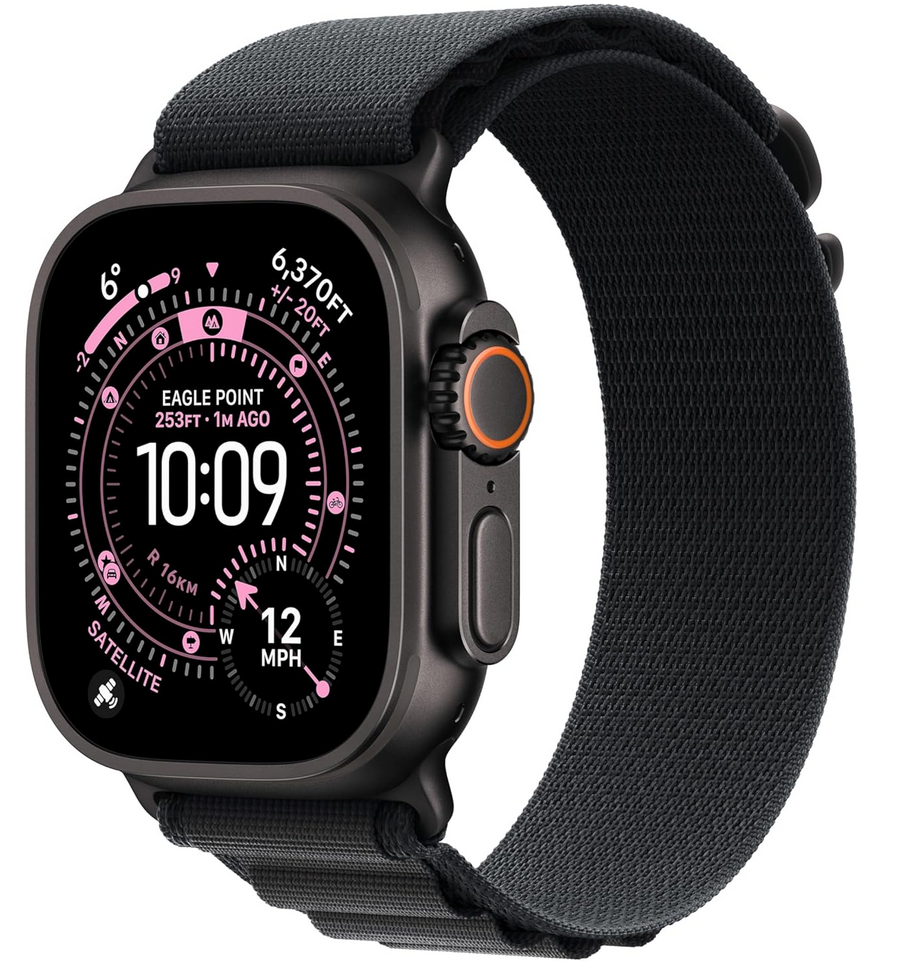
Best for iPhone users and weekend hikers: Apple Watch Ultra 3
For iPhone users who hike at weekends and want one watch that is genuinely useful across the whole week, the Apple Watch Ultra 3 is the strongest recommendation on this page. Titanium case, sapphire lens, dual-frequency GPS, barometric altimeter with storm alerts, compass, 5G, satellite emergency SOS with no subscription, and 72 hours battery in low power mode. Offline navigation via Tooboo. Komoot and AllTrails integrate natively. Between hikes it is a fully autonomous smartwatch: calls, messages, payments, Siri, Apple Health, and cycle tracking all work independently of the phone. No Garmin or Coros watch integrates with an iPhone as completely or works as well away from the trail.

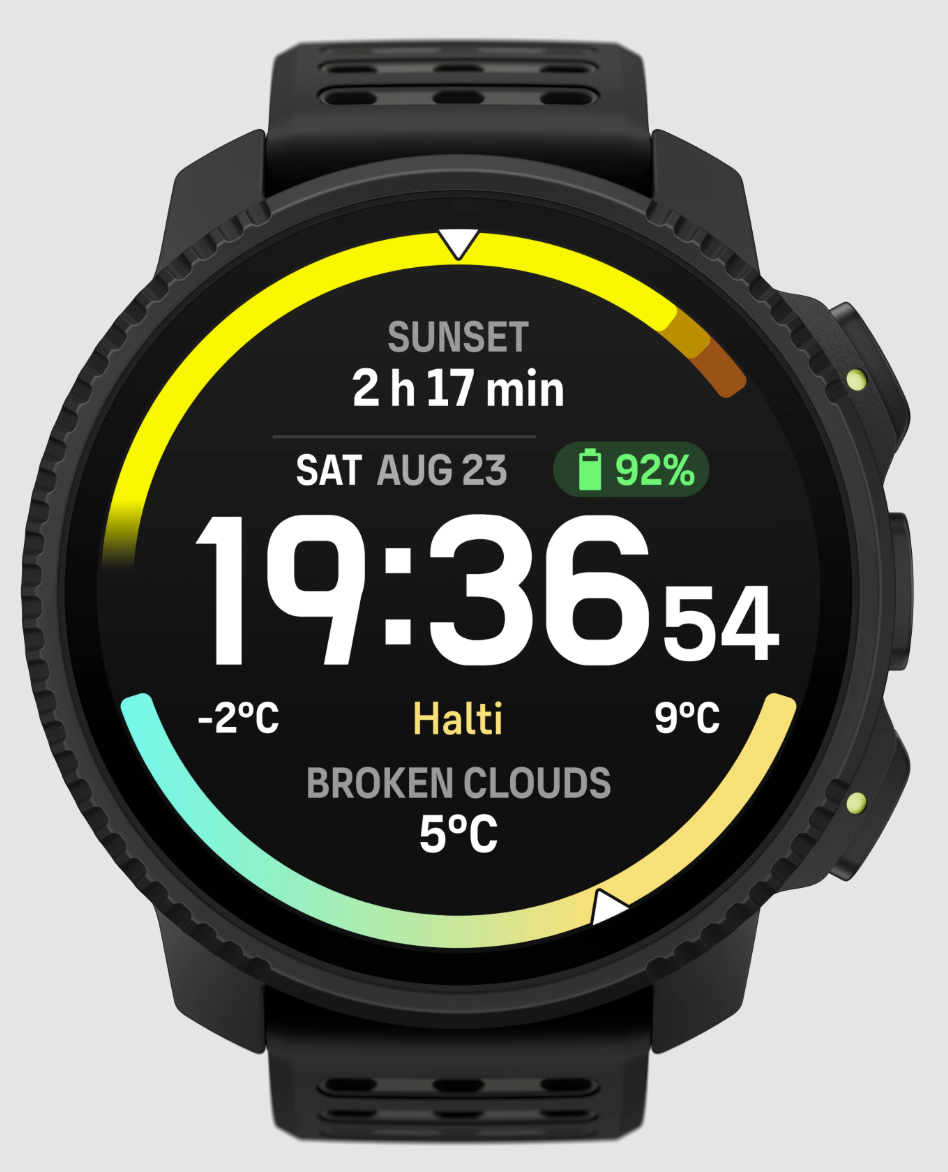
Best for aesthetics and trusted sensors: Suunto Vertical 2
The Suunto Vertical 2 is the right choice for hikers who want a well-made, good-looking watch with sensors they can trust, without the complexity of the Garmin platform. Battery runs to 85 hours GPS and 21 days smartwatch from the internal cell. Full downloadable maps including OS Maps for UK users, barometric altimeter with storm alarm, compass, and GPX import from Komoot. The Suunto app is straightforward. For hikers who do not want ClimbPro, Garmin Explore, Connect IQ, and a training platform they will never use, the Vertical 2 delivers exactly what a hiking watch needs to do in a design that works beyond the trail. Suunto’s ABC sensor accuracy and storm alarm have an earned reputation in the mountaineering community.
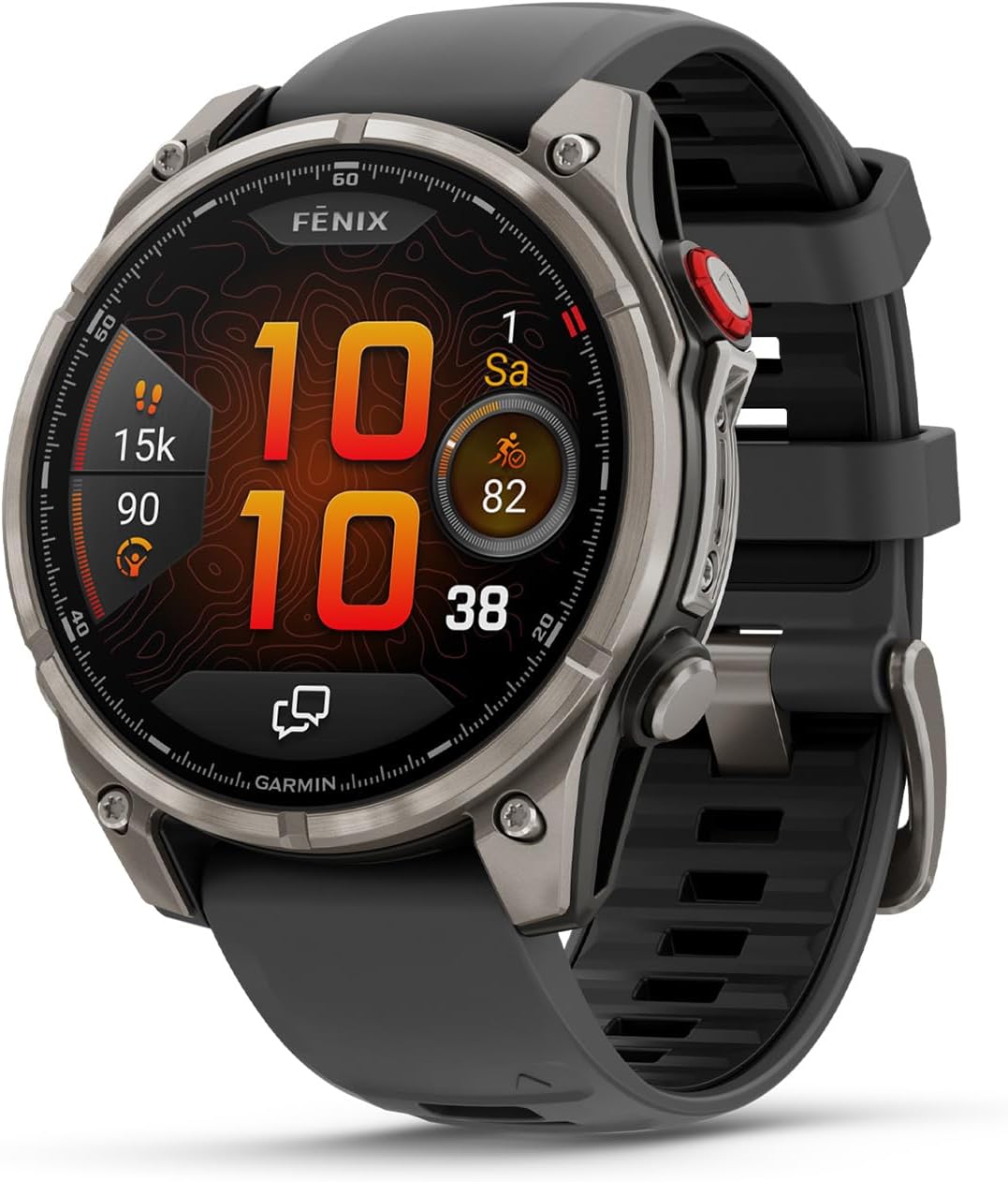
Best for deep navigation and training integration: Garmin Fenix 8 47mm AMOLED
For Android users, serious multisport athletes, or hikers who want the deepest navigation platform available: MIL-STD-810, 10ATM, titanium bezel, sapphire crystal, TopoActive maps with contour lines preloaded worldwide, full ABC sensors with storm alerts, ClimbPro, Komoot and OS Maps integration, incident detection, and 43 hours GPS battery.
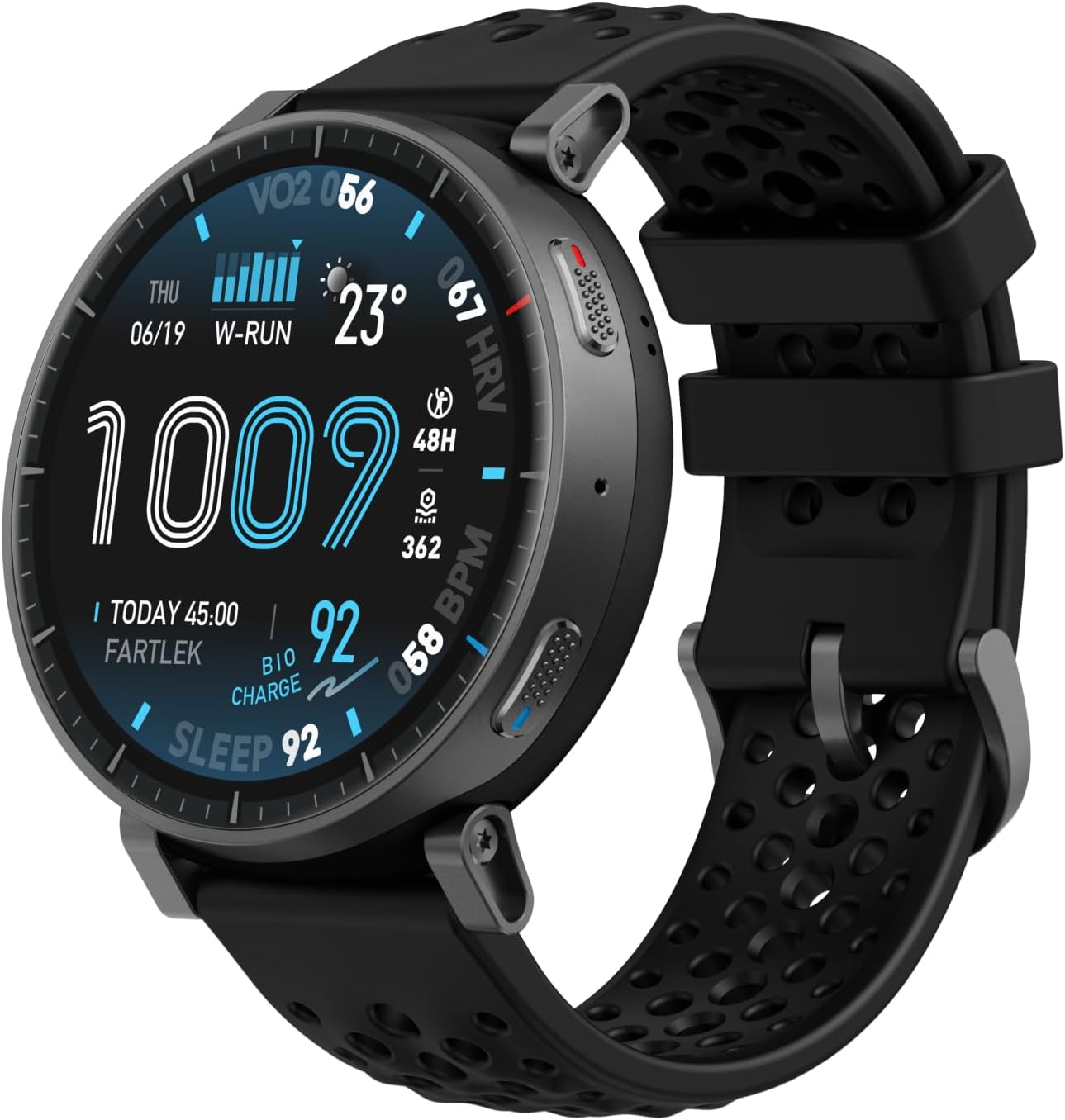
Best for genuinely remote terrain: Garmin Fenix 8 Pro AMOLED
The Fenix 8 Pro adds inReach satellite SOS and two-way text communication over the base Fenix 8, requiring an active inReach subscription. For solo hikers in terrain where cellular coverage genuinely does not exist and two-way messaging matters — remote US wilderness, high alpine, expedition environments — inReach offers more comprehensive global coverage than Apple’s satellite SOS. For most UK and European hikers the base Fenix 8, Suunto Vertical 2, or Apple Watch Ultra 3 covers the realistic safety requirement without the subscription cost.
Best for multi-week expeditions: Garmin Enduro 3
The Enduro 3 Solar at 90 days smartwatch and 320 hours GPS claimed has a large enough internal cell that it remains viable even with minimal solar contribution. Full TopoActive maps, ClimbPro, ABC sensors, MIL-STD-810 in a 51mm MIP Solar case at 70g. For thru-hikers and expeditions measured in weeks, nothing else in this category matches it on battery.
Best value with maps: Amazfit T-Rex 3
The Amazfit T-Rex 3 at around $280 delivers offline OSM maps, dual-band GPS, a 2,000-nit AMOLED display, MIL-STD-810 durability, 27-day smartwatch battery, and 100m water resistance at a price that undercuts the Garmin Instinct 3 while offering a proper visual map rather than breadcrumb navigation. ABC sensors are present. The Zepp platform is narrower than Garmin Connect and the training tools are less mature, but for a hiker who primarily wants maps, durability, and battery at a low entry price, it delivers meaningfully more than the Instinct 3 for similar money. The T-Rex 3 Pro at $399 upgrades to titanium bezel, sapphire glass, 3,000-nit display, and routable offline maps with auto-rerouting for hikers who want more navigation capability.
Best Coros hiking watch: Coros Vertix 2S
The Coros Vertix 2S undercuts the Fenix 8 significantly with titanium bezel, sapphire glass, 100m water rating, full offline maps, 73 hours GPS, and 36 days smartwatch. ABC sensors are present. Routes must be imported via GPX; in-app route creation is not supported. ANT+ is absent. The Coros Apex 4 is a lower-cost Coros alternative with offline maps, strong battery, and the same platform for hikers who do not need the Vertix 2S’s premium case materials.
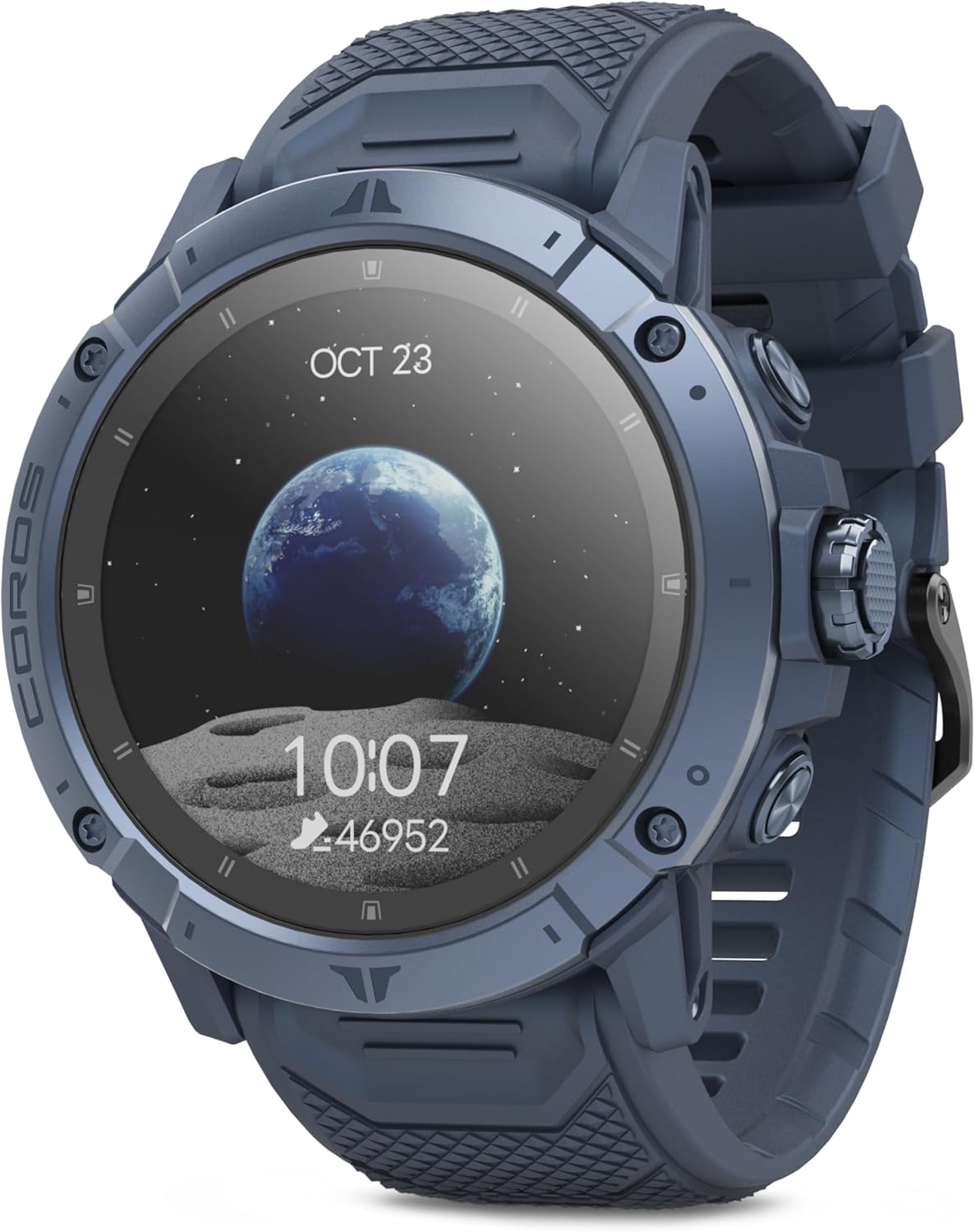
Which hiking watch to buy
- Best for iPhone users and weekend hikers: Apple Watch Ultra 3. Satellite SOS with no subscription, 5G, offline maps, titanium, sapphire, and a genuinely useful smartwatch the rest of the week.
- Best for aesthetics and trusted sensors without platform complexity: Suunto Vertical 2. Clean design, reliable ABC sensors, OS Maps, 85 hours GPS, no solar dependency.
- Best for Android users and serious navigation: Garmin Fenix 8 47mm AMOLED. TopoActive maps, ClimbPro, OS Maps, deepest navigation platform available.
- Best for solo remote terrain with two-way satellite messaging: Garmin Fenix 8 Pro AMOLED. inReach subscription required. Most UK and European hikers do not need this.
- Best for multi-week expeditions: Garmin Enduro 3 Solar. 90 days smartwatch, largest internal cell in the category.
- Best value with proper maps: Amazfit T-Rex 3 ($280) or T-Rex 3 Pro ($399). Both carry offline maps and MIL-STD-810 durability. The Instinct 3 is not recommended at a similar price as it carries no visual maps.
- Best Fenix 8 alternative at lower price: Coros Vertix 2S. Titanium, sapphire, offline maps, no ANT+. Coros Apex 4 for a lower-cost Coros entry with maps.
For the full lens material comparison including scratch repair options, see the site’s Garmin watch lens guide.
Further reading
- Apple Watch hub
- Suunto hub
- Amazfit hub
- Garmin Fenix hub
- Garmin Instinct hub
- Hiking technology hub
- Best Garmin Fenix
- Best Apple Watch for sport
- Best sports watch
Best-of guides
Explore the full resource library
This site covers endurance sport technology across a range of dedicated reference sections. Each one collects the most relevant articles, tests, and analysis on its topic in one place.
Buyer guides
- Best sports watch: tested recommendations by sport and athlete type (triathlon, running, marathon, cycling, hiking, and women)
- Best Garmin watch: Forerunner versus Fenix by series, sport, and budget
- Best wearables: fitness trackers, recovery trackers, heart rate monitors, running power meters, and female athlete tech
- Best cycling products: computers, smart trainers, power meters, and cycling heart rate monitors
- Gear I use: the watches, bikes, sensors, fuel and sleep kit tfk actually trains and races with, and what his partner uses
Brand and product guides
- Amazfit: the full Amazfit range from Balance to Cheetah to T-Rex, accuracy tests, HYROX partnership, and Zepp Health analysis
- Apple Watch: athlete-first coverage of Apple Watch across running, cycling, and triathlon
- COROS: watches, features, and firmware across the full COROS range
- Garmin: the company, the platform and the full range, and the starting point for choosing across every Garmin product line
- Garmin Edge: bike computers from entry-level navigation to flagship endurance and mountain biking
- Garmin Fenix: every model, feature, and firmware development for Garmin's flagship outdoor watch
- Garmin Fenix 8 Series: which variant to buy, upgrade advice, accuracy data, and the full Fenix 8 review and firmware coverage
- Garmin Forerunner: the full Forerunner line covered from entry level to triathlon flagship
- Garmin Instinct: rugged GPS watches for endurance and adventure athletes
- Garmin Features Explained: how Garmin's metrics work, from Training Load and Body Battery to Race Predictor and HRV Status
- Google Fitbit: Fitbit Edge, Fitbit Air, Google Health, Pixel Watch and the Wear OS platform
- Polar: watches, sensors, Polar Flow and training science across the full Polar range
- Runna: coach-written running plans that adapt as you train
- Suunto: Race, Vertical, Run and the SuuntoPlus ecosystem
- Strava: features, privacy, segments, and how Strava fits into a serious training setup
- Ride with GPS: route planning, navigation and how it works alongside Strava
- Wahoo: KICKR trainers, ELEMNT bike computers, and the Wahoo ecosystem
- WHOOP: strain, recovery, sleep and the full WHOOP ecosystem
Specifications database
- Full Specifications Database: detailed spec sheets, battery life, sensor lists and generation-on-generation comparisons for current Garmin, COROS, Amazfit, Samsung, Google Fitbit, Huawei, Polar, Suunto, Wahoo and Apple Watch models
Glossary
- Sports Technology Glossary: non-branded terminology across running, cycling, swimming, triathlon, hiking, strength training, HYROX, sensors, ecosystems, and brands
Sport and topic guides
- Running Watches: how to choose by discipline (road racing, trail, track, beginner, and multisport)
- Triathlon and Multisport Technology: watches, sensors, and race-day tools for swimmers, cyclists, and runners
- HYROX: training science, race analysis, and technology for the functional fitness race format
- parkrun: technology, training, and performance for the weekly 5K
- Hiking Technology: navigation, safety, and trail tech for walkers and hikers
- Heart Rate Monitoring: optical sensors, chest straps, accuracy comparisons, and how to set training zones
- Optical Sensors (PPG): the 40 things a wrist optical sensor could measure, from heart rate to glucose, ranked by evidence
- GPS Accuracy: how satellite systems perform across brands, terrains, and conditions
- Sports Watch Battery Life: battery claims, real-world tests, and how to manage battery life across Garmin, Apple, Amazfit and COROS
- Recovery Trackers: WHOOP, Oura, and the science of readiness scoring
- Muscle Oxygen Sensors: SmO2 and NIRS explained, Train Red and Moxy compared, and the category from BSX and Humon to Garmin and WHOOP
- Female Athlete Tech: wearables, physiology, and performance for female endurance athletes, covering cycle-synced training, RED-S, HR accuracy, and VO2max
- Sports Science: peer-reviewed research on HRV, VO2max, lactate threshold, running power, wearable accuracy, and supplementation
- Testing Methodology: how this site tests GPS accuracy, heart rate, battery life, and other performance claims
Content series
- Release Radar: confirmed launches, leaks, and rumours across Garmin, Apple, COROS, Polar, Suunto, and Wahoo
- Deep Dive Feature Files: weekly firmware feature updates across all brands (bug fixes excluded)
- Fix Files: weekly firmware bug fix tracking across all brands
