A muscle oxygen sensor straps over a working muscle and uses near-infrared light to estimate the oxygen saturation of the tissue beneath it, known as SmO2. The reading reflects the balance between oxygen delivery and oxygen use at that spot. Heart rate and power describe the body’s overall response and the external workload, but neither measures what is happening locally in the muscle. A conventional wrist sensor cannot measure SmO2 in a leg muscle, because the reading has to be taken over the muscle itself.
Since 2016 I have tested BSX Insight, Moxy, Humon Hex, NNOXX One and Train Red’s FYER and PLUS. BSX and Humon have closed, and NNOXX said in April 2026 that it was in talks about a partnership or sale. Whoop acquired Humon’s assets and team in 2020. In September 2026 I reported that Garmin had acquired Moxy, and Moxy’s founder, Roger Schmitz, has since implicitly confirmed the deal in writing. The category is small, but larger wearable companies are now buying into it.
What an SmO2 reading shows
The sport-focused sensors in this category use continuous-wave near-infrared spectroscopy (NIRS). LEDs shine red and near-infrared light into the muscle, and detectors set at fixed distances from the LEDs measure the light that returns. Oxygenated and deoxygenated haemoglobin absorb those wavelengths differently, and the sensor’s algorithm converts the returning light into a saturation percentage. Myoglobin in the muscle absorbs light in the same way and cannot be separated from haemoglobin, so the figure is a device-derived estimate of local oxygenation, not a blood-gas measurement. The sports science behind it is decades old, and a 2024 systematic review in Sports Medicine by Perrey, Quaresima and Ferrari covers how muscle oximetry is now used in sport. The change is that the hardware now fits in a 20 g pod.
- SmO2 is the estimated oxygen saturation of the tissue under the sensor. Train Red also labels it TSI%, the tissue saturation index used in laboratory NIRS.
- tHb, total haemoglobin, tracks changes in local blood volume. A sharp fall during a hard contraction can show the muscle squeezing off its own blood supply.
- O2Hb and HHb are the oxygenated and deoxygenated parts of the signal, and HbDiff is the difference between them.
The trend is more useful than any single reading. A steady fall during a progressively harder effort shows oxygen use outpacing delivery and can help locate a threshold. Slow recovery between intervals suggests the muscle had not reoxygenated before the next rep. A low value is not automatically bad, because it can also mean the muscle is extracting oxygen well. The 5-1-5 test, a five-minute baseline, a one-minute maximal effort and five minutes of recovery, is a common way to find an athlete’s own floor and ceiling; I used it in my Moxy review.
What the number cannot tell you
- The reading is local to the tissue under the sensor. A sensor on the left quadriceps cannot be assumed to represent the right quadriceps, the hamstrings or the calves, and a 2024 study of Moxy during cycling examined differences between the two legs of the same rider.
- Skin and fat sit between the sensor and the muscle. Moxy designs its sensor to measure through up to 12 mm of fat; above that, too little light reaches the muscle.
- Placement, strap pressure, hair and ambient light all change the reading. In my testing of Humon Hex, moving the sensor by about a centimetre on the same muscle changed the readings. Repeatable data needs the same spot, the same pressure and a light shield every session.
- Readings are not interchangeable between brands. Each sensor uses its own optics and algorithm, so a trend from one sensor on one muscle is more useful than comparing a Moxy percentage with a Train Red percentage.
Current sensors compared
Train Red and Moxy are the main sport-focused sensors on sale. Train Red builds its sensors with Artinis Medical Systems, the Dutch laboratory NIRS specialist, and sells three models. Moxy sells a single sensor and has one of the strongest published validation records among sport NIRS devices, including a 2019 study of the reliability and validity of its 0-100% scale. Train Red’s record is younger and growing quickly. A 2023 SPIE paper assessed the stability and accuracy of its wearable sensor, and researchers now use Train Red sensors in peer-reviewed work, including a 2025 Experimental Physiology study of oxidative function in swimmers’ triceps; Train Red lists the studies on its publications page. The table uses each manufacturer’s own product pages, and battery life and usable depth vary with settings, placement and the tissue under the sensor. FYER PRO is newly launched and I have not yet tested it.
| Train Red FYER 2.0 | Train Red FYER PRO | Train Red PLUS 2.0 | Moxy Monitor | |
|---|---|---|---|---|
| EU price | From €699 | From €999 | From €1,999 | Varies by bundle |
| UK price | From £612 | Not yet listed | From £1,750 | Varies by bundle |
| US price | From $817 | Not yet listed | From $2,335 | Varies by bundle |
| Sample rate | 10 Hz | Up to 100 Hz | 100 Hz | 0.5 Hz (updates every 2 seconds) |
| Metrics | SmO2 (TSI%) | SmO2, O2Hb, HHb, tHb, HbDiff | SmO2, O2Hb, HHb, tHb, HbDiff | SmO2, tHb |
| Optical channels | 1 | 1 | 6 | 1 |
| Measuring depth | Up to 20 mm | About 12.5-17.5 mm | Up to 25 mm | Through up to 12 mm of fat |
| Battery life | Up to 20 hours | Up to 20 hours | Up to 20 hours | At least 6 hours |
| Weight | 20 g | 20 g | 26 g | Under 40 g |
| Water resistance | IPX7, swimming with plug | IPX7 | IPX4, sweatproof | Sealed, waterproof |
| Connectivity | BLE and ANT+ | BLE and ANT+ | BLE and ANT+ | BLE and ANT+ |
| Motion sensor | Yes | Yes, 100 Hz export | Yes, 100 Hz export | No |
| Onboard storage | Yes | Yes | Yes | Yes |
| Charging | USB-C | USB-C | USB-C | Wireless (Qi) |
| App | Train Red app, free | Train Red app, free | Train Red app, free | Moxy Portal app, PC software |
Which to buy
FYER 2.0 is the sensible choice for an athlete who wants SmO2 on a Garmin, Wahoo or Suunto watch or bike computer, or in Train Red’s own app. It is light, waterproof and runs for 20 hours, and the app interprets the raw numbers as muscle states and recovery phases. FYER PRO adds the full haemoglobin breakdown and a 100 Hz sample rate, which coaches and sports scientists will use more than most athletes. PLUS is aimed at labs and coaches, with six channels measuring at several depths. My Train Red review covers FYER and PLUS in detail.
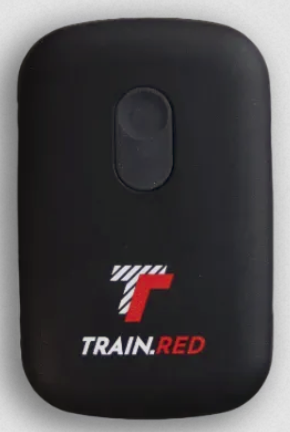
Train Red FYER 2.0, FYER PRO and PLUS 2.0
Muscle oxygen (SmO2) sensors for Garmin, Wahoo and Suunto. 10% off with code THE5KRUNNER.
 Direct from Train Red
Moxy has the longer published validation record and a user base that includes Olympic triathlon champion Kristian Blummenfelt, according to Moxy. Until Garmin or Moxy says what happens to the product, a buyer is relying on the ANT+ muscle oxygen profile. That profile kept Humon Hex working on Garmin and Wahoo devices after Humon closed.
How the category got here
| Sensor | Dates | What happened |
|---|---|---|
| BSX Insight | Closed October 2017 | Depended on BSX’s online services |
| Humon Hex | 2018 to February 2020 | Assets and team acquired by Whoop in 2020 |
| Moxy Monitor | On sale | Acquired by Garmin, September 2026 |
| NNOXX One | Launched 2023 | Pairs SmO2 with nitric oxide; company seeking a partner or buyer, April 2026 |
| Train Red FYER and PLUS | Launched 2023 | FYER 2.0 and FYER PRO followed |
BSX Insight was the first sensor I used, in 2016. It combined SmO2 with an estimate of lactate threshold heart rate, and the second-generation XM2 added more. It depended on BSX’s online services, so the product’s useful life was tied to the company, and BSX failed in October 2017. Moxy and Humon both made offers to stranded owners.
Humon Hex launched in 2018 and was simple to use. It strapped to the thigh, worked over ANT+ with Garmin and Wahoo, and Humon spent heavily on apps and analysis. Humon closed in February 2020, saying muscle oxygen needed more market education than it could fund. The sensor kept working through the ANT+ profile, and Whoop acquired Humon’s assets and team later that year.
Moxy was already on sale when I first wrote about it in 2014, and it outlived both. My Moxy review dates from 2016. NNOXX One arrived in 2023 with a nitric oxide measurement alongside SmO2; in April 2026 the company said it was in talks about a partnership or sale. Train Red launched FYER and PLUS in 2023 with laboratory-grade optics.
What comes next
In my testing, every generation of sensor has produced usable data. The companies that closed also carried the cost of apps, cloud services and teaching athletes an unfamiliar metric, and Humon named market education in its closing letter. Neither Garmin nor Whoop sells a muscle oxygen sensor yet, but both can carry those costs.
Garmin filed a trademark for Muscle Battery in February 2026, describing an algorithm based on SmO2 data. SmO2 cannot be measured at the wrist, so the filing points to dedicated Garmin hardware, and the Moxy acquisition gives Garmin validated optics and years of field data. Whoop was granted a muscle oxygen patent in April 2026 for a body-worn NIRS sensor whose strap measures its own pressure and tension. Humon’s founding team are among the named inventors, and the strap is aimed at the placement problem that has affected every sensor in this category.
A Garmin sensor, if one ships, would reach Garmin’s existing watch and Edge owners on launch day, which no independent maker can match. That would leave Train Red as the main independent specialist, competing on sample rate, the depth of its haemoglobin data and a coaching layer it has already built.
Quick answers
What does a muscle oxygen sensor measure?
A muscle oxygen sensor estimates SmO2, the oxygen saturation of the tissue in a specific muscle. It uses near-infrared light and must sit directly over the muscle being measured. Most sensors also report total haemoglobin (tHb), and some report oxygenated and deoxygenated haemoglobin separately.
Can a smartwatch measure muscle oxygen at the wrist?
Not for the muscles that matter in endurance sport. SmO2 has to be measured over the working muscle, shielded from light and held in a consistent position. A wrist optical sensor measures blood oxygen and heart rate, which is a different measurement from muscle oxygen saturation.
Do Garmin watches support muscle oxygen sensors?
Yes. Higher-end Garmin watches and Edge bike computers read SmO2 from sensors such as Moxy and Train Red over the ANT+ muscle oxygen profile, and Train Red also offers a Connect IQ data field. Wahoo bike computers support the same ANT+ profile, and Suunto supports Train Red through SuuntoPlus.
Has Garmin bought Moxy?
Yes. the5krunner reported in September 2026 that Garmin has acquired Moxy Monitor, and Moxy’s founder has since implicitly confirmed the deal in writing.
Can you compare SmO2 readings between different sensors?
Not reliably as a straight percentage. Each sensor uses its own optics, detector spacing and algorithm, and readings vary with placement and the tissue under the sensor. Trends from the same sensor, on the same muscle and in the same position, are more useful than comparing one brand’s number with another’s.
What happened to Humon Hex and BSX Insight?
BSX closed in October 2017, and BSX Insight depended on its online services. Humon closed in February 2020, but Hex kept working with Garmin and Wahoo devices through the ANT+ muscle oxygen profile. Whoop acquired Humon’s assets and team in 2020.
Muscle oxygen reviews and articles
Reviews
- Train Red review: FYER and PLUS
- NNOXX One review
- Humon Hex review
- Moxy Monitor review and 5-1-5 test
- BSX Insight review
Garmin, Whoop and the next generation
- Garmin has acquired Moxy Monitor
- Garmin’s Muscle Battery and CIRQA trademarks
- Garmin CIRQA and Muscle Battery are not the same product
- Whoop’s muscle oxygen sensor patent
- Garmin’s next-generation sensors
Testing and compatibility
- De-saturation intervals: Moxy vs NNOXX vs Train Red
- Train Red PLUS launch
- NNOXX One analysis of a half marathon
- Humon Hex: new features and three more months of use
- Suunto adds Train Red muscle oxygen support
- Wahoo adds Train Red support
History
- BSX Insight XM2
- BSX Insight trade-in: muscle oxygen not dead
- BSX Insight: the final word
- Humon Hex closes
- Moxy offers a Humon Hex trade-in
- Moxy Portal Kickstarter launch
Related hubs: sports science, HYROX sports tech, Garmin and Whoop.
Explore the full resource library
This site covers endurance sport technology across a range of dedicated reference sections. Each one collects the most relevant articles, tests, and analysis on its topic in one place.
Buyer guides
- Best sports watch — tested recommendations by sport and athlete type: triathlon, running, marathon, cycling, hiking, and women
- Best Garmin watch — Forerunner versus Fenix by series, sport, and budget
- Best wearables — recovery trackers, heart rate monitors, running power meters, and female athlete tech
- Best cycling products — computers, smart trainers, power meters, and cycling heart rate monitors
Brand and product guides
- Amazfit — the full Amazfit range from Balance to Cheetah to T-Rex, accuracy tests, HYROX partnership, and Zepp Health analysis
- Apple Watch — athlete-first coverage of Apple Watch across running, cycling, and triathlon
- COROS — watches, features, and firmware across the full COROS range
- Garmin — the company, the platform and the full range, and the starting point for choosing across every Garmin product line
- Garmin Edge — bike computers from entry-level navigation to flagship endurance and mountain biking
- Garmin Fenix — every model, feature, and firmware development for Garmin's flagship outdoor watch
- Garmin Fenix 8 Series — which variant to buy, upgrade advice, accuracy data, and the full Fenix 8 review and firmware coverage
- Garmin Forerunner — the full Forerunner line covered from entry level to triathlon flagship
- Garmin Instinct — rugged GPS watches for endurance and adventure athletes
- Garmin Features Explained — how Garmin's metrics work, from Training Load and Body Battery to Race Predictor and HRV Status
- Google Fitbit — Fitbit Air, Google Health, Pixel Watch and the Wear OS platform
- Polar — watches, sensors, Polar Flow and training science across the full Polar range
- Suunto — Race, Vertical, Run and the SuuntoPlus ecosystem
- Strava — features, privacy, segments, and how Strava fits into a serious training setup
- Ride with GPS - how Strava fits into a routing
- Wahoo — KICKR trainers, ELEMNT bike computers, and the Wahoo ecosystem
- WHOOP — strain, recovery, sleep and the full WHOOP ecosystem
Specifications database
- Full Specifications Database — detailed spec sheets, battery life, sensor lists and generation-on-generation comparisons for current Garmin, COROS, Amazfit, Samsung, Google Fitbit, Huawei, Polar, Suunto, Wahoo and Apple Watch models
Glossary
- Sports Technology Glossary — non-branded terminology across running, cycling, swimming, triathlon, hiking, strength training, HYROX, sensors, ecosystems, and brands
Sport and topic guides
- Running Watches — how to choose by discipline: road racing, trail, track, beginner, and multisport
- Triathlon and Multisport Technology — watches, sensors, and race-day tools for swimmers, cyclists, and runners
- HYROX — training science, race analysis, and technology for the functional fitness race format
- parkrun — technology, training, and performance for the weekly 5K
- Hiking Technology — navigation, safety, and trail tech for walkers and hikers
- Heart Rate Monitoring — optical sensors, chest straps, accuracy comparisons, and how to set training zones
- GPS Accuracy — how satellite systems perform across brands, terrains, and conditions
- Sports Watch Battery Life — battery claims, real-world tests, and how to manage battery life across Garmin, Apple, Amazfit and Coros
- Recovery Trackers — WHOOP, Oura, and the science of readiness scoring
- Muscle Oxygen Sensors - SmO2 and NIRS explained, Train Red and Moxy compared, and the category from BSX and Humon to Garmin and Whoop
- Female Athlete Tech — wearables, physiology, and performance for female endurance athletes, covering cycle-synced training, RED-S, HR accuracy, and VO2max
- Sports Science — peer-reviewed research on HRV, VO2max, lactate threshold, running power, wearable accuracy, and supplementation
- Testing Methodology — how this site tests GPS accuracy, heart rate, battery life, and other performance claims
Content series
- Release Radar — confirmed launches, leaks, and rumours across Garmin, Apple, COROS, Polar, Suunto, and Wahoo
- Deep Dive Feature Files — weekly firmware feature updates across all brands (bug fixes excluded)
- Fix Files — weekly firmware bug fix tracking across all brands
