Best sports watch for women 2026: tested recommendations by wrist size, aesthetics, and health tracking
The criteria that actually drive watch purchases among female athletes are not the ones most buyer guides lead with. Case size, colourways, and design aesthetics are the three variables that most commonly decide which watch ends up on the wrist. They are widely treated as superficial considerations. They are not. A watch worn only for workouts because it looks wrong with everything else is a less useful training tool than one worn all day. A case that sits flush on a 150mm wrist produces better optical heart rate data than one that overhangs it. Size and aesthetics are practical choices, not vanity ones.
Female-specific health metrics are the fourth variable. Not every female athlete needs cycle tracking on her watch. Those who do will find the platform differences are real and worth understanding before buying.
This page covers all four. For the physiology behind the data and deeper coverage of wearables beyond GPS watches, see the female athlete tech hub and the best wearables for female endurance athletes.
The three criteria that actually matter
Case size: watches at or below 42mm sit flush on most smaller wrists, produce better optical heart rate contact, and wear comfortably under clothing. Most brands now offer a 41mm or 42mm variant of their flagship model. Where they do, that variant loses nothing in terms of software or sensors. It is worth being clear that a 45mm watch is average for a unisex sports watch, not small. No current Suunto model goes below 45mm. Amazfit’s Active Max is 48.5mm. For athletes who specifically need a smaller diameter, the options are the Garmin FR570 42mm, Apple Watch 42mm, Garmin Venu 4 41mm, Garmin FR70 43mm, and the Fenix 8 43mm.
Aesthetics and colourways: Garmin, Apple, Polar, and Suunto all produce colourways and case finishes that move beyond the default black-on-black sport watch. This matters because a watch worn only at the gym generates fewer training insights than one worn continuously. Daily HRV, resting heart rate, sleep, and recovery data require constant wear to be meaningful. A watch that works with a wider range of contexts gets worn more, and generates better data as a result.
Female health metrics: menstrual cycle tracking, pregnancy support, and menopause monitoring are available across Garmin, Apple, and Polar at different depths. For athletes who want this data, the platform differences are significant. For those who do not, any watch on this page performs on its training merits.
Best overall: Garmin Forerunner 570 42mm
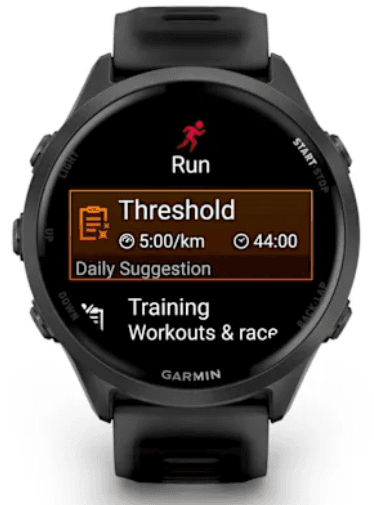
The FR570 in its 42mm configuration is the pick for most female athletes. At 42g and 42mm it sits genuinely flush on smaller wrists without removing any core training features. Garmin’s Women’s Health suite integrates menstrual cycle monitoring, pregnancy tracking, and menopause support directly into the same training readiness and recovery scoring the watch uses for everything else. Natural Cycles integration is available. It comes in multiple colourways including lighter finishes that work beyond the training context. Dual-frequency GPS, music, power meter support, AMOLED display, and 18 hours GPS battery complete the package. Buy Garmin Forerunner 570.

Best for weight-conscious athletes: Suunto RUN
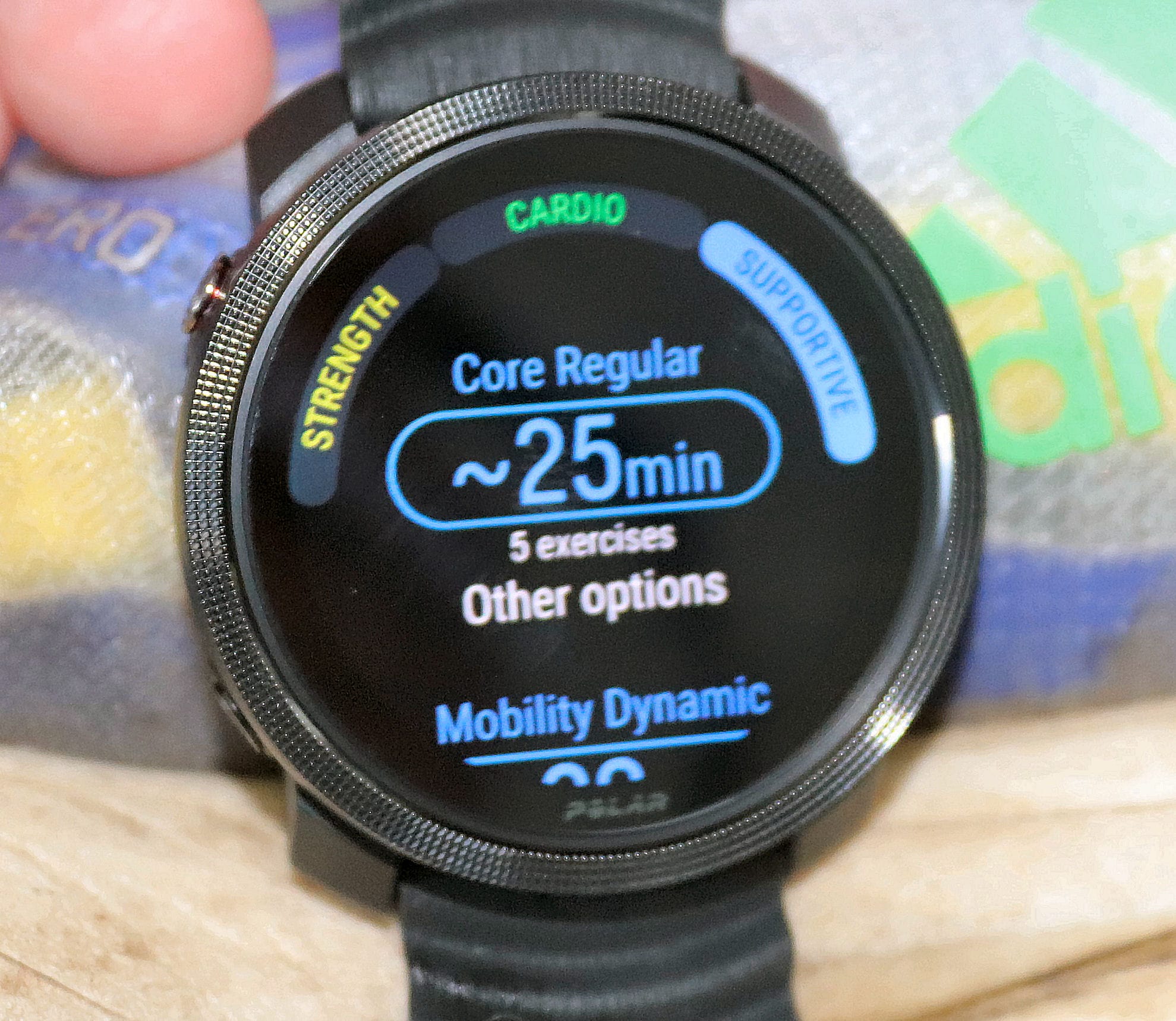
The Suunto RUN is the lightest serious running watch available at 36g with the textile strap, and it is the most affordable watch on this page at around £199/$250. The case is 46mm in diameter, so it is not a small-wrist option on diameter, but at 36g it disappears on the wrist in a way that heavier 42mm watches do not. A digital crown gives it higher usability than its price suggests. The Suunto app is clean and has improved significantly over recent years. For female athletes who prioritise weight above diameter and want a simpler interface than Garmin at a lower price, the RUN is the clearest recommendation. Buy Suunto RUN.
Best Polar option: Polar Vantage M3
The Polar Vantage M3 is 45mm and 45g with an AMOLED touchscreen and dual-frequency GPS. At 45mm it is average in diameter for a unisex sports watch, not small, but its light weight and thin profile make it comfortable on a range of wrist sizes. It is mid-price at £349/$349. Available in colourways including white and rose gold finishes alongside the standard black. Training Load Pro and Recovery Pro are among the strongest training science tools on a wrist device. Polar records nightly skin temperature with baseline shift detection, which requires more manual interpretation than Garmin or Apple’s cycle tracking but delivers genuinely useful data for athletes who engage with it. Buy from a local retailer.
Best for aesthetics and lifestyle wear: Garmin Venu 4
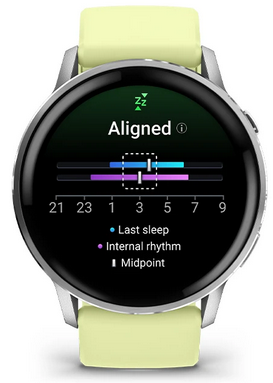
The Venu 4 is designed from the outset to function as a watch first and a sports watch second. Available in 41mm and 45mm, both AMOLED, with colourways including cream, ivory, and rose finishes. The 41mm is a genuine small-case option. The full Women’s Health suite is present. Call capability makes it a genuine smartwatch replacement. Battery runs to 12 days smartwatch and 20 hours GPS. For female athletes who want something that works across training, work, and social contexts without adjustment, the Venu 4 is the clearest answer in the Garmin range. Buy on Amazon.
Best for iPhone users: Apple Watch Series 11 42mm
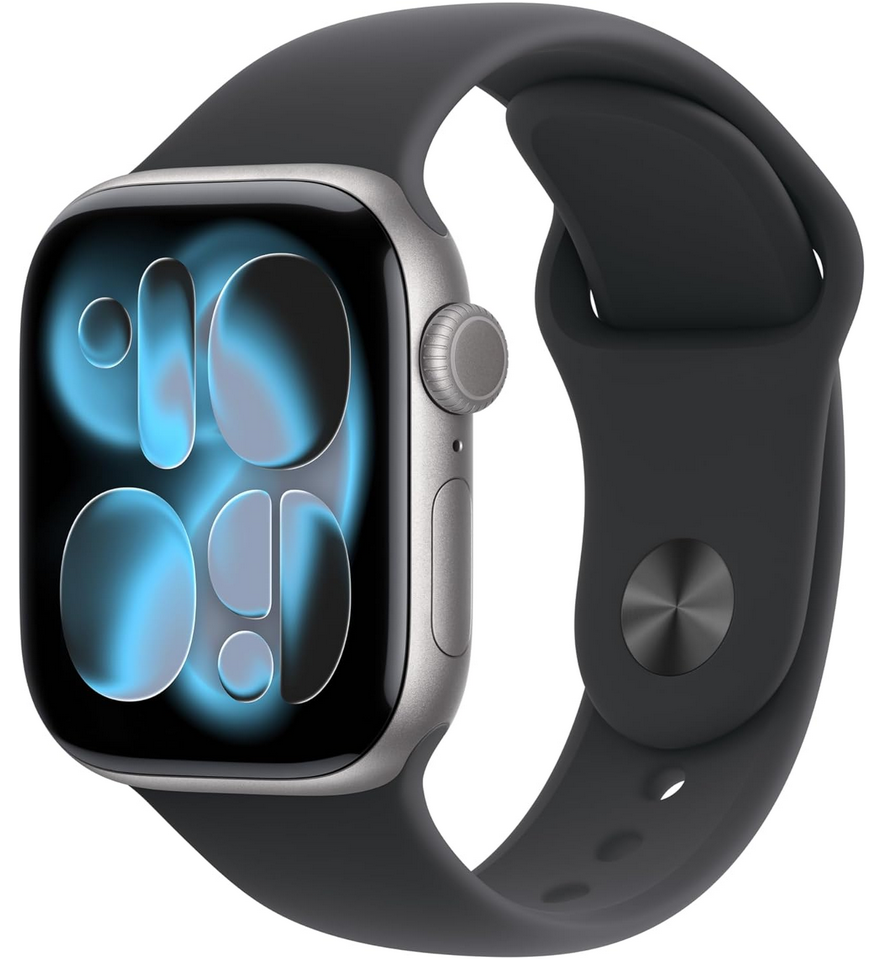
The Apple Watch Series 11 in 42mm is the best smartwatch for female athletes on iPhone. Cycle tracking using nightly wrist temperature to detect ovulation is passive, automatic, and the most accurate implementation of this feature on any watch. The 42mm case is available in an unusually wide range of finishes and band combinations, which is why it is more likely than any other watch to be worn continuously. Battery runs to 38 hours in Low Power Mode, sufficient for most marathon runners. The training platform is shallower than Garmin for structured endurance work but the health ecosystem is the most complete of any smartwatch. Buy Apple Watch.
Best value: Amazfit Active Max
The Amazfit Active Max at $169/£169 delivers a 1.5-inch 3,000-nit AMOLED display, 64 hours GPS battery, offline maps, music, dual-frequency GPS, NFC payments, and HYROX mode in one package. At 39.5g it is among the lightest watches on this page. The trade-off is the 48.5mm case diameter, which is large: one major review site explicitly flags that female athletes with smaller wrists would be better served by a smaller watch. GPS accuracy is good for everyday running and training but lags behind Garmin and Huawei in dense urban environments. The Zepp platform lacks the female health tracking depth of Garmin or Apple. For budget-conscious athletes who are not prioritising wrist size or cycle tracking, the Active Max is exceptional value. Buy from a local retailer.
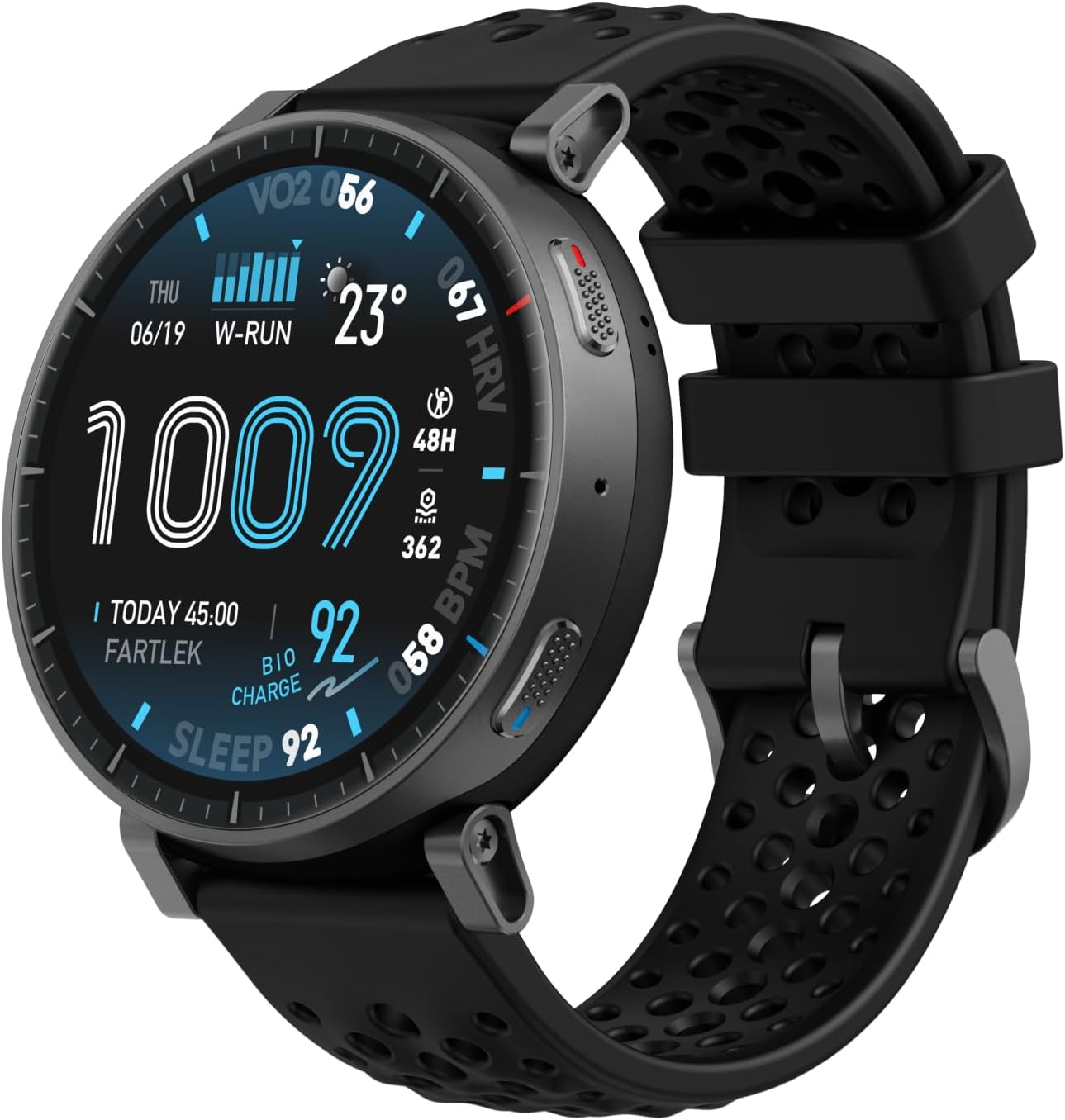
Best for Ironman and ultra distance: Garmin Fenix 8 43mm
For events beyond a marathon, the Fenix 8 43mm AMOLED is the strongest option for athletes who need maximum battery without sacrificing wrist fit. At 44g and 43mm it is the smallest Fenix 8 and carries the full feature set: maps, ECG, LED flashlight, titanium bezel, and sapphire crystal. The full Women’s Health suite applies. The Forerunner 965 is also worth considering for marathons and ultras at up to 31 hours GPS. Buy FR965. Buy Garmin Fenix 8.
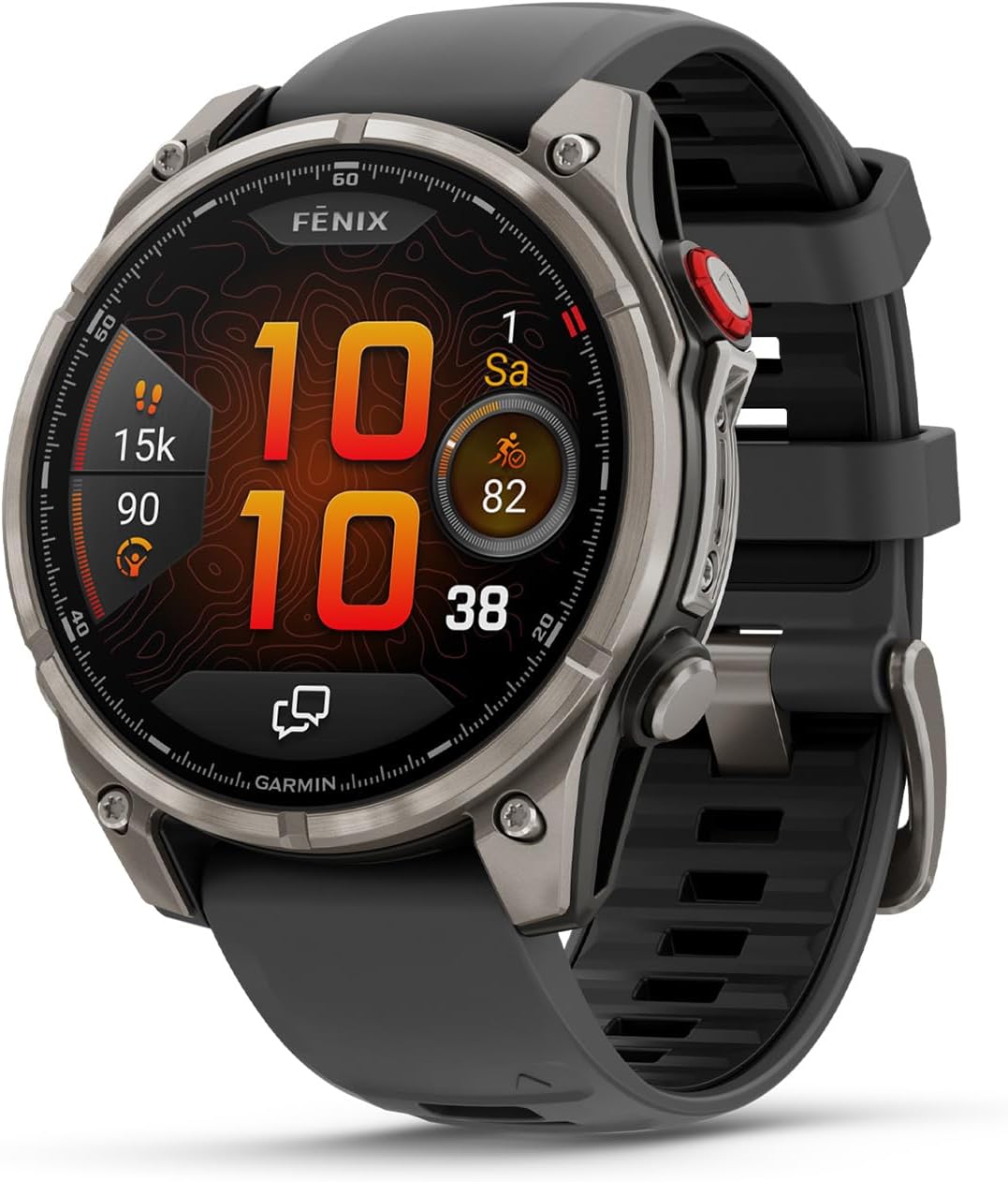
Best budget Garmin: Forerunner 70
The Forerunner 70 at £219.99 / $249.99 carries the full Garmin adaptive coaching and Women’s Health stack in a 43mm AMOLED case, available in Citron, Soft Pink, Tidal Blue and Cool Lavender alongside Black and Whitestone. The coaching intelligence is identical to the FR570 and FR970. The trade-off is single-frequency GPS, no Garmin Pay and no music. For female athletes who want Garmin’s full training and health platform without the FR570’s price, the FR70 is the correct starting point and the most colourway-diverse Forerunner in the current range. Buy on Amazon.
Female health tracking: platform comparison
Garmin offers the most integrated implementation. Menstrual cycle monitoring, pregnancy tracking, and menopause support sit within the same training readiness and recovery scoring the watch uses for all other data. Natural Cycles integration is available on the FR570, FR970, Venu 4, Venu X1, and Fenix 8.
Apple Watch uses nightly wrist temperature for passive ovulation detection, requiring no manual input. For athletes who want cycle data without logging, it is the most frictionless implementation available.
Polar records nightly skin temperature with baseline shift detection on the Vantage V3 and M3. The data requires more active interpretation than Garmin or Apple but is genuinely useful for athletes who engage with it.
Suunto and Amazfit do not currently offer female-specific health tracking at the same depth as the three platforms above. Both are strong training watches; neither is the right answer for athletes who need integrated cycle tracking.
For a full comparison of wearables built specifically around female physiology, including Oura Ring 5, WHOOP 5.0, and the Polar Verity Sense armband, see the best wearables for female endurance athletes. For the physiology behind the data, see the female athlete tech hub.
Reviews and buy links
- Garmin Forerunner series guide | Buy FR570
- Suunto RUN review | Buy
- Polar Vantage M3 review | Buy
- Apple Watch hub | Buy
- Amazfit Active Max review
- Garmin Fenix 8 hub | Buy
- Female athlete tech hub
- Best wearables for female endurance athletes
Best-of guides
Explore the full resource library
This site covers endurance sport technology across a range of dedicated reference sections. Each one collects the most relevant articles, tests, and analysis on its topic in one place.
Buyer guides
- Best sports watch: tested recommendations by sport and athlete type (triathlon, running, marathon, cycling, hiking, and women)
- Best Garmin watch: Forerunner versus Fenix by series, sport, and budget
- Best wearables: fitness trackers, recovery trackers, heart rate monitors, running power meters, and female athlete tech
- Best cycling products: computers, smart trainers, power meters, and cycling heart rate monitors
Brand and product guides
- Amazfit: the full Amazfit range from Balance to Cheetah to T-Rex, accuracy tests, HYROX partnership, and Zepp Health analysis
- Apple Watch: athlete-first coverage of Apple Watch across running, cycling, and triathlon
- COROS: watches, features, and firmware across the full COROS range
- Garmin: the company, the platform and the full range, and the starting point for choosing across every Garmin product line
- Garmin Edge: bike computers from entry-level navigation to flagship endurance and mountain biking
- Garmin Fenix: every model, feature, and firmware development for Garmin's flagship outdoor watch
- Garmin Fenix 8 Series: which variant to buy, upgrade advice, accuracy data, and the full Fenix 8 review and firmware coverage
- Garmin Forerunner: the full Forerunner line covered from entry level to triathlon flagship
- Garmin Instinct: rugged GPS watches for endurance and adventure athletes
- Garmin Features Explained: how Garmin's metrics work, from Training Load and Body Battery to Race Predictor and HRV Status
- Google Fitbit: Fitbit Edge, Fitbit Air, Google Health, Pixel Watch and the Wear OS platform
- Polar: watches, sensors, Polar Flow and training science across the full Polar range
- Runna: coach-written running plans that adapt as you train
- Suunto: Race, Vertical, Run and the SuuntoPlus ecosystem
- Strava: features, privacy, segments, and how Strava fits into a serious training setup
- Ride with GPS: route planning, navigation and how it works alongside Strava
- Wahoo: KICKR trainers, ELEMNT bike computers, and the Wahoo ecosystem
- WHOOP: strain, recovery, sleep and the full WHOOP ecosystem
Specifications database
- Full Specifications Database: detailed spec sheets, battery life, sensor lists and generation-on-generation comparisons for current Garmin, COROS, Amazfit, Samsung, Google Fitbit, Huawei, Polar, Suunto, Wahoo and Apple Watch models
Glossary
- Sports Technology Glossary: non-branded terminology across running, cycling, swimming, triathlon, hiking, strength training, HYROX, sensors, ecosystems, and brands
Sport and topic guides
- Running Watches: how to choose by discipline (road racing, trail, track, beginner, and multisport)
- Triathlon and Multisport Technology: watches, sensors, and race-day tools for swimmers, cyclists, and runners
- HYROX: training science, race analysis, and technology for the functional fitness race format
- parkrun: technology, training, and performance for the weekly 5K
- Hiking Technology: navigation, safety, and trail tech for walkers and hikers
- Heart Rate Monitoring: optical sensors, chest straps, accuracy comparisons, and how to set training zones
- Optical Sensors (PPG): the 40 things a wrist optical sensor could measure, from heart rate to glucose, ranked by evidence
- GPS Accuracy: how satellite systems perform across brands, terrains, and conditions
- Sports Watch Battery Life: battery claims, real-world tests, and how to manage battery life across Garmin, Apple, Amazfit and COROS
- Recovery Trackers: WHOOP, Oura, and the science of readiness scoring
- Muscle Oxygen Sensors: SmO2 and NIRS explained, Train Red and Moxy compared, and the category from BSX and Humon to Garmin and WHOOP
- Female Athlete Tech: wearables, physiology, and performance for female endurance athletes, covering cycle-synced training, RED-S, HR accuracy, and VO2max
- Sports Science: peer-reviewed research on HRV, VO2max, lactate threshold, running power, wearable accuracy, and supplementation
- Testing Methodology: how this site tests GPS accuracy, heart rate, battery life, and other performance claims
Content series
- Release Radar: confirmed launches, leaks, and rumours across Garmin, Apple, COROS, Polar, Suunto, and Wahoo
- Deep Dive Feature Files: weekly firmware feature updates across all brands (bug fixes excluded)
- Fix Files: weekly firmware bug fix tracking across all brands
