Best recovery tracker 2026: what they actually measure
The most important thing to understand about recovery trackers is what they do not measure. No current consumer wearable measures athletic recovery — the specific physiological readiness of muscles, tendons, and energy systems to perform hard training again. What they measure is general physiological stress: the combined load of training, sleep quality, illness, alcohol, work stress, travel, and everything else your body is managing at once.
The distinction matters. A green recovery score does not mean you are ready to run a hard interval session. It means your autonomic nervous system, as measured through overnight HRV, resting heart rate, and related signals, is not currently under unusual stress. Those are related things but not the same thing. A highly trained athlete in a heavy training block will often show depressed HRV not because they are in trouble but because their body is adapting to load. A sedentary person after a stressful week of work will show the same depressed HRV. The number looks the same; the meaning is entirely different.
With that established: recovery trackers are genuinely useful tools. Tracking your own HRV trend over weeks and months, noting when it drops in response to illness, travel, or overreaching, and using that information to modulate training intensity is evidence-based practice. The limitation is not the sensor; it is the platform’s interpretation layer, and most platforms interpret the data in ways that active athletes should approach critically.
Active morning protocols vs passive overnight measurement
For serious athletes who want the most actionable HRV data, the most accurate approach is an active morning reading taken under controlled, repeatable conditions. There are several validated protocols: a seated one to two minute measurement taken first thing in the morning; a standing measurement taken in the same way; or an orthostatic test, which measures the heart rate response to transitioning from lying to standing and reflects autonomic nervous system reactivity. All of these must be actively performed — same time, same posture, same conditions every day. A Polar H10 chest strap paired with HRV4Training or Elite HRV is the recommended setup. The chest strap reads electrical cardiac activity directly, producing cleaner data than the optical PPG sensors in wrist wearables.
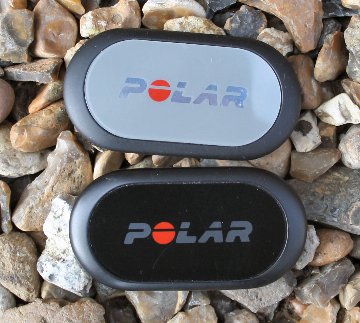
Polar H10
ECG-grade chest strap
The tension is obvious: active protocols require consistency and effort every morning. A wearable does the measurement automatically in the background while you sleep, requiring no intervention at all. For athletes who will reliably perform a morning protocol every day, the active reading is more precise and more actionable. For athletes who will not — which is most people, on most days — a passive overnight reading from a wearable delivers a good enough signal with zero friction. Both have a role. The passive overnight reading is not inferior by design; it is a different trade-off between accuracy and compliance.
What wearable recovery trackers actually measure
All passive recovery trackers use optical PPG sensors to capture overnight heart rate variability — specifically rMSSD, the metric that reflects parasympathetic nervous system activity. When parasympathetic activity is high, rMSSD is high and the body is in a rest-and-recover state. When sympathetic activity dominates, rMSSD falls. This happens during illness, heavy training load, alcohol consumption, poor sleep, psychological stress, and heat exposure — any significant stressor, regardless of source.
A detailed analysis of overnight HRV data quality across Garmin, WHOOP, and Oura against ECG reference is covered in the site’s HRV guide. The conclusion: all three capture relative changes in physiology reliably; Oura and Garmin track more closely to ECG reference in absolute terms; WHOOP is noisier at higher HRV values. Relative changes over time are what matter, not absolute daily scores.
The critical limitation of platform interpretation is that most recovery scores compound your physiological response with your behaviour. WHOOP’s Strain and Recovery system, Garmin’s Training Readiness, and similar composite scores incorporate training load as an input. This confounds the output: a low score after a hard training block might mean you responded poorly, or it might mean you trained hard and the algorithm is penalising you for input rather than reading the output. The HRV data alone, tracked against your personal normal range, carries more signal than any composite score.
A specific note for strength athletes
Wearables are particularly unreliable for strength and resistance training during the day. Optical heart rate sensors measure cardiovascular load well but cannot read the physiological cost of anaerobic work — heavy lifting, HIIT, plyometrics, or any high-intensity effort where the cardiovascular response does not reflect the actual muscular and metabolic stress. Garmin’s Body Battery, WHOOP’s Strain score, and equivalent daytime metrics underestimate the load of a heavy squat session and have no way to account for the mechanical stress on muscles and connective tissue.
Life stressors compound this further. A stressful afternoon at work, a poor night’s sleep, or a long commute all affect Body Battery and daytime strain scores in ways that have nothing to do with training readiness. The daytime score should not be used to make specific decisions about training load for the next session.
The good news for strength athletes is that overnight HRV remains valid. HRV does not care whether your stress came from a barbell, a deadline, or an illness. If your body is coping with its total workload, overnight HRV will trend within your normal range. If you are overreaching, underrecovering, or getting ill, it will drop. The practical application: ignore Body Battery and strain scores on heavy lifting days; use the overnight HRV trend over weeks as the reliable indicator of whether the training programme is sustainable.
Who actually needs a dedicated recovery tracker?
Athletes who already own a Garmin, Polar, Apple Watch, or Coros watch already have overnight HRV tracking on their wrist. The case for a separate recovery tracker is specific: you do not want to sleep with a watch on your wrist; you want a ring form factor; you want a screenless band that looks nothing like a sports watch; or you want deeper coaching than your sports watch platform provides. For athletes who are happy wearing their sports watch overnight, a separate tracker duplicates what they already have. The Garmin features hub covers HRV Status, Body Battery, and Training Readiness in detail.
Best overall recovery tracker: Oura Ring 5
The Oura Ring is the most accurate consumer wearable for overnight HRV and resting heart rate, based on independent validation against ECG reference. Worn on the finger rather than the wrist, it produces better optical contact and less motion artefact during sleep. The ring form factor wears all day without looking like a fitness device. Battery runs to seven days. The Oura app is the strongest in the category for trend analysis and contextual insight. A subscription is required for the full feature set. The ring does not track GPS sports activities.
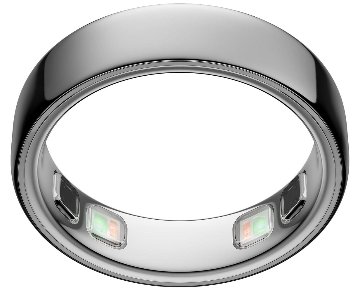
Oura Ring 5
Smart ring
Best for coaching and lifestyle correlation: WHOOP 5.0
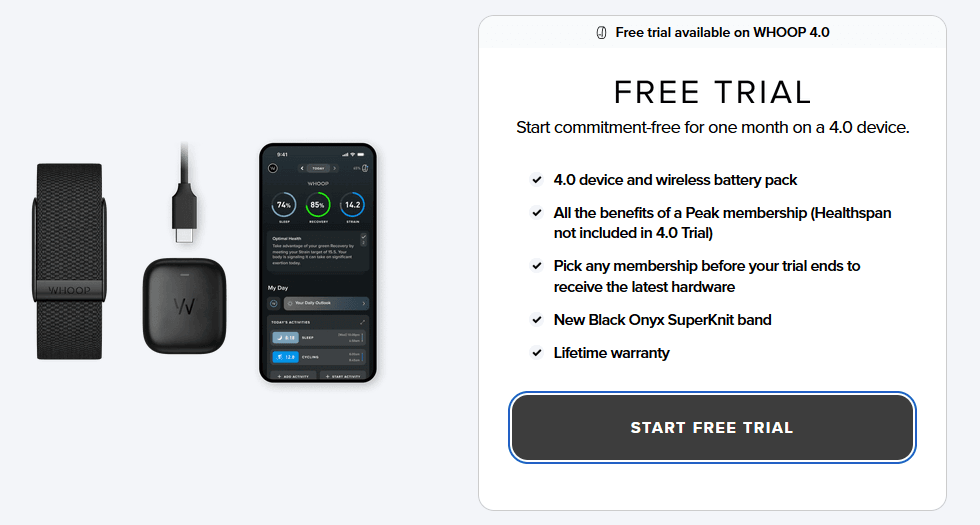
WHOOP has the strongest app in the screenless tracker category, the best workout autodetection, and the deepest coaching layer. The MG tier adds ECG and blood pressure trend monitoring. WHOOP is subscription-only, starting at $199 per year. For athletes who want the deepest recovery coaching and are prepared to pay an ongoing subscription, WHOOP delivers it. The site’s full screenless tracker comparison covers WHOOP against CIRQA, Polar LOOP, Fitbit Air, and Helio Strap Pro in detail.
Best for existing Garmin owners: Garmin CIRQA
The CIRQA at $199.99 with no subscription is the natural companion for existing Garmin watch owners who want a screenless band feeding into Garmin Connect. It has the only physical button in the screenless tracker category, good autodetection, and full ecosystem integration. For Garmin watch owners satisfied with the recovery data they already have, the CIRQA adds form factor rather than new data types. The full review covers heart rate accuracy across six sessions, plus sleep, steps and calories.
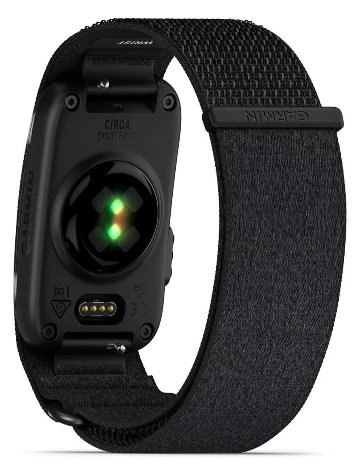
Garmin CIRQA Smart Band
Screenless health and fitness band (no subscription required)
RRP £179.99
$199.99/€199.99
- use code:
Get it nowOrder now – Garmin CIRQA Smart Band Also sold direct byBest value screenless tracker: Amazfit Helio Strap
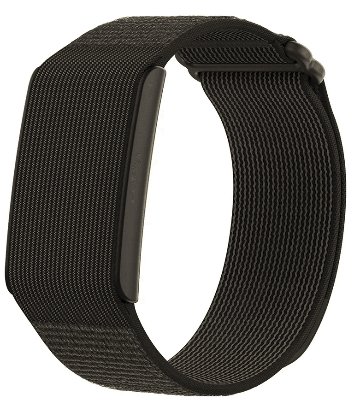
The Amazfit Helio Strap at $99.99 ties as the cheapest option in the category with no subscription required. The Zepp app is impressively solid — more polished than Polar Flow and a credible alternative to CIRQA for athletes outside the Garmin ecosystem. The Helio Strap Pro at $199.99 adds unique HYROX-specific per-station muscular load tracking that no other device in this category attempts, making it the strongest specialist option for HYROX athletes.
Amazfit Helio Strap
Sports tracker biceps band
Polar LOOP 2
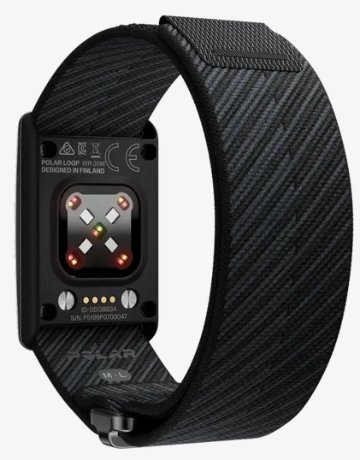
The Polar LOOP 2 is a subscription-free screenless tracker at $199.99 that feeds into Polar Flow. For existing Polar watch owners who want ecosystem continuity and a one-time purchase, it is the correct choice within that platform. The app is functional but dated and does not match WHOOP, Garmin Connect, or the Zepp app on usability. Recovery Pro and Training Load Pro — Polar’s strongest features — run on the watch, not the band.
Polar Loop
Arm-worn heart rate tracker
Using recovery tracker data honestly
The most useful application of any recovery tracker is tracking your own personal HRV trend against your normal range over weeks and months. A single day’s score is rarely meaningful. A sustained drop below your normal range in response to an identifiable stressor — illness, overreaching, travel, alcohol, poor sleep — is informative. A sustained increase indicates adaptation. The platform’s composite readiness score is less useful than the underlying HRV trend because composite scores blend input with output, obscuring the signal.
No platform currently on the market tells you whether your muscles are ready for another hard session. For athletes who want the most precise HRV data for training decisions, an active morning protocol — seated, standing, or orthostatic — with a Polar H10 and HRV4Training or Elite HRV remains more reliable than any passive overnight wearable. The trade-off is daily discipline versus zero friction. Both have a role depending on the athlete.
For the full scientific analysis of HRV measurement across Garmin, WHOOP, Oura, and HRV4Training, see the HRV guide. For the full screenless tracker comparison, see the CIRQA vs WHOOP comparison. For Garmin’s recovery feature stack, see the Garmin features hub. For the recovery tracker hub, see the recovery trackers section.
Best-of guides
Explore the full resource library
This site covers endurance sport technology across a range of dedicated reference sections. Each one collects the most relevant articles, tests, and analysis on its topic in one place.
Buyer guides
- Best sports watch: tested recommendations by sport and athlete type (triathlon, running, marathon, cycling, hiking, and women)
- Best Garmin watch: Forerunner versus Fenix by series, sport, and budget
- Best wearables: fitness trackers, recovery trackers, heart rate monitors, running power meters, and female athlete tech
- Best cycling products: computers, smart trainers, power meters, and cycling heart rate monitors
- Buying guides: every upgrade guide and product comparison in one place, by brand, for owners deciding whether to move to the newest model
- Gear I use: the watches, bikes, sensors, fuel and sleep kit tfk actually trains and races with, and what his partner uses
Brand and product guides
- Amazfit: the full Amazfit range from Balance to Cheetah to T-Rex, accuracy tests, HYROX partnership, and Zepp Health analysis
- Apple Watch: athlete-first coverage of Apple Watch across running, cycling, and triathlon
- COROS: watches, features, and firmware across the full COROS range
- Garmin: the company, the platform and the full range, and the starting point for choosing across every Garmin product line
- Garmin Edge: bike computers from entry-level navigation to flagship endurance and mountain biking
- Garmin Fenix: every model, feature, and firmware development for Garmin's flagship outdoor watch
- Garmin Fenix 8 Series: which variant to buy, upgrade advice, accuracy data, and the full Fenix 8 review and firmware coverage
- Garmin Forerunner: the full Forerunner line covered from entry level to triathlon flagship
- Garmin Instinct: rugged GPS watches for endurance and adventure athletes
- Garmin Features Explained: how Garmin's metrics work, from Training Load and Body Battery to Race Predictor and HRV Status
- Google Fitbit: Fitbit Edge, Fitbit Air, Google Health, Pixel Watch and the Wear OS platform
- Polar: watches, sensors, Polar Flow and training science across the full Polar range
- Runna: coach-written running plans that adapt as you train
- Suunto: Race, Vertical, Run and the SuuntoPlus ecosystem
- Strava: features, privacy, segments, and how Strava fits into a serious training setup
- Ride with GPS: route planning, navigation and how it works alongside Strava
- Wahoo: KICKR trainers, ELEMNT bike computers, and the Wahoo ecosystem
- WHOOP: strain, recovery, sleep and the full WHOOP ecosystem
Specifications database
- Full Specifications Database: detailed spec sheets, battery life, sensor lists and generation-on-generation comparisons for current Garmin, COROS, Amazfit, Samsung, Google Fitbit, Huawei, Polar, Suunto, Wahoo and Apple Watch models
Glossary
- Sports Technology Glossary: non-branded terminology across running, cycling, swimming, triathlon, hiking, strength training, HYROX, sensors, ecosystems, and brands
Sport and topic guides
- Running Watches: how to choose by discipline (road racing, trail, track, beginner, and multisport)
- Triathlon and Multisport Technology: watches, sensors, and race-day tools for swimmers, cyclists, and runners
- HYROX: training science, race analysis, and technology for the functional fitness race format
- parkrun: technology, training, and performance for the weekly 5K
- Hiking Technology: navigation, safety, and trail tech for walkers and hikers
- Heart Rate Monitoring: optical sensors, chest straps, accuracy comparisons, and how to set training zones
- Optical Sensors (PPG): the 40 things a wrist optical sensor could measure, from heart rate to glucose, ranked by evidence
- GPS Accuracy: how satellite systems perform across brands, terrains, and conditions
- Sports Watch Battery Life: battery claims, real-world tests, and how to manage battery life across Garmin, Apple, Amazfit and COROS
- Recovery Trackers: WHOOP, Oura, and the science of readiness scoring
- Muscle Oxygen Sensors: SmO2 and NIRS explained, Train Red and Moxy compared, and the category from BSX and Humon to Garmin and WHOOP
- Female Athlete Tech: wearables, physiology, and performance for female endurance athletes, covering cycle-synced training, RED-S, HR accuracy, and VO2max
- Sports Science: peer-reviewed research on HRV, VO2max, lactate threshold, running power, wearable accuracy, and supplementation
- Testing Methodology: how this site tests GPS accuracy, heart rate, battery life, and other performance claims
Content series
- Release Radar: confirmed launches, leaks, and rumours across Garmin, Apple, COROS, Polar, Suunto, and Wahoo
- Deep Dive Feature Files: weekly firmware feature updates across all brands (bug fixes excluded)
- Fix Files: weekly firmware bug fix tracking across all brands
Small things I always use
- Garmin 90-degree charging adapter: Charges your Garmin from any USB-C cable. Essential when travelling. I use one.
- Body Glide: The blue anti-chafe stick swimmers and runners carry. I use it.
- Speedo earplugs: Fewer ear infections and no cold-water dizziness. I use them.
- Dryrobe Advance: My winter changing robe for open-water swims. I use one. A cheaper option is the AONYIYI changing robe.
- Maurten: Race fuel that stays easy on the stomach. I use them.
- Beet It Sport nitrate shots: Beetroot shots I take in the days before a race. I use them.
- Garmin charging puck: The quickest way to top up before a session. I use one.
- Injinji: Toe socks that stop rubbing, so you run more. I use them.
- Ultimate toe protectors: Stop black toenails on long runs. They work. I use them.
- Compressport R2 v2 calf sleeves: My calf sleeves of choice. I use them.
- Cellucor C4: My pre-workout before hard sessions.
- TPU tubes: Schwalbe Aerothan, Tubolito and Pirelli SmarTube. Light, tiny spares. I use all three.
- G8 insoles: Adjustable insoles that are good. I use them.
- Cycplus Cube: A 97g electric pump that gets a road tyre rideable in two minutes. I carry one. 5% off with code THE5KRUNNER.
Watches and sensors
- Polar H10: My daily driver for waking HRV.
- Polar Verity Sense: My backup arm-worn HR sensor.
- Nomad bedside charger: Charges my iPhone and Apple Watch overnight. I use it, and many of their bands.
- Train.Red: The best muscle oxygen sensor I’ve used.
- Tymewear: Accurate heart rate and reliable ventilatory zones. I use it to pace endurance rides over an hour.
- Garmin Forerunner 970: A pro-grade triathlon watch. I use this.
- Apple Watch Ultra 4: My daily smartwatch. No phone needed on rides.
- Garmin Fenix 9 Pro: I’ve just bought one.
On the bike
- Continental GP5000 for everyday riding, and Aero 111 on the front for special occasions.
- Helmets: Specialized S-Works Evade 3 for road riding, and Rudy Project Wing for TT-style races. I use both.
- Ravemen FR300: A front light that mounts under your Garmin or Wahoo. I use one.
- Wahoo TRACKR Radar: I use it on one bike and Varia on the other. They perform the same.
- Garmin Varia RTL515: Radar that warns you of cars from behind. I use this model.
- Wahoo ELEMNT Roam 3: The bike computer that’s easy to use. I use mine on most rides.
- Favero Assioma Pro RS2: Accurate power pedals that swap easily between bikes. I use this model.
Home and indoor training
- NPE Runn: Makes my basic treadmill smart, sending more accurate speed and distance to my watch and Zwift. I use it.
- Google Wifi: Keeps Zwift connected in my pain cave. I use it.
- Apple TV 4K: Zwift on the big screen. I use two.
- Google Nest Doorbell (wired, 2nd gen): My video doorbell, running in both Google Home and Apple Home. I use it.
Health, recovery and sleep
- FreeStyle Libre 3 Plus: Shows how my blood sugar responds to diet.
- hDrop: Measures my sweat loss in summer and indoors.
- Fourth Frontier Zone: Checks my heart under load in hard sessions.
- Oura Ring 5: My partner’s recovery tracker of choice.
- Eight Sleep: A cooling mattress cover my partner and I use nightly.
Reader-Powered Content

This content is not sponsored. It’s mostly me behind the labour of love, which is this site, and I appreciate everyone who supports it.
Support the site: Follow (free, fewer ads) · Subscribe (paid, ad-free) · Buy Me A Coffee
Written by real people, with AI assistance. Fact-checked and verified for originality. See the Editorial Policy. FTC: Affiliate Disclosure — some links pay commission. As an Amazon Associate, I earn from qualifying purchases.
