Retraces the recorded GPS track, so it carries any error in that track
Getting back to the car or trailhead after an unplanned run or hike
Only works during the activity being recorded, and the as the crow flies return option ignores terrain
Quick answers
What is the difference between TracBack and Back to Start on a Garmin?
Back to Start is the menu option, and TracBack is one of the choices inside it. TracBack follows the path already travelled, while the other choice, Straight Line or Route, heads for the start directly, with turn-by-turn directions on watches with maps.
Can I use Back to Start after saving an activity?
Not from the Back to Start menu, which only appears while a GPS activity is still recording. Watches with maps have a separate option to navigate to the starting point of a saved activity.
Does Garmin Back to Start need maps?
No. TracBack and the straight-line option work on watches without maps, because both use the GPS track recorded during the activity. Maps add turn-by-turn directions back to the start.
Which Garmin watches have Back to Start?
Garmin documents it across its GPS watches, from Forerunner and Instinct to MARQ and Descent, and its support page says the steps vary by model. The owner’s manual gives the exact button and options.
Back to Start – a deep dive
When Back to Start is actually useful
In over 10 years of navigating and using sports devices, I can’t remember ever truly needing to use this feature. I’ve only ever been on sufficiently safe terrain where I need a bearing back to the start and the ability to improvise as I go. If you get to your point of getting lost in a necessarily intricate way, then this feature will retrace those intricacies. To a large degree, you can compensate for an outbound wrong turn by zooming out on the map to get the context of where you are and where you are heading. This feature may have been more useful in days when we only had breadcrumb (line) navigation.
Introduction
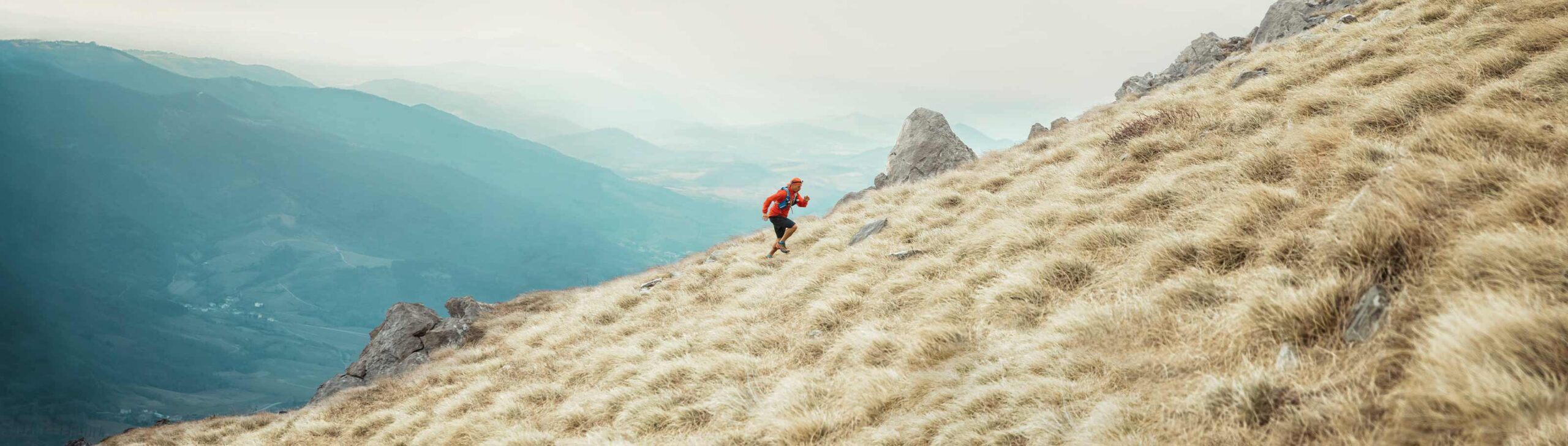
Garmin Back to Start, which runners also search for as return to start, is the navigation option that leads an athlete back to where an activity began. Garmin’s manuals describe it this way: “You can navigate back to the starting point of your current activity in a straight line or along the path you traveled.” TracBack, Garmin’s older name for retracing the route, now sits inside the Back to Start menu.
It belongs with Garmin’s navigation features, alongside course following, which guides an athlete along a route planned in advance. Back to Start needs no planning, because it works from the activity being recorded. Its limitation follows from that: Garmin’s support page says the option “will not appear for saved activities, or activities that do not record GPS.”
What the Back to Start options mean
TracBack follows the recorded track in reverse, so the athlete returns the way they came, through the same gates and over the same paths. The second option is named differently by watch. On Instinct watches it is Straight Line, and it shows the direction and distance to the start without regard to what lies in between. On other watches it is Route. Without maps, or with the direct routing setting switched on, Route does the same straight-line job; with maps and direct routing switched off, it gives turn-by-turn directions back along the map’s roads and trails. Whichever option is chosen, the map shows the current location, the track to follow and the destination. Garmin also offers Off Course alerts, which warn when the athlete strays from the recorded track during TracBack.
How Garmin Back to Start works
Garmin states that TracBack and Back to Start navigate back along the GPS track for the current activity, and that the feature only works while that activity is recording GPS. The straight-line option most plausibly compares the current position with the stored start point and shows the bearing and distance. The routed option uses the watch’s maps to plan a new path to the same point.
What affects Back to Start
TracBack can only be as good as the track it follows. A track recorded under tree cover, between tall buildings or with a poor satellite fix will lead back along the same errors, and the GPS accuracy of the watch sets that limit. The straight-line option ignores rivers, cliffs and private land, so it suits open ground better than a valley or a city. On mapped watches, the result of Route depends on whether direct routing is switched on and on the maps installed.
How accurate is Garmin Back to Start
Garmin publishes no accuracy figure for Back to Start. TracBack adds no error of its own, so the way back is as good as the track recorded on the way out. The straight-line option is accurate to the start point, but the distance it shows is not the distance left to travel.
Competitor equivalents
- Polar offers Track back, which follows the route already travelled, and Back to start, which shows the direction and distance to the starting point, on watches such as Grit X2 and Vantage V3.
- COROS has Back to Start, which follows the GPS points logged during the activity as breadcrumb navigation and needs no loaded route.
- Suunto calls its version Find back, which guides the athlete directly back to the starting point of a GPS-recorded exercise.
- Apple Watch has Backtrack in the Compass app, which retraces the wearer’s steps.
Which Garmin devices support Back to Start
Back to Start goes back at least to the Forerunner 201, whose owner’s manual offers to “return to your start point along a traveled path without marking any locations”, and the Fenix 3 manual uses the name TracBack for the same idea. Today Garmin documents it across its GPS watch range, although the options and the button differ by model: Instinct and Descent G2 watches offer TracBack or Straight Line from the GPS button, while mapped watches such as MARQ add a routed option with turn-by-turn directions.
Where to find Back to Start on Garmin
- On mapped watches such as MARQ: during a GPS activity, press STOP, then select Back to Start and choose TracBack or Route.
- On Instinct and Descent G2: during the activity, press GPS, then select Back to Start and choose TracBack or Straight Line.
- After an activity, on mapped watches: the navigation menu has a separate option to navigate to the starting point of a saved activity.
Common problems and misreadings
The option is missing once the activity has been saved, and it never appears in an activity that does not record GPS. See Quick answers above for the mapped-watch alternative.
TracBack retraces every detour, including a wrong turn or a loop, because it follows the track exactly rather than looking for a shorter way home.
How to improve Back to Start
Back to Start is not a trainable metric. A clean track to follow comes from waiting for a good satellite fix before starting the activity.
How Back to Start connects to other Garmin features
Back to Start is the unplanned counterpart to course following, and on hilly ground ClimbPro shows the climbs on a planned course. For hikers, the hiking technology hub covers maps and safety kit, and if the way back goes wrong, Incident Detection and LiveTrack tell someone where the athlete is. The other navigation features are listed on the Garmin navigation page, and Garmin’s own guide is on its Back to Start support page.
Small things I always use
- Garmin 90-degree charging adapter: Charges your Garmin with any USB-C cable. Essential when travelling. I use one.
- Body Glide: The blue anti-chafing stick swimmers and runners carry. I use it.
- Speedo earplugs: Fewer ear infections and no cold-water dizziness. I use them.
- Dryrobe Advance: My winter changing robe for open-water swims. I use one. A cheaper option is the AONYIYI changing robe.
- Maurten: Race fuel that stays easy on the stomach. I use them.
- Beet It Sport nitrate shots: Beetroot shots I take in the days before a race. I use them.
- Garmin charging puck: The quickest way to top up before a session. I use one.
- Injinji: Toe socks that stop rubbing, so you run more. I use them.
- Ultimate toe protectors: Stop black toenails on long runs. They work. I use them.
- Compressport R2 v2 calf sleeves: My calf sleeves of choice. I use them.
- Cellucor C4: My pre-workout before hard sessions.
- TPU tubes: Schwalbe Aerothan, Tubolito and Pirelli SmarTube. Light, tiny spares. I use all three.
- G8 insoles: Adjustable arches, perfect position. I use them.
- Cycplus Cube: A 97g electric pump that gets a road tyre rideable in two minutes. I carry one. 5% off with code THE5KRUNNER.
Health, recovery and sleep
- Kineon MOVE+: Red and infrared light for sore knees, Achilles and other joints after hard training. I use it.
- FreeStyle Libre 3 Plus: Shows how my blood sugar responds to diet. Occasional use.
- hDrop: Measures my sweat loss in summer and indoors. I use it.
- Fourth Frontier Zone: Checks my heart under load in hard sessions.
- Oura Ring 5: My partner’s recovery tracker of choice.
- Eight Sleep: A cooling mattress cover my partner and I use nightly.
Watches and sensors
- Polar H10: My daily driver for waking HRV.
- Polar Verity Sense: My backup arm-worn HR sensor.
- Nomad bedside charger: Charges my iPhone and Apple Watch overnight. I use it, and many of their bands.
- Train.Red: The best muscle oxygen sensor I’ve used. Occasional use.
- Tymewear: Accurate heart rate and reliable ventilatory zones. I use it to pace endurance rides over an hour.
- Garmin Forerunner 970: A pro-grade triathlon watch. I use this.
- Apple Watch Ultra 4: My daily smartwatch. No phone needed on rides.
On the bike
- Continental GP5000 for everyday riding, and Aero 111 on the front for special occasions. I use both.
- Helmets: Specialized S-Works Evade 3 for road riding, and Rudy Project Wing for TT-style races. I use both.
- Ravemen FR300: A front light that mounts under your Garmin or Wahoo. I use one.
- Ravemen FR1000: The light and the computer mount in one unit, so nothing else goes on the bars. Better than mine.
- Ravemen FR1500SE: 1,500 lumens hanging under your Garmin, for proper night rides.
- Ravemen FR1100SE: 1,100 lumens under your Garmin, and up to 46 hours on slow flash.
- Ravemen FR500: A brighter FR300 with the same mount.
- Wahoo TRACKR Radar: I use it on one bike and Varia on the other. They perform the same.
- Garmin Varia RTL515: Radar that warns you of cars from behind. I use this model.
- Wahoo ELEMNT Roam 3: The bike computer that’s easy to use. I use mine on most rides.
- Favero Assioma Pro RS2: Accurate power pedals that swap easily between bikes. I use this model.
Home and indoor training
- NPE Runn: Makes my basic treadmill smart, sending more accurate speed and distance to my watch and Zwift. I use it.
- Google Wifi: Keeps Zwift connected in my pain cave. I use it.
- Apple TV 4K: Zwift on the big screen. I use two.
- Google Nest Doorbell (wired, 2nd gen): My video doorbell, running in both Google Home and Apple Home via Starling. I use it.
Reader-Powered Content

This content is not sponsored. It’s mostly me behind the labour of love, which is this site, and I appreciate everyone who supports it.
Support the site: Follow (free, fewer ads) · Subscribe (paid, ad-free) · Buy Me A Coffee
Written by real people, with AI assistance. Fact-checked and verified for originality. See the Editorial Policy. FTC: Affiliate Disclosure — some links pay commission. As an Amazon Associate, I earn from qualifying purchases.
