The GT 7 Pro costs £100 more than the standard GT 7, and almost none of that premium buys new capability. Both watches run the same trail running mode, the same skiing and golf upgrades, the same cycling climb analysis, and the same women’s health research. The decision comes down to three things:
- What the case is made of,
- Whether an on-demand ECG sensor is worth paying for, and
- Whether diving is actually something you do.
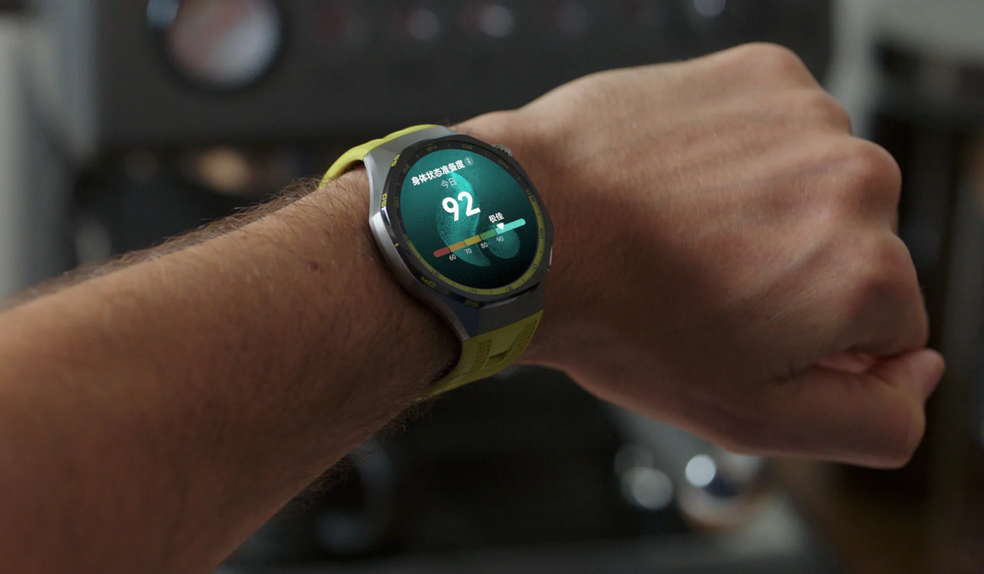
Case material is the real difference
The GT 7 Pro carries over last year’s titanium front and nanocrystal ceramic back in the 45.6mm case size, with a sapphire crystal lens. The standard GT 7 uses a stainless steel front and fibre-reinforced composite back, in 41mm or 46mm sizes. Titanium and ceramic wear better over years of daily use: titanium resists the dents and scratches steel picks up, and ceramic doesn’t scuff the way composite backs eventually do against a desk edge or a bike stem. Sapphire crystal is also meaningfully harder than whatever cover lens sits on the standard GT 7, so it survives gravel, rock scrambles and bike crashes better. Yet, sapphire isn’t Huawei’s best available lens material, however: the company’s own Kunlun Glass outperforms sapphire crystal on drop resistance in Huawei’s own testing, and the GT 7 Pro doesn’t use it. Titanium build quality itself is something Huawei already does well elsewhere; the Watch GT Runner 2 runs a titanium case at 34.5g and held up across a month of testing. If you replace a watch every two years regardless of condition, none of this matters. If you expect to wear one watch for five years, it might. A superior case and lens just de-risks your purchase aginst accidents that do happen.
The ECG sensor is a weaker argument than it sounds
The GT 7 Pro adds an on-demand ECG sensor; the GT 7 does not.
On paper, this sounds like a genuine health feature worth paying for. In practice, an on-demand ECG captures a reading only when you press and hold the sensor, which means it catches an arrhythmia only if you happen to be measuring when the event occurs. Atrial fibrillation and other arrhythmias are frequently intermittent and asymptomatic, so a watch that requires you to notice something is wrong before you can check is poorly matched to catching the thing it’s meant to catch. Continuous background heart rhythm monitoring, which flags irregularity without you initiating anything, is a meaningfully different and more useful capability than on-demand ECG, and this watch doesn’t offer it.
Buy the Pro for the case material and the diving rating if those matter to you; don’t buy it for the ECG sensor if you expect it to catch problems you wouldn’t otherwise notice.
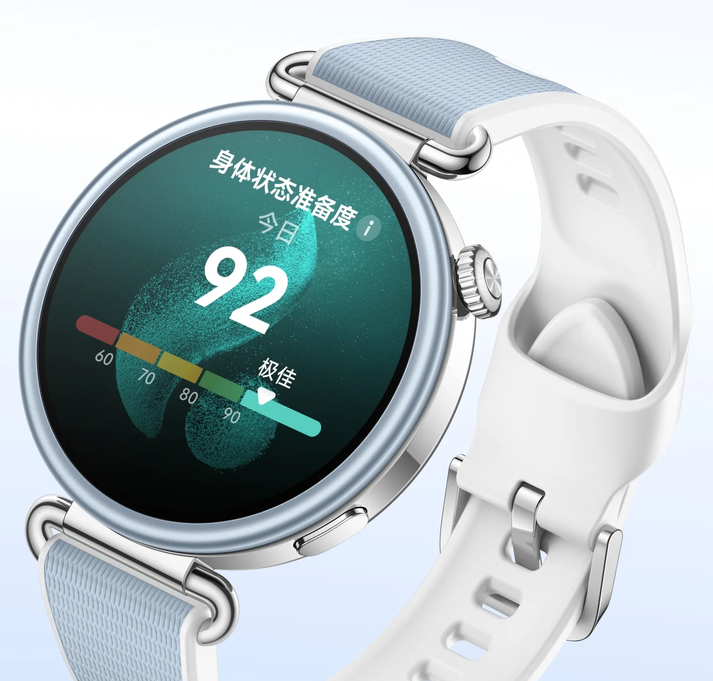
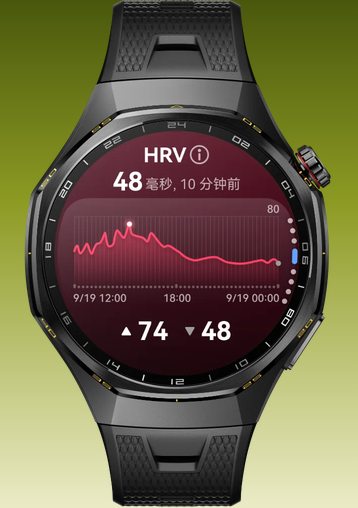
Diving is a rating for divers, not a general buyer
The GT 7 Pro carries a 40-metre freedive rating; the GT 7 doesn’t.
This is a significant capability difference, but only for those who really need it: apnoea diving to 40 metres, not scuba, and not general water resistance beyond swimming. If you dive, this is one of the two reasons to pick the Pro. If you don’t, it adds nothing to daily use, since both watches handle swimming and general water exposure without issue. It’s easy to see “freedive rating” on a spec sheet and read it as a broader durability signal; it isn’t. It’s a single-purpose feature for a single-purpose audience.
Everything else is shared
Battery life scales with case size rather than tier: the Pro’s 45.6mm case and the GT 7’s 46mm size both reach 51 hours of continuous GPS in the new trail running mode, up from 40 hours on last year’s equivalent GT 6 modes. The GT 7’s 41mm size manages 32 hours, up from 25. Skiing modes, golf mode upgrades, cycling climb analysis with AI-assisted ride data, and the health research programmes Huawei is running with Chinese hospital partners all apply equally to both watches. None of this differs by tier.
The decision, plainly
Buy the GT 7 Pro if you want a case that ages better over years of wear, or if you dive to 40 metres. Buy the standard GT 7 if neither of those applies, and put the £100 difference toward something else. The ECG sensor shouldn’t tip the decision either way, since an on-demand reading only helps if you’re already suspicious enough to check, at which point a hospital visit is the more useful next step regardless of what your watch says.
Full specifications for both models: Watch GT 7 Pro and Watch GT 7. For pricing, launch details and what changed from the GT 6 generation, see Huawei Watch GT 7: All You Need to Know, and the current Huawei Watch GT 7 Pro price.

Quick answers
Is the Huawei Watch GT 7 Pro worth £100 more than the standard GT 7?
Only if the titanium and ceramic case matters to you over years of wear, or if you need the 40-metre freedive rating. Every software feature, battery life at matching case size, and sensor beyond ECG and depth are identical between the two.
Should I buy the GT 7 Pro for its ECG sensor?
No. The ECG is on-demand only, meaning it captures a reading only when you actively check it. Arrhythmias are often intermittent and asymptomatic, so an on-demand sensor is poorly suited to catching problems you don’t already suspect.
Does the standard Huawei Watch GT 7 support diving?
No. Only the GT 7 Pro carries a 40-metre freedive rating. Both watches handle swimming and general water exposure without issue.
Is battery life better on the GT 7 Pro?
Battery life tracks case size, not tier. The Pro’s 45.6mm case and the GT 7’s 46mm size both reach 51 hours of continuous GPS in trail running mode. The GT 7’s smaller 41mm size manages 32 hours.
Last Updated on 8 October 2026 by tfk the5krunner
Small things I always use
- Garmin 90-degree charging adapter: Charges your Garmin from any USB-C cable. Essential when travelling. I use one.
- Body Glide: The blue anti-chafe stick swimmers and runners carry. I use it.
- Speedo earplugs: Fewer ear infections and no cold-water dizziness. I use them.
- Dryrobe Advance: My winter changing robe for open-water swims. I use one. A cheaper option is the AONYIYI changing robe.
- Maurten: Race fuel that stays easy on the stomach. I use them.
- Beet It Sport nitrate shots: Beetroot shots I take in the days before a race. I use them.
- Garmin charging puck: The quickest way to top up before a session. I use one.
- Injinji: Toe socks that stop rubbing, so you run more. I use them.
- Ultimate toe protectors: Stop black toenails on long runs. They work. I use them.
- Compressport R2 v2 calf sleeves: My calf sleeves of choice. I use them.
- Cellucor C4: My pre-workout before hard sessions.
- TPU tubes: Schwalbe Aerothan, Tubolito and Pirelli SmarTube. Light, tiny spares. I use all three.
- G8 insoles: Adjustable insoles that are good. I use them.
- Cycplus Cube: A 97g electric pump that gets a road tyre rideable in two minutes. I carry one. 5% off with code THE5KRUNNER.
Watches and sensors
- Polar H10: My daily driver for waking HRV.
- Polar Verity Sense: My backup arm-worn HR sensor.
- Nomad bedside charger: Charges my iPhone and Apple Watch overnight. I use it, and many of their bands.
- Train.Red: The best muscle oxygen sensor I’ve used.
- Tymewear: Accurate heart rate and reliable ventilatory zones. I use it to pace endurance rides over an hour.
- Garmin Forerunner 970: A pro-grade triathlon watch. I use this.
- Apple Watch Ultra 4: My daily smartwatch. No phone needed on rides.
- Garmin Fenix 9 Pro: I’ve just bought one.
On the bike
- Continental GP5000 for everyday riding, and Aero 111 on the front for special occasions.
- Helmets: Specialized S-Works Evade 3 for road riding, and Rudy Project Wing for TT-style races. I use both.
- Ravemen FR300: A front light that mounts under your Garmin or Wahoo. I use one.
- Wahoo TRACKR Radar: I use it on one bike and Varia on the other. They perform the same.
- Garmin Varia RTL515: Radar that warns you of cars from behind. I use this model.
- Wahoo ELEMNT Roam 3: The bike computer that’s easy to use. I use mine on most rides.
- Favero Assioma Pro RS2: Accurate power pedals that swap easily between bikes. I use this model.
Home and indoor training
- NPE Runn: Makes my basic treadmill smart, sending more accurate speed and distance to my watch and Zwift. I use it.
- Google Wifi: Keeps Zwift connected in my pain cave. I use it.
- Apple TV 4K: Zwift on the big screen. I use two.
- Google Nest Doorbell (wired, 2nd gen): My video doorbell, running in both Google Home and Apple Home. I use it.
Health, recovery and sleep
- FreeStyle Libre 3 Plus: Shows how my blood sugar responds to diet.
- hDrop: Measures my sweat loss in summer and indoors.
- Fourth Frontier Zone: Checks my heart under load in hard sessions.
- Oura Ring 5: My partner’s recovery tracker of choice.
- Eight Sleep: A cooling mattress cover my partner and I use nightly.
Reader-Powered Content

This content is not sponsored. It’s mostly me behind the labour of love, which is this site, and I appreciate everyone who supports it.
Support the site: Follow (free, fewer ads) · Subscribe (paid, ad-free) · Buy Me A Coffee ❤️
Written by real people, with AI assistance. Fact-checked and verified for originality. See the Editorial Policy. FTC: Affiliate Disclosure — some links pay commission. As an Amazon Associate, I earn from qualifying purchases.
tfk is the founder and author of the5krunner, an independent endurance sports technology publication. With 20 years of hands-on testing of GPS watches and wearables, and competing in triathlons at an international age-group level, tfk provides in-depth expert analysis of fitness technology for serious athletes and endurance sport competitors. ID

Hi, does the watch support replying to notifications, similar to Amazfit watches? For example, can I reply to messages directly from the watch?
And does it work with iOS? Amazfit recently introduced this functionality with its new system update. Thanks 🙂