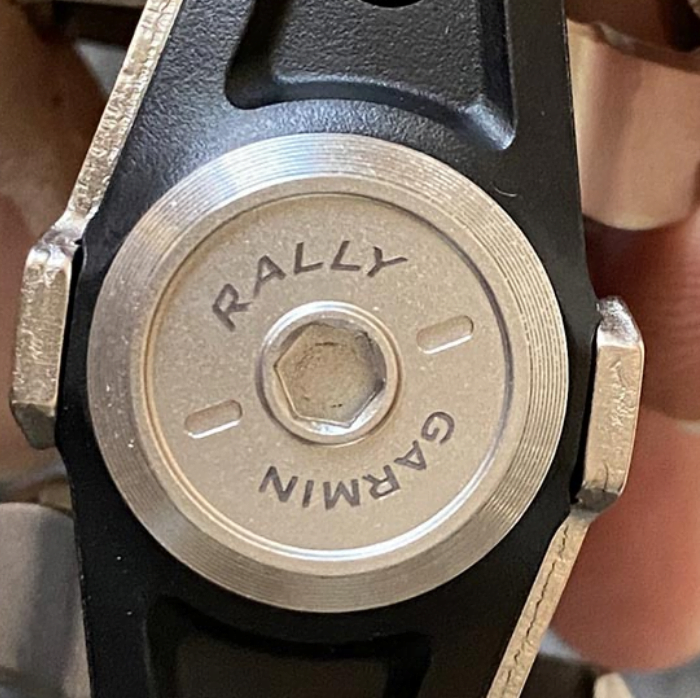
Garmin Rally X10: new Power Pedals for 2025-2026, likely SOON!
via: @JohnW, thank you!
Today, I directly a new leak on an upgrade to Garmin’s power meter pedal system, likely called RALLY X10. A few new featurettes are coming too, and I’m half-expecting to see the product on the shelves in August-September. (Talking with others, they have also heard different rumours, hence considerably bumping up the likelihood)
Update: Garmin RS/RK/XC versions of dual sided 210 and single-sided 110 Rally pedals launched
Let’s go…
why Now?
The existing Garmin RALLY RS200 (RS Series) is over four years old; it’s falling behind in competitiveness. I wouldn’t buy one today.
Simply put, it’s due for a refresh. Component technologies will have improved slightly over the years and become more accurate and power-efficient. Plus, Garmin will be aware of the limitations of the current product and be determined to overcome them.
Garmin will have expected a new product from Favero – I have the Assioma PRO RS-2 (2025), and they are awesome. I couldn’t ask for anything more in a reference-grade power meter pedal.
I doubt any of Assioma’s capabilities would have surprised Garmin, which will be looking to add something new and different to justify its longstanding premium pricing strategy.
Furthermore, legislation and the needs of pro riders are driving sports electronics towards secure data connections.
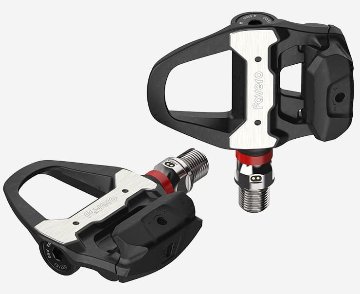
Favero Assioma PRO RS
Accurate. Lightweight. Best value.
RRP $789.00
£649.00, €699.00
- use code:
Get it nowOrder now – Favero Assioma PRO RS Also sold direct bysort-of Leaked New Features
My source has mentioned all these features. Not being a cyclist, the source was a bit sketchy on some of these, so I’ve tried to fill some gaps without making stuff up.
Secure Sensor connection
We will get secure power meter connections aligned with similarly secure connections Garmin has already introduced for heart rate monitors like HRM 600.
This is both leaked and expected. It’s the way of the world, in that the powers seem to believe we want secure connections to non-personal data. #sigh.
Direct Force Measurement
The watts we see from our power meter pedals are:
Power (Watts)=(Force (N)×Crank Length (mm)/1000)×(2π×Cadence (rpm)/60)
Garmin will add new metrics that let us consider just the force part of the calculation. This is not new. I believe Pioneer, Rotor and Shimano have supported FORCE in some guise on earlier products. I wouldn’t get too excited by it as it will be of limited use.
There are some training protocols where you focus on producing force, which usually involve pedalling at a low cadence. Having FORCE as a new metric will help this kind of training.
It’s perhaps also interesting to understand the forces you are putting out in different kinds of riding. For example, I know that when out of the saddle, sprinting up relatively short hills, I am cycling with a lowish cadence (say 60rpm), where I can generate significantly more power than when seated. When in the saddle, I can’t generate anywhere near as much power, but can physically spin faster (80-100rpm). I could do the math, I suppose. I could also try to close the gap that exists in the force from sitting and the force when standing.
For reviewers, force might also be a better comparator when determining accuracy. Numerous power meters drop the occasional crank revolution. You’ve seen the calculation above, so you will understand that a missed revolution can significantly throw off the resulting watts, making comparison tricky with another product. When I look for a power difference, is it caused by whatever measures the cadence, the force, or both? Now I’ll know more easily and with left and right force splits.
speculated Features
From the known leaks above, it follows that there will be other related features.
I’ll also add some glaring omissions by Garmin that its competitors offer, and where Garmin will probably want to play catch-up.
Increased Data Rate Capture and Broadcast
I don’t want to delve too much into data measurement, processing and broadcasting frequency. Suffice it to say, I will be very surprised if we don’t see the ability to receive higher resolution data. The storage limitation is that, AFAIK, a FIT file can only have 5 data points per second. We see that in RR/HRV data, and recently with the 5Hz position reporting for Edge MTB.
The 5Hz limit will not be changed for FIT files; however, it might be possible to create a live stream differently, either through Bluetooth (? IDK) or directly to Garmin Connect or a 3rd party app. I believe Pioneer did that.
In terms of what that means for me and regular readers of this site, the answer is “not a lot.” You will probably get a more accurate power curve in the 1-3 second range. That’s it. The averaging calculations performed on your bike computer or the power meter itself, around 5Hz data, only impact accuracy in that timeframe.
Increased Accuracy
Body Rocket and others have introduced power meters claiming accuracy (error) below 1%. Garmin’s frequent data, perhaps a new generation of strain gauge, and some awesome tinkering from its engineers might be able to give us a more accurate power meter.
This would mean nothing to most people in terms of true actionability. However, I’m pretty sure that lots of people are a sucker for claims of ”It’s more accurate ” and would buy Rally X10 as a result. (Yeah, me too!!)
Battery
I suspect Garmin will revert to rechargeable batteries.
Plus, as is the way with these things, battery life will be even better than before.
It will be interesting to see if Garmin can boost Rally from the 100-120 hours eked from the replaceable battery. Favero only managed 50-60 hours from the Li-ion rechargeable, so perhaps Garmin’s battery life will drop to those kinds of levels. There is no magic battery tech that Favero was unaware of.
Rectify common problems
I steered well clear of Garmin’s Rally pedals. Having been burned by the problems of the Vector predecessors, I trusted Favero instead. I seem to have made the right choice, as the following are known Rally issues that Garmin will likely be working to design around for the replacement model.
- Bearing wear after ~10,000–20,000 km, Non-owner-serviceable pedal bearings
- Pedal body wear requiring expensive replacements
- Left/right power imbalance reporting errors (meaning one or both pedals are wrong)
- Notable overreading or underreading power despite calibration
- Torque sensitivity during pedal install
- Misreporting of cadence data
- Temperature drift affecting power accuracy
- Calibration failures on Garmin devices
- Signal dropouts (ANT+/BLE)
- Firmware update failures
- Inconsistent wake/sleep behaviour
- LED indicators showing unknown states
- Incompatibility with certain third-party head units
- No auto-zero calibration
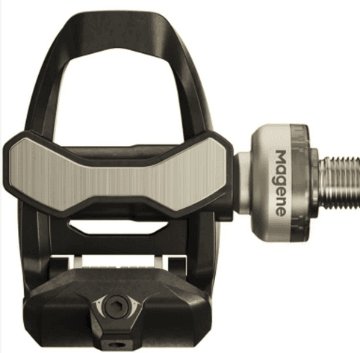
Magene P715S
Dual-sided power meter pedals (Shimano/KEO)
Price: Value – a turning point?
At $1,100, Garmin Rally RS200 overshadows the Assioma PRO RS’s sub-$800 price point. Both starkly put into perspective by Magene’sP715 dual-sided pedals at $500
RS200 isn’t worth $1,100. Yet Garmin will inevitably attempt to further raise the ante with the Rally X10…let’s say $1,200
What do you think…$1200? or a more sensible $950 to counter the glaringly obvious threat from Assioma?
Favero Assioma PRO RS
Accurate. Lightweight. Best value.
RRP $789.00
£649.00, €699.00
- use code:
Get it nowOrder now – Favero Assioma PRO RS Also sold direct byLast Updated on 3 October 2026 by tfk the5krunner
Small things I always use
- Garmin 90-degree charging adapter: Charges your Garmin from any USB-C cable. Essential when travelling. I use one.
- Body Glide: The blue anti-chafe stick swimmers and runners carry. I use it.
- Speedo earplugs: Fewer ear infections and no cold-water dizziness. I use them.
- Dryrobe Advance: My winter changing robe for open-water swims. I use one. A cheaper option is the AONYIYI changing robe.
- Maurten: Race fuel that stays easy on the stomach. I use them.
- Beet It Sport nitrate shots: Beetroot shots I take in the days before a race. I use them.
- Garmin charging puck: The quickest way to top up before a session. I use one.
- Injinji: Toe socks that stop rubbing, so you run more. I use them.
- Ultimate toe protectors: Stop black toenails on long runs. They work. I use them.
- Compressport R2 v2 calf sleeves: My calf sleeves of choice. I use them.
- Cellucor C4: My pre-workout before hard sessions.
- TPU tubes: Schwalbe Aerothan, Tubolito and Pirelli SmarTube. Light, tiny spares. I use all three.
- G8 insoles: Adjustable insoles that are good. I use them.
- Cycplus Cube: A 97g electric pump that gets a road tyre rideable in two minutes. I carry one. 5% off with code THE5KRUNNER.
Watches and sensors
- Polar H10: My daily driver for waking HRV.
- Polar Verity Sense: My backup arm-worn HR sensor.
- Nomad bedside charger: Charges my iPhone and Apple Watch overnight. I use it, and many of their bands.
- Train.Red: The best muscle oxygen sensor I’ve used.
- Tymewear: Accurate heart rate and reliable ventilatory zones. I use it to pace endurance rides over an hour.
- Garmin Forerunner 970: A pro-grade triathlon watch. I use this.
- Apple Watch Ultra 4: My daily smartwatch. No phone needed on rides.
- Garmin Fenix 9 Pro: I’ve just bought one.
On the bike
- Continental GP5000 for everyday riding, and Aero 111 on the front for special occasions.
- Helmets: Specialized S-Works Evade 3 for road riding, and Rudy Project Wing for TT-style races. I use both.
- Ravemen FR300: A front light that mounts under your Garmin or Wahoo. I use one.
- Wahoo TRACKR Radar: I use it on one bike and Varia on the other. They perform the same.
- Garmin Varia RTL515: Radar that warns you of cars from behind. I use this model.
- Wahoo ELEMNT Roam 3: The bike computer that’s easy to use. I use mine on most rides.
- Favero Assioma Pro RS2: Accurate power pedals that swap easily between bikes. I use this model.
Home and indoor training
- NPE Runn: Makes my basic treadmill smart, sending more accurate speed and distance to my watch and Zwift. I use it.
- Google Wifi: Keeps Zwift connected in my pain cave. I use it.
- Apple TV 4K: Zwift on the big screen. I use two.
- Google Nest Doorbell (wired, 2nd gen): My video doorbell, running in both Google Home and Apple Home. I use it.
Health, recovery and sleep
- FreeStyle Libre 3 Plus: Shows how my blood sugar responds to diet.
- hDrop: Measures my sweat loss in summer and indoors.
- Fourth Frontier Zone: Checks my heart under load in hard sessions.
- Oura Ring 5: My partner’s recovery tracker of choice.
- Eight Sleep: A cooling mattress cover my partner and I use nightly.
Reader-Powered Content

This content is not sponsored. It’s mostly me behind the labour of love, which is this site, and I appreciate everyone who supports it.
Support the site: Follow (free, fewer ads) · Subscribe (paid, ad-free) · Buy Me A Coffee
Written by real people, with AI assistance. Fact-checked and verified for originality. See the Editorial Policy. FTC: Affiliate Disclosure — some links pay commission. As an Amazon Associate, I earn from qualifying purchases.

tfk is the founder and author of the5krunner, an independent endurance sports technology publication. With 20 years of hands-on testing of GPS watches and wearables, and competing in triathlons at an international age-group level, tfk provides in-depth expert analysis of fitness technology for serious athletes and endurance sport competitors. See the gear tfk uses. ID

Sorry, slight typo/semantics.
“the watts we see from our power meters is force (KJ) x cadence (rpm)”
should read something like:
the watts we see from our power meters is derived from force (kN) x cadence (rpm)
ty, was just adding in the crank length bit as well
TFK – I’m getting a pop up every time I load a page asking me to subscribe to a newsletter. As a subscriber, how do I disable this?
yes
i get that too
#Google beta feature.
i’ll disable it (I haven’t even got a newsletter workflow planned yet!)
Great, thanks.
I have been using the current rally pedals for almost 2 years since I bought them used for half the price and they worked flawlessly. Not sure that whatever no features are backed in the new ones will make them so much better….just more expensive.
yes i think we are at ‘peak pedal’
improvements are only going to be incrementatl
There apepar to be engineering design issues with the existing Rally.
From the equation above, you can tell the 5k runner (or his source) isn’t an engineer! Engineers and scientists are taught to convert everything to SI units *before* calculation – you make fewer mistakes that way.
I.e. Power in watts; Crank Length in metres and Cadence in hertz (revolutions per second).
The equation then simplifies to a much more readable:
Power=Force × Crank Length ×2π ×Cadence
Again the original equation isn’t wrong but bitter experience says that doing it this way means fewer of your Mars orbiter rockets explode.
What is a scientific error above is that missing cadence isn’t likely to have a significant effect on power unless your missing a significant number of rotations. I.e. the equation resolves to:
Underestimate α proportion of missing rotations.
E.g. if you miss 50% of the rotations, you’ll underestimate power by 50% but that seems unlikely. If you miss, say, 1 in 1000, the error will only be 0.1%.
My last bit of maths for the day is to observe that if Garmin are getting 20,000 km out of their bearings IRL they should probably be congratulating themselves and improving something else. If the above-average keen club cyclist does 8,000 km per year and has 3-4 bikes, the pedals have a good chance of outlasting any bike they are attached to.
the vast majority of cyclists state crank length in mm and revolutions in rpm.
i’m not an engineer but know that engineers are a clever bunch and easily able to convert my musings to their proprietary language ;-). I’m not sure which proprietary languge to use..I believe the Mars Orbiter engineers used two different languages, hence the problem it had.
dropped cadence defintely affects power. you may be right that 0.1% is missed by a certain pm on a certain ride. but the error probably wont be spread evently throughout the ride. what if it was on that 5 minute bit when i was trying hard or that gravel section or on that short sprint up that little hill for a minute. the impact then is more significant.
> My last bit of maths for the day is to observe that if Garmin are getting 20,000 km out of their bearings IRL they should probably be congratulating themselves and improving something else. If the above-average keen club cyclist does 8,000 km per year and has 3-4 bikes, the pedals have a good chance of outlasting any bike they are attached to.
1 – An advantage of power meter pedals is how quickly they can be moved between bikes.
2 – 20,000 km of pedal bearing life would be acceptable if the bearings could be serviced. They’re not. One can get nearly that much from a Shimano pedal, but then we service them and get nearly that much again and again.
Looks like these just got released:
Garmin announces the Rally 110 and 210 power meters for cyclists
https://www.garmin.com/en-US/newsroom/press-release/sports-fitness/garmin-rally-110-and-210-power-meters-for-cyclists-are-rechargeable-and-easy-to-transfer/
hi john
yes, my holiday (bike trip) got in the way of this one.