Suunto SHRM2 heart rate monitor — not the Whoop rival we hoped for
Gadgets and Wearables spotted a Suunto product with the model code SHRM2, described as a Bluetooth heart rate monitor. A good find. Here is what else can be pieced together with some more research.
The SHRM2 appears alongside a second Suunto filing for the Core 2 outdoor watch, a coin-cell-powered Fenix-class device. Two unconventional Suunto launches in the same window is itself worth noting.
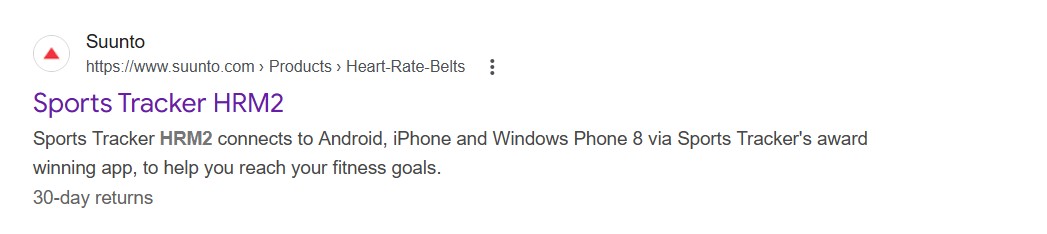
For the avoidance of doubt, this is not the same as the Sports Tracker HRM2 already on Suunto’s website. That product is a legacy chest strap from the early 2010s, built to pair with the Sports Tracker phone app.
The clues
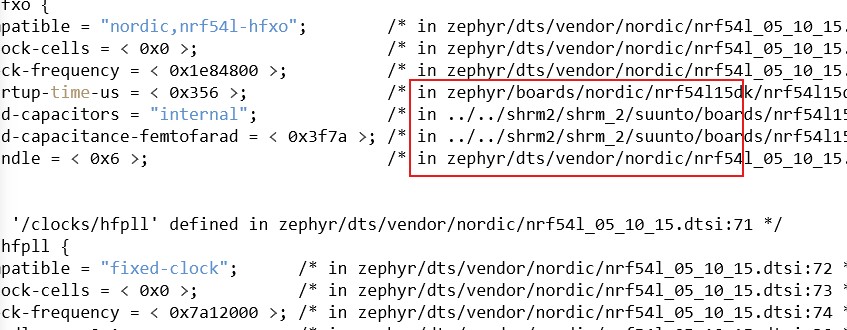
A Nordic Semiconductor developer thread from several months ago points to firmware work on the SHRM2, built around a current-generation Bluetooth chip that fits anything from a chest strap to a smart ring. The chip has extensive capabilities, including precision finding and smart home interoperability. Suunto will use this chip.
Separately, the EU radio equipment law changed on 1 August 2025. Any new heart rate monitor sold in Europe now requires authenticated pairing, secure boot and signed firmware. The existing Suunto Smart Heart Rate Belt would not clear that bar today, so SHRM2 is being re-engineered from the ground up.
What SHRM2 actually is
Intel suggests that SHRM2 is a chest strap rather than an armband. This site expects it to reach retail as the Suunto Belt Pro. One feature is three concurrent Bluetooth connections, allowing the strap to broadcast simultaneously to a watch, a bike computer and a phone or third device.
The FCC filing, certified on 23 July 2026, adds further detail. The label confirms a CR2032 coin cell, 30-metre water resistance, and a small pod roughly 24mm across, close to the size of the existing Suunto Smart Heart Rate Belt. The test report was run using Nordic’s own nRF_DTM test utility, effectively confirming the Nordic silicon. The antenna is a PIFA type at -2.1 dBi gain, and conducted output power measures around -4.5 dBm across all channels. That is well below the regulatory ceiling and considerably lower than Polar H10, which sits closer to 0 dBm. Suunto is optimising for CR2032 battery life over broadcast range.
Suunto has also filed a confidentiality request, so internal photos and the user manual are held back from public view. That is uncommon for a routine strap refresh and suggests Suunto wants to control the launch narrative rather than let regulatory filings drive it.
- Pros: brings Suunto to competitive parity at the top of the strap category, removes the need to use a watch as a heart rate relay for pairing a strap with a head unit, and strengthens the Suunto Coach ecosystem.
- Cons: three-channel BLE is solid but not category-leading, with Garmin HRM 600, Wahoo TRACKR and Polar H10 already supporting multi-device pairing. No ANT+, which cuts off compatibility with older Garmin head units and third-party trainers. Still chasing Garmin. The target audience continues to shrink.
The Whoop competitor that wasn’t
The more interesting product would have been an optical arm band. That category is held by Polar Verity Sense, Wahoo TICKR FIT, and increasingly Whoop, Polar LOOP 2, Amazfit Helio Strap, and the rumoured Garmin CIRQA.
- Pros: reaches athletes who refuse a chest strap, opens continuous wear and recovery data, fits naturally with Find My or Find Hub, and brings non-watch customers into the Suunto app.
- Cons: new category, strong incumbents, optical accuracy is hard, marketing alongside wrist HR claims is delicate.
Maybe that will come later?
The verdict
The arm band and continuous wear segment is where Whoop has built a subscription business from nothing, where Polar has held a quiet share for years, and where Suunto remains conspicuously absent. SHRM2 as a Whoop competitor would have been worth the effort. A three-channel chest strap, while welcome, is not.
The arm-band category is also where Garmin’s Q1 2026 earnings call signalled a new-category product, with CIRQA the leading candidate. Garmin and Whoop targeting the same form factor in the same window leaves Suunto on the sidelines of the most contested wearable category of 2026.
Even so, SHRM2 is the first new Suunto heart rate strap in over a decade. FCC certification on 23 July 2026 points to a Q3 or Q4 launch. Paired with the coin-cell Core 2, Suunto is bringing two distinctive products to market in a single window. The Core 2 analysis is here: Suunto Core 2: A Garmin Fenix With a 2-Year Battery?
Source and original research by: the5krunner and Gadgets & Wearables.
Last Updated on 11 September 2026 by the5krunner
My favourite kit and nutrition
- Garmin Fenix 9 Pro — I’ve just bought one.
- Injinji – Runners protect your toes. Avoid discomfort and minor injury. Run more. Run faster. I use them.
- Garmin 90-degree charging adapter — A small keyring adapter you can use anywhere. Essential when away. I use one.
- Garmin charging puck — the fastest and most reliable way to top up your Garmin before a session. I use one.
- Ravemen FR300 — Front light that mounts directly under your Garmin or Wahoo head unit. Keeps your bars clean and your beam pointed where it matters. I use one.
- Body Glide – The blue anti-chafe stick that all swimmers and many runners use. I use it.
- Maurten — The race nutrition trusted by elite athletes. Gels and drink mixes engineered to be easy on the stomach. I use them.
- Garmin Varia RTL515 — A radar rear light that alerts you to vehicles approaching from behind. Pairs with your Edge or Wahoo. I use this model.
- Favero Assioma Pro RS2 — The power-meter pedals most serious cyclists choose. Accurate, easy to move between bikes. I use this model.
- Garmin Forerunner 970 — A serious choice for a pro-grade triathlon watch. I use this.
- Polar H10 — My daily driver for accurate, waking HRV readings.
- Wahoo ELEMNT Roam 3 — The bike computer that has the feature Garmin lacks: usability. I use mine on most rides.
Reader-Powered Content

This content is not sponsored. It’s mostly me behind the labour of love, which is this site, and I appreciate everyone who supports it.
Support the site: Follow (free, fewer ads) · Subscribe (paid, ad-free) · Buy Me A Coffee ❤️
All articles are written by real people, fact-checked, and verified for originality. See the Editorial Policy. FTC: Affiliate Disclosure — some links pay commission. As an Amazon Associate, I earn from qualifying purchases.
tfk is the founder and author of the5krunner, an independent endurance sports technology publication. With 20 years of hands-on testing of GPS watches and wearables, and competing in triathlons at an international age-group level, tfk provides in-depth expert analysis of fitness technology for serious athletes and endurance sport competitors. ID

“ brings Suunto to competitive parity at the top of the strap category, solves the long-running pain point for cyclists of pairing a strap with a watch and a head unit at the same time, and strengthens the Suunto Coach ecosystem.”
Suunto just solved this problem with adding heart rate broadcast to their watches where the heartrate of a cheststrap, connected to the watch, is broadcasted again by the watch.
ty for spotting that. will edit