Huawei has launched the Watch D3, and it is one of those smartwatches where the most interesting thing isn’t the screen, the apps, or the number of workout modes. It is what happens underneath the strap.
The Huawei Watch D3 is built around blood pressure monitoring, giving it a very different purpose from a typical smartwatch. Huawei has also made the new model slimmer than its predecessor, which could make wearing this kind of health-focused watch feel a little less demanding. But how much has Huawei actually changed this time, and does the D3 make blood pressure monitoring more practical? We will find out in more detail in TFK’s Huawei Watch D3 review, which tests blood pressure accuracy against an Omron arm cuff on four people; for now, let’s look at Huawei’s launch info.
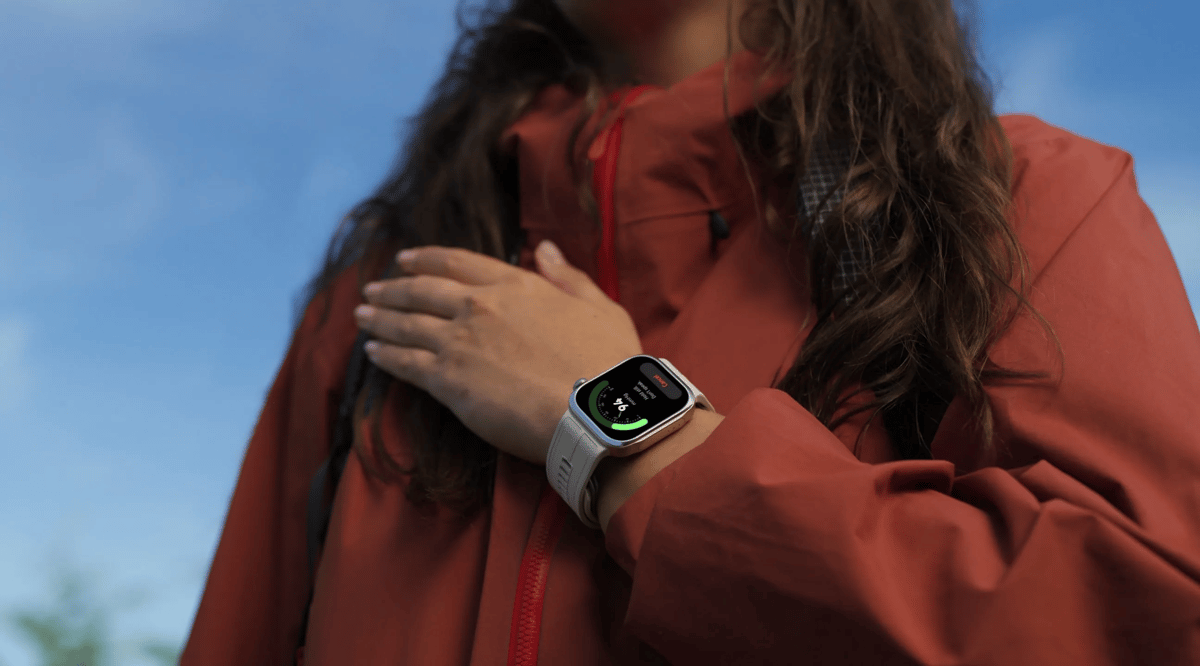
Huawei Watch D3 is officially here
The Huawei Watch D3 was officially announced on September 2, 2026, the third generation of Huawei’s wearables built around measuring blood pressure. Rather than treating blood pressure as one software feature among many, Huawei has built the whole watch around it. Ahead of the market launch, Huawei introduced the D3 at the ESC Congress 2026, the European Society of Cardiology’s annual gathering, to highlight its clinical grounding.
UK availability starts September 23, at £399.99, through all major retail outlets. The D3 is positioned differently from a typical fitness tracker.
The big change is 24-hour blood pressure monitoring
The main engineering advance in the Huawei Watch D3 is the inflatable mechanical cuff hidden inside the strap. This gives the watch full 24-hour ambulatory blood pressure monitoring (ABPM).
Rather than taking a single measurement once a week, the D3 takes automatic readings throughout the day and night. A spot check only gives you a small slice of information, and it can be skewed by white coat syndrome, the anxiety of being measured that pushes readings up. Ambulatory monitoring instead records your blood pressure curve across the day and how much it dips at night.
Huawei built this to follow clinical ABPM standards from the European Society of Hypertension, and you get a detailed cardiovascular trends report in the Huawei Health app.
Why the inflatable cuff still matters
Mainstream smartwatches from Apple or Google use optical sensors that rely on pulse wave analysis to estimate vascular changes. They measure blood volume fluctuations beneath the skin, and an algorithm estimates pressure trends from that.
The Huawei Watch D3 works differently: physical oscillometric detection. A micro-pump inflates an air bag inside the strap and occludes the wrist artery, taking an accurate pressure reading as it deflates. This removes the guesswork in optical estimation. The same underlying mechanism on the Watch D2 has already cleared independent scrutiny: a 2025 study in Hypertension Research tested it against a mercury sphygmomanometer at rest and a cuff-based monitor over 24 hours, and found it met the AAMI/ESH/ISO Universal Standard for both. The D3 itself hasn’t yet been through an independent study of its own, and Huawei’s claim that the new exercise BP mode meets the relevant ISO standards is a manufacturer statement, not (yet) an externally validated one, since the D2 study didn’t test exercise conditions at all. For a wider look at which wearables actually measure blood pressure rather than estimate it, see Blood Pressure Watches 2026: What Actually Works. The Wellue BPW1 review covers the same cuff-based approach in more detail.
Huawei adds pre- and post-exercise blood pressure monitoring
The feature most likely to interest endurance athletes and runners is pre- and post-exercise blood pressure monitoring.
You can record your starting vascular parameters before exercise and take a follow-up measurement within two minutes after. If your pre-exercise blood pressure is above the physiological thresholds, the watch sends an instant alert. Three cardiovascular activities are currently supported:
- Running
- Walking
- Cycling
Post-exercise blood pressure recovery gives athletes information about autonomic balance, arterial stiffness and general recovery. Huawei states this exercise-dependent blood pressure feature meets the relevant ISO standards.
The Watch D3 is much thinner than the D2
The Huawei Watch D3 is noticeably slimmer and more comfortable than its predecessor, the Watch D2. The size reduction changes it from an uncomfortable medical tool into a watch you would be willing to wear every day and night.
- Thinner body: 11.3mm thick, 2mm thinner than the D2’s 13.3mm.
- Slimmer band and cuff: the inflatable airbag is slimmer, and the strap is lighter, so there is no bulky, stiff band.
- Larger screen: a 1.92-inch screen at up to 3,000 nits brightness, twice as bright as the D2’s, and easy to read in direct sunlight.
- Different footprint: 46.5 x 41mm, versus the D2’s 48 x 38mm.
Having a watch that’s 2mm thinner makes a real difference to usability. The D3 measures your blood pressure while you sleep, and a thicker watch is more likely to catch on bed sheets and wake you. The thinner design and lighter band make overnight monitoring easier, and the extra brightness makes the screen readable outside on a run.
For a full breakdown of how the two models compare, see our Watch D3 vs Watch D2 comparison.
What else does the Huawei Watch D3 track?
Blood pressure is the headline feature, but the D3 also covers the usual ground:
- ECG: detects irregular heartbeats.
- Vitals: regular heart rate monitoring, SpO2 (blood oxygen saturation), and skin temperature.
- Sleep and recovery: deep sleep architecture, HRV (heart rate variability), and Huawei’s Physical Readiness Score.
- Health and Stress Glance: a multi-parameter stress reading in under a minute.
- Exercise mode: over 80 exercise modes, with automatic mode detection.
Huawei Watch D3 price and availability
The Huawei Watch D3 reaches the UK market on September 23, 2026, at £399.99, through the official Huawei Store, Amazon UK and other select UK retailers. See Huawei Watch D3 price and retailers for the current position.
The Huawei Watch D3 is not currently available in the US.
Is the Huawei Watch D3 a serious fitness watch or a blood pressure monitor first?
For endurance athletes, the Huawei Watch D3 sits between the two worlds. It doesn’t try to replace a Garmin Forerunner or Polar Vantage for pace control, training load or breadcrumb navigation.
Instead, the D3 stays a health-monitoring device rather than a sports-performance one. The pre- and post-training monitoring mode makes it more useful for people who want to track their vascular reaction to cardiovascular load. The Watch D3 trades triathlon analytics for direct blood-pressure telemetry, a capability that’s still relatively uncommon among wearables.
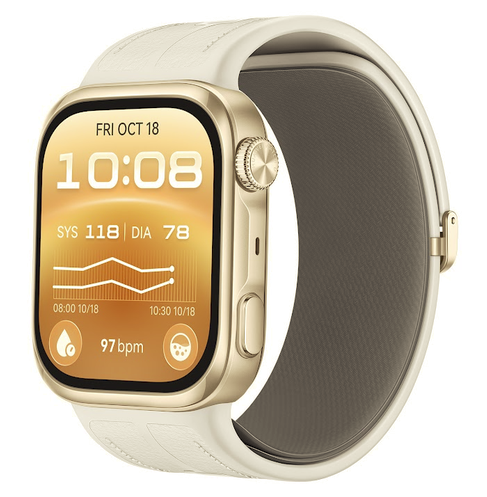
Huawei Watch D3
Real cuff blood pressure in a slimmer watch, with a pre- and post-exercise BP mode and a 60-second Health Glance check.

Quick answers
When is the Huawei Watch D3 available and how much does it cost?
The Watch D3 becomes available in the UK on 23 September 2026 at £399.99, through the HUAWEI Store, Amazon UK and other select UK retailers.
How does the Huawei Watch D3 measure blood pressure?
A genuine inflatable cuff built into the strap compresses the wrist artery, using the same oscillometric principle as a clinical upper-arm monitor, rather than estimating blood pressure from an optical pulse waveform.
Is the Huawei Watch D3 available in the US?
No. The Watch D3 is not currently available in the US.
What's new on the Huawei Watch D3 versus the Watch D2?
The case drops to 11.3mm from 13.3mm, the screen grows to 1.92 inches at twice the brightness, and Huawei has added a dedicated pre- and post-exercise blood pressure mode.
Last Updated on 30 September 2026 by tfk the5krunner
Small things I always use
- Garmin 90-degree charging adapter: Charges your Garmin from any USB-C cable. Essential when travelling. I use one.
- Body Glide: The blue anti-chafe stick swimmers and runners carry. I use it.
- Speedo earplugs: Fewer ear infections and no cold-water dizziness. I use them.
- Dryrobe Advance: My winter changing robe for open-water swims. I use one. A cheaper option is the AONYIYI changing robe.
- Maurten: Race fuel that stays easy on the stomach. I use them.
- Beet It Sport nitrate shots: Beetroot shots I take in the days before a race. I use them.
- Garmin charging puck: The quickest way to top up before a session. I use one.
- Injinji: Toe socks that stop rubbing, so you run more. I use them.
- Ultimate toe protectors: Stop black toenails on long runs. They work. I use them.
- Compressport R2 v2 calf sleeves: My calf sleeves of choice. I use them.
- Cellucor C4: My pre-workout before hard sessions.
- TPU tubes: Schwalbe Aerothan, Tubolito and Pirelli SmarTube. Light, tiny spares. I use all three.
- G8 insoles: Adjustable insoles that are good. I use them.
- Cycplus Cube: A 97g electric pump that gets a road tyre rideable in two minutes. I carry one. 5% off with code THE5KRUNNER.
Watches and sensors
- Polar H10: My daily driver for waking HRV.
- Polar Verity Sense: My backup arm-worn HR sensor.
- Nomad bedside charger: Charges my iPhone and Apple Watch overnight. I use it, and many of their bands.
- Train.Red: The best muscle oxygen sensor I’ve used.
- Tymewear: Accurate heart rate and reliable ventilatory zones. I use it to pace endurance rides over an hour.
- Garmin Forerunner 970: A pro-grade triathlon watch. I use this.
- Apple Watch Ultra 4: My daily smartwatch. No phone needed on rides.
- Garmin Fenix 9 Pro: I’ve just bought one.
On the bike
- Continental GP5000 for everyday riding, and Aero 111 on the front for special occasions.
- Helmets: Specialized S-Works Evade 3 for road riding, and Rudy Project Wing for TT-style races. I use both.
- Ravemen FR300: A front light that mounts under your Garmin or Wahoo. I use one.
- Wahoo TRACKR Radar: I use it on one bike and Varia on the other. They perform the same.
- Garmin Varia RTL515: Radar that warns you of cars from behind. I use this model.
- Wahoo ELEMNT Roam 3: The bike computer that’s easy to use. I use mine on most rides.
- Favero Assioma Pro RS2: Accurate power pedals that swap easily between bikes. I use this model.
Home and indoor training
- NPE Runn: Makes my basic treadmill smart, sending more accurate speed and distance to my watch and Zwift. I use it.
- Google Wifi: Keeps Zwift connected in my pain cave. I use it.
- Apple TV 4K: Zwift on the big screen. I use two.
- Google Nest Doorbell (wired, 2nd gen): My video doorbell, running in both Google Home and Apple Home. I use it.
Health, recovery and sleep
- FreeStyle Libre 3 Plus: Shows how my blood sugar responds to diet.
- hDrop: Measures my sweat loss in summer and indoors.
- Fourth Frontier Zone: Checks my heart under load in hard sessions.
- Oura Ring 5: My partner’s recovery tracker of choice.
- Eight Sleep: A cooling mattress cover my partner and I use nightly.
Reader-Powered Content

This content is not sponsored. It’s mostly me behind the labour of love, which is this site, and I appreciate everyone who supports it.
Support the site: Follow (free, fewer ads) · Subscribe (paid, ad-free) · Buy Me A Coffee ❤️
Written by real people, with AI assistance. Fact-checked and verified for originality. See the Editorial Policy. FTC: Affiliate Disclosure — some links pay commission. As an Amazon Associate, I earn from qualifying purchases.

Shradha Puri is a tech writer covering fem tech, wearables, consumer technology and AI-powered gadgets. With a background in marketing and editorial strategy, her work focuses on how emerging technology is influencing health, fitness and everyday consumer experiences. She closely follows the tech space, with a particular interest in sleep, recovery and health tracking wearables.
