| Manufacturer | Google (Fitbit) |
|---|---|
| Type | Fitness tracker |
| Announced | 12 October 2026, on pre-order. Amazon lists shipping from 27 October 2026. |
| Price at launch | $179 / £159.99 / €179.99. Stephen Curry Special Edition $219 |
| Predecessor | Fitbit Charge 6 |
| Band size | Active Band: small (130mm to 170mm) and large (170mm to 210mm), both included in the box. Stephen Curry Special Edition band: 150mm to 195mm |
| Colours | Matte Black Aluminium/Obsidian, Satin Silver Aluminium/Fog, Satin Pyrite Aluminium/Olive, Champagne Gold/Canyon, Satin Pyrite Aluminium/Stephen Curry Special Edition band |
Specifications and features as at launch.
Expert opinion | What’s new versus Charge 6 | Specifications | Battery life | Features | Sensors and health features | Further reading
Expert opinion
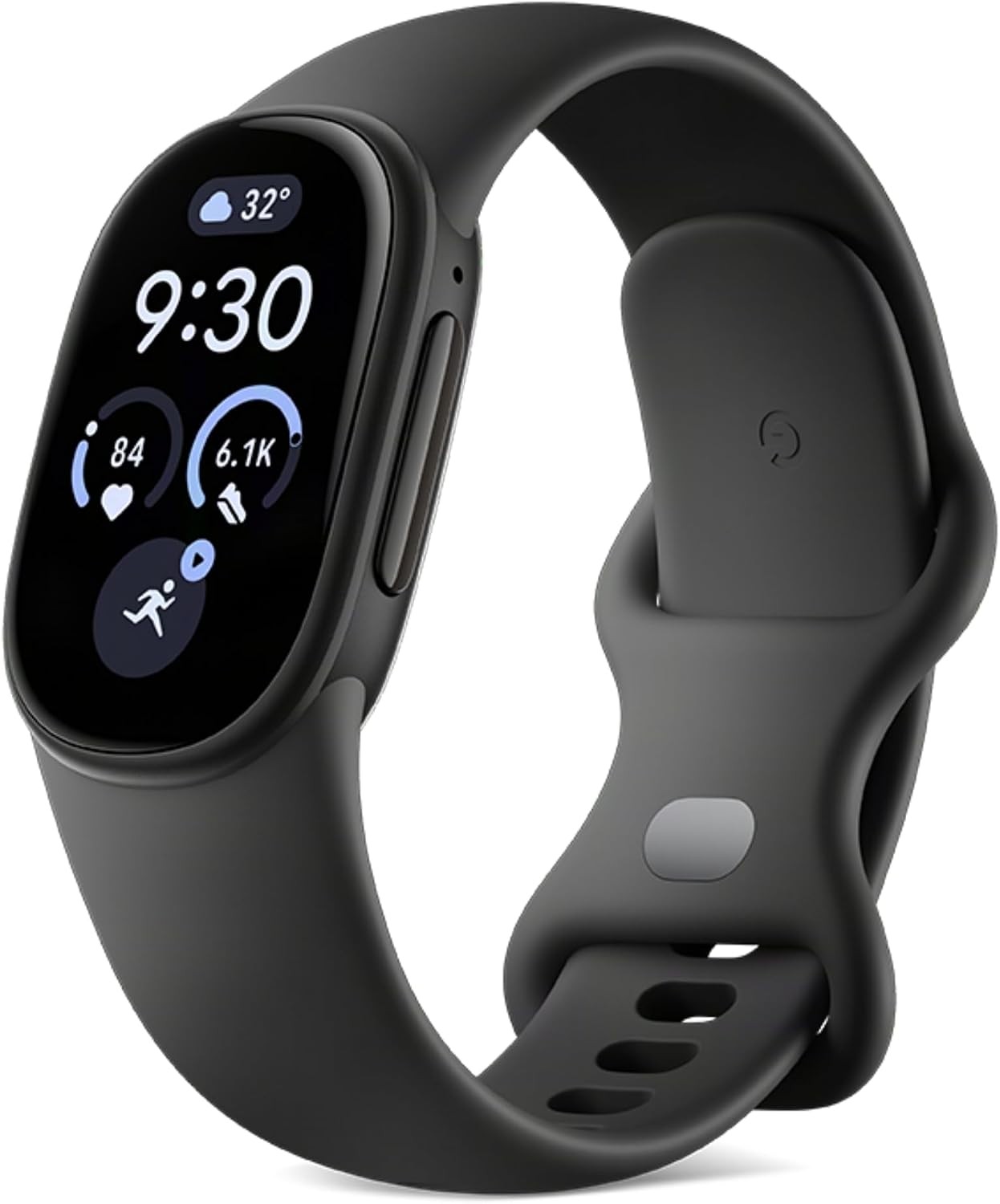
The Google Fitbit Edge is the direct successor to the Charge 6, and it adds what a tracker of this size most lacked: a larger 1.34-inch AMOLED display, multi-system GPS, an altimeter and a physical button, all in a 17.7g aluminium case. Battery life stays at up to seven days, but the battery is now user-replaceable, which is rare at this size and should give the Edge a longer working life than most smartwatches. It bridges the gap between step trackers and entry-level sports watches, and on paper it bridges it well.
The heart rate hardware appears to be the same as the Fitbit Air‘s, storing heart rate at 2-second intervals, the sampling rate that limited the Air’s accuracy during intervals in our testing. NFC has gone, so there are no contactless payments, and the EDA sensor has been dropped too, although stress is still monitored in the background. At $179 or £159.99 it costs $20 or £20 more than the Charge 6 did at launch. Google Maps, coach-built workouts and Health Guardian arrive later in autumn 2026, and the best coaching sits behind the $9.99 (£7.99) monthly Google Health Premium subscription. Real-world GPS accuracy and battery life with every sensor switched on still need independent testing.

What’s new versus Charge 6
Hardware
- The display grows by 46% to a 1.34-inch AMOLED with an always-on option, in a larger 39.22mm x 25.56mm case. The housing is 100% recycled aluminium.
- GPS uses GPS, Galileo, GLONASS, BeiDou and QZSS outside the US, and GPS and Galileo in the US. The Charge 6 used GPS and GLONASS. Google claims its new GPS chip is 40% more accurate than the Charge 6’s.
- An altimeter and a gyroscope are new, so the Edge tracks floors climbed and elevation, which the Charge 6 cannot.
- The battery is user-replaceable and charges to 100% in about 90 minutes, against 2 hours on the Charge 6. The Edge uses the Fitbit Air’s charger, which connects at the sensor array the two share.
- Dust resistance is new, with an IP68 rating alongside 5 ATM water resistance.
- NFC is removed, so Google Wallet contactless payments are not available. The EDA sensor and EDA Scan app are also removed, but stress is still monitored continuously in the background.
- The band attachment mechanism is new.
- Heart rate is stored at 2-second intervals, the same as the Fitbit Air. The Charge 6 stores heart rate at 1-second intervals during exercise.
Software
- The Gemini-based Google Health Coach builds personalised fitness plans and shows real-time visual guidance during workouts, telling you when to push, ease off or hold pace. Both need Google Health Premium.
- Live workout metrics now show on the tracker as well as in the app, followed by a post-workout summary on the wrist.
- Automatic workout detection now works on the device and recognises 40+ workout types. The Charge 6 detected workouts in the mobile app only.
- Structured workouts are supported.
- The Edge can be used alongside a Pixel Watch or Fitbit Air on the same account, switching between them seamlessly. The Pixel Watch works only with Android, and the Apple Watch has only just begun to work with a non-Apple phone, so the Edge and Air are the switching option for iPhone owners.
- Quick replies to messages (Android only, because of iOS restrictions), weather and a Morning Brief are new.
- Media controls now work with any Bluetooth-connected player, replacing the Charge 6’s YouTube Music controls.
- Google Maps turn-by-turn directions, available on the Charge 6 now, are listed as coming in autumn 2026.
Specifications
| Display | |
|---|---|
| Type | AMOLED colour display, always-on option, adjustable brightness |
| Size | 1.34in (34mm) |
| Physical | |
| Dimensions | 39.22mm (L) x 25.56mm (W) x 11.58mm (H) |
| Weight | 17.7g without band |
| Materials | 100% recycled aluminium housing. Active Band in silicone with a soft-touch coating |
| Controls | Mechanical side button and touchscreen |
| Water and dust resistance | 5 ATM (ISO 22810:2010) and IP68 (IEC 60529) |
| Sensors and positioning | |
| Positioning | Built-in GPS, Galileo, GLONASS, BeiDou and QZSS. GPS and Galileo only in the US |
| Heart rate | Photoplethysmography (PPG) optical heart rate sensor |
| Motion | Accelerometer and gyroscope |
| Elevation | Altimeter |
| Blood oxygen | Red and infrared SpO2 sensors |
| Skin temperature | Far field skin temperature sensor |
| Electrical | Multipurpose electrical sensors compatible with the ECG app |
| Other | Ambient light sensor |
| © the5krunner. Link required. | |
| Processor, connectivity and storage | |
| Chip | Ambiq AP5 MCU |
| Radio | Bluetooth 5.4. No NFC and no Wi-Fi |
| Phone compatibility | Android 11 or newer, iOS 16.4 or newer. Requires a Google account and the Google Health app |
| On-device storage | 64MB NOR flash: 7 days of minute-by-minute motion data, 30 days of daily totals, heart rate at 2-second intervals |
| Security updates | At least two years after the device is last sold on the Google Store in the US |
Battery life
| Mode | Battery life |
|---|---|
| Typical use | Up to 7 days |
| Charge time, 0 to 100% | About 90 minutes |
| Quick charge | 5 minutes for up to 1 day of use |
| © the5krunner. Link required. | |
The battery is a 65mAh lithium-ion cell made with 100% recycled cobalt and lithium, and it is user-replaceable. Google based the 7-day figure on default settings with features that run in Battery Saver mode, so continuous GPS, SpO2 tracking and the always-on display all shorten it. Charging uses the USB-C cable in the box, and Google quotes its charge times with a 30W adapter, which is sold separately.
Features
The Edge pairs with the Google Health app and requires a Google account.
- Google Health Coach builds personalised fitness plans, adjusts them to your readiness and routine, and answers questions about your data. It needs Google Health Premium, with three months included, then $9.99 or £7.99 a month.
- Workout tracking covers 40+ exercise modes with automatic recognition, pool and open-water swims, structured workouts, live metrics on the wrist, built-in GPS for outdoor sessions, a workout intensity map in the app and a post-workout summary.
- Training metrics include Daily Readiness, Cardio Load with weekly targets, Active Zone Minutes, VO2 max and floors climbed.
- Heart rate on exercise equipment broadcasts over Bluetooth to machines that support the Bluetooth Heart Rate Profile.
- Sleep tracking gives sleep stages and a Sleep Score, with coach-written sleep insights for Premium members.
- Smart features include phone notifications with quick replies (Android only, because of iOS restrictions), media controls for any Bluetooth-connected player, weather, alarm and timer.
- Coming in autumn 2026: Google Maps turn-by-turn directions, coach-built workouts started from the tracker, and Health Guardian alerts.
Sensors and health features
The ECG app checks for signs of atrial fibrillation, and the Edge also gives irregular heart rhythm notifications and high and low heart rate alerts. These features are available in select countries only and are not intended for users under 22 or those with known arrhythmias. Heart rhythm data is recorded only when the wearer is still or asleep.
The Health Metrics dashboard shows SpO2, heart rate variability, breathing rate, skin temperature variation and resting heart rate. Skin temperature also feeds menstrual cycle tracking. Monthly blood pressure and insulin resistance trends need Google Health Premium and are wellness trends, not clinical readings. There is no EDA sensor, but the Edge still monitors stress continuously in the background.
Quick answers
Is the Fitbit Edge waterproof?
Yes. It is water resistant to 50 metres (5 ATM) and dust-tight (IP68), so you can shower and swim with it, and it tracks pool and open-water swims.
Do Fitbit Charge 6 bands fit the Fitbit Edge?
No. The Edge uses a new band attachment, so Charge 6 bands will not fit. Google sells Edge bands separately.
What charger does the Fitbit Edge use?
The same magnetic charger as the Fitbit Air, which connects at the sensor array the two share. A full charge takes about 90 minutes, and 5 minutes gives about a day of use.
How long does the Fitbit Edge battery last?
Up to 7 days with typical use. Continuous GPS, SpO2 tracking and the always-on display all shorten it. The battery is user-replaceable.
Is the Fitbit Edge the newest Fitbit?
Yes. Google launched it on 12 October 2026 as the successor to the Charge 6, at $179.
Further reading
- Fitbit Edge: all you need to know
- Fitbit Charge 6 specifications
- Fitbit Air specifications
- Fitbit Edge vs Fitbit Air: which to buy
- Fitbit tracker upgrade guide: Charge 6, 5 and 4 to Edge
- Fitbit Air review: 31 cons, 21 pros
- How the Fitbit Edge leaked: Pixel 11 ads, FCC filings and launch details
- Google Fitbit specifications
- All specifications
