Anyone who paid $1,199.99 for a Fenix 8 Pro this year has bought a watch whose main processor first appeared in July 2020 on Garmin’s budget Venu Sq and which was probably designed in 2018.
Teardowns prove the Fenix 8 Pro is running the same processor and co-processor as the 2022 Fenix 7, admittedly also with a better screen, LTE and satellite messaging and a newer GPS chip. but the processor is why it feels laggy to use, and even the Fenix 9 Pro hasn’t fully solved lagginess.
The same pair of processors also run the Fenix 8, Enduro 3, Epix Pro (Gen 2) and even the $1,999.99 Fenix 8 Pro MicroLED. Buyers of Garmin’s most expensive watches have clearly been paying for new screens and radios rather than the core internals designed at the start of the decade.
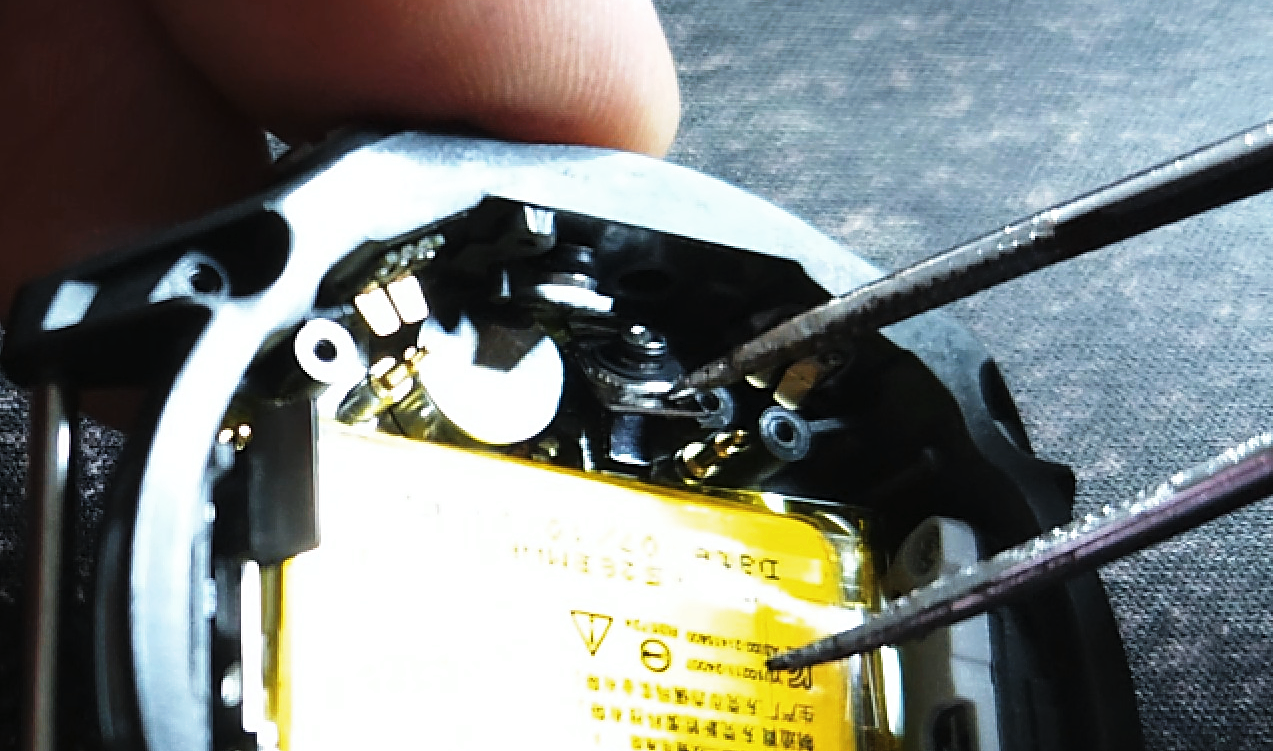
Forerunner 170 buyers get a 2021 heart rate sensor
The Forerunner 170 (May 2026) wasn’t cheap at $299.99, yet uses the prior-generation Elevate Gen 4 optical heart rate sensor that Garmin first fitted to the Venu 2 in April 2021 – now half a decade old.
That said, Garmin moved its premium watches to the Elevate Gen 5 optical sensor with the Fenix 7 Pro in May 2023, but the Vivoactive 6, the whole Instinct 3 range and the CIRQA band, launched in July 2026, still use Gen 4 (2021).
Budget buyers get a worse deal – a 2017 Bluetooth chip
The parent who bought the Approach J1 (Jan 2026) junior golf watch at $299.99 got a new watch built around a Nordic nRF52832 Bluetooth chip that Garmin first used in the Vivosport in July 2017 – almost certainly designed over a decade ago. The same chip is in the Instinct E, Lily 2 Active and Forerunner 165. It isn’t Wi-Fi capable, so these watches sync and take software updates through the phone app, and cannot download maps or music over Wi-Fi.
The oldest chips still in new watches
| Component | Job | Garmin first used it | Newest watch using it |
|---|---|---|---|
| Nordic nRF52832 | Bluetooth and ANT+ | Vivosport, July 2017 | Approach J1, January 2026 |
| NXP i.MX RT595 | Main processor | Venu Sq, July 2020 | Fenix 8 Pro, September 2025 |
| Ambiq Apollo3 | Sensor co-processor | Descent G1 Solar, October 2021 | Approach J1, January 2026 |
| Elevate Gen 4 | Optical heart rate sensor | Venu 2, April 2021 | CIRQA, July 2026 |
The Ambiq Apollo3 co-processor (designed 2017/16) handles heart rate, steps and sleep. It has been in nearly every Garmin since the Descent G1 Solar (Oct 2021). Ambiq has since moved on to its Apollo4 and Apollo5 families, but only Vivoactive 6 buyers have so far got the faster, next-generation Apollo510.
The Silicon Labs RS9116 Wi-Fi chip is another Fenix 7 carry-over, still in the Fenix 8 and Vivoactive 6.
Age is not the whole story, because the Bluetooth, Wi-Fi, GNSS and optical heart rate parts each run their own firmware, which Garmin updates through watch software releases. Those updates improve connection reliability, satellite accuracy, and heart rate accuracy on the same hardware, but firmware cannot add what a chip lacks, such as Wi-Fi on the nRF52832, nor is it likely to lower power consumption.
Where new money does buy new hardware
GPS is the part Garmin keeps upgrading, and it shows in my 10-mile GPS accuracy test results. The Fenix 7, with an Airoha AG3335MN chip, was acceptably accurate, and the same chip delivered improved accuracy as Garmin tweaked its firmware over time. But excellence had to wait for the Synaptics SYN4778 on the Fenix 8 and the Forerunner 970. A buyer moving from a 2022 Garmin to a 2024 or newer flagship gets a real gain in GPS accuracy, plus newer displays and, on the Pro models, LTE and satellite messaging.
Fenix 9 Pro
Buyers of the Fenix 9 Pro, launched on 25 August 2026, still won’t know what is inside until someone performs a detailed teardown (e.g. F. Tipi). Garmin’s 180-day confidentiality hold on FCC internal photos also means some details, including pictures, won’t appear until around February 2027. Each Garmin page in the Garmin specifications database now lists its internal components and when Garmin first used each chip, and the Fenix 9 Pro page will be updated when its photos appear.
More Garmin coverage is on the Garmin hub, and Ambiq’s October 2018 announcement of the Apollo3 shows how long the co-processor has been on the market.
Quick answers
Is the Fenix 8 Pro faster than the Fenix 7?
Not in processing hardware. Both use the NXP i.MX RT595 processor and Ambiq Apollo3 co-processor, so the Fenix 8 Pro’s gains come from its screen, LTE and satellite radio and newer GPS chip.
What processor does the Garmin Fenix 8 Pro use?
Fenix 8 Pro uses an NXP i.MX RT595 main processor and an Ambiq Apollo3 co-processor, the same pairing as the Fenix 7 of January 2022. The RT595 first appeared in the Venu Sq in July 2020. Its GNSS chip is from Synaptics and its LTE-M modem is from Murata.
What is the oldest chip in current Garmin watches?
The Nordic nRF52832 Bluetooth chip, which Garmin first used in the Vivosport in July 2017. It is still in the Approach J1, released in January 2026, and in the Instinct E, Lily 2 Active and Forerunner 165.
Does the Fenix 9 Pro use the same processor?
That is not confirmed yet. Fenix 9 Pro FCC teardown photos are expected around February 2027, six months after its August 2026 launch.
Source and original research by: the5krunner, garminrumors, Mike George and f-Tipi blog
Last Updated on 1 November 2026 by tfk the5krunner
Small things I always use
- Garmin 90-degree charging adapter: Charges your Garmin from any USB-C cable. Essential when travelling. I use one.
- Body Glide: The blue anti-chafe stick swimmers and runners carry. I use it.
- Speedo earplugs: Fewer ear infections and no cold-water dizziness. I use them.
- Dryrobe Advance: My winter changing robe for open-water swims. I use one. A cheaper option is the AONYIYI changing robe.
- Maurten: Race fuel that stays easy on the stomach. I use them.
- Beet It Sport nitrate shots: Beetroot shots I take in the days before a race. I use them.
- Garmin charging puck: The quickest way to top up before a session. I use one.
- Injinji: Toe socks that stop rubbing, so you run more. I use them.
- Ultimate toe protectors: Stop black toenails on long runs. They work. I use them.
- Compressport R2 v2 calf sleeves: My calf sleeves of choice. I use them.
- Cellucor C4: My pre-workout before hard sessions.
- TPU tubes: Schwalbe Aerothan, Tubolito and Pirelli SmarTube. Light, tiny spares. I use all three.
- G8 insoles: Adjustable insoles that are good. I use them.
- Cycplus Cube: A 97g electric pump that gets a road tyre rideable in two minutes. I carry one. 5% off with code THE5KRUNNER.
Watches and sensors
- Polar H10: My daily driver for waking HRV.
- Polar Verity Sense: My backup arm-worn HR sensor.
- Nomad bedside charger: Charges my iPhone and Apple Watch overnight. I use it, and many of their bands.
- Train.Red: The best muscle oxygen sensor I’ve used.
- Tymewear: Accurate heart rate and reliable ventilatory zones. I use it to pace endurance rides over an hour.
- Garmin Forerunner 970: A pro-grade triathlon watch. I use this.
- Apple Watch Ultra 4: My daily smartwatch. No phone needed on rides.
- Garmin Fenix 9 Pro: I’ve just bought one.
On the bike
- Continental GP5000 for everyday riding, and Aero 111 on the front for special occasions.
- Helmets: Specialized S-Works Evade 3 for road riding, and Rudy Project Wing for TT-style races. I use both.
- Ravemen FR300: A front light that mounts under your Garmin or Wahoo. I use one.
- Wahoo TRACKR Radar: I use it on one bike and Varia on the other. They perform the same.
- Garmin Varia RTL515: Radar that warns you of cars from behind. I use this model.
- Wahoo ELEMNT Roam 3: The bike computer that’s easy to use. I use mine on most rides.
- Favero Assioma Pro RS2: Accurate power pedals that swap easily between bikes. I use this model.
Home and indoor training
- NPE Runn: Makes my basic treadmill smart, sending more accurate speed and distance to my watch and Zwift. I use it.
- Google Wifi: Keeps Zwift connected in my pain cave. I use it.
- Apple TV 4K: Zwift on the big screen. I use two.
- Google Nest Doorbell (wired, 2nd gen): My video doorbell, running in both Google Home and Apple Home. I use it.
Health, recovery and sleep
- FreeStyle Libre 3 Plus: Shows how my blood sugar responds to diet.
- hDrop: Measures my sweat loss in summer and indoors.
- Fourth Frontier Zone: Checks my heart under load in hard sessions.
- Oura Ring 5: My partner’s recovery tracker of choice.
- Eight Sleep: A cooling mattress cover my partner and I use nightly.
Reader-Powered Content

This content is not sponsored. It’s mostly me behind the labour of love, which is this site, and I appreciate everyone who supports it.
Support the site: Follow (free, fewer ads) · Subscribe (paid, ad-free) · Buy Me A Coffee
Written by real people, with AI assistance. Fact-checked and verified for originality. See the Editorial Policy. FTC: Affiliate Disclosure — some links pay commission. As an Amazon Associate, I earn from qualifying purchases.
tfk is the founder and author of the5krunner, an independent endurance sports technology publication. With 20 years of hands-on testing of GPS watches and wearables, and competing in triathlons at an international age-group level, tfk provides in-depth expert analysis of fitness technology for serious athletes and endurance sport competitors. See the gear tfk uses. ID
