
Wahoo’s new My Readiness combines overnight HRV from an Oura ring with your training load and a daily reaction test, then gives you one readiness state and a recommended session. It launched in the Wahoo App on 12 November 2026 and is free for Wahoo App users who have an active Oura membership.
I have subjectively triangulated readiness for 15 years, using modelled readiness (TSB), a measured waking HRV reading and subjective Feel. I discussed triangulating these views with Wahoo two months ago nad Wahoo is the first company I know of to put three views of readiness into one score, albeit with different metrics.
What Wahoo My Readiness does
My Readiness blends three measures into one state.
- Recovery Response comes from your Oura ring and covers overnight HRV, resting heart rate and time asleep.
- Training Capacity compares your recent training load with your long-term load.
- Mental Capacity is a 90-second reaction test followed by four quick self-ratings.
The result is one of six Readiness States, from Primed to Rest Recommended, and the app suggests a matching session. Wahoo also sets a nightly sleep need and calculates it itself rather than borrowing a figure from Oura.
What Wahoo already had
Training Capacity has been in the Wahoo App since the launch of Dimensional Training Load. It compares your short-term load, which covers about a week, with your long-term load, which covers several months. When the short-term figure runs well above the long-term one, you are carrying fatigue. This is similar to Banister’s TSB.
Mental Capacity is the less usual part. You tap blue shapes and ignore red ones in a 90-second Go/NoGo test, then rate rest, readiness, stress and frustration from 0 to 100. The result runs from -100 to +100 and can move your Training Capacity by up to 12 points. Your first score arrives on day four, and Wahoo says the baseline takes about 30 days to settle. I reviewed Mental Capacity earlier this year and was surprised to see a link to how I felt.
The Oura data Wahoo uses
From Oura, Wahoo takes resting heart rate, time asleep and calculates rMSSD (HRV) from overnight RR data. It also reads blood oxygen, respiratory rate and body temperature as possible signs of illness.
The link works one way, from Oura to Wahoo, and it imports up to 90 days of Oura data. Every Oura ring generation works, and you need an active Oura membership (subscription). Oura is the first wearable on the list, and Wahoo has named Apple Health (Apple Watch) and COROS as next, according to Wahoo’s Oura page.
Overnight HRV is the weak link for athletes
Overnight HRV measures your resting physiology. A late meal or a few drinks lowers the nightly average, and that tells you about last night, not about how ready your body is to train. Marco Altini draws the same line between resting and athletic physiology, and I agree.
I take my own seated standing, first thing after waking (standing is better). The small stress of sitting up partly shows how your body responds to a load, which is closer to the question an athlete is asking.
Overnight data has one real advantage: you passively wear the ring, and the number automatically appears. A waking reading takes a couple of minutes every morning, and many athletes will not keep that up.
The other difference is the subjective view. My third view is Feel, which asks how ready to train I feel. Wahoo instead uses a reaction test and four mood ratings, which describe alertness and how you feel today.
Wahoo has the right structure. I know of no other company that combines all three into one readiness score. One weak point is the physiological input, because overnight HRV is a resting measure.
Another weak point is combining these factors into one overall score. I’m pretty sure there’s no scientific basis for the weights Wahoo uses, like any of these composite metrics. However, as consumers, we like simple scores…and this is one of them.
What Wahoo hasn’t said
Wahoo has not published the algorithm that combines the three views. It has not said how much weight each view carries, or what counts as an elevated reading from the illness markers. It also hasn’t made clear whether full Dimensional Training Load insights still require a Premium subscription.
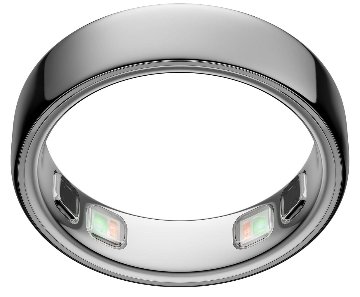
Oura Ring 5
Smart ring
Thoughts
I’ve not tested Wahoo’s end-to-end readiness process. It sounds pretty good in principle.
When that is combined with some of Wahoo’s other changes to the app, the current state of it is quite impressive. The Wahoo app has gone from a clean way to manage your Wahoo-branded devices to a proper training app. In particular, I like how the company is now addressing its strategic weakness, i.e., the inability to collect a full suite of training modalities within its own ecosystem. The addition of running data via the Wahoo app on Watch OS (Apple Watch app -I use it) and now sleep data from a top-quality source completes the picture.
I suggested to Wahoo that they should develop an awesome Wahoo Connect IQ app to let Garmin watches capture data directly for its ecosystem. Now, that would throw the cat amongst the pigeons! That one particular move could get me to switch to the Wahoo app.
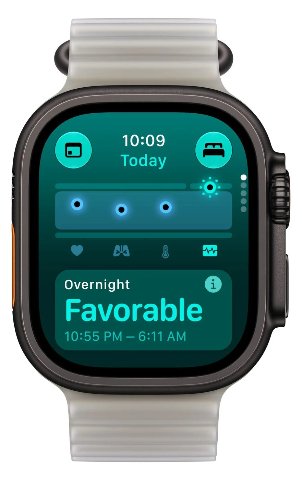
Apple Watch Ultra 4
GPS adventure watch
Quick answers
Does it work with every Oura ring?
Yes. Wahoo says all Oura ring generations work, as long as you have an active Oura membership.
Does Wahoo import the Oura Readiness Score?
No. Wahoo takes the underlying Oura measures and calculates its own readiness and sleep need.
Which workouts does My Readiness use?
Wahoo says it uses training data from your Wahoo App history alongside Oura data.
Does it send data back to Oura?
No. The link is one way, from Oura to the Wahoo App.
How much Oura history does Wahoo import?
It imports up to 90 days of Oura data.
Last Updated on 13 November 2026 by tfk the5krunner
Small things I always use
- Garmin 90-degree charging adapter: Charges your Garmin with any USB-C cable. Essential when travelling. I use one.
- Body Glide: The blue anti-chafing stick swimmers and runners carry. I use it.
- Speedo earplugs: Fewer ear infections and no cold-water dizziness. I use them.
- Dryrobe Advance: My winter changing robe for open-water swims. I use one. A cheaper option is the AONYIYI changing robe.
- Maurten: Race fuel that stays easy on the stomach. I use them.
- Beet It Sport nitrate shots: Beetroot shots I take in the days before a race. I use them.
- Garmin charging puck: The quickest way to top up before a session. I use one.
- Injinji: Toe socks that stop rubbing, so you run more. I use them.
- Ultimate toe protectors: Stop black toenails on long runs. They work. I use them.
- Compressport R2 v2 calf sleeves: My calf sleeves of choice. I use them.
- Cellucor C4: My pre-workout before hard sessions.
- TPU tubes: Schwalbe Aerothan, Tubolito and Pirelli SmarTube. Light, tiny spares. I use all three.
- G8 insoles: Adjustable arches, perfect position. I use them.
- Cycplus Cube: A 97g electric pump that gets a road tyre rideable in two minutes. I carry one. 5% off with code THE5KRUNNER.
Health, recovery and sleep
- Kineon MOVE+: Red and infrared light for sore knees, Achilles and other joints after hard training. I use it.
- FreeStyle Libre 3 Plus: Shows how my blood sugar responds to diet. Occasional use.
- hDrop: Measures my sweat loss in summer and indoors. I use it.
- Fourth Frontier Zone: Checks my heart under load in hard sessions.
- Oura Ring 5: My partner’s recovery tracker of choice.
- Eight Sleep: A cooling mattress cover my partner and I use nightly.
Watches and sensors
- Polar H10: My daily driver for waking HRV.
- Polar Verity Sense: My backup arm-worn HR sensor.
- Nomad bedside charger: Charges my iPhone and Apple Watch overnight. I use it, and many of their bands.
- Train.Red: The best muscle oxygen sensor I’ve used. Occasional use.
- Tymewear: Accurate heart rate and reliable ventilatory zones. I use it to pace endurance rides over an hour.
- Garmin Forerunner 970: A pro-grade triathlon watch. I use this.
- Apple Watch Ultra 4: My daily smartwatch. No phone needed on rides.
On the bike
- Continental GP5000 for everyday riding, and Aero 111 on the front for special occasions. I use both.
- Helmets: Specialized S-Works Evade 3 for road riding, and Rudy Project Wing for TT-style races. I use both.
- Ravemen FR300: A front light that mounts under your Garmin or Wahoo. I use one.
- Ravemen FR1000: The light and the computer mount in one unit, so nothing else goes on the bars. Better than mine.
- Ravemen FR1500SE: 1,500 lumens hanging under your Garmin, for proper night rides.
- Ravemen FR1100SE: 1,100 lumens under your Garmin, and up to 46 hours on slow flash.
- Ravemen FR500: A brighter FR300 with the same mount.
- Wahoo TRACKR Radar: I use it on one bike and Varia on the other. They perform the same.
- Garmin Varia RTL515: Radar that warns you of cars from behind. I use this model.
- Wahoo ELEMNT Roam 3: The bike computer that’s easy to use. I use mine on most rides.
- Favero Assioma Pro RS2: Accurate power pedals that swap easily between bikes. I use this model.
Home and indoor training
- NPE Runn: Makes my basic treadmill smart, sending more accurate speed and distance to my watch and Zwift. I use it.
- Google Wifi: Keeps Zwift connected in my pain cave. I use it.
- Apple TV 4K: Zwift on the big screen. I use two.
- Google Nest Doorbell (wired, 2nd gen): My video doorbell, running in both Google Home and Apple Home via Starling. I use it.
Reader-Powered Content

This content is not sponsored. It’s mostly me behind the labour of love, which is this site, and I appreciate everyone who supports it.
Support the site: Follow (free, fewer ads) · Subscribe (paid, ad-free) · Buy Me A Coffee
Written by real people, with AI assistance. Fact-checked and verified for originality. See the Editorial Policy. FTC: Affiliate Disclosure — some links pay commission. As an Amazon Associate, I earn from qualifying purchases.
tfk is the founder and author of the5krunner, an independent endurance sports technology publication. With 20 years of hands-on testing of GPS watches and wearables, and competing in triathlons at an international age-group level, tfk provides in-depth expert analysis of fitness technology for serious athletes and endurance sport competitors. See the gear tfk uses. ID
