Garmin Training Features: A Reference Guide
Reference pages for every training intelligence metric and tool available on Garmin watches and cycling computers.
- Training Readiness — a daily score from 0 to 100 summarising whether the body is prepared for a hard training session, drawing on recovery time, sleep quality, HRV status, stress and acute load. The most synthesised single number in Garmin’s training suite.
- Training Status — an assessment of whether recent training is producing a fitness benefit, maintaining current fitness or allowing detraining, derived from the trend in VO2 max estimates over the preceding weeks. Updated after each qualifying outdoor activity.
- Training Load — a rolling seven-day measure of training stress expressed in arbitrary units, calculated from excess post-exercise oxygen consumption (EPOC) estimated via heart rate data. The primary input into Training Status and Training Readiness.
- Training Effect — a per-activity score reported separately for aerobic and anaerobic systems, indicating the physiological stimulus that the session is likely to produce. Ranges from 0.0 (no effect) to 5.0 (overreaching).
- Recovery Time — the number of hours estimated before the body is ready for another hard session, calculated from the EPOC accumulated during the most recent activity. One of the primary inputs into Training Readiness.
- Daily Suggested Workouts — a recommended workout type and target intensity generated each morning based on Training Readiness, current Training Status and load distribution across aerobic base, tempo and high-intensity zones. Available on current-generation devices only.
- Acute Load — the training stress accumulated over the most recent seven days, used alongside chronic load to calculate Training Load Ratio and assess the risk of overtraining or injury from rapid volume increases.
- Chronic Load — the training load averaged over the preceding four weeks, representing the volume the body has adapted to and used as the baseline against which acute load is compared.
- Load Focus — a breakdown of training load by intensity zone — base, tempo and high intensity — showing whether the current training distribution matches the demands of the athlete’s goal event.
- Training Load Ratio — the ratio of acute load to chronic load, used to indicate whether training volume is increasing too rapidly relative to the adapted baseline. A ratio above 1.5 is typically flagged as elevated injury risk.
- Primary Benefit — a per-activity label describing the dominant physiological adaptation the session is likely to produce, such as base endurance, tempo or VO2 max development. Derived from Training Effect scores.
- Workout Execution Score — a post-activity score assessing how closely the athlete followed the intended workout structure in terms of pace, heart rate and effort distribution. Available on current-generation devices with structured workout support.
- Running Tolerance — a metric introduced with the Forerunner 970 that estimates how well the musculoskeletal system is coping with running volume, distinct from the cardiovascular load captured by Training Load.
- Garmin Coach — adaptive training plan feature that generates structured workouts toward a 5K, 10K or half-marathon goal, adjusting session targets each week based on recent performance and Training Status.
- Triathlon Coach — an extension of the coached training plan system covering swim, bike and run disciplines, introduced with the Forerunner 970. Generates weekly structured training across all three sports toward a target event.
- Garmin Fitness Coach — a strength and flexibility workout delivery feature available on select devices, providing guided bodyweight sessions through the watch display. Distinct from Garmin Coach, which targets endurance running goals.
- Gear Tracking — a feature within Garmin Connect that logs distance and usage on registered equipment such as running shoes, allowing athletes to monitor when gear is due for replacement based on accumulated mileage.
About Garmin Training
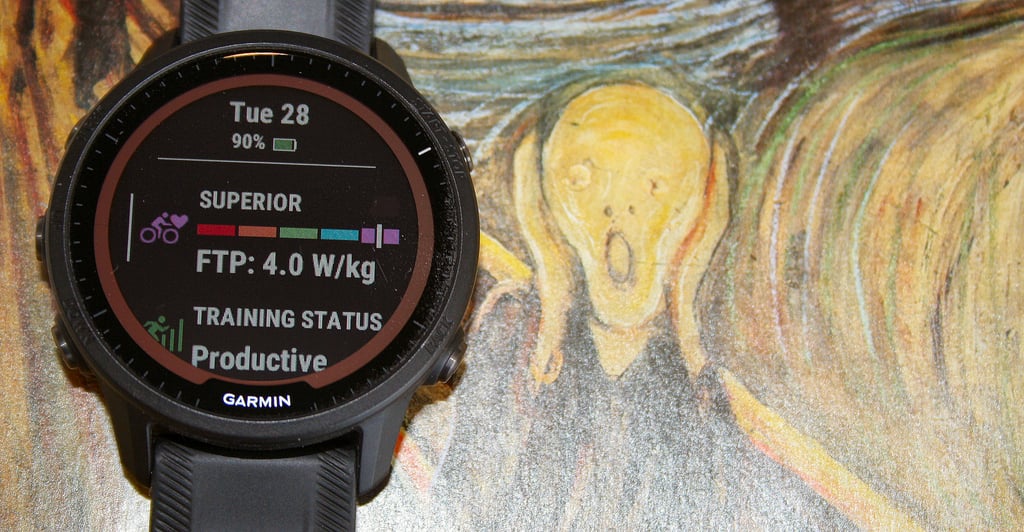
Garmin’s training intelligence suite is built on algorithms developed by Firstbeat Analytics, a Finnish sports science company acquired by Garmin in 2020. The suite uses heart rate data — combined with heart rate variability, pace, power and activity history — to produce metrics that describe both what a training session achieved and whether an athlete is absorbing that training effectively over time.
The core of the system is a continuous model of aerobic fitness. Each recorded activity updates this model, and Garmin derives training load, recovery time, training status, and the daily suggested workout from it. These metrics are interdependent: Training Readiness, for example, draws on recovery time, sleep quality, HRV status and acute load simultaneously. Understanding how the metrics relate to one another is more useful than reading any single figure in isolation.
Not every training feature is available on every Garmin device. The full suite — including Training Readiness, Daily Suggested Workouts and Running Tolerance — requires a current-generation device on the unified Garmin OS platform. Entry-tier watches, such as the Forerunner 55 and Forerunner 165, provide only VO2 max and Training Status. Each feature page notes the specific devices and generations that support it.
The Physiology category covers the underlying fitness metrics — VO2 max, lactate threshold, aerobic fitness age — that the training features draw upon. Where a training metric depends directly on a physiological measurement, the relevant page explains that dependency.
