Full specifications, features and battery life for the Suunto Race, the performance-focused sibling of the Suunto Vertical.
| Manufacturer | Suunto |
| Type | GPS multisport watch |
| Series | Race |
| Released | October 2023 |
| Price at launch | Black: €449 / £389 / $449. Titanium: €549 / £479 / $549. |
| Predecessor | None specific. The performance-focused sibling of the Suunto Vertical, released the same year. |
| Successor | Suunto Race 2 |
| Diameter | 49mm |
| Thickness | 13.3mm |
| Weight | 80g (steel) |
Specifications and features as at launch.

Expert opinion | Specifications | Battery life | Features | Comparisons | Further reading
Expert opinion
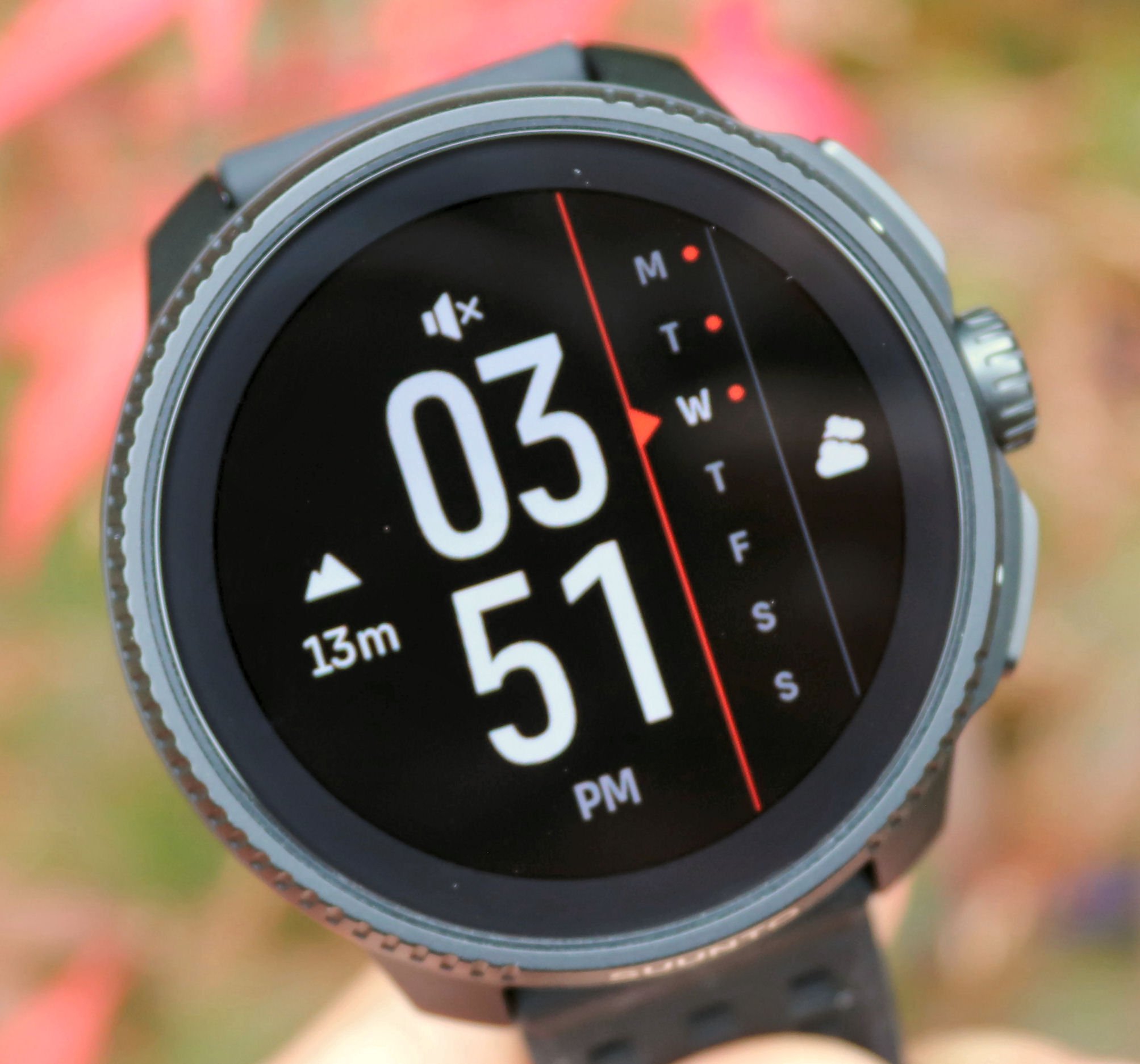
GPS accuracy remained up there with the best on tfk’s testing, though not quite matching the Suunto Vertical it shares hardware with; elevation tracks deviated from comparators unexpectedly, though this wasn’t verified with dedicated elevation testing. Heart rate accuracy improved somewhat over the Vertical’s sensor. The digital crown gives a quicker way to scroll through menus and maps than Vertical’s buttons, though minor scrolling lag remained at launch. The watch supports no ANT+ and no more than one sensor of each type, and does not display the ID of a paired sensor, which can make troubleshooting a failed pairing difficult, particularly for cyclists running multiple similar sensors.
Specifications
| Display | |
|---|---|
| Type | AMOLED |
| Brightness | 1,000 nits |
| Physical | |
| Diameter | 49mm |
| Thickness | 13.3mm |
| Weight | 80g, steel case |
| Case options | Steel (black) or titanium |
| Strap | 22mm |
| Interface | Digital crown, plus physical buttons; ridged bezel |
| Fast charging | 80% in 1 hour; a further hour for a full charge |
| Sensors and positioning | |
| GNSS | Dual-frequency, 4 constellations |
| ABC sensors | Altimeter, barometer, compass |
Battery life
| Mode | Claim |
|---|---|
| Performance (4 GNSS systems, dual-band) | 40 hours |
| Normal/Endurance (4 GNSS systems, single-band) | 50 hours |
| Ultra (4 GNSS systems, 0.5s duty cycle, single-band) | 70 hours |
| Tour (position logged every 2 minutes) | 120 hours |
Suunto tested a GPS-only mode during development and found it saved only around 2% of battery over running all four constellations, so it was not offered as a separate mode. Battery life runs at roughly half to two-thirds of the equivalent figures on the Suunto Vertical, which shares the same internals behind a lower-power MIP display rather than AMOLED.
Features
Full feature detail is covered on the Suunto specifications index.
Navigation
- Onboard maps, non-routable, shown as a picture layer beneath any active route
- Three map styles: normal, dark, high contrast
- Bearings, POIs, pan/zoom and breadcrumb route following
- Race Companion, which surfaces route-specific waypoints and technical-section warnings when a route has been loaded ahead of a race
Training and sleep
- Structured workout support via third-party plans, e.g. TrainingPeaks or AI Endurance
- Training load (ATL, CTL) and form (TSB) tracking, alongside HRV-based recovery
- Sleep stage tracking and nighttime HRV recording
- SuuntoPlus app store, including gym, running, cycling and racquet-sport apps
Comparisons and upgrade guides
- Polar Vantage V3 vs Suunto Race vs Garmin Forerunner 965, three flagships compared
Further reading
Related
Race S is the smaller-format sibling, with a 1.32in display, a lighter 63g steel case, Gorilla Glass rather than sapphire, 50m water resistance and a 40-hour GPS battery claim.
Vertical shares the same internals behind a lower-power MIP display, with solar charging and roughly 50 to 100% more battery life depending on mode.
