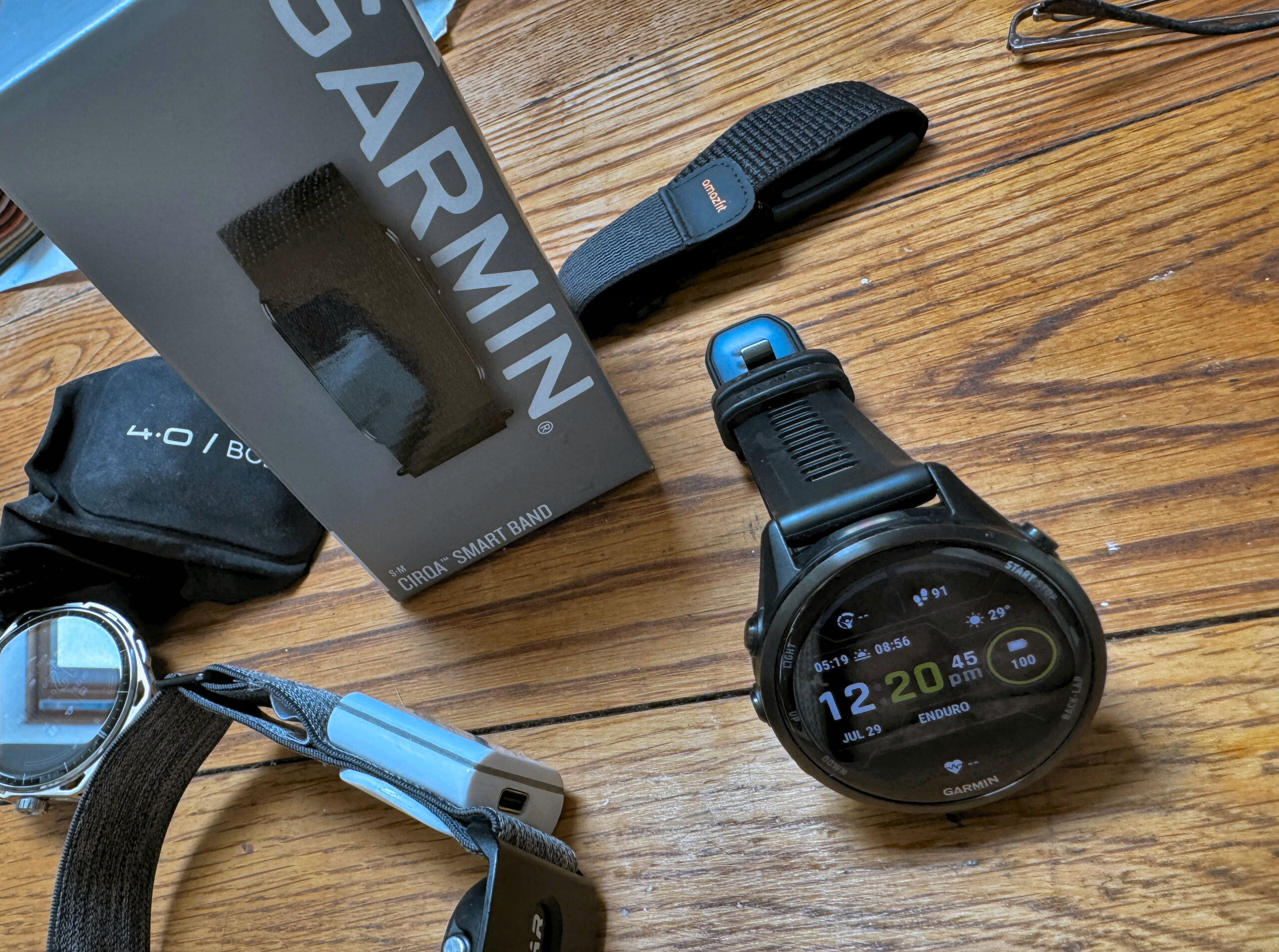
Yes, CIRQA Band’s sleep data is broadly accurate for how long you slept. Over 15 nights against five other trackers, Garmin CIRQA‘s night-to-night timing holds up well, and I’d say, though I can’t prove it from this data alone, that it also gets your bedtime and sleep onset times right. What it doesn’t do is agree with the other devices on how that time breaks sleep stages down into REM, deep and light sleep, which is pretty normal for every sleep tracker.
This sleep data is now folded into the full CIRQA review, alongside heart rate, step and calorie accuracy.
Devices on Test, Test conditions
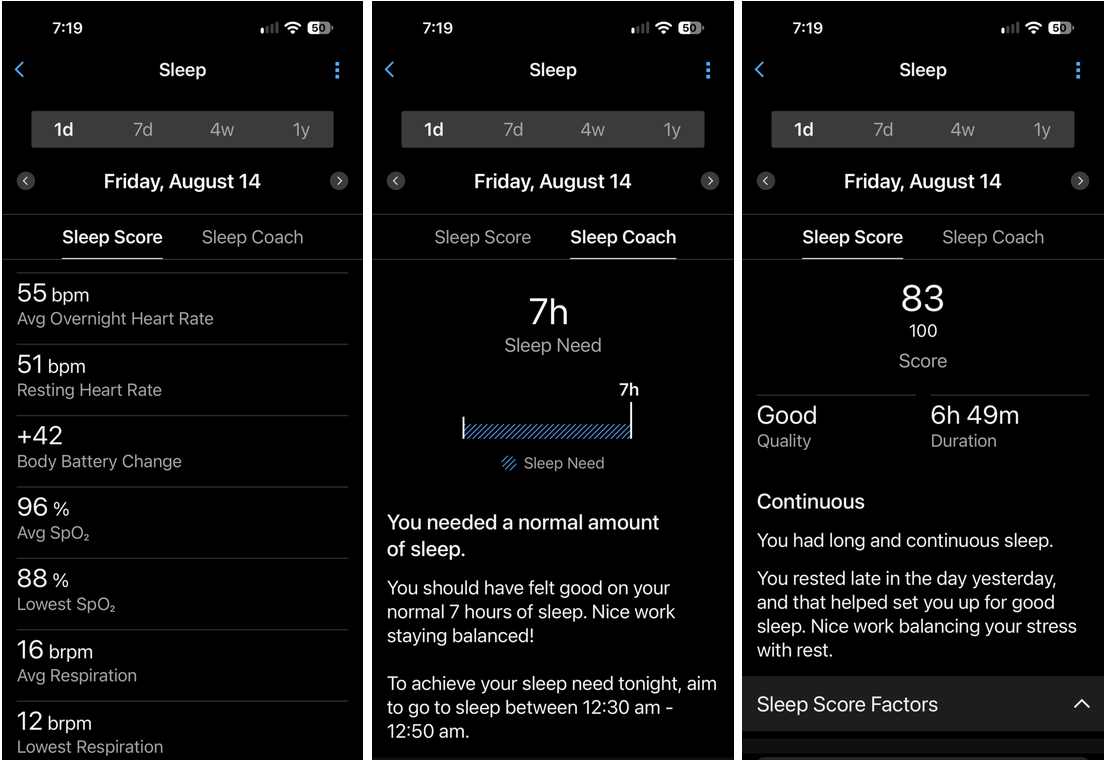
I wore the Garmin CIRQA alongside five other sleep trackers: an Eight Sleep mattress, an Amazfit Helio Strap, a Fitbit Air, a Polar Loop 2, and a Whoop MG. None of these has been checked against a sleep lab, so I can’t call any of them “right”.
I’m currently on some medication which does affect heart rate and sleep.
Setting up the comparison
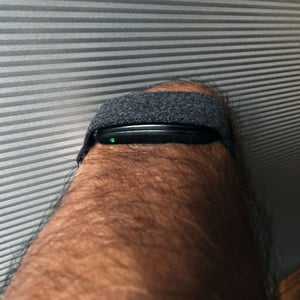
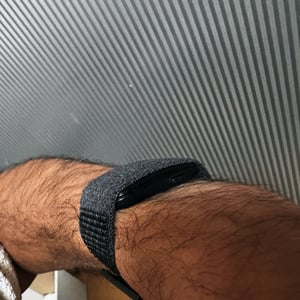
A few things about the setup are worth knowing before the numbers. CIRQA was worn properly on the wrist and Whoop on the bicep. Fitbit was worn next to the CIRQA, always inverted, and the other two swapped positions on the left wrist. There are also gaps in the data, but that’s not a major problem here, as the CIRQA was always paired with at least two other devices, which is enough to see patterns.
I’m using Eight Sleep as the main comparison point because it reads the raw data more accurately from body movements measured underneath the mattress (ballistocardiography, BCG). But it still has to turn that reading into sleep stages using its own algorithms, so when I say CIRQA and Eight Sleep disagree, I simply mean the two devices give different answers. I don’t mean either is wrong.
Resting heart rate and breathing rate
Resting heart rate and breathing rate are where CIRQA does best. Night after night, it lands within a point or two of Eight Sleep, and it’s just as close to Amazfit and Whoop.
Resting heart rate: CIRQA vs Eight Sleep, over 14 nights. On average, CIRQA reads 0.4 beats per minute higher, and on any given night the two are usually within about 1.2 beats of each other.
Breathing rate: CIRQA typically reads 1.3 breaths per minute higher, and the two are usually within about 1.4 breaths of each other on any given night.
Heart rate variability
Heart rate variability, or HRV, is a number that reflects how your body is handling the stresses of everyday life. CIRQA’s HRV reading comes out higher than Eight Sleep’s every single night, and higher than Whoop’s on every night but one. Because CIRQA is consistently higher, this might reflect the fact that Whoop calculates individual nightly periods rather than averaging the full night like Garmin. Against Amazfit, the gap is smaller with CIRQA reading about 3ms higher on average, though there are only six usable nights to judge that by. On the one night CIRQA showed an unusual spike, Whoop showed a spike too, even though the two numbers themselves were far apart.
Time spent awake
CIRQA recorded less awake time than Eight Sleep on 12 of the 14 nights. The gap is even bigger against Fitbit, about 78 minutes lower on average, and much smaller against Amazfit, though there are only four usable nights of Amazfit awake data to go on.
Time awake: CIRQA vs Eight Sleep. Over 14 nights, CIRQA came in lower on 12 of them, by 42 minutes on average. The biggest gaps are:
- 3 August: CIRQA said 29 minutes, Eight Sleep said 133
- 1 August: CIRQA said 2 minutes, Eight Sleep said 105
Deep sleep and restorative sleep
Note: this site has held a consistent position for many years that all wearable sleep stage data has never been validated against the truth – even lab-standard polysomnography (PSG) is inaccurate.
On average, CIRQA and Eight Sleep differ by only 8 minutes on deep sleep, but on any single night they can swing 40 to 80 minutes in either direction. Fitbit shows the same pattern (a 4-minute average gap that hides similarly wide night-to-night swings), so deep sleep just looks inconsistent everywhere, not only against Eight Sleep.
CIRQA’s combined “restorative sleep” number (deep sleep plus REM) is 56 minutes higher than Eight Sleep’s on average, and higher than Amazfit’s and Fitbit’s too, by 33 and 61 minutes respectively. Against Whoop, though, it runs the other way: CIRQA reads about 55 minutes lower on average, the only device here where CIRQA comes in lower rather than higher. That’s true on all 14 nights against Eight Sleep.
Restorative sleep: CIRQA vs Eight Sleep. Over 14 nights, CIRQA averaged 56 minutes higher.
Whoop only provides the restorative total.
REM sleep
REM sleep is where CIRQA and Eight Sleep disagree the most. On 12 of the 14 nights with usable data, CIRQA said I’d had more REM sleep than Eight Sleep did, often by an hour or more. It also reads higher than Amazfit, though by a smaller margin (about 15 minutes on average), and higher than Fitbit by more (about 57 minutes). Whoop and Polar don’t have enough usable nights of REM data to draw conclusions.
REM sleep: CIRQA vs Eight Sleep. Over 14 nights, CIRQA came in higher on 12 of them, by 48 minutes on average. The biggest gaps are:
- 6 August: CIRQA said 142 minutes, Eight Sleep said 24
- 1 August: CIRQA said 104 minutes, Eight Sleep said 1
Sleep score
Note: this site has held a consistent position for many years that sleep scores are made-up composite numbers with each brand using wholly different algorithms. But people like the scores, so I’ll include them here and they should trend similarly.
CIRQA’s sleep score comes out 14 points higher than Eight Sleep’s on average, and 18 points higher than Amazfit’s. It sits closer to Fitbit (7 points) and even closer to Polar, though Polar only has three usable nights to compare. That fits with CIRQA reporting more restorative sleep and less awake time, though there’s no way to know from this data how much each stage feeds into Garmin’s scoring formula.
Polar Loop 2, Fitbit Air and Amazfit Helio
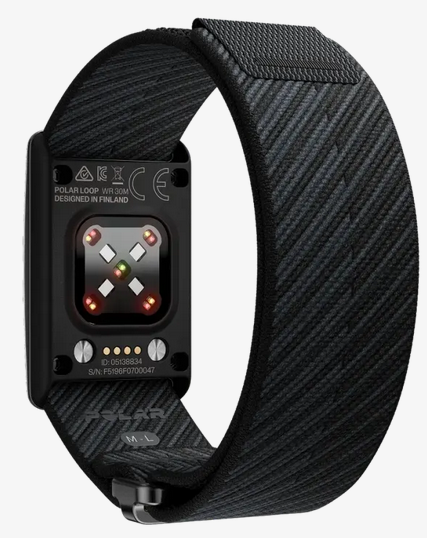
Polar Loop 2 recorded no sleep at all on six of the 15 nights, most likely due to a flat battery rather than a fault, and it’s mentioned above only to back up something already shown against Eight Sleep or Fitbit.
How this compares to DC Rainmaker’s testing
DC Rainmaker ran a similar test with seven nights on the wrist and three on the bicep, using a similar approach and mostly the same devices, though he didn’t include Eight Sleep and neither of us used a chest strap. My 15 nights is a bit more data than his ten combined nights, though neither of us got as far as statistically better 20 nights.
Our conclusions broadly agree, with only HRV as the exception.
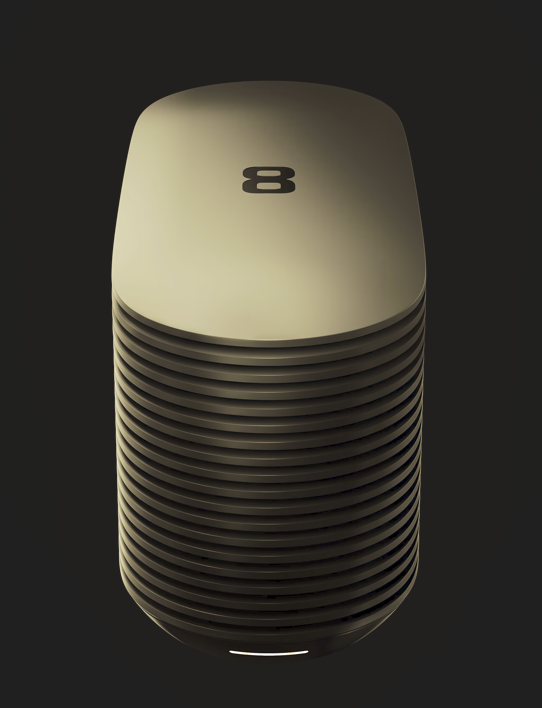
Eight Sleep Pod 6
Excellent. Expensive. Accurate. Quiet.

The bottom line for CIRQA
Resting heart rate, breathing rate, and how long you slept all track closely against the other devices.
Your HRV trend is worth watching compared to its baseline, but it’s not worth comparing against other brands’ numbers.
REM, time awake, restorative sleep and sleep score mostly agree with each other: CIRQA thinks you spent less time awake, and a lot more time in REM, than most of the other devices do. Whoop is the one exception, since its restorative number comes out lower than CIRQA’s.
This fits with CIRQA possibly drawing the line between “awake” and “asleep” in a different place to the other devices.
Deep sleep is different again. It isn’t consistently high or low against any device, just inconsistent, and nothing here says which device gets closer to what actually happened.
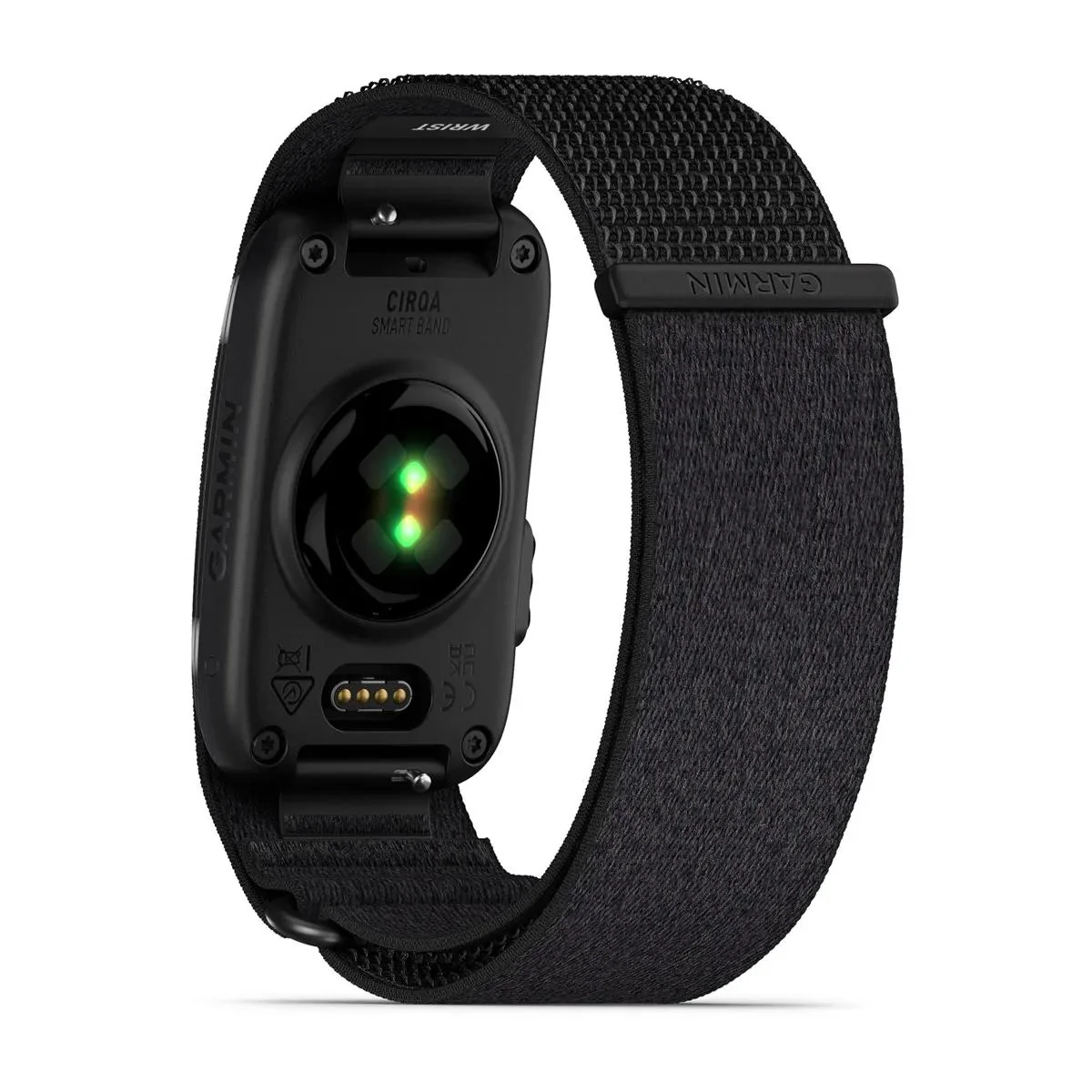
Garmin CIRQA Smart Band
Screenless health and fitness band (no subscription required)
 +other retailers
Quick answers
Is Garmin CIRQA's sleep data accurate?
It’s broadly reliable for total sleep duration and physiological metrics like resting heart rate and breathing rate. Its breakdown of sleep into REM, deep and light stages shows no consistent agreement with other trackers, which is typical of wrist-worn consumer devices.
Why is Eight Sleep used as the main comparison device?
Eight Sleep measures from underneath the mattress rather than from a wrist sensor, which gives a more continuous physiological signal. That’s a reasonable basis for using it as a comparison point, but its own sleep-stage algorithm hasn’t been checked against a lab reference either.
Does CIRQA overestimate REM sleep?
Compared with Eight Sleep, CIRQA reports more REM sleep on 12 of 14 usable nights, by 48 minutes on average. The data can’t say which device is closer to the truth, only that they disagree consistently in one direction.
Does CIRQA underreport time spent awake?
Yes, relative to Eight Sleep. CIRQA logged less awake time on 12 of 14 usable nights, by 42 minutes on average, and by over an hour on several nights.
What does CIRQA's restorative sleep figure actually measure?
It’s CIRQA’s own deep sleep total added to its own REM total, matching exactly on every night in this dataset. It isn’t a separately measured stage, so it inherits whatever bias sits in CIRQA’s deep and REM numbers.
Can CIRQA's sleep score be compared with scores from other brands?
Not directly. CIRQA’s score averaged 14 points higher than Eight Sleep’s over the same nights. Each brand runs its own scoring formula, so absolute scores aren’t interchangeable across devices, even when both claim a 0 to 100 scale.
Is CIRQA's HRV reading comparable to other wearables?
Not as an absolute number. CIRQA reads higher than Eight Sleep on every usable night and higher than Whoop on all but one. The consistent direction of the gap points to a difference in calculation rather than physiology, so CIRQA’s HRV is best used to track your own trend rather than compared against another brand’s figure.
Why does Whoop report one combined restorative figure instead of separate deep and REM numbers?
Whoop reports a single restorative total rather than splitting out light, deep and REM sleep. Light sleep is generally the stage hardest to detect reliably from a wrist or bicep sensor, so combining deep and REM into one number sidesteps that weak point rather than solving it.
Does wearing Whoop on the bicep instead of the wrist affect this comparison?
It’s a plausible factor. Whoop was worn on the bicep in this dataset, a different measurement site from the four wrist-worn devices, which could explain some of its disagreement with the group independent of any difference in the algorithm.
Last Updated on 23 September 2026 by the5krunner
My favourite kit and nutrition
- Garmin Fenix 9 Pro — I’ve just bought one.
- Injinji – Runners protect your toes. Avoid discomfort and minor injury. Run more. Run faster. I use them.
- Garmin 90-degree charging adapter — A small keyring adapter you can use anywhere. Essential when away. I use one.
- Garmin charging puck — the fastest and most reliable way to top up your Garmin before a session. I use one.
- Ravemen FR300 — Front light that mounts directly under your Garmin or Wahoo head unit. Keeps your bars clean and your beam pointed where it matters. I use one.
- Body Glide – The blue anti-chafe stick that all swimmers and many runners use. I use it.
- Maurten — The race nutrition trusted by elite athletes. Gels and drink mixes engineered to be easy on the stomach. I use them.
- Garmin Varia RTL515 — A radar rear light that alerts you to vehicles approaching from behind. Pairs with your Edge or Wahoo. I use this model.
- Favero Assioma Pro RS2 — The power-meter pedals most serious cyclists choose. Accurate, easy to move between bikes. I use this model.
- Garmin Forerunner 970 — A serious choice for a pro-grade triathlon watch. I use this.
- Polar H10 — My daily driver for accurate, waking HRV readings.
- Wahoo ELEMNT Roam 3 — The bike computer that has the feature Garmin lacks: usability. I use mine on most rides.
Reader-Powered Content

This content is not sponsored. It’s mostly me behind the labour of love, which is this site, and I appreciate everyone who supports it.
Support the site: Follow (free, fewer ads) · Subscribe (paid, ad-free) · Buy Me A Coffee ❤️
All articles are written by real people, fact-checked, and verified for originality. See the Editorial Policy. FTC: Affiliate Disclosure — some links pay commission. As an Amazon Associate, I earn from qualifying purchases.
tfk is the founder and author of the5krunner, an independent endurance sports technology publication. With 20 years of hands-on testing of GPS watches and wearables, and competing in triathlons at an international age-group level, tfk provides in-depth expert analysis of fitness technology for serious athletes and endurance sport competitors. ID
