Garmin CIRQA Smart Band: A Whoop Annoyer, Not a Whoop Killer
Update, 19 August 2026: the full CIRQA review is now live, with wrist and biceps heart rate accuracy tested across six sessions, plus sleep, steps and calories. For retailers and the latest deal, see Garmin CIRQA price and availability.
Three screenless bands have launched in the past fourteen months. The Amazfit Helio Strap came first, then the Fitbit Air, and now Garmin’s CIRQA Smart Band. Polar Loop is also in the market. Every one of them has been described as a Whoop killer by numerous people, including those who should know better. Whoop still charges between $199 and $359 a year and is still the product everyone else gets measured against, not because of the price or the accuracy but rather its excellent app and the marketing aura around it.
None of these bands is going to kill Whoop. Together they will do some damage, but neither they nor the damage they do is the thing Whoop should be worried about.
Listen to the discussion
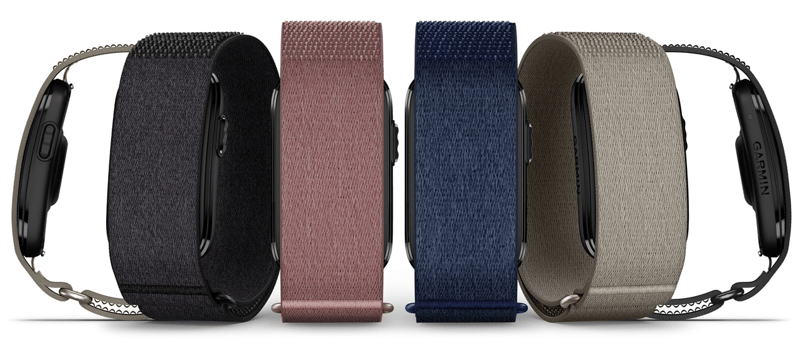
What each band is actually for
The Garmin CIRQA is a complementary device. It is aimed at people who already own a Garmin watch and want overnight recovery data without sleeping in a Fenix. It also works as a cheap way into Garmin’s ecosystem for someone who wants Body Battery and Training Readiness without buying a watch. Garmin is not pretending this is anyone’s only device, even though it will be for some.
The full specification confirms a sensor a generation behind the Index Sleep Monitor, which tells you where it sits in the range.
Amazfit Helio Strap and the Helio Strap Pro have taken the HYROX ground that Whoop never bothered to defend. At $99 with a good Zepp app behind it, the Helio is probably the best cheap option available.
The Fitbit Air costs $99, includes Gemini coaching and requires no subscription. Google’s interest here is not the hardware margin. It is the continuous stream of your physiological data that trains its AI models. The band is the collection mechanism for a FAR bigger game.
Polar Loop has the right hardware and the wrong software. Polar is waiting on the Flow platform update, and until that arrives, the product sits in no man’s land.
What Whoop has that none of them touch
The subscription is the product and the hardware is how you access it. Whoop Advanced Labs offers blood panel testing, which is actual biomarker data rather than something inferred from a wrist sensor. Whoop is also building hormonal insights and Healthspan scoring, and the direction of travel is towards medical territory (Medical Adjacency – my favourite phrase)
None of the hardware-first bands is on that road. Garmin sells you a sensor and gives you metrics. Whereas Whoop is building a health platform and attaching a wearable to it. The Whoop 5.0 and MG review covers what that platform currently delivers.
The lifetime cost argument does not reach Whoop’s customer
Reviewers make the lifetime cost argument constantly, and price-sensitive buyers respond to it. Whoop’s core customer is not one of those buyers. They are a lifestyle purchaser who is not doing the arithmetic at all. Thirty dollars a month sits alongside the gym membership and the supplements without much scrutiny.
The bands are winning an argument that Whoop’s actual customer never thinks of.
Where the damage lands
Each band takes a different slice of Whoop’s cheapest customers. Garmin owners who were renting Whoop until their own brand shipped something. HYROX athletes who worked out that Amazfit does the job for a fifth of the price. Google households who were never going to subscribe to anything. Budget buyers who tried Whoop for a year and lapsed.
None of that is fatal on its own. Together, these products close every cheap exit route around Whoop at the same time. Whoop’s growth problem was always the customers who left after year one, and there are now four reasonable places for those people to go. The screenless band field has filled out considerably in twelve months.
Oura rhymes but does not compete
Oura runs the same subscription model, occupies similar lifestyle territory and has comparable medical ambitions. The customer is different. Oura’s buyer is focused on sleep and recovery, is often less athletic and wants the data collection to be invisible. Whoop’s buyer is performance-oriented and comfortable wearing something visible on the wrist or bicep.
There is overlap at the wellness edge, but the two have grown the category together rather than fighting over it. Oura would become a direct threat if it pushed harder into performance features. It has not done that yet, and the ring format makes that technically tricky.
What would actually kill Whoop
Apple has no product in this category. If it launched a ring or a band, it would arrive with medical credibility, regulatory experience from ECG and AFib detection, deep ecosystem lock-in and Health app integration on day one. Apple’s existing customer base already contains Whoop’s exact demographic: affluent, health-conscious, brand-loyal and untroubled by price. The Apple Watch platform has spent a decade building the health credibility that would make such a launch credible immediately.
The bands that have launched this year are taking customers Whoop was going to lose anyway. Apple would take the ones it wants to keep.
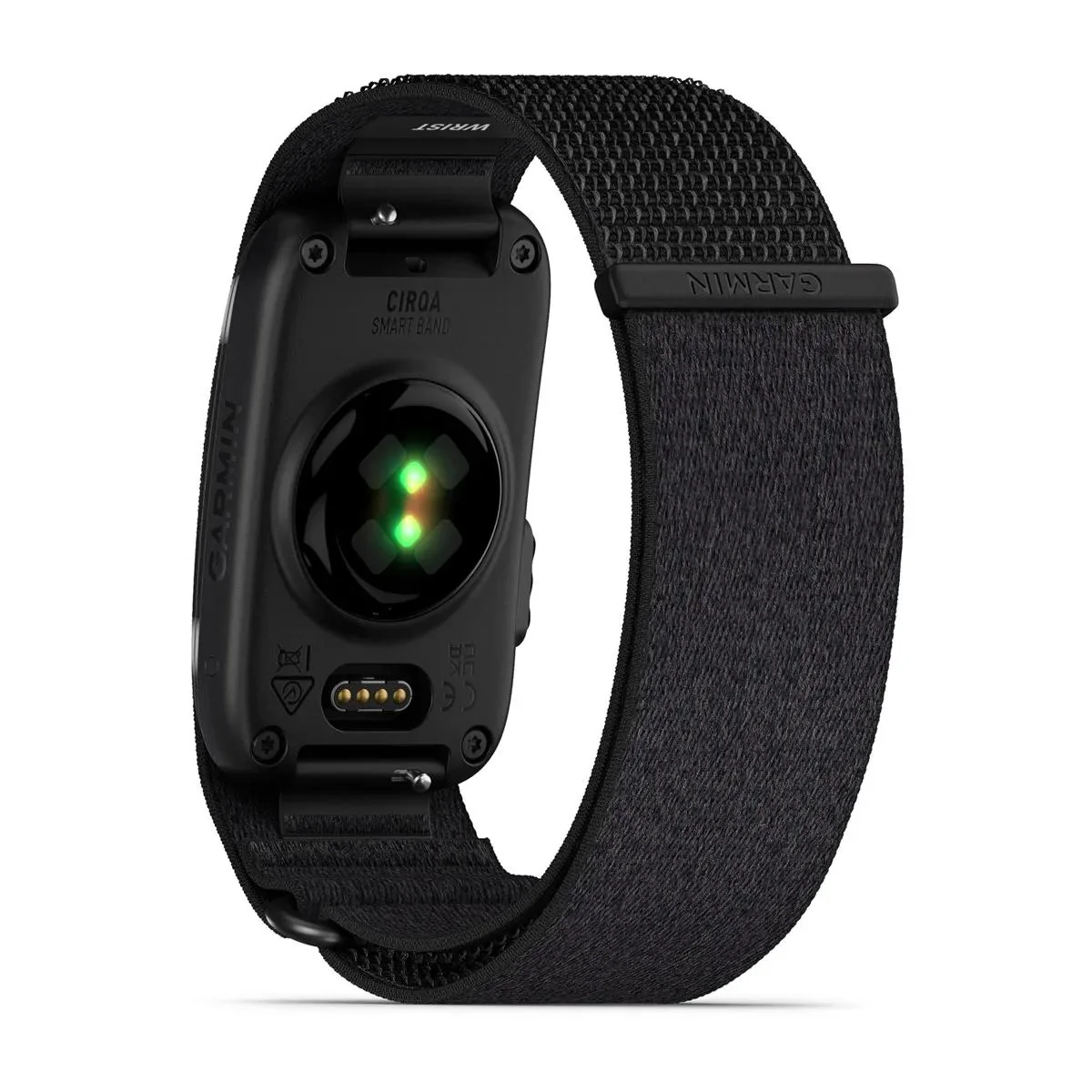
Garmin CIRQA Smart Band
Screenless health and fitness band (no subscription required)
 +other retailers
Quick answers
Is the Garmin CIRQA a Whoop killer?
No. The CIRQA is a complementary device aimed primarily at existing Garmin owners who want overnight recovery data without sleeping in a watch. It competes for Whoop’s most price-sensitive customers rather than its core subscriber base.
Which screenless band is the best Whoop alternative?
It depends on your ecosystem. The Garmin CIRQA at $199.99 suits existing Garmin owners. The Amazfit Helio Strap at $99 is the best cheap option and has strong HYROX support. The Fitbit Air at $99 suits Google households. None of them replicates Whoop’s blood panel testing or medical-adjacent features.
What does Whoop offer that the new bands do not?
Whoop Advanced Labs provides blood panel testing, which is actual biomarker data rather than sensor inference. Whoop is also building hormonal insights and Healthspan scoring. No hardware-first band from Garmin, Amazfit, Google or Polar is developing comparable medical-adjacent capability.
Is Oura a Whoop competitor?
Partially. Oura shares the subscription model and lifestyle positioning but attracts a different buyer: more sleep-focused, often less athletic, and preferring an invisible form factor. The two have largely grown the category together rather than competing for the same customers. Oura would become a direct threat if it pushed harder into performance metrics.
Will Apple launch a Whoop competitor?
Apple has not announced a ring or screenless band. If it did, it would arrive with medical credibility, regulatory experience from ECG and AFib detection, and ecosystem lock-in. Apple’s customer base overlaps closely with Whoop’s core demographic, which would make it a more serious threat than any current band.
How much does Whoop cost per year?
Whoop membership ranges from $199 to $359 per year depending on tier. The hardware is included with the subscription and cannot be purchased outright.
Is the Garmin CIRQA cheaper than Whoop over time?
Yes, substantially. The CIRQA is a one-off $199.99 purchase with core metrics free in Garmin Connect. Whoop costs between $199 and $359 every year and the hardware cannot be bought outright. A single year of the cheapest Whoop tier costs the same as owning a CIRQA outright. The optional Connect+ subscription is covered separately in the CIRQA and Connect+ analysis.
Last Updated on 3 October 2026 by tfk the5krunner
Small things I always use
- Garmin 90-degree charging adapter: Charges your Garmin from any USB-C cable. Essential when travelling. I use one.
- Body Glide: The blue anti-chafe stick swimmers and runners carry. I use it.
- Speedo earplugs: Fewer ear infections and no cold-water dizziness. I use them.
- Dryrobe Advance: My winter changing robe for open-water swims. I use one. A cheaper option is the AONYIYI changing robe.
- Maurten: Race fuel that stays easy on the stomach. I use them.
- Beet It Sport nitrate shots: Beetroot shots I take in the days before a race. I use them.
- Garmin charging puck: The quickest way to top up before a session. I use one.
- Injinji: Toe socks that stop rubbing, so you run more. I use them.
- Ultimate toe protectors: Stop black toenails on long runs. They work. I use them.
- Compressport R2 v2 calf sleeves: My calf sleeves of choice. I use them.
- Cellucor C4: My pre-workout before hard sessions.
- TPU tubes: Schwalbe Aerothan, Tubolito and Pirelli SmarTube. Light, tiny spares. I use all three.
- G8 insoles: Adjustable insoles that are good. I use them.
- Cycplus Cube: A 97g electric pump that gets a road tyre rideable in two minutes. I carry one. 5% off with code THE5KRUNNER.
Watches and sensors
- Polar H10: My daily driver for waking HRV.
- Polar Verity Sense: My backup arm-worn HR sensor.
- Nomad bedside charger: Charges my iPhone and Apple Watch overnight. I use it, and many of their bands.
- Train.Red: The best muscle oxygen sensor I’ve used.
- Tymewear: Accurate heart rate and reliable ventilatory zones. I use it to pace endurance rides over an hour.
- Garmin Forerunner 970: A pro-grade triathlon watch. I use this.
- Apple Watch Ultra 4: My daily smartwatch. No phone needed on rides.
- Garmin Fenix 9 Pro: I’ve just bought one.
On the bike
- Continental GP5000 for everyday riding, and Aero 111 on the front for special occasions.
- Helmets: Specialized S-Works Evade 3 for road riding, and Rudy Project Wing for TT-style races. I use both.
- Ravemen FR300: A front light that mounts under your Garmin or Wahoo. I use one.
- Wahoo TRACKR Radar: I use it on one bike and Varia on the other. They perform the same.
- Garmin Varia RTL515: Radar that warns you of cars from behind. I use this model.
- Wahoo ELEMNT Roam 3: The bike computer that’s easy to use. I use mine on most rides.
- Favero Assioma Pro RS2: Accurate power pedals that swap easily between bikes. I use this model.
Home and indoor training
- NPE Runn: Makes my basic treadmill smart, sending more accurate speed and distance to my watch and Zwift. I use it.
- Google Wifi: Keeps Zwift connected in my pain cave. I use it.
- Apple TV 4K: Zwift on the big screen. I use two.
- Google Nest Doorbell (wired, 2nd gen): My video doorbell, running in both Google Home and Apple Home. I use it.
Health, recovery and sleep
- FreeStyle Libre 3 Plus: Shows how my blood sugar responds to diet.
- hDrop: Measures my sweat loss in summer and indoors.
- Fourth Frontier Zone: Checks my heart under load in hard sessions.
- Oura Ring 5: My partner’s recovery tracker of choice.
- Eight Sleep: A cooling mattress cover my partner and I use nightly.
Reader-Powered Content

This content is not sponsored. It’s mostly me behind the labour of love, which is this site, and I appreciate everyone who supports it.
Support the site: Follow (free, fewer ads) · Subscribe (paid, ad-free) · Buy Me A Coffee
Written by real people, with AI assistance. Fact-checked and verified for originality. See the Editorial Policy. FTC: Affiliate Disclosure — some links pay commission. As an Amazon Associate, I earn from qualifying purchases.
tfk is the founder and author of the5krunner, an independent endurance sports technology publication. With 20 years of hands-on testing of GPS watches and wearables, and competing in triathlons at an international age-group level, tfk provides in-depth expert analysis of fitness technology for serious athletes and endurance sport competitors. See the gear tfk uses. ID

It’s a defensive product: Garmin customers who might jump ship because they like the idea of a minimalistic body observatory device are much less likely to actually do so when Garmin offers the cirqua
that must play a part. As always, an interesting angle from you either way – I expect no less 😉
Interesting comparison! It’s always helpful to see honest reviews of new fitness technology before making a purchase. Likewise, researching rental companies in Milwaukee helps people make informed decisions and choose the best option for their needs.
#sigh
Best summary and analysis on this theme I read so far. Totally agree. The only product that could in future swap me from Whoop is an Apple weareble. I am curious if they will come with something. Maybe there is even chance of buying whoop? It seems the Whoop and Apple are very similiar brands.
ty!