Google’s March Pixel Drop Brings AI Ambition to Wrist and Pocket
Google began rolling out its March Pixel Drop on 3 March 2026, delivering a broad set of software updates to Pixel phones and Pixel Watch devices. The release spans artificial intelligence, safety, and convenience features — and signals how aggressively Google intends to embed Gemini into everyday device interactions.
Pixel Watch: Safety, Payments and Expanded Gestures
The update’s most significant watch-side addition is the geographic expansion of Satellite SOS. First launched on Pixel Watch 4 in the contiguous United States, the emergency satellite messaging capability is now available in Canada, Europe, Alaska and Hawaii. The service is included at no additional charge for two years after activation.
Standalone earthquake alerts arrive on Pixel Watch 2 and newer models, providing real-time notifications of nearby seismic activity and potentially seconds of warning before shaking begins. The alerts draw on both ShakeAlert and Android detection systems, though coverage is not universal across all regions.
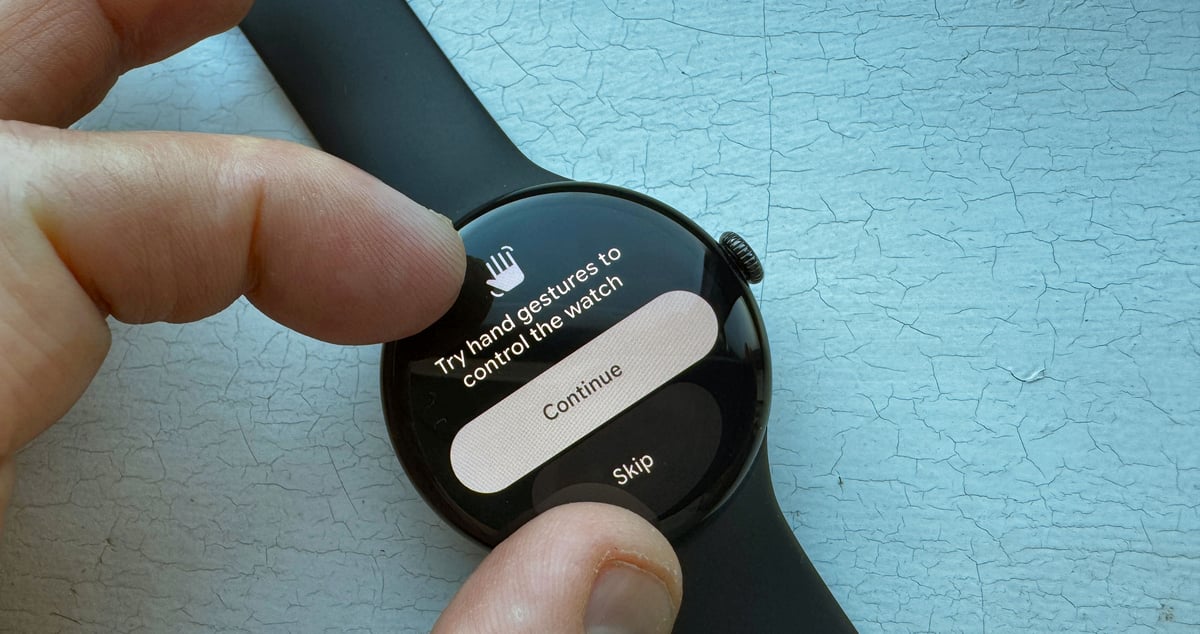
On the convenience side, Express Pay allows Pixel Watch 2 (and newer) owners to tap a payment terminal without first opening Google Wallet — provided the feature is enabled, and the watch is unlocked. The one-handed gesture controls introduced on Pixel Watch 4, which allow wrist turns and double-pinch actions to answer calls or control media, now extend to Pixel Watch 3.
Security integration between the phone and the watch also tightens. Pixel Watch will now alert owners if a phone is left behind and automatically lock the handset when the Bluetooth connection between the two devices is broken. A connected watch and phone together also enable faster biometric identity checks on Pixel 8 Pro and newer devices.
Gemini Takes On In-App Tasks
Gemini’s role within the Pixel ecosystem deepens considerably with this update. The assistant can now execute multi-step tasks across compatible applications in the background — ordering groceries, booking a rideshare, or reordering a regular coffee — without requiring the buyer to navigate each app manually. The capability is available as a beta feature on the Pixel 10, Pixel 10 Pro and Pixel 10 Pro XL.
A related feature, Magic Cue, surfaces Gemini recommendations within messaging conversations. When friends discuss restaurant options over text, Magic Cue can prompt a Gemini search and return results inside the chat window, removing the need to switch applications.
Circle to Search Gains Visual Intelligence
The most visible phone-side addition extends Circle to Search with multi-object image recognition. Where the feature previously helped identify a single circled item, it can now identify every element within an image simultaneously — plants in a botanical garden, dishes in a bento box, or each piece of an outfit seen while scrolling. The feature is available on Pixel 10 devices and newer.
Shopping integration follows directly from that capability. Buyers who find an item of clothing through Circle to Search can now tap the “Try It On” button in the image result to upload their own photo or select a model to preview the garment. The feature is live in the US, UK, Canada, Japan, Australia and India.
Now Playing Becomes a Standalone App
Pixel’s ambient music recognition tool, Now Playing, has been rehoused as a standalone application available on the Google Play Store. The app consolidates a device’s full music recognition history in a single location and allows tracks to be played directly through a preferred streaming service. This is a refinement rather than a reinvention, but it gives a quietly useful feature considerably more prominence.
A Platform Play, Not a Product Launch
The March Pixel Drop is interesting because it demonstrates that Google intends to use its Pixel installed base as the primary proving ground for Gemini’s practical, day-to-day utility. The in-app task execution, the contextual restaurant recommendations, the expanded satellite safety coverage — each reflects an effort to make the assistant ever more useful in daily life.
Longer Term Thoughts
More lines of code are said to be produced by AI than by humans. This might go some way to explaining why the rate of change in Pixel Watch’s features has increased tremendously over the last year or so.
Probably also that Google is taking the wrist more seriously.
Either way, the scope for rapid improvements on the Pixel watch is a clear work-in-progress, and we might expect the release cadence to quicken for new features. However, as we’ve seen with Apple and other smaller sports watch companies, there also needs to be some urgency, funding and strategic support behind the scenes to make this happen.
Source: Google. For the full picture of the Google Fitbit and Wear OS ecosystem: Google Fitbit and Wear OS hub.
Last Updated on 3 October 2026 by tfk the5krunner
Small things I always use
- Garmin 90-degree charging adapter: Charges your Garmin from any USB-C cable. Essential when travelling. I use one.
- Body Glide: The blue anti-chafe stick swimmers and runners carry. I use it.
- Speedo earplugs: Fewer ear infections and no cold-water dizziness. I use them.
- Dryrobe Advance: My winter changing robe for open-water swims. I use one. A cheaper option is the AONYIYI changing robe.
- Maurten: Race fuel that stays easy on the stomach. I use them.
- Beet It Sport nitrate shots: Beetroot shots I take in the days before a race. I use them.
- Garmin charging puck: The quickest way to top up before a session. I use one.
- Injinji: Toe socks that stop rubbing, so you run more. I use them.
- Ultimate toe protectors: Stop black toenails on long runs. They work. I use them.
- Compressport R2 v2 calf sleeves: My calf sleeves of choice. I use them.
- Cellucor C4: My pre-workout before hard sessions.
- TPU tubes: Schwalbe Aerothan, Tubolito and Pirelli SmarTube. Light, tiny spares. I use all three.
- G8 insoles: Adjustable insoles that are good. I use them.
- Cycplus Cube: A 97g electric pump that gets a road tyre rideable in two minutes. I carry one. 5% off with code THE5KRUNNER.
Watches and sensors
- Polar H10: My daily driver for waking HRV.
- Polar Verity Sense: My backup arm-worn HR sensor.
- Nomad bedside charger: Charges my iPhone and Apple Watch overnight. I use it, and many of their bands.
- Train.Red: The best muscle oxygen sensor I’ve used.
- Tymewear: Accurate heart rate and reliable ventilatory zones. I use it to pace endurance rides over an hour.
- Garmin Forerunner 970: A pro-grade triathlon watch. I use this.
- Apple Watch Ultra 4: My daily smartwatch. No phone needed on rides.
- Garmin Fenix 9 Pro: I’ve just bought one.
On the bike
- Continental GP5000 for everyday riding, and Aero 111 on the front for special occasions.
- Helmets: Specialized S-Works Evade 3 for road riding, and Rudy Project Wing for TT-style races. I use both.
- Ravemen FR300: A front light that mounts under your Garmin or Wahoo. I use one.
- Wahoo TRACKR Radar: I use it on one bike and Varia on the other. They perform the same.
- Garmin Varia RTL515: Radar that warns you of cars from behind. I use this model.
- Wahoo ELEMNT Roam 3: The bike computer that’s easy to use. I use mine on most rides.
- Favero Assioma Pro RS2: Accurate power pedals that swap easily between bikes. I use this model.
Home and indoor training
- NPE Runn: Makes my basic treadmill smart, sending more accurate speed and distance to my watch and Zwift. I use it.
- Google Wifi: Keeps Zwift connected in my pain cave. I use it.
- Apple TV 4K: Zwift on the big screen. I use two.
- Google Nest Doorbell (wired, 2nd gen): My video doorbell, running in both Google Home and Apple Home. I use it.
Health, recovery and sleep
- FreeStyle Libre 3 Plus: Shows how my blood sugar responds to diet.
- hDrop: Measures my sweat loss in summer and indoors.
- Fourth Frontier Zone: Checks my heart under load in hard sessions.
- Oura Ring 5: My partner’s recovery tracker of choice.
- Eight Sleep: A cooling mattress cover my partner and I use nightly.
Reader-Powered Content

This content is not sponsored. It’s mostly me behind the labour of love, which is this site, and I appreciate everyone who supports it.
Support the site: Follow (free, fewer ads) · Subscribe (paid, ad-free) · Buy Me A Coffee
Written by real people, with AI assistance. Fact-checked and verified for originality. See the Editorial Policy. FTC: Affiliate Disclosure — some links pay commission. As an Amazon Associate, I earn from qualifying purchases.
tfk is the founder and author of the5krunner, an independent endurance sports technology publication. With 20 years of hands-on testing of GPS watches and wearables, and competing in triathlons at an international age-group level, tfk provides in-depth expert analysis of fitness technology for serious athletes and endurance sport competitors. See the gear tfk uses. ID
