Index S2 Smart Scale – Garmin Sued Over Body Composition Accuracy Claims
Thanks to Dan for the heads up!
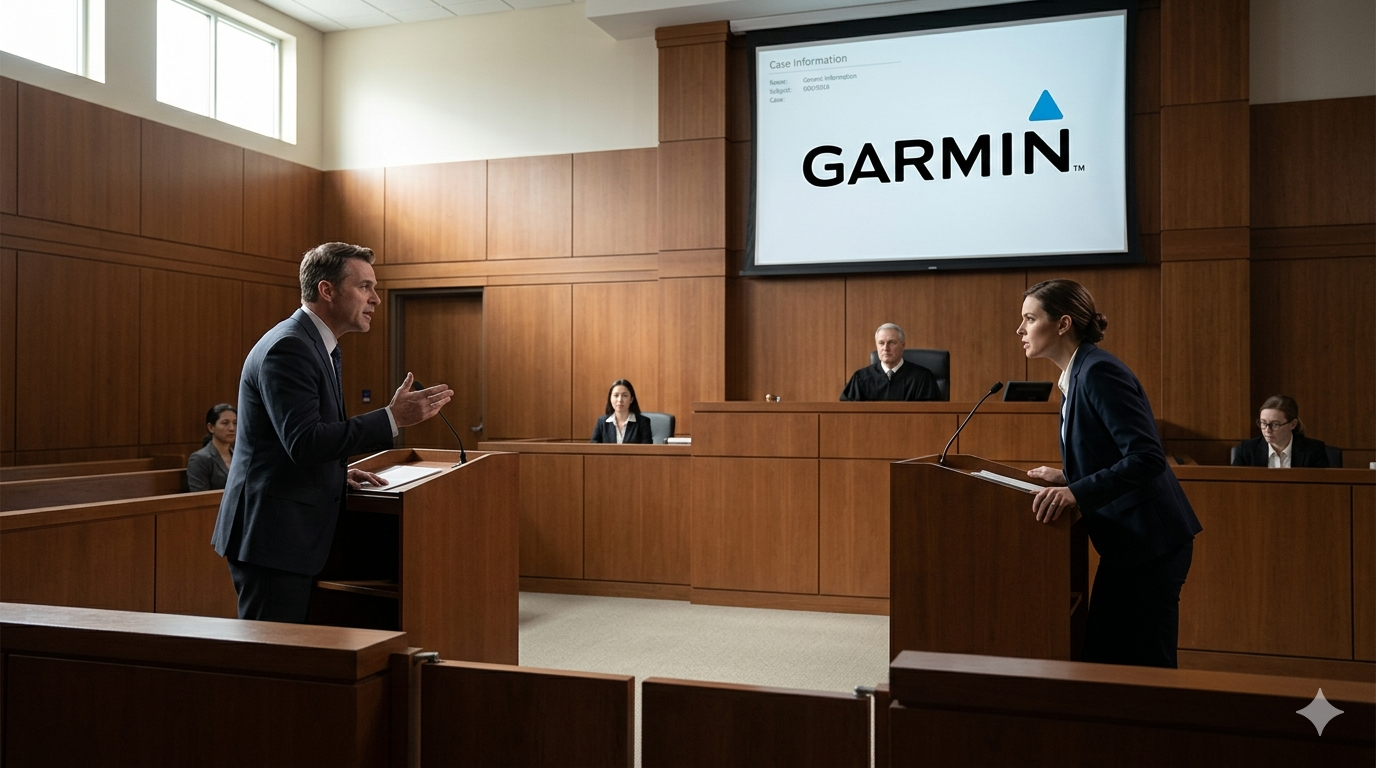
A proposed class action filed in the US District Court for the Northern District of Illinois on 29 May 2026 aims at the Garmin Index S2 Smart Scale. The case is Maurer v. Garmin International Inc. et al (1:26-cv-06389).
This case is starting to be reported for the device’s inaccuracy. That’s not strictly true. What’s really being tried here is whether Garmin misrepresented what its product could deliver. What’s at stake initially seems to be the class-action claim for $ 5 million plus costs. However, that’s not the case either; that’s a threshold limit, and if the plaintiff wins, the amount could be substantially higher.
Let’s cut to the chase. Here is the essence of Maurer’s allegation and the likely rebuttal from Garmin. An hour-long episode of The Good Wife based on this case would pretty much boil down to these 11 bullet points.
The allegation
- Foot-to-foot BIA sends a current from one foot to the other, measuring resistance only through the lower body. It cannot accurately capture whole-body composition.
- Garmin marketed the Index S2 with unqualified accuracy language and positioned body fat, muscle mass and related metrics as reliable outputs.
- A 2021 peer-reviewed study in JMIR mHealth uHealth found that foot-to-foot smart scales underestimate fat and muscle mass by up to 8kg compared with DEXA, the clinical gold standard.
- Garmin failed to disclose the technology’s fundamental limitation to buyers.
- The plaintiff argues that every Index S2 purchaser was therefore misled. The complaint seeks monetary damages exceeding $5 million.
The rebuttal
- The JMIR study tested a Tefal, a Terraillon and a Withings scale. A Garmin was not tested. No Garmin-specific error rate can be drawn from it.
- The 8kg figure is a worst-case outlier from a clinical population recruited specifically because of obesity or chronic illness. Median errors in the same study were 2.2–4.4kg.
- The Garmin Owner’s Manual cautions that hydration and activity affect measurements and recommends consistent conditions for best results.
- Every major competitor (Withings, Fitbit, Tanita, Eufy) uses the same foot-to-foot two-point BIA. If the technology is the problem, Garmin is not uniquely culpable.
- The industry-standard position is that BIA scales track relative change over time, not absolute clinical values.
- “Exceptional accuracy” in Garmin’s launch statement referred to the scale’s overall accuracy, which measures weight to within 0.1kg. The complaint must demonstrate that the claim was applied specifically to body composition.
Assessment
The plaintiff’s weakest point is the science: the key study does not test Garmin’s product and draws its error data from an unrepresentative clinical population. The study might show that this general class of products has inherent weaknesses.
Garmin’s Achilles heel is its own marketing copy. The official blog states the scale delivers results for users because “Garmin believes that accurate data is important” in direct reference to body composition outputs. Even worse is the launch statement from Garmin VP of worldwide sales Dan Bartel: “The Index S2 builds on the success of the first-generation Garmin smart scale with exceptional accuracy.” Unqualified. In a product announcement that leads with body composition as the headline feature. That is the sentence the plaintiff’s lawyers will return to.
My take is that Garmin has a decent chance of losing. I’m not a lawyer. However, consumer fraud cases do consider the overall impression created by marketing, not giving brands a get-out-of-jail-free card with a disclaimer buried somewhere in a voluminous manual. The “everyone else does it too” defence might help Garmin, but the specific statement from a named executive making an unqualified claim of accuracy at launch won’t.
Garmin’s words are its biggest liability, not its product.
The case, Maurer v. Garmin International, Inc., et al. (1:26-cv-06389), was first reported by Singletracks.
Quick answers
Does the Garmin Index S2 accurately measure body weight?
Yes. Weight measurement is not in dispute. The lawsuit concerns body composition metrics — body fat percentage, muscle mass and related outputs — not the scale’s ability to measure weight.
What is foot-to-foot BIA, and why does it matter?
Foot-to-foot BIA sends an electrical current from one foot to the other, measuring resistance only through the lower body. A four-point system that uses both feet and hands measures more of the body directly and is generally considered more accurate for body composition.
Has Garmin responded to the lawsuit?
Not publicly at the time of publication. The case was filed on 29 May 2026 and is in its early stages.
Last Updated on 3 October 2026 by tfk the5krunner
Small things I always use
- Garmin 90-degree charging adapter: Charges your Garmin from any USB-C cable. Essential when travelling. I use one.
- Body Glide: The blue anti-chafe stick swimmers and runners carry. I use it.
- Speedo earplugs: Fewer ear infections and no cold-water dizziness. I use them.
- Dryrobe Advance: My winter changing robe for open-water swims. I use one. A cheaper option is the AONYIYI changing robe.
- Maurten: Race fuel that stays easy on the stomach. I use them.
- Beet It Sport nitrate shots: Beetroot shots I take in the days before a race. I use them.
- Garmin charging puck: The quickest way to top up before a session. I use one.
- Injinji: Toe socks that stop rubbing, so you run more. I use them.
- Ultimate toe protectors: Stop black toenails on long runs. They work. I use them.
- Compressport R2 v2 calf sleeves: My calf sleeves of choice. I use them.
- Cellucor C4: My pre-workout before hard sessions.
- TPU tubes: Schwalbe Aerothan, Tubolito and Pirelli SmarTube. Light, tiny spares. I use all three.
- G8 insoles: Adjustable insoles that are good. I use them.
- Cycplus Cube: A 97g electric pump that gets a road tyre rideable in two minutes. I carry one. 5% off with code THE5KRUNNER.
Watches and sensors
- Polar H10: My daily driver for waking HRV.
- Polar Verity Sense: My backup arm-worn HR sensor.
- Nomad bedside charger: Charges my iPhone and Apple Watch overnight. I use it, and many of their bands.
- Train.Red: The best muscle oxygen sensor I’ve used.
- Tymewear: Accurate heart rate and reliable ventilatory zones. I use it to pace endurance rides over an hour.
- Garmin Forerunner 970: A pro-grade triathlon watch. I use this.
- Apple Watch Ultra 4: My daily smartwatch. No phone needed on rides.
- Garmin Fenix 9 Pro: I’ve just bought one.
On the bike
- Continental GP5000 for everyday riding, and Aero 111 on the front for special occasions.
- Helmets: Specialized S-Works Evade 3 for road riding, and Rudy Project Wing for TT-style races. I use both.
- Ravemen FR300: A front light that mounts under your Garmin or Wahoo. I use one.
- Wahoo TRACKR Radar: I use it on one bike and Varia on the other. They perform the same.
- Garmin Varia RTL515: Radar that warns you of cars from behind. I use this model.
- Wahoo ELEMNT Roam 3: The bike computer that’s easy to use. I use mine on most rides.
- Favero Assioma Pro RS2: Accurate power pedals that swap easily between bikes. I use this model.
Home and indoor training
- NPE Runn: Makes my basic treadmill smart, sending more accurate speed and distance to my watch and Zwift. I use it.
- Google Wifi: Keeps Zwift connected in my pain cave. I use it.
- Apple TV 4K: Zwift on the big screen. I use two.
- Google Nest Doorbell (wired, 2nd gen): My video doorbell, running in both Google Home and Apple Home. I use it.
Health, recovery and sleep
- FreeStyle Libre 3 Plus: Shows how my blood sugar responds to diet.
- hDrop: Measures my sweat loss in summer and indoors.
- Fourth Frontier Zone: Checks my heart under load in hard sessions.
- Oura Ring 5: My partner’s recovery tracker of choice.
- Eight Sleep: A cooling mattress cover my partner and I use nightly.
Reader-Powered Content

This content is not sponsored. It’s mostly me behind the labour of love, which is this site, and I appreciate everyone who supports it.
Support the site: Follow (free, fewer ads) · Subscribe (paid, ad-free) · Buy Me A Coffee
Written by real people, with AI assistance. Fact-checked and verified for originality. See the Editorial Policy. FTC: Affiliate Disclosure — some links pay commission. As an Amazon Associate, I earn from qualifying purchases.
tfk is the founder and author of the5krunner, an independent endurance sports technology publication. With 20 years of hands-on testing of GPS watches and wearables, and competing in triathlons at an international age-group level, tfk provides in-depth expert analysis of fitness technology for serious athletes and endurance sport competitors. See the gear tfk uses. ID
