Runna launches heat-adjusted pace targets with Adapt for Heat
Runna’s Adapt for Heat feature is now live, adjusting pace targets for sessions run in hot and humid conditions. Runna says 80% of its global user base skips or alters runs because of heat, a figure from the company’s own research.
June 2026 produced the hottest June day on record in the UK, 37.7°C at Lingwood, Norfolk, according to the Met Office. Strava’s data for the same period, supplied by Runna, shows runners adjusting around the heat: activities starting before 7am rose 32%, indoor activity rose 12%, running activity fell 16%, and cycling rose 14% as some runners switched sport entirely.
Adapt for Heat removes the manual guesswork from that adjustment. A colour-coded hourly forecast based on local conditions shows the hottest and coolest windows of the day. Pace targets are then recalculated so that a slower pace in heat delivers the same training stimulus as the original target pace would have on a cooler day. The adjustment is calculated from feels-like temperature, workout duration and the specific session in the runner’s existing plan.
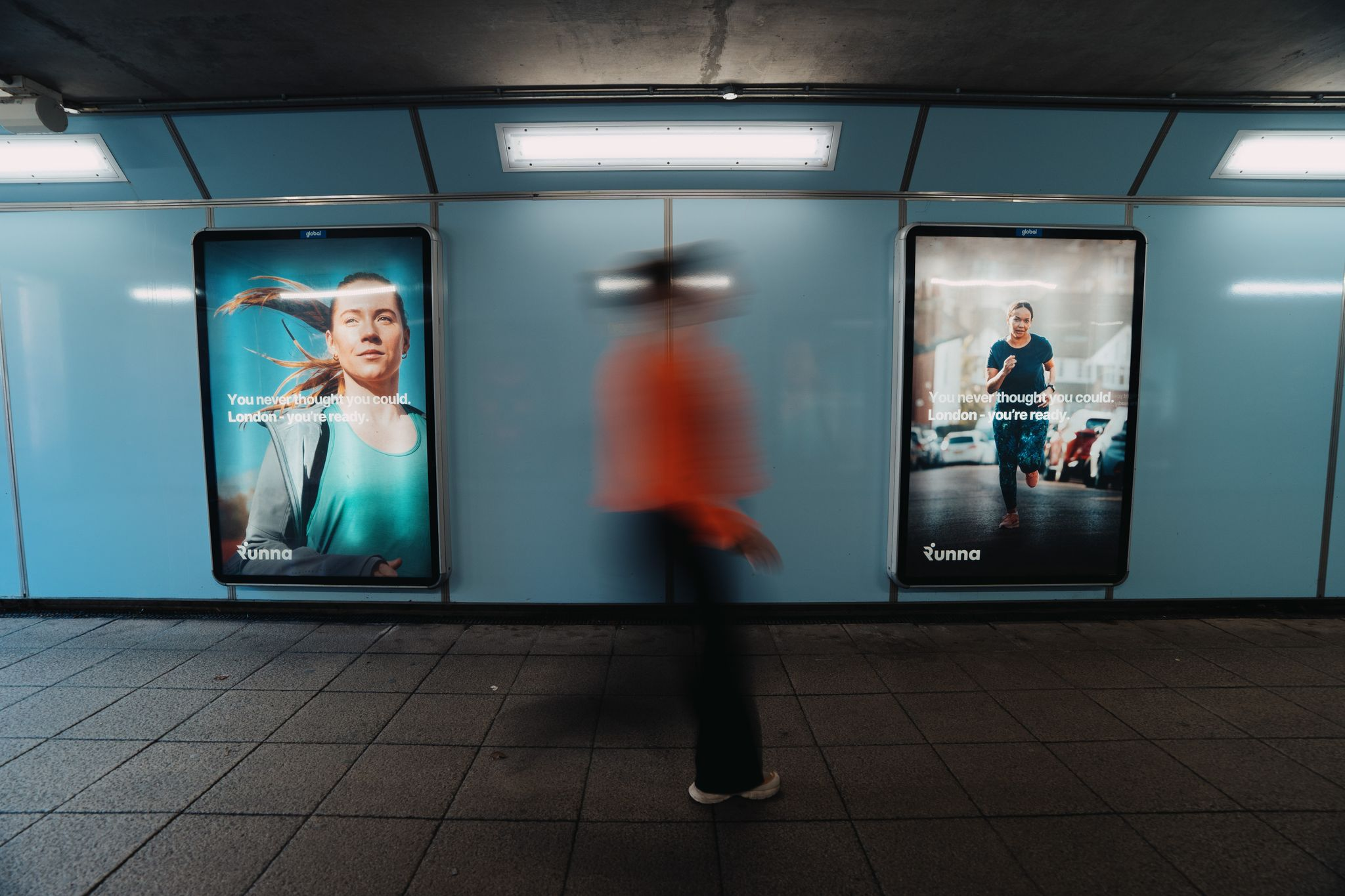
Two further features arrive in August. Upcoming Plans lets runners schedule multiple training plans in advance, with pace targets and performance data carrying over automatically as one plan ends and the next begins. Post-Race Recovery Plan is a relaunch: a recovery block is generated automatically the moment a runner starts any 5K to 50K race plan, built around that runner’s distance, pace and performance history, and feeds directly into Upcoming Plans.
Runna’s algorithmic pace-setting has drawn scrutiny before. Runna: Is Your AI Marathon Training Plan Injuring You? found physical therapists reporting multiple weekly cases tied to AI-generated plans. The heat feature also lands three weeks after Strava race discovery: Runna races now inside the app, and follows a record 2.8 million miles of 5K activity logged in a single day across the two platforms in June.
Adapt for Heat runs entirely on external inputs: feels-like temperature, duration, and the scheduled session. It has no way to see what heat strain is actually doing to the runner underneath. The CORE 2 Body Temperature Sensor review tested that gap directly. Cycling outdoors through a hot UK summer produced almost no measured heat adaptation, despite Garmin’s own ambient-based Heat Acclimation metric showing 25% adaptation over the same period, a divergence put down to airflow keeping actual skin and core temperature suppressed even as the forecast stayed hot. Indoor sessions without a fan, with that cooling removed, produced adaptation the outdoor ones did not.
Running doesn’t get the same airflow cooling cycling does, but the underlying problem is identical: feels-like temperature describes the air, not the athlete’s core temperature. Wind, shade, humidity at head height versus at a weather station, and pace itself all change the heat strain a runner accumulates at a given ambient reading. Wahoo has since added core-temperature sensors like CORE across its bike computer line, and running watches from Garmin, COROS, Suunto and Wahoo already support the sensor over ANT+ or BLE. Runna sits on top of Strava, which reads GPS and heart rate, not core or skin temperature. Adapt for Heat is adjusting for the forecast. It isn’t measuring the runner.
Take Out
This is a nice feature. Expect adjustment when feels-like temperature exceeds as little as 16 Celcius.
Don’t confuse this feature with heat adaptation. If you run on a super hot day, there will almost certainly be some heat adaptation happening, but neither this feature nor the ambient temperature is a reliable guide to it.
My favourite kit and nutrition
- Garmin Fenix 9 Pro — I’ve just bought one.
- Injinji – Runners protect your toes. Avoid discomfort and minor injury. Run more. Run faster. I use them.
- Garmin 90-degree charging adapter — A small keyring adapter you can use anywhere. Essential when away. I use one.
- Garmin charging puck — the fastest and most reliable way to top up your Garmin before a session. I use one.
- Ravemen FR300 — Front light that mounts directly under your Garmin or Wahoo head unit. Keeps your bars clean and your beam pointed where it matters. I use one.
- Body Glide – The blue anti-chafe stick that all swimmers and many runners use. I use it.
- Maurten — The race nutrition trusted by elite athletes. Gels and drink mixes engineered to be easy on the stomach. I use them.
- Garmin Varia RTL515 — A radar rear light that alerts you to vehicles approaching from behind. Pairs with your Edge or Wahoo. I use this model.
- Favero Assioma Pro RS2 — The power-meter pedals most serious cyclists choose. Accurate, easy to move between bikes. I use this model.
- Garmin Forerunner 970 — A serious choice for a pro-grade triathlon watch. I use this.
- Polar H10 — My daily driver for accurate, waking HRV readings.
- Wahoo ELEMNT Roam 3 — The bike computer that has the feature Garmin lacks: usability. I use mine on most rides.
Reader-Powered Content

This content is not sponsored. It’s mostly me behind the labour of love, which is this site, and I appreciate everyone who supports it.
Support the site: Follow (free, fewer ads) · Subscribe (paid, ad-free) · Buy Me A Coffee ❤️
All articles are written by real people, fact-checked, and verified for originality. See the Editorial Policy. FTC: Affiliate Disclosure — some links pay commission. As an Amazon Associate, I earn from qualifying purchases.
tfk is the founder and author of the5krunner, an independent endurance sports technology publication. With 20 years of hands-on testing of GPS watches and wearables, and competing in triathlons at an international age-group level, tfk provides in-depth expert analysis of fitness technology for serious athletes and endurance sport competitors. ID
