The Watch 6 launches at the same £399.99 UK price as the Watch 5’s own launch price a year earlier, and at that price it actually offers less premium material choice, not more. The titanium and ceramic tier the Watch 5 offered is gone from the base model. Huawei hasn’t dropped premium materials from the lineup entirely, though: they’ve moved to a separate Watch 6 Pro tier starting at £599.99, with a titanium 46mm option and an all-ceramic 43mm edition finished with 18K gold accents, its first fully ceramic watch. This piece compares the base Watch 6 against the Watch 5 only; the Pro tier gets its own comparison against the Watch 5 Pro. What the base Watch 6 adds instead is almost entirely on the software side: three new opt-in health-risk studies, a confirmed Pulse Wave Arrhythmia Analysis feature, and a sensor Huawei claims is twice as responsive. Whether that trade makes sense depends on which of those two things you actually value.
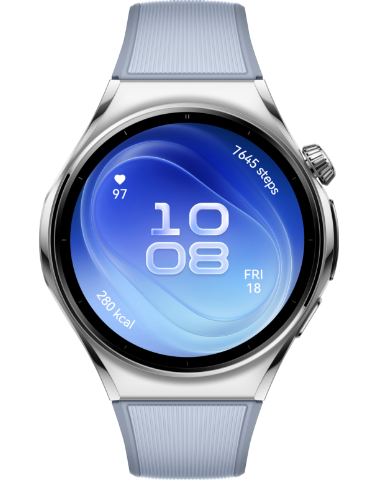
Case material moves to a separate Pro tier
The Watch 5 offered a genuine premium tier: aerospace-grade titanium with a ceramic rear at 46mm, or 904L stainless steel with ceramic at 42mm, alongside cheaper 316L stainless steel and composite options at both sizes. The base Watch 6 drops titanium and ceramic entirely. The 42mm uses an aluminium alloy front, the 46mm stainless steel, both paired with a polymer composite rear rather than any ceramic option. Colour choice shrinks to match: five colours total across both sizes, against the Watch 5’s eight. This isn’t a refinement of the Watch 5’s material lineup; it’s the removal of its top tier from this price point. That tier hasn’t disappeared from Huawei’s range, though: the Watch 6 Pro carries a titanium 46mm option and a fully ceramic 43mm edition with 18K gold accents, at £200 more than this base model. Sapphire crystal glass covers the display on both the Watch 5 and the base Watch 6, though Huawei’s Kunlun Glass outperforms sapphire on drop resistance in Huawei’s own testing, and neither uses it.
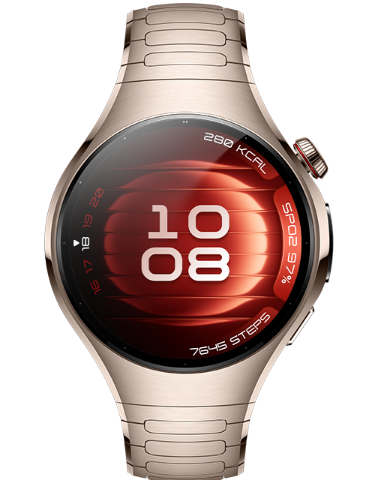
The genuine software additions
Three things are new on the Watch 6 that the Watch 5’s specification page doesn’t offer. Coronary heart disease, diabetes risk, and hypertension risk studies are opt-in programmes run through the HUAWEI Research app, each requiring separate activation and a data collection period before Health Glance shows results. Pulse Wave Arrhythmia Analysis is confirmed as a real feature, named directly in Huawei’s own battery test conditions rather than inferred from marketing copy. And the X-TAP sensor itself moves to a 12-channel PPG design Huawei states doubles responsiveness versus the Watch 5’s sensor, though that comparison is Huawei’s own and hasn’t been independently verified.
Health Glance is also now explicitly stated at 14 metrics across four bodily systems, a specific figure the Watch 5’s own specification page never gave. None of Huawei’s three risk studies is intended for diagnosis or treatment, and each needs to be joined separately rather than running automatically.
Battery life hasn’t moved at all.
The figures are identical, size for size, mode for mode. Both watches reach 4.5 days typical use on the 46mm in Standard mode, 3 days with always-on display, rising to 11 days maximum and 7 days typical use in Battery saver mode. The 42mm matches too: 3 days typical use, 2 days with always-on display, up to 7 days maximum and 5 days typical in Battery saver mode. A year of development hasn’t moved this number in either direction.
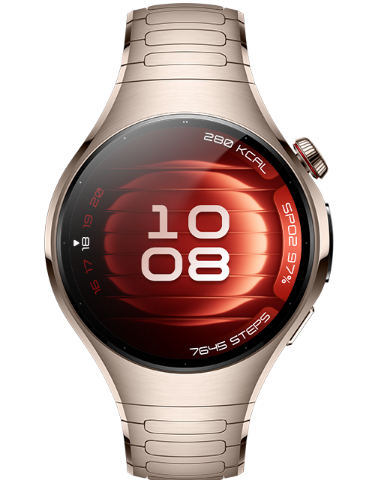
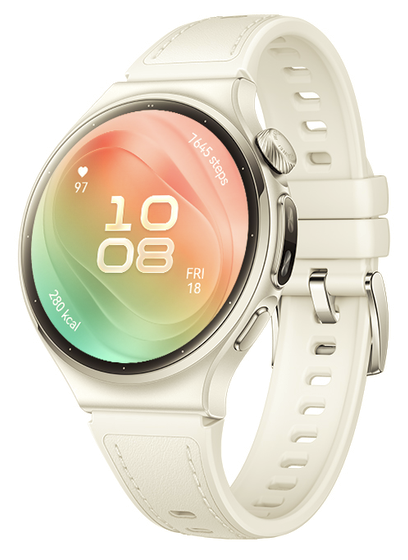
Water resistance and diving are also unchanged.
Both watches carry identical 5 ATM and IP69 ratings, plus a 40-metre freedive rating under EN13319. Nothing here differs between the two generations; if diving capability was a reason to consider either watch, it applies equally to both.
Smaller connectivity differences
NearLink, Huawei’s proprietary short-range wireless standard, is new to the Watch 6 and absent from the Watch 5’s specification page. GNSS gets a more detailed listing on the Watch 6’s page, with BeiDou explicitly stated as tri-band; the Watch 5’s page doesn’t rule this out, but it simply doesn’t specify it. The Watch 5’s page names Wi-Fi 6 specifically; the Watch 6’s page states only “2.4GHz and 5GHz” without naming the standard, a difference in how much detail Huawei has published rather than a confirmed downgrade. Gesture Magic and a Safety Check feature are both new to the Watch 6, though both remain pending an OTA update rather than live at launch.
The decision, plainly
Buy the Watch 6 if the three opt-in health studies, Pulse Wave Arrhythmia Analysis, or the more responsive X-TAP sensor would actually get used, since none of those exists on the Watch 5 at any price. Buy the Watch 5 if you want a titanium or ceramic build at this price point, and can find one at a discount now that it’s been replaced. If you want that build new, the Watch 6 Pro carries it forward at £599.99. Paying full price for the base Watch 6 or the Watch 5 buys identical battery life and identical water resistance regardless of which one you choose.
Huawei Watch 5
Fingertip SpO2 and ECG readings in under ten seconds, in a titanium or steel case rated for up to 11 days in Battery Saver mode.

Full specifications for both models: Watch 6 and Watch 5. For the Watch 6’s full launch details: Huawei Watch 6 Launches: New Health Features, UK Pricing Confirmed. For the full Huawei range, see the Huawei specifications index.
Quick answers
Is the Huawei Watch 6 an upgrade over the Watch 5?
It depends what you value. On the base model, case material is a genuine step down: titanium and ceramic are gone, at the same price. That tier still exists on the separate Watch 6 Pro, from £599.99. Software gains three new opt-in health studies and a more responsive X-TAP sensor, none of which exist on the Watch 5.
Is battery life better on the Huawei Watch 6?
No. Battery life is identical to the Watch 5 at the same case size and mode, with the same figures in Standard and Battery saver modes.
Does the Huawei Watch 6 have a titanium case option?
Not on the base model. The base Watch 6 uses aluminium alloy (42mm) or stainless steel (46mm) only. Titanium and an all-ceramic 43mm edition are both available on the separate Watch 6 Pro, from £599.99.
What health features are new on the Huawei Watch 6?
Three opt-in research studies via the HUAWEI Research app: coronary heart disease, diabetes risk and hypertension risk, alongside a confirmed Pulse Wave Arrhythmia Analysis feature and a 12-channel X-TAP sensor Huawei states is twice as responsive.
Last Updated on 8 October 2026 by tfk the5krunner
Small things I always use
- Garmin 90-degree charging adapter: Charges your Garmin from any USB-C cable. Essential when travelling. I use one.
- Body Glide: The blue anti-chafe stick swimmers and runners carry. I use it.
- Speedo earplugs: Fewer ear infections and no cold-water dizziness. I use them.
- Dryrobe Advance: My winter changing robe for open-water swims. I use one. A cheaper option is the AONYIYI changing robe.
- Maurten: Race fuel that stays easy on the stomach. I use them.
- Beet It Sport nitrate shots: Beetroot shots I take in the days before a race. I use them.
- Garmin charging puck: The quickest way to top up before a session. I use one.
- Injinji: Toe socks that stop rubbing, so you run more. I use them.
- Ultimate toe protectors: Stop black toenails on long runs. They work. I use them.
- Compressport R2 v2 calf sleeves: My calf sleeves of choice. I use them.
- Cellucor C4: My pre-workout before hard sessions.
- TPU tubes: Schwalbe Aerothan, Tubolito and Pirelli SmarTube. Light, tiny spares. I use all three.
- G8 insoles: Adjustable insoles that are good. I use them.
- Cycplus Cube: A 97g electric pump that gets a road tyre rideable in two minutes. I carry one. 5% off with code THE5KRUNNER.
Watches and sensors
- Polar H10: My daily driver for waking HRV.
- Polar Verity Sense: My backup arm-worn HR sensor.
- Nomad bedside charger: Charges my iPhone and Apple Watch overnight. I use it, and many of their bands.
- Train.Red: The best muscle oxygen sensor I’ve used.
- Tymewear: Accurate heart rate and reliable ventilatory zones. I use it to pace endurance rides over an hour.
- Garmin Forerunner 970: A pro-grade triathlon watch. I use this.
- Apple Watch Ultra 4: My daily smartwatch. No phone needed on rides.
- Garmin Fenix 9 Pro: I’ve just bought one.
On the bike
- Continental GP5000 for everyday riding, and Aero 111 on the front for special occasions.
- Helmets: Specialized S-Works Evade 3 for road riding, and Rudy Project Wing for TT-style races. I use both.
- Ravemen FR300: A front light that mounts under your Garmin or Wahoo. I use one.
- Wahoo TRACKR Radar: I use it on one bike and Varia on the other. They perform the same.
- Garmin Varia RTL515: Radar that warns you of cars from behind. I use this model.
- Wahoo ELEMNT Roam 3: The bike computer that’s easy to use. I use mine on most rides.
- Favero Assioma Pro RS2: Accurate power pedals that swap easily between bikes. I use this model.
Home and indoor training
- NPE Runn: Makes my basic treadmill smart, sending more accurate speed and distance to my watch and Zwift. I use it.
- Google Wifi: Keeps Zwift connected in my pain cave. I use it.
- Apple TV 4K: Zwift on the big screen. I use two.
- Google Nest Doorbell (wired, 2nd gen): My video doorbell, running in both Google Home and Apple Home. I use it.
Health, recovery and sleep
- FreeStyle Libre 3 Plus: Shows how my blood sugar responds to diet.
- hDrop: Measures my sweat loss in summer and indoors.
- Fourth Frontier Zone: Checks my heart under load in hard sessions.
- Oura Ring 5: My partner’s recovery tracker of choice.
- Eight Sleep: A cooling mattress cover my partner and I use nightly.
Reader-Powered Content

This content is not sponsored. It’s mostly me behind the labour of love, which is this site, and I appreciate everyone who supports it.
Support the site: Follow (free, fewer ads) · Subscribe (paid, ad-free) · Buy Me A Coffee ❤️
Written by real people, with AI assistance. Fact-checked and verified for originality. See the Editorial Policy. FTC: Affiliate Disclosure — some links pay commission. As an Amazon Associate, I earn from qualifying purchases.
tfk is the founder and author of the5krunner, an independent endurance sports technology publication. With 20 years of hands-on testing of GPS watches and wearables, and competing in triathlons at an international age-group level, tfk provides in-depth expert analysis of fitness technology for serious athletes and endurance sport competitors. ID

the more premium materials come in watch 6 pro variant…
AI translation of Huawei’s Chinese introduction:“The Huawei WATCH 6 Pro uses premium nanocrystalline ceramic material for both its case and strap, completely breaking away from the pieced-together feel of traditional materials to deliver a more seamless, unified design. Celebrated for its smooth, delicate touch and exceptional durability, ceramic has long been a staple in high-end luxury timepieces. By introducing an all-ceramic design to the WATCH 6 Pro, Huawei gives the body and strap a lustrous, translucent visual impact. At the same time, the crown, buttons, and X-TAP section are accented with 18K genuine gold. This exquisite detail—adding actual gold to minimalist white ceramic—not only eliminates the cold feeling typical of tech devices, but also imparts a understated yet luxurious high-end texture. Whether paired with a sharp business suit, a sophisticated workplace shirt, or everyday casual wear, the “Smart & Elegant White Ceramic” handles it all with ease, making style effortless and providing users who pursue quality of life with a superior outfit choice.”
AI translation of Huawei’s Chinese introduction:“The Huawei WATCH 6 Pro uses premium nanocrystalline ceramic material for both its case and strap, completely breaking away from the pieced-together feel of traditional materials to deliver a more seamless, unified design. Celebrated for its smooth, delicate touch and exceptional durability, ceramic has long been a staple in high-end luxury timepieces. By introducing an all-ceramic design to the WATCH 6 Pro, Huawei gives the body and strap a lustrous, translucent visual impact. At the same time, the crown, buttons, and X-TAP section are accented with 18K genuine gold. This exquisite detail—adding actual gold to minimalist white ceramic—not only eliminates the cold feeling typical of tech devices, but also imparts a understated yet luxurious high-end texture. Whether paired with a sharp business suit, a sophisticated workplace shirt, or everyday casual wear, the “Smart & Elegant White Ceramic” handles it all with ease, making style effortless and providing users who pursue quality of life with a superior outfit choice.”