Suunto Smart Heart Rate Belt 2 adds running dynamics and claims a cleaner heart rate and HRV trace
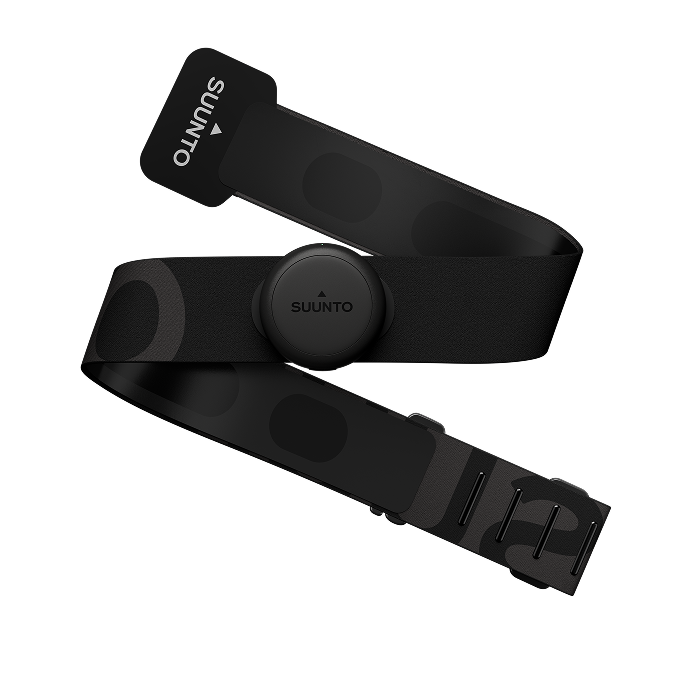
Suunto Smart Heart Rate Belt 2 adds running dynamics, three simultaneous Bluetooth connections, 20 hours of onboard memory and what Suunto says is a cleaner, more accurate heart rate and HRV trace. That last one interests me most. The strap now catches bad beats before the data reaches your watch. All other chest straps leave that to software after the workout.
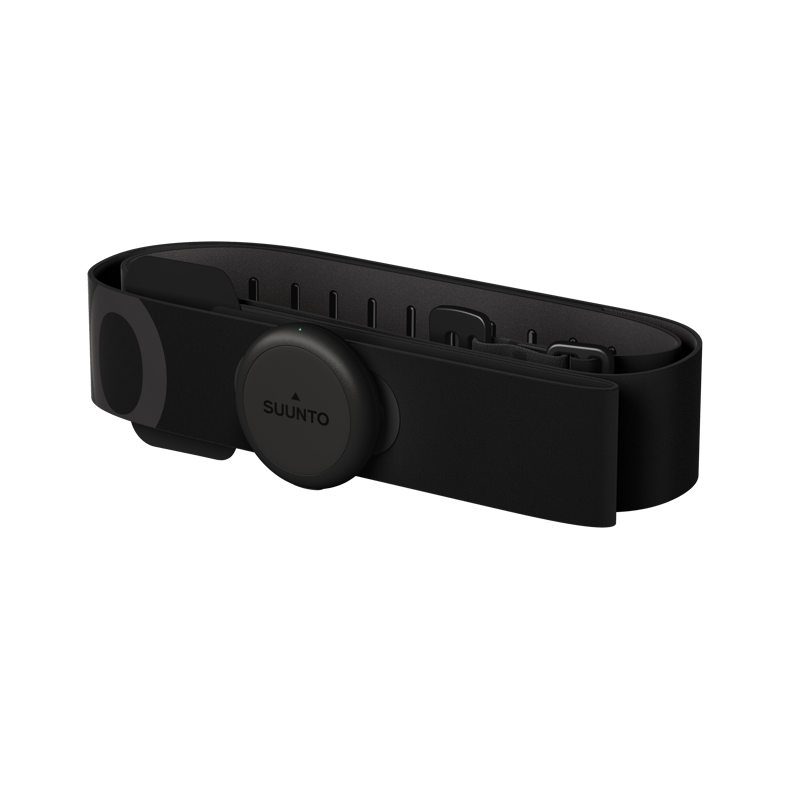
Artefact rejection on the transmitter
Chest straps time each beat from the QRS spike in the ECG signal. The gaps between spikes are the R-R intervals that HRV and Suunto’s ZoneSense use. At rest, the detection is close to perfect; validation studies put the Polar H10 within a couple of milliseconds of laboratory ECG. It breaks down under harder conditions: intense efforts, arm swing, a dry synthetic top, or poor electrode contact. The sensor registers a spike that was not a beat, or misses one that was. Each error corrupts one interval and shows up as a spike or dropout in the bpm trace.
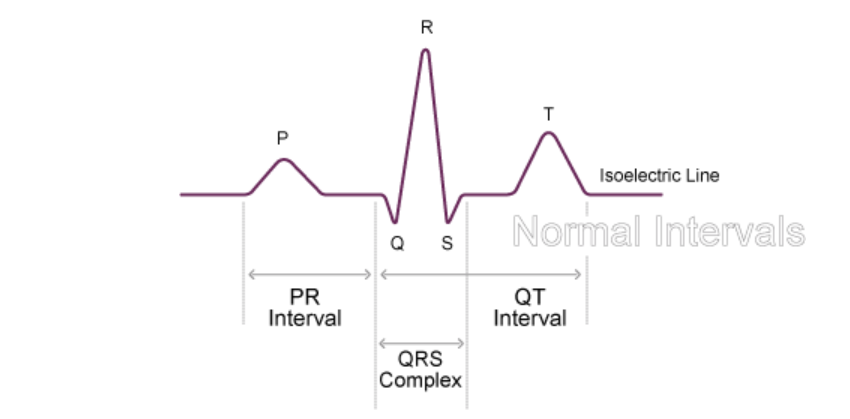
Standard practice is to fix this afterwards. You export the R-R file to Kubios (or similar) and apply a correction threshold. Researchers control that step closely.
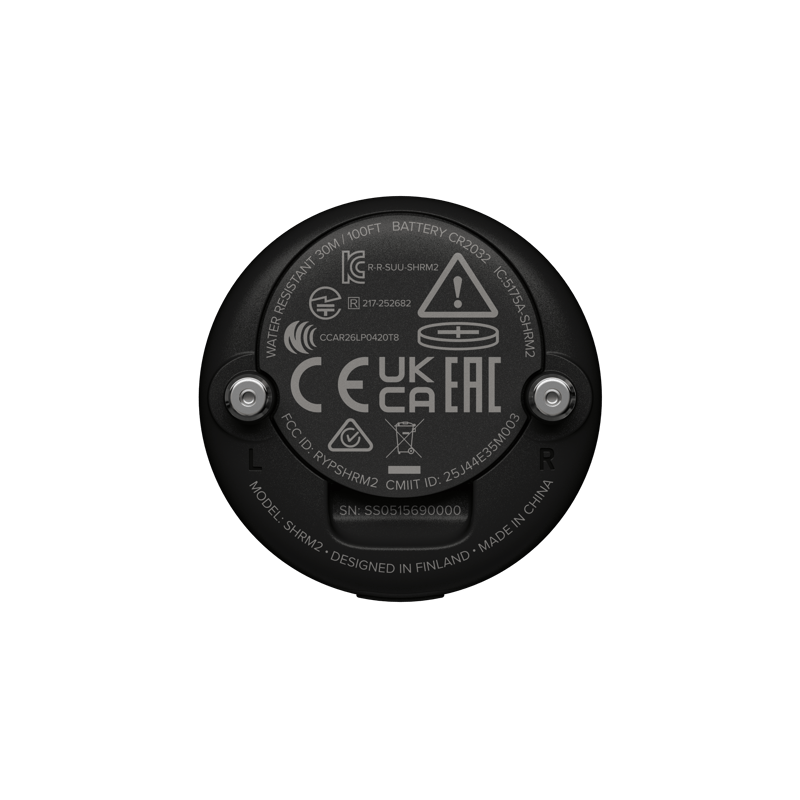
Belt 2 moves the job onto the transmitter. Suunto says ECG-based detection identifies QRS-complex artefacts in both the heart rate and R-R streams as they are captured, and the new strap’s construction shields the signal from electrostatic noise. Suunto describes the result as a heart rate trace that “follows intervals, sustained surges and long efforts more consistently”.
ZoneSense already worked with the original belt. The new strap simply changes the data quality.
If you analyse your own data
To some degree, on-device correction removes worry and the need to make a decision later.
- Correction thresholds are a choice: different settings shift measures such as DFA a1, and a lab usually wants to make that choice itself.
- An over-aggressive filter can remove real physiology, like an ectopic beat, along with noise.
- The original belt exported raw IBI data through Movescount; Suunto’s Belt 2 material doesn’t mention an equivalent raw export.
- If that option doesn’t exist, the belt is less useful for independent HRV analysis than the strap it replaces, regardless of what it does for the BPM trace.
Whether the artefact rejection helps or harms depends on how it is tuned. Garmin’s HRM 600 and Coros’s strap haven’t gone this way. Their recent upgrades focused on running dynamics, battery, and broadcast.
One independent test does exist. @thequantifiedscientist ran Belt 2 against a Polar H10 across cycling, running and weightlifting sessions. The small deviations he found, mostly at peaks and dips in the lower heart rate range, he attributes to differences in how each device defines a beat-to-beat reading rather than to any fault in the Suunto strap. Otherwise the two were effectively identical, which is what you’d expect from two well-built ECG chest straps.
The rest of the upgrade
The signal-quality work above is the headline change. Everything else is more conventional: a motion sensor in the transmitter adds running dynamics, covering cadence, ground contact time, vertical oscillation, flight time and left/right balance. Garmin has measured the same things from the chest for years on its HRM straps and watches, so this is a catch-up move for Suunto. It needs a compatible Suunto watch, and on some models the metrics only appear in a custom sport mode, a SuuntoPlus app, or after the workout rather than live.
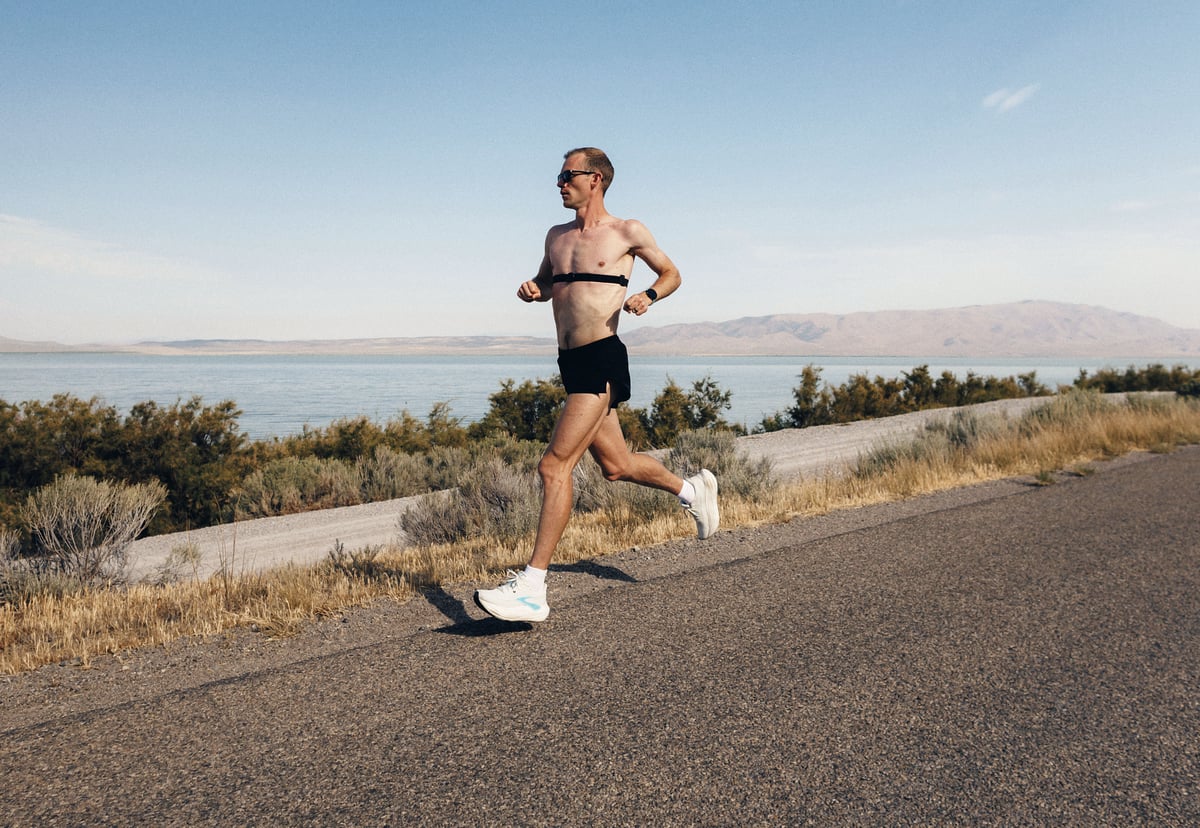
The rest of the changes are straightforward and also of the catch-up type.
- Three simultaneous Bluetooth connections replace the old belt’s single active link, useful for anyone sending heart rate to a watch, a bike computer and an indoor platform at once.
- Onboard memory rises from 3.5 hours to 20, and a compatible watch reads it back by timestamp, so a dropped connection no longer leaves a gap in the file.
- The module is bigger and heavier
- The battery moves from a CR2025 to a larger, higher-capacity CR2032, yet
- Rated battery life drops slightly to about 460 hours.
The table below includes full specs, including watch compatibility.
| Spec | Smart Heart Rate Belt | Smart Heart Rate Belt 2 |
|---|---|---|
| Price | £59 (list £69) | £89 |
| Battery | CR2025, approximately 500 hours | CR2032, approximately 460 hours |
| Module weight | 9.4 g | 13 g |
| Module dimensions | 36.5 x 36.5 x 8 mm | 36.5 x 36.5 x 8.5 mm |
| Water resistance | 30 m | 30 m |
| Simultaneous Bluetooth connections | One at a time | Up to three |
| Onboard R-R memory | 3.5 hours at 120 bpm | 20 hours, rolling |
| Artefact rejection | None (raw R-R only) | QRS-complex artefact detection plus static (ESD) shielding |
| Running dynamics | None | Motion sensor (six-axis): cadence, GCT, vertical oscillation, flight time, GCT/FT ratio, L/R balance, compatible watches only |
| ZoneSense support | Yes | Yes |
| Strap sizes | S, M, L (56 to 160 cm) | XS/S, M/L |
Suunto Smart Heart Rate Belt 2 costs £89 / EUR 99 and has been available since 8 September 2026, direct from Suunto and through retailers. Amazon currently lists it at £76.50.

ZoneSense, running dynamics and memory readback all need one of the watches above. Belt 2 launched alongside Suunto Run 2.
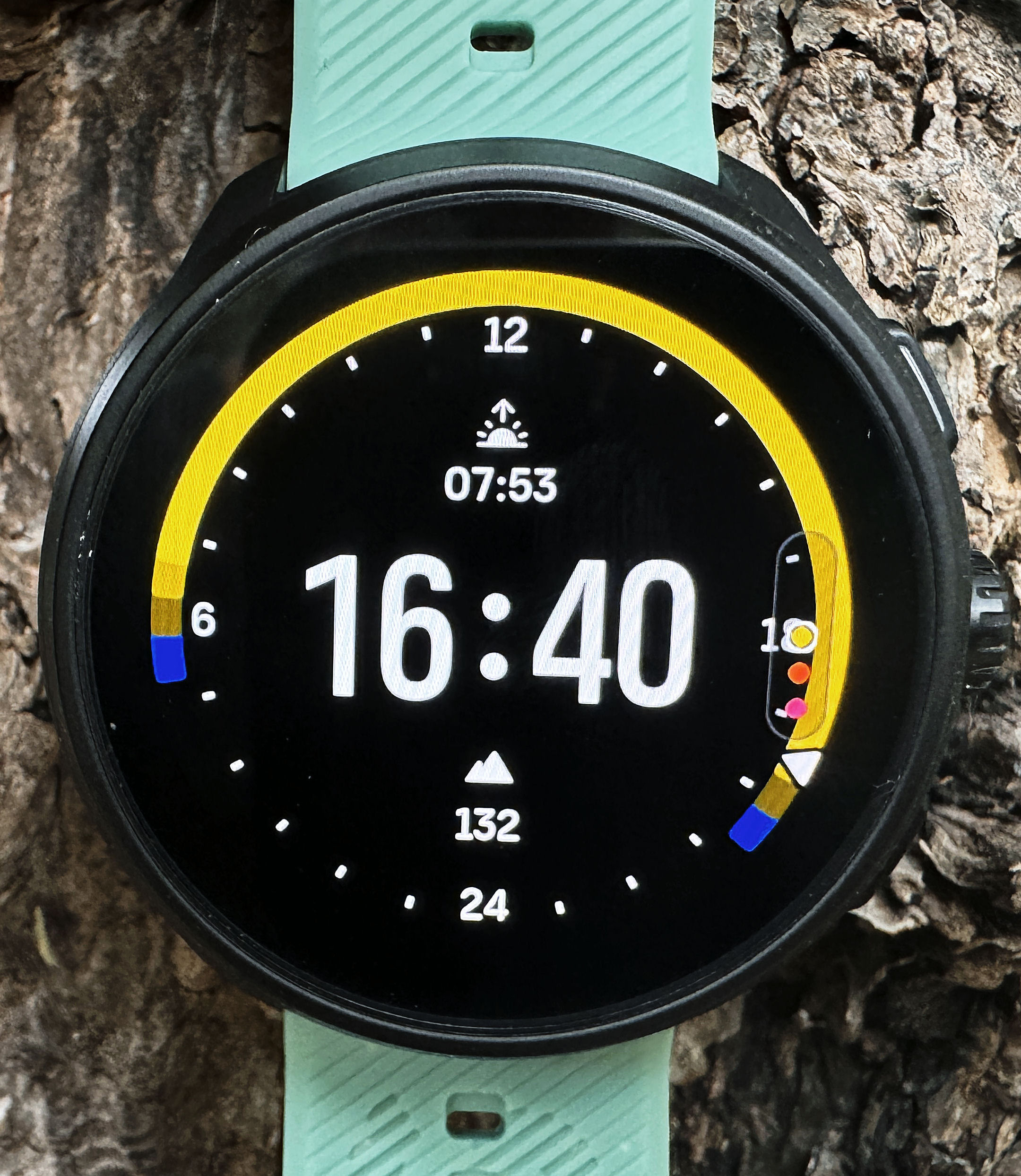
Suunto Run 2
Stainless steel bezel, 1.32" AMOLED (2,000 nits), dual-band GPS, 10-day battery.

Quick answers
Do other chest straps already do onboard artefact rejection?
Not as a marketed real-time feature. Correction for straps like the Polar H10 is applied afterwards, in software such as Kubios HRV or Elite HRV, rather than on the device during capture.
What does Belt 2 detect?
QRS-complex artefacts, meaning false or missed beat detections, in the heart rate and R-R data, plus static noise from dry synthetic clothing, which the new strap construction shields against.
Does this improve ZoneSense?
It should. ZoneSense is built from beat-to-beat R-R data, so a cleaner input stream gives it less noise to work with. ZoneSense already worked with the original belt.
Will on-device correction affect HRV research using this belt?
Potentially. Labs and coaches usually want the raw, uncorrected R-R stream so they can apply their own correction method. Suunto’s Belt 2 material does not mention a raw export mode.
Which Suunto watches work with Belt 2?
Heart rate, R-R, memory and ZoneSense: Suunto 9 Peak Pro, Vertical, Vertical 2, Race, Race 2, Race S, Run, Run 2 and Ocean. Running dynamics: Vertical 2, Race, Race 2, Race S, Run and Run 2, with some of those needing a custom sport mode, SuuntoPlus app or post-workout analysis.
How much does Suunto Smart Heart Rate Belt 2 cost and when is it available?
£89 in the UK and EUR 99 in the eurozone, available since 8 September 2026 through Suunto’s own site and retailers. Amazon currently lists it at £76.50.
Last Updated on 9 September 2026 by the5krunner
My favourite kit and nutrition
- Garmin Fenix 9 Pro — I’ve just bought one.
- Injinji – Runners protect your toes. Avoid discomfort and minor injury. Run more. Run faster. I use them.
- Garmin 90-degree charging adapter — A small keyring adapter you can use anywhere. Essential when away. I use one.
- Garmin charging puck — the fastest and most reliable way to top up your Garmin before a session. I use one.
- Ravemen FR300 — Front light that mounts directly under your Garmin or Wahoo head unit. Keeps your bars clean and your beam pointed where it matters. I use one.
- Body Glide – The blue anti-chafe stick that all swimmers and many runners use. I use it.
- Maurten — The race nutrition trusted by elite athletes. Gels and drink mixes engineered to be easy on the stomach. I use them.
- Garmin Varia RTL515 — A radar rear light that alerts you to vehicles approaching from behind. Pairs with your Edge or Wahoo. I use this model.
- Favero Assioma Pro RS2 — The power-meter pedals most serious cyclists choose. Accurate, easy to move between bikes. I use this model.
- Garmin Forerunner 970 — A serious choice for a pro-grade triathlon watch. I use this.
- Polar H10 — My daily driver for accurate, waking HRV readings.
- Wahoo ELEMNT Roam 3 — The bike computer that has the feature Garmin lacks: usability. I use mine on most rides.
Reader-Powered Content

This content is not sponsored. It’s mostly me behind the labour of love, which is this site, and I appreciate everyone who supports it.
Support the site: Follow (free, fewer ads) · Subscribe (paid, ad-free) · Buy Me A Coffee ❤️
All articles are written by real people, fact-checked, and verified for originality. See the Editorial Policy. FTC: Affiliate Disclosure — some links pay commission. As an Amazon Associate, I earn from qualifying purchases.
tfk is the founder and author of the5krunner, an independent endurance sports technology publication. With 20 years of hands-on testing of GPS watches and wearables, and competing in triathlons at an international age-group level, tfk provides in-depth expert analysis of fitness technology for serious athletes and endurance sport competitors. ID
