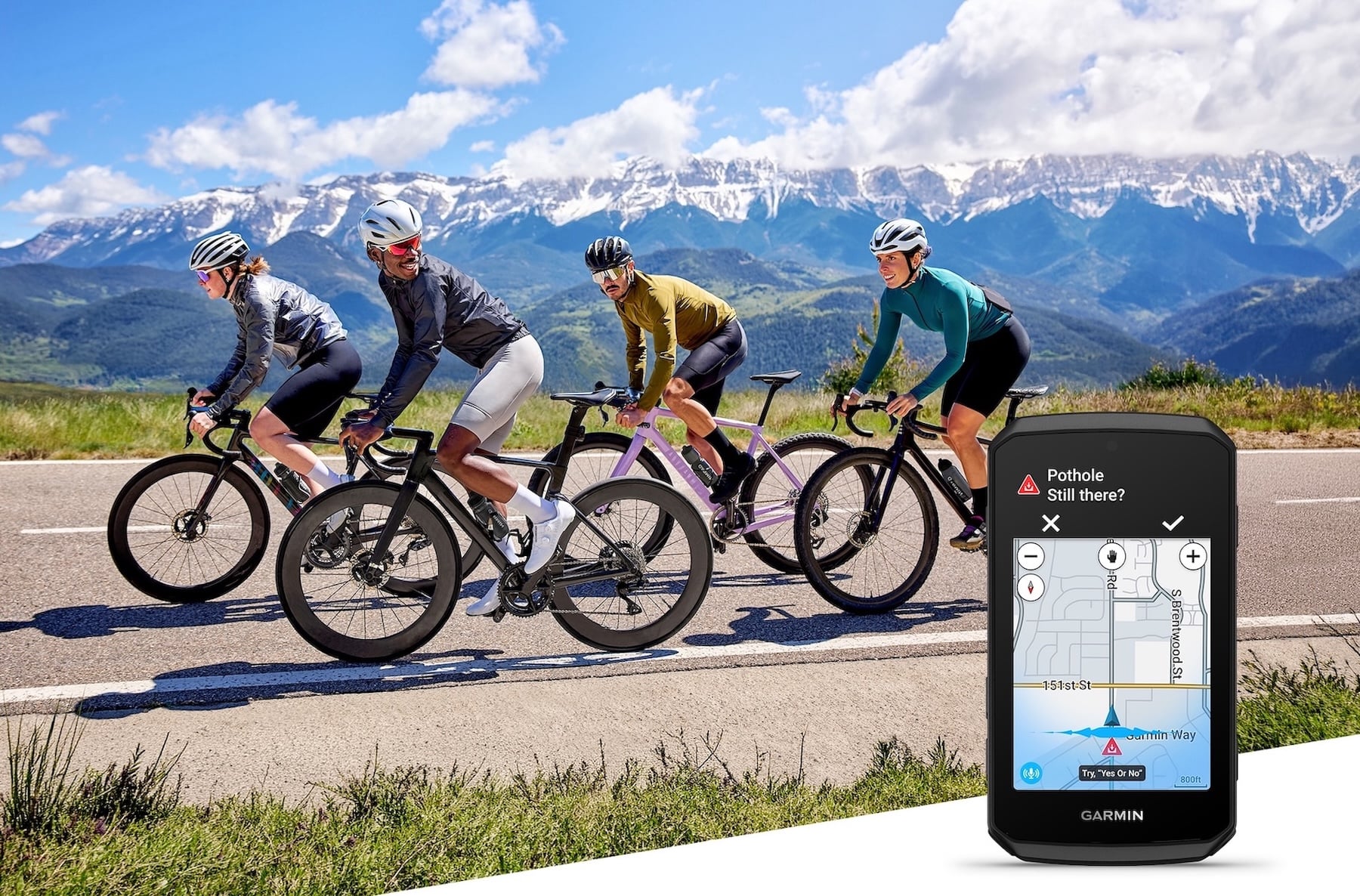
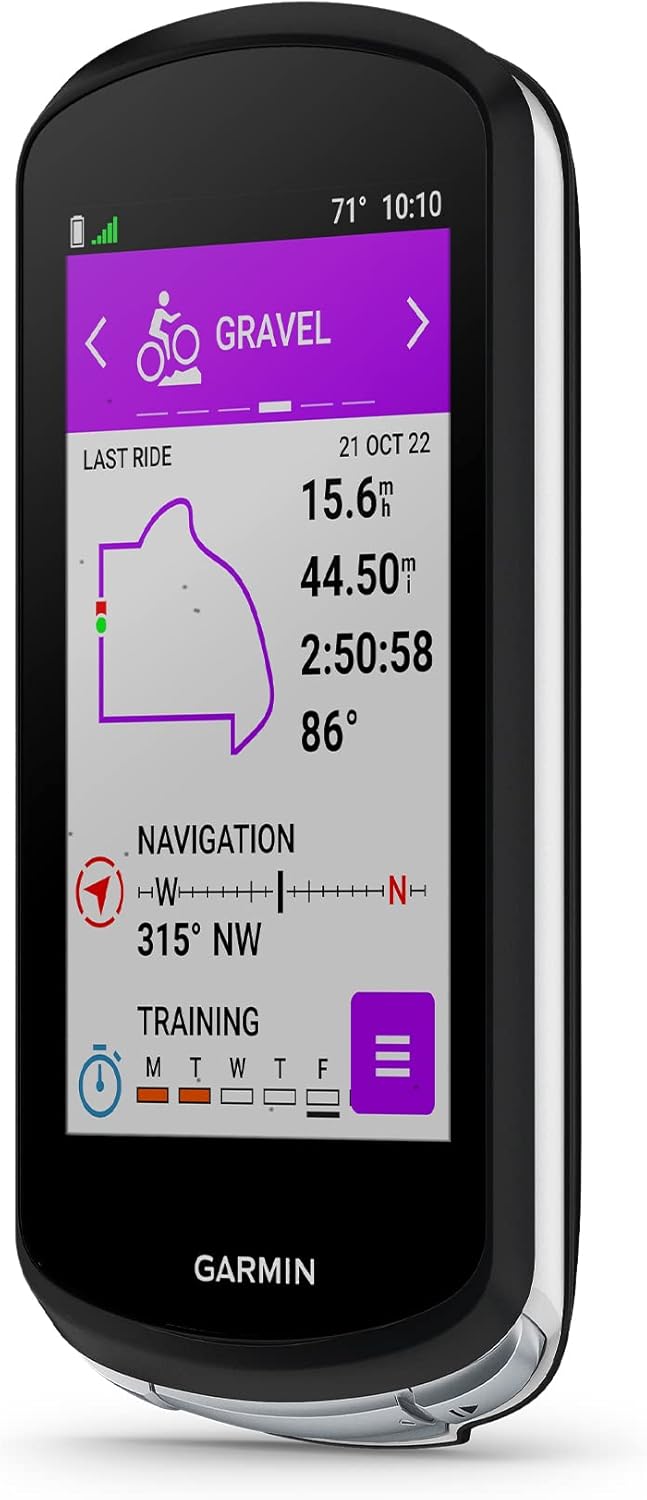
As of today, Garmin’s Edge range includes four models of significantly varying ages. The flagship Edge 1060 launched on 20 October 2026, marking the start of the x60 generation. The medium-format Edge 850 and Edge 550 arrived in September 2025 and belong to the x50 generation, so they are a year old and, on Garmin’s two-year Edge cycle, are due to be replaced by Edge 860 and 560 in 2027. Edge 1040 Solar dates from June 2022 and stays on sale because nothing else in the current range uses Solar charging.
Two things decide the choice: how much screen and battery you want on the bars, and whether a microphone or touchscreen matters to you. The core training analysis covers all four: ClimbPro, Power Guide, Course Demands, Cycling Ability, real-time stamina, and Smart Fueling. Beyond that core, they differ. The routing, messaging and home-screen features announced with the 1060 are on the 1060 alone at launch, and the 1040 Solar runs on an older firmware line that receives new features later, and only where its hardware allows.
Edge 1060: the new flagship
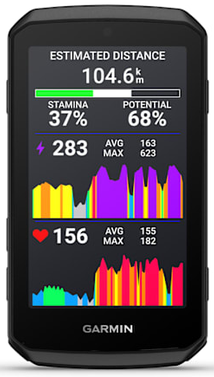
Edge 1060 costs £699.99 / $799.99 and is the only Edge you can talk to. A microphone alongside the speaker lets you reroute, ask for a number or report a pothole by voice, and Garmin Messenger messages are read aloud, with voice replies going back from the bars. It has the biggest screen in the range at 3.5 inches, the most battery of the bright-screen models at 20 hours of demanding use, Garmin Pay, reverse charging to top up a Varia light or a phone, and a lighter weight than the Edge 1050 it replaces. The Edge 1060 vs 1050 comparison covers that.
Garmin Edge 1060
Garmin's flagship bike computer. Change route, check your heart rate or report a pothole by voice, with both hands on the bars.
 +other retailers
Edge 850: the same core software on a smaller screen
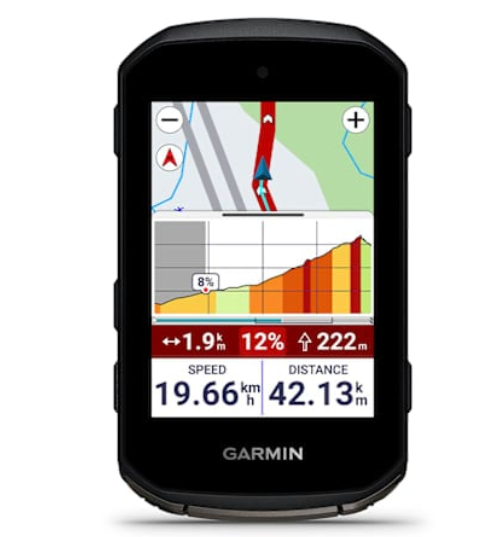
The Edge 850 costs £469.99 / $599.99 and runs the same core training capabilities as the 1060: ClimbPro, Power Guide, Course Demands, Cycling Ability, real-time stamina, Smart Fueling, and GroupRide. At launch, it lacks the routing, GroupRide detection, and home-screen additions that arrived with the 1060. It has a 2.7-inch touchscreen with buttons, Garmin Pay, an on-device course creator, and a speaker, so it offers spoken turn prompts and a real bell rather than a beeper. It gives up screen area, the microphone, reverse charging, and battery life: 12 hours of demanding use versus the 1060’s 20. At 113g, it is 29g lighter than the 1060 and 15mm shorter, which on a road bike is the difference between a computer that fits within the stem length and one that doesn’t. The Edge 850 and 550 review has the detail.
Edge 550: the 850 with buttons
Edge 550 costs £379.99 / $499.99 and is the 850 without the touchscreen, the speaker or Garmin Pay. The display, battery, sensors, and training features are identical. Still, the cuts go beyond the headline three: storage halves to 32GB, the preloaded maps cover one region instead of two, and the 550 cannot search an address or build a round-trip route on the device, so new routes come from the phone. The saving is £90 / $100, and the cost is the interface. I own an Edge 550, and it is poor to use. Garmin designed this generation’s menus for a touchscreen, and the button-only version feels like an afterthought: actions that are one tap on the 850 become a sequence of presses on the 550, and the layout still feels like a touchscreen once the touch is removed. That is the single strongest argument for paying the extra for the 850. The case for the 550 is narrower than it looks: a rider who sets the data screens once, trains with gloves on in winter and never navigates somewhere new will be fine, because the ride itself needs little input.
Edge 1040 Solar: still current, still unique
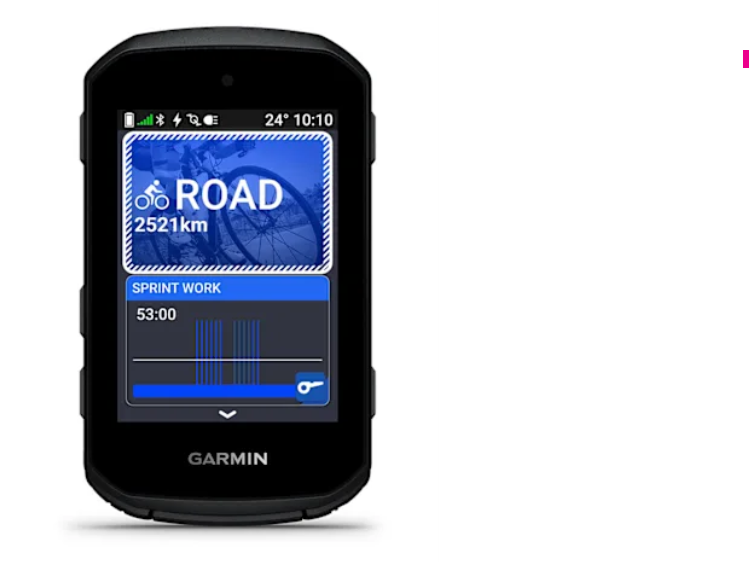
Edge 1040 Solar launched in June 2022 at £629.99 / $749.99 and is the one model here that Garmin has chosen not to replace. Its transflective MIP screen is dimmer and lower resolution than the other three’s bright LCDs, and it has no speaker, no Garmin Pay, and no microphone. It also runs on its own firmware line, so new software reaches it after the x50 models. It is on sale because of its battery: 45 hours of demanding use and 100 hours in saver mode, with Power Glass adding around 20 minutes of riding per hour in strong sun. No bright-screen Edge gets close, and a bright screen cannot carry a solar layer, so until Garmin solves that, the 1040 Solar stays the only Edge for multi-day riding without a charger. Treat it as a current model in its own category, not an old one.
What each one lets you do on a ride
- Finding the way. All four reroute on their maps when you miss a turn, show the climb ahead with ClimbPro, and carry Trailforks trail data with ForkSight at junctions. Only the 1060 compares several routes to a destination before you leave, previews traffic and reported hazards on each, finds the shortest training loop with the fewest stops, and uses a pin dropped in Apple Maps as the destination. The 850, 1060 and 1040 Solar search addresses and build round-trip routes on the device; the 550 cannot, so a new route means stopping to use the phone.
- Riding with others. GroupRide runs on all four, with live locations and incident alerts for the group. The 1060 is the only one that detects an active ride nearby and offers to join it, removing the code-sharing step at the cafe before a club run.
- Being heard and being safe. Varia radar, lights and incident detection work with every model. The speaker on the 1060 and 850 does three jobs the others cannot. It speaks the turn prompts, so you can follow a route in traffic without looking down at the screen. It rings a proper bell with a double tap on any screen, loud enough for a towpath or a shared path, where the 550 and 1040 Solar can only beep. And the 1060 reads messages aloud. Road hazards can be reported from any of the four, but only the 1060 takes the report by voice while you keep riding.
- Hands on the bars. The 850 and 550 carry a full seven-button layout, so everything can be done without touching the screen, which is what you want in rain and gloves. The 1060 also has buttons, which Garmin says it added for exactly that. The 550 is the exception, for the reasons above. The 1060 also adds voice, so you can ask for a reroute or a number without touching anything.
- The cafe stop. The 1060 and 850 pay for coffee with Garmin Pay. All four show phone notifications on the screen, but only the 1060 reads Garmin Messenger messages aloud and lets you reply by voice. The 1060 is also the only one that can hand some of its charge to a dying Varia light or phone.
- Training. The daily suggested workouts, Cycling Coach plans, Power Guide pacing and Smart Fueling prompts are the same experience on all four. The 1060 alone pulls TrainingPeaks plan workouts onto the device without a manual send, and shows the workout on the new interactive screen.
- Going long. The 1040 Solar is the only one that will see out a 300km day, a two-day bikepacking loop or a week’s tour without a charger, and in sun it gains riding time as it goes. The 1060’s 20 hours cover any single-day event; the 850 and 550’s 12 hours cover most rides, but not a long sportive with navigation running.
Side by side
| Edge 1060 | Edge 850 | Edge 550 | Edge 1040 Solar | |
|---|---|---|---|---|
| Launch price | £699.99 / $799.99 / €799.99 | £469.99 / $599.99 / €549.99 | £379.99 / $499.99 / €449.99 | £629.99 / $749.99 |
| Released | October 2026 | September 2025 | September 2025 | June 2022 |
| Generation | x60 | x50 | x50 | x40 |
| Display | 3.5 inch, 480 x 800, bright LCD | 2.7 inch, 420 x 600, bright LCD | 2.7 inch, 420 x 600, bright LCD | 3.5 inch, 282 x 470, MIP with solar |
| Input | Touchscreen and buttons | Touchscreen and buttons | Buttons only | Touchscreen and buttons |
| Weight | 142g | 113g | 110g | 133g |
| Dimensions | 58.5 x 107 x 16.3mm | 54.6 x 92.2 x 16.8mm | 54.6 x 92.2 x 16.8mm | 59.3 x 117.6 x 20.0mm |
| Battery, demanding use | Up to 20 hours | Up to 12 hours | Up to 12 hours | Up to 45 hours, plus solar |
| Battery saver | Up to 60 hours | Up to 36 hours | Up to 36 hours | Up to 100 hours |
| Speaker | Yes | Yes | No | No |
| Microphone and voice control | Yes | No | No | No |
| Garmin Pay | Yes | Yes | No | No |
| Reverse charging | Yes | No | No | No |
| Solar charging | No | No | No | Yes |
| Storage | 64GB | 64GB | 32GB | 32GB |
| Preloaded map regions | Two | Two | One | Two |
| Address search and round-trip routing on device | Yes | Yes | No | Yes |
| Multi-band GNSS | Yes | Yes | Yes | Yes |
The generation gap
Edge 1060 is the first x60 device. The 850 and 550 will likely be replaced in 2027 on the pattern Garmin has kept since the 1040 in 2022, and anyone buying one now is buying the last year of its life at full price. The second is software. Everything Garmin announced with the 1060, except voice control, needs no microphone, and the 1060 shares a firmware line with the 850, 550, and 1050, so updates could bring route previews, road closure alerts, Free Flow Routing, and TrainingPeaks sync to the smaller models. Garmin has not said whether they will.
Which Edge to buy
Buy the Edge 1060 if you want the biggest screen, the longest battery life among the bright-screen models, and voice control. It is also the only one of the four that will not be superseded next year.
Buy Edge 850 if you want the same core training software in a computer that fits inside the stem, and you can live with 12 hours and no microphone. It is the right choice for most road riders who charge after every ride.
Buy Edge 550 only if you set it up once and then mostly just ride, and would rather keep £90 than have touch, a speaker or contactless payment. Anyone who changes settings or navigates often will find the button-only menus wearing.
Buy Edge 1040 Solar if you ride for days between chargers. Nothing else in the range does that, and it is not being replaced.
The Garmin Edge series guide covers the Edge MTB, Explore 2, and 130 Plus, and the best cycling computer guide puts Garmin against Wahoo and Hammerhead. Garmin’s own Edge 1060 product page has the official specifications.
Quick answers
Is Edge 1060 the same generation as Edge 850 and 550?
No. Edge 1060 launched in October 2026 as the first x60 model. Edge 850 and 550 launched in September 2025 as x50 models and are due to be replaced by an 860 and 560 in 2027, following Garmin’s two-year Edge cycle.
Is Edge 1040 Solar still a current model?
Yes. Garmin replaced the non-solar 1040 with the 1050 but kept the 1040 Solar on sale, and the 1060 does not replace it either. It is the only Edge with solar charging and the only one rated for 45 hours of demanding use.
Does Edge 850 have the same features as Edge 1060?
The core training software is the same, but the routing, messaging, and home-screen features announced with the 1060 aren’t on the 850 at launch. The Edge 850 also lacks the microphone and voice control, reverse charging, the 3.5-inch screen, and the 20-hour battery. Garmin has not said whether the routing features announced with the 1060 will reach the 850 by update.
What is the difference between Edge 850 and Edge 550?
The Edge 550 drops the touchscreen, speaker, and bell; Garmin Pay; half the storage; one of the two preloaded map regions; and on-device address search and round-trip routing. The display, battery, sensors, and training features are identical, and it costs £ 90/$100 less.
Which Edge has the longest battery life?
Edge 1040 Solar offers up to 45 hours of demanding use and 100 hours in battery saver before solar gain. The Edge 1060 lasts 20 hours, and the Edge 850 and 550 last 12 hours.
Last Updated on 20 October 2026 by tfk the5krunner
Small things I always use
- Garmin 90-degree charging adapter: Charges your Garmin from any USB-C cable. Essential when travelling. I use one.
- Body Glide: The blue anti-chafe stick swimmers and runners carry. I use it.
- Speedo earplugs: Fewer ear infections and no cold-water dizziness. I use them.
- Dryrobe Advance: My winter changing robe for open-water swims. I use one. A cheaper option is the AONYIYI changing robe.
- Maurten: Race fuel that stays easy on the stomach. I use them.
- Beet It Sport nitrate shots: Beetroot shots I take in the days before a race. I use them.
- Garmin charging puck: The quickest way to top up before a session. I use one.
- Injinji: Toe socks that stop rubbing, so you run more. I use them.
- Ultimate toe protectors: Stop black toenails on long runs. They work. I use them.
- Compressport R2 v2 calf sleeves: My calf sleeves of choice. I use them.
- Cellucor C4: My pre-workout before hard sessions.
- TPU tubes: Schwalbe Aerothan, Tubolito and Pirelli SmarTube. Light, tiny spares. I use all three.
- G8 insoles: Adjustable insoles that are good. I use them.
- Cycplus Cube: A 97g electric pump that gets a road tyre rideable in two minutes. I carry one. 5% off with code THE5KRUNNER.
Watches and sensors
- Polar H10: My daily driver for waking HRV.
- Polar Verity Sense: My backup arm-worn HR sensor.
- Nomad bedside charger: Charges my iPhone and Apple Watch overnight. I use it, and many of their bands.
- Train.Red: The best muscle oxygen sensor I’ve used.
- Tymewear: Accurate heart rate and reliable ventilatory zones. I use it to pace endurance rides over an hour.
- Garmin Forerunner 970: A pro-grade triathlon watch. I use this.
- Apple Watch Ultra 4: My daily smartwatch. No phone needed on rides.
- Garmin Fenix 9 Pro: I’ve just bought one.
On the bike
- Continental GP5000 for everyday riding, and Aero 111 on the front for special occasions.
- Helmets: Specialized S-Works Evade 3 for road riding, and Rudy Project Wing for TT-style races. I use both.
- Ravemen FR300: A front light that mounts under your Garmin or Wahoo. I use one.
- Wahoo TRACKR Radar: I use it on one bike and Varia on the other. They perform the same.
- Garmin Varia RTL515: Radar that warns you of cars from behind. I use this model.
- Wahoo ELEMNT Roam 3: The bike computer that’s easy to use. I use mine on most rides.
- Favero Assioma Pro RS2: Accurate power pedals that swap easily between bikes. I use this model.
Home and indoor training
- NPE Runn: Makes my basic treadmill smart, sending more accurate speed and distance to my watch and Zwift. I use it.
- Google Wifi: Keeps Zwift connected in my pain cave. I use it.
- Apple TV 4K: Zwift on the big screen. I use two.
- Google Nest Doorbell (wired, 2nd gen): My video doorbell, running in both Google Home and Apple Home. I use it.
Health, recovery and sleep
- FreeStyle Libre 3 Plus: Shows how my blood sugar responds to diet.
- hDrop: Measures my sweat loss in summer and indoors.
- Fourth Frontier Zone: Checks my heart under load in hard sessions.
- Oura Ring 5: My partner’s recovery tracker of choice.
- Eight Sleep: A cooling mattress cover my partner and I use nightly.
Reader-Powered Content

This content is not sponsored. It’s mostly me behind the labour of love, which is this site, and I appreciate everyone who supports it.
Support the site: Follow (free, fewer ads) · Subscribe (paid, ad-free) · Buy Me A Coffee
Written by real people, with AI assistance. Fact-checked and verified for originality. See the Editorial Policy. FTC: Affiliate Disclosure — some links pay commission. As an Amazon Associate, I earn from qualifying purchases.
tfk is the founder and author of the5krunner, an independent endurance sports technology publication. With 20 years of hands-on testing of GPS watches and wearables, and competing in triathlons at an international age-group level, tfk provides in-depth expert analysis of fitness technology for serious athletes and endurance sport competitors. See the gear tfk uses. ID
