Best cycling power meter 2026: Favero Assioma, 4iiii, Stages, or Garmin Rally?
The answer to which power meter to buy depends on one question: how many bikes do you own? For riders with two or more bikes, a pedal-based solution is the correct answer because it transfers between bikes in under a minute. For riders with one bike, a single-sided left crank is the cheapest route to actionable power data. The detailed analysis behind both recommendations is covered in the site’s full power meter pedals guide and best power meter guide. This page summarises the conclusions.
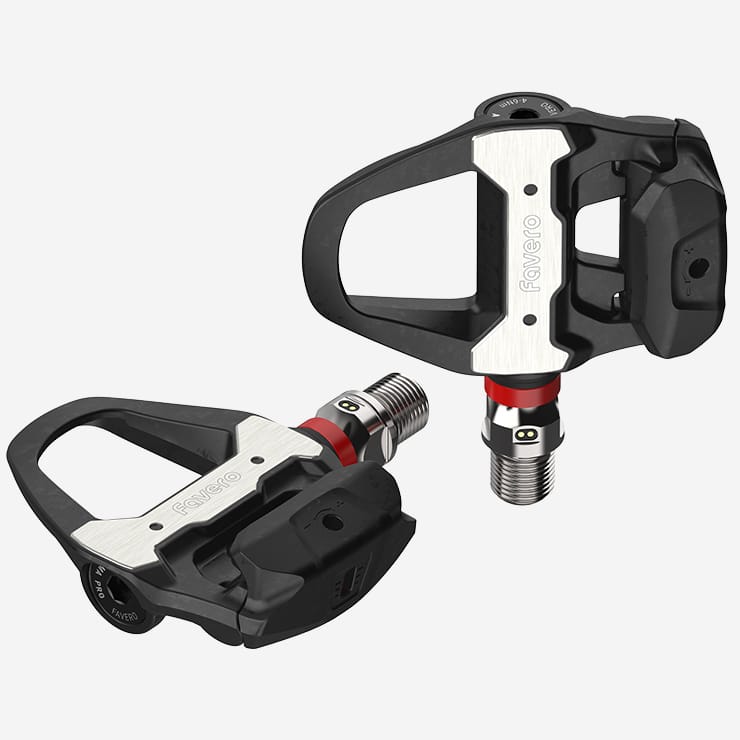
Best for multi-bike owners: Favero Assioma PRO RS
The Favero Assioma PRO RS is the clearest recommendation for any cyclist who owns more than one bike. It is cheaper than the Garmin Rally, claims the same plus or minus 1% accuracy, transfers between bikes as easily as any pedal, and has been on the market long enough to be a known quantity for reliability. After Garmin’s May 2026 Rally price cut, the gap narrowed to around $110 dual-sided — still a meaningful saving for an effectively identical product that is also lighter and carries nearly double the claimed battery life following Favero’s 2026 firmware update. The Assioma uses a rechargeable battery with a proprietary pin connector. The charging cable is proprietary and losing it is an avoidable inconvenience worth noting before travelling.
The Garmin Rally 210 is the direct equivalent at a higher price. It offers marginally more peripheral data metrics (Platform Centre Offset and Power Phase for cyclists with specific biomechanical needs), uses a standard battery rather than a rechargeable, and integrates natively with Garmin head units and watches. For most riders those differences do not justify the remaining price premium. Budget pedal alternatives from lesser-known brands tend to be less reliable — the category has consolidated around Favero and Garmin and anything significantly cheaper is a reliability risk rather than a value proposition. For the full pedal comparison including cleat compatibility, battery life, and peripheral metrics, see the detailed pedals guide.

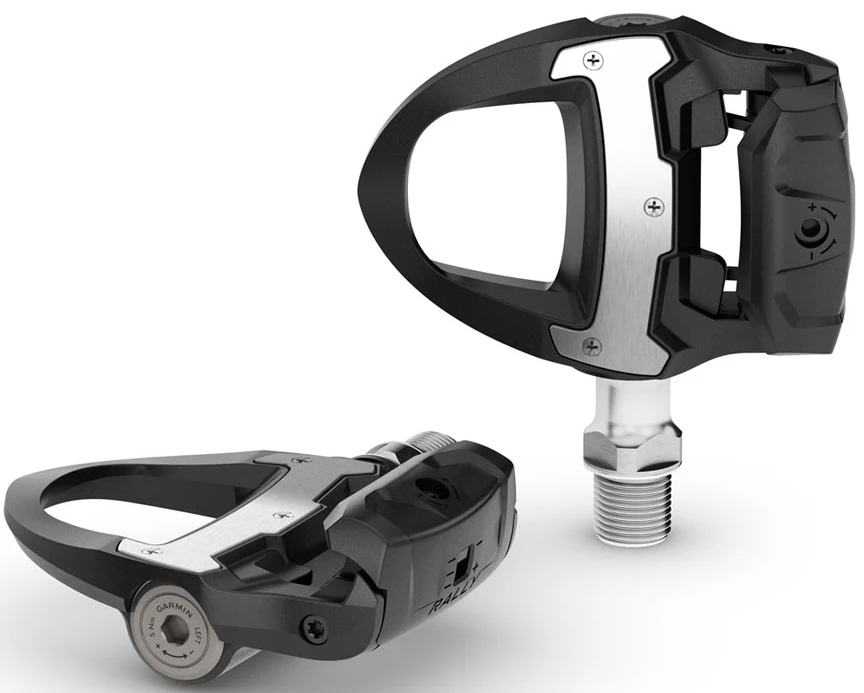
Garmin Rally: if you want native Garmin integration
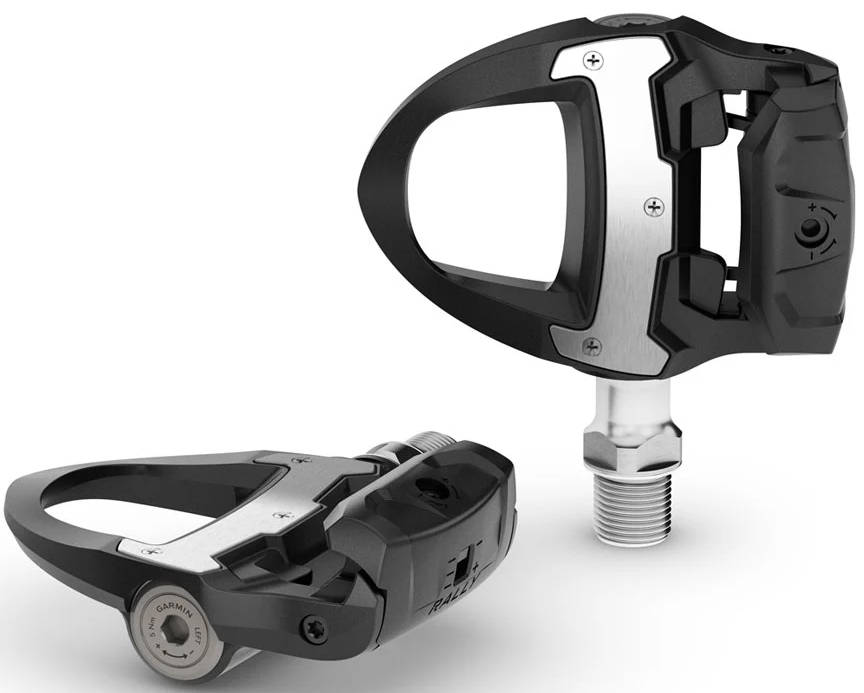
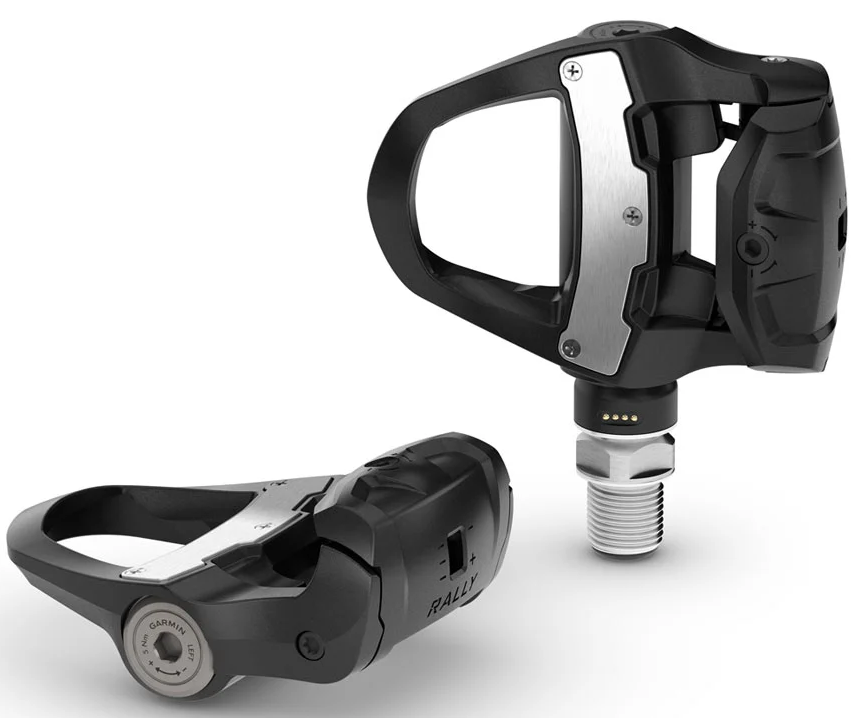
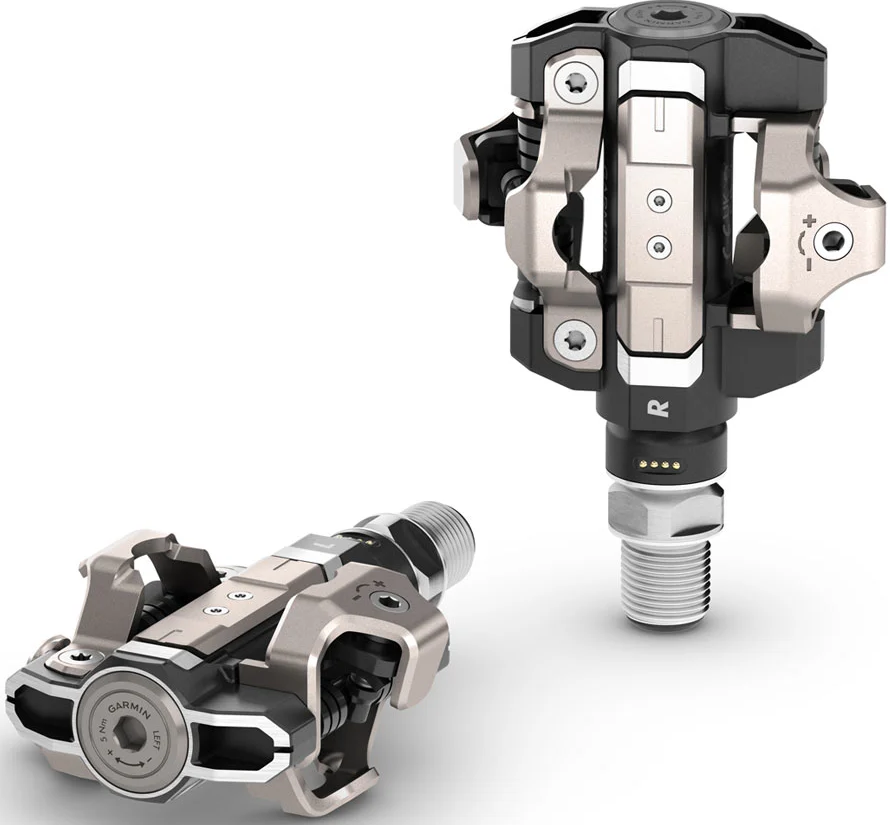
The Garmin Rally RS210 (dual-sided, SPD-SL) and RS110 (single-sided) are the road versions for Look KEO and Shimano SPD-SL cleats. The RK variants cover Look KEO, and the XC variants cover Shimano SPD for off-road use. At current pricing the RS210 is $899 dual and $599 single — $110 and $100 more than the Assioma PRO RS respectively. The Rally is the correct choice for riders who specifically want native Garmin Connect integration, the convenience of standard battery replacement, or the additional cycling dynamics metrics.
Best entry point: single-sided left crank (4iiii or Stages)
For a rider with one bike who wants to start training with power without the cost of pedals, a single-sided left crank is the right entry point. The existing left crank arm is replaced with an otherwise identical crank that has a strain gauge bonded to it. Installation takes five minutes with an Allen key, no bike shop required.
The two main options are 4iiii Precision and Stages Gen 3. Both claim plus or minus 1 to 1.5% accuracy and both are focused on Shimano cranksets. 4iiii has consistently delivered accurate, reliable products at this price tier and now offers a factory install option in Europe as well as the US. Stages filed for bankruptcy and laid off its entire workforce in 2024 but has since been acquired by SPIA Cycling Inc., a subsidiary of the Giant Group, and relaunched its Gen 3 lineup as of mid-2025. Stages is back and trading, but the recent corporate history is worth knowing if long-term support continuity matters to you.
4iiii Precision pricing:
- Single-sided: from $339/£335
- Dual-sided: from £848 (Ultegra) or $979/£979 (Dura-Ace)
- Factory install: from $529/£549
Stages Gen 3 pricing: from $299 single-sided.
Single-sided power measures left-leg output only and doubles it to estimate total power. For most riders, single-sided power is actionable and repeatable, and the concerns around right-left asymmetry are less significant in practice than the additional cost of a dual-sided system. For the full analysis, see the best power meter guide.
Dual-sided crank options
Dual-sided crank power meters measure both legs independently and report actual total power rather than a doubled estimate. 4iiii and Stages both offer dual-sided versions. For riders with a known left-right asymmetry or who specifically want validated total power for performance analysis, the dual-sided crank is worth the premium. For most recreational and club riders, the single-sided left crank is sufficient.
Single-sided crank vs single-sided Assioma
The Favero Assioma PRO RS-1 (single-sided pedal) sits between the left crank and the dual PRO RS in price. For a one-bike owner who might eventually add a second bike, the single-sided Assioma is worth considering: it costs more than a 4iiii crank now but transfers to a second bike later without any additional purchase. For a committed one-bike rider, the 4iiii or Stages left crank is cheaper and equally accurate for the core purpose.
Why not buy a cheaper power meter?
Several brands offer power meters below the 4iiii and Assioma entry points. Budget power meters below this tier introduce reliability and accuracy concerns that undermine the core purpose of training with power. A power meter that reads inconsistently is worse than no power meter, because it corrupts the data you are using to make training decisions. The price floor for a trustworthy product is around $339 for a single-sided crank and around $499 for the Assioma PRO RS-1.
Which power meter to buy
- Two or more bikes, best value: Favero Assioma PRO RS. Transfers between bikes, accurate, lighter and longer battery life than the Garmin Rally, still cheaper after the May 2026 Rally price cut.
- Two or more bikes, want Garmin ecosystem: Garmin Rally RS210. Same accuracy, standard battery, native Garmin integration, $110 more than the Assioma dual.
- One bike, entry budget: 4iiii Precision single-sided from $339/£335. Installs in five minutes, actionable power at the lowest credible price. Buy 4iiii Precision. Stages Gen 3 is the direct alternative at a similar price. Buy Stages Gen 3.
- One bike, want dual-sided crank: 4iiii Precision Dual from £848. Buy 4iiii Dual.
- Off-road: Garmin Rally XC210 (SPD, dual-sided) or Favero Assioma PRO MX. Buy Favero Assioma PRO MX.
- Avoid: budget pedals from unknown brands below the Assioma price point. Reliability risks outweigh the saving.
For the full pedal comparison including battery life, cleat compatibility, Q-factor, and peripheral metrics, see the power meter pedals guide. For the full power meter category guide by rider type, see the best power meter guide.
Best-of guides
Explore the full resource library
This site covers endurance sport technology across a range of dedicated reference sections. Each one collects the most relevant articles, tests, and analysis on its topic in one place.
Buyer guides
- Best sports watch — tested recommendations by sport and athlete type: triathlon, running, marathon, cycling, hiking, and women
- Best Garmin watch — Forerunner versus Fenix by series, sport, and budget
- Best wearables — recovery trackers, heart rate monitors, running power meters, and female athlete tech
- Best cycling products — computers, smart trainers, power meters, and cycling heart rate monitors
Brand and product guides
- Amazfit — the full Amazfit range from Balance to Cheetah to T-Rex, accuracy tests, HYROX partnership, and Zepp Health analysis
- Apple Watch — athlete-first coverage of Apple Watch across running, cycling, and triathlon
- COROS — watches, features, and firmware across the full COROS range
- Garmin — the company, the platform and the full range, and the starting point for choosing across every Garmin product line
- Garmin Edge — bike computers from entry-level navigation to flagship endurance and mountain biking
- Garmin Fenix — every model, feature, and firmware development for Garmin's flagship outdoor watch
- Garmin Fenix 8 Series — which variant to buy, upgrade advice, accuracy data, and the full Fenix 8 review and firmware coverage
- Garmin Forerunner — the full Forerunner line covered from entry level to triathlon flagship
- Garmin Instinct — rugged GPS watches for endurance and adventure athletes
- Garmin Features Explained — how Garmin's metrics work, from Training Load and Body Battery to Race Predictor and HRV Status
- Google Fitbit — Fitbit Air, Google Health, Pixel Watch and the Wear OS platform
- Polar — watches, sensors, Polar Flow and training science across the full Polar range
- Suunto — Race, Vertical, Run and the SuuntoPlus ecosystem
- Strava — features, privacy, segments, and how Strava fits into a serious training setup
- Ride with GPS - how Strava fits into a routing
- Wahoo — KICKR trainers, ELEMNT bike computers, and the Wahoo ecosystem
- WHOOP — strain, recovery, sleep and the full WHOOP ecosystem
Specifications database
- Full Specifications Database — detailed spec sheets, battery life, sensor lists and generation-on-generation comparisons for current Garmin, COROS, Amazfit, Samsung, Google Fitbit, Huawei, Polar, Suunto, Wahoo and Apple Watch models
Glossary
- Sports Technology Glossary — non-branded terminology across running, cycling, swimming, triathlon, hiking, strength training, HYROX, sensors, ecosystems, and brands
Sport and topic guides
- Running Watches — how to choose by discipline: road racing, trail, track, beginner, and multisport
- Triathlon and Multisport Technology — watches, sensors, and race-day tools for swimmers, cyclists, and runners
- HYROX — training science, race analysis, and technology for the functional fitness race format
- parkrun — technology, training, and performance for the weekly 5K
- Hiking Technology — navigation, safety, and trail tech for walkers and hikers
- Heart Rate Monitoring — optical sensors, chest straps, accuracy comparisons, and how to set training zones
- GPS Accuracy — how satellite systems perform across brands, terrains, and conditions
- Sports Watch Battery Life — battery claims, real-world tests, and how to manage battery life across Garmin, Apple, Amazfit and Coros
- Recovery Trackers — WHOOP, Oura, and the science of readiness scoring
- Female Athlete Tech — wearables, physiology, and performance for female endurance athletes, covering cycle-synced training, RED-S, HR accuracy, and VO2max
- Sports Science — peer-reviewed research on HRV, VO2max, lactate threshold, running power, wearable accuracy, and supplementation
- Testing Methodology — how this site tests GPS accuracy, heart rate, battery life, and other performance claims
Content series
- Release Radar — confirmed launches, leaks, and rumours across Garmin, Apple, COROS, Polar, Suunto, and Wahoo
- Deep Dive Feature Files — weekly firmware feature updates across all brands (bug fixes excluded)
- Fix Files — weekly firmware bug fix tracking across all brands
