Best marathon watch 2026: tested recommendations for 26.2 miles
The best marathon watch for most runners in 2026 is the Garmin Forerunner 570. It covers the five things that matter most on marathon day: an onboard coaching plan you can follow from your wrist, dual-frequency GPS that holds in city canyons, race-day pacing tools, a battery that comfortably outlasts any finish time, and a lightweight case that you forget is there by mile 20.
Every current flagship watch from Garmin, Coros, Polar, Suunto, Apple, and Huawei will last a marathon on a single charge. Battery life is no longer the differentiator it once was below the ultra distance. What separates the best marathon watches is the quality of the coaching plan integration, GPS accuracy in dense urban environments, and how little the watch asks of you on race day itself.
What makes a great marathon watch
- Onboard coaching plan: the watch should execute a structured marathon plan directly, displaying the day’s session, target pace, and effort without the runner needing to open an app. Garmin’s adaptive coaching runs across the full Forerunner range: the FR70 and FR170 both deliver a complete adaptive marathon plan including beginner-friendly run/walk plans directly from the wrist. The FR570 and FR970 add more advanced metrics and maps on top. Coros EvoLab and Polar’s structured workout tools are credible alternatives.
- Urban canyon GPS: city marathons route through high-rise corridors where single-band GPS loses signal and accumulates distance errors. Dual-frequency multi-band GPS (L1+L5) corrects for multipath interference. Every watch recommended here uses it.
- Battery life: all current flagship watches exceed six hours of GPS recording, which covers even a slow marathon finish. The Coros Pace Pro reaches 38 hours; the FR570 reaches 18. For most runners this is irrelevant. It matters only if you run long training days back-to-back without access to charging.
- Weight: the Coros Pace 4 at 40g (nylon strap) is among the lightest serious marathon watches. The Garmin FR570 at 42g and the Polar Vantage M3 at 45g follow. At marathon pace the differences are imperceptible for most runners.
- Endurance metrics: training load, recovery time, HRV status, race predictor, and lactate threshold estimation all inform marathon preparation. Garmin’s Firstbeat stack covers all of these. Polar’s Training Load Pro and Recovery Pro are strong. Coros EvoLab covers training load and race prediction.
- Music: onboard music via Spotify, Amazon Music, or Deezer is available on the FR570, FR970, and Fenix 8. Coros Pace Pro supports offline MP3 only. Polar and Huawei do not support streaming music on current models.
Best marathon watch overall: Garmin Forerunner 570
The Forerunner 570 is the pick for most runners. Garmin Coach integration means a full marathon plan built around your goal time and current fitness executes directly on the watch: the daily session appears on your wrist, target pace adjusts for gradient via PacePro, and the race predictor updates as your fitness changes through the training block. Dual-frequency GPS produces accurate splits in urban environments. Battery runs to 18 hours in GPS mode. The 42mm case weighs 42g. Music is supported via Spotify, Amazon Music, and Deezer. Buy Garmin Forerunner 570.
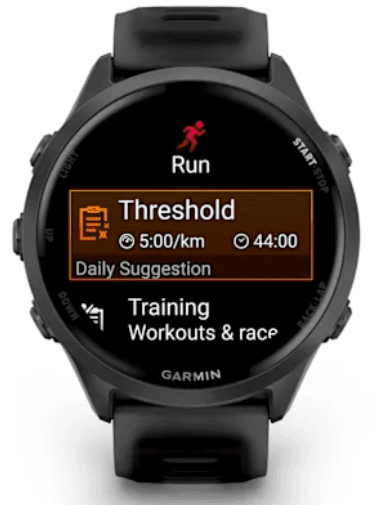
Best premium marathon watch: Garmin Forerunner 970
The FR970 adds full topographic maps, voice control, contactless payments, and a deeper physiological analysis stack to everything the 570 does. For marathon runners who also want turn-by-turn navigation on long training runs in unfamiliar territory, the maps are the decisive upgrade. Battery runs to 26 hours GPS. For the full comparison between the 570 and 970, see the Garmin Forerunner hub. Buy Garmin Forerunner 970.
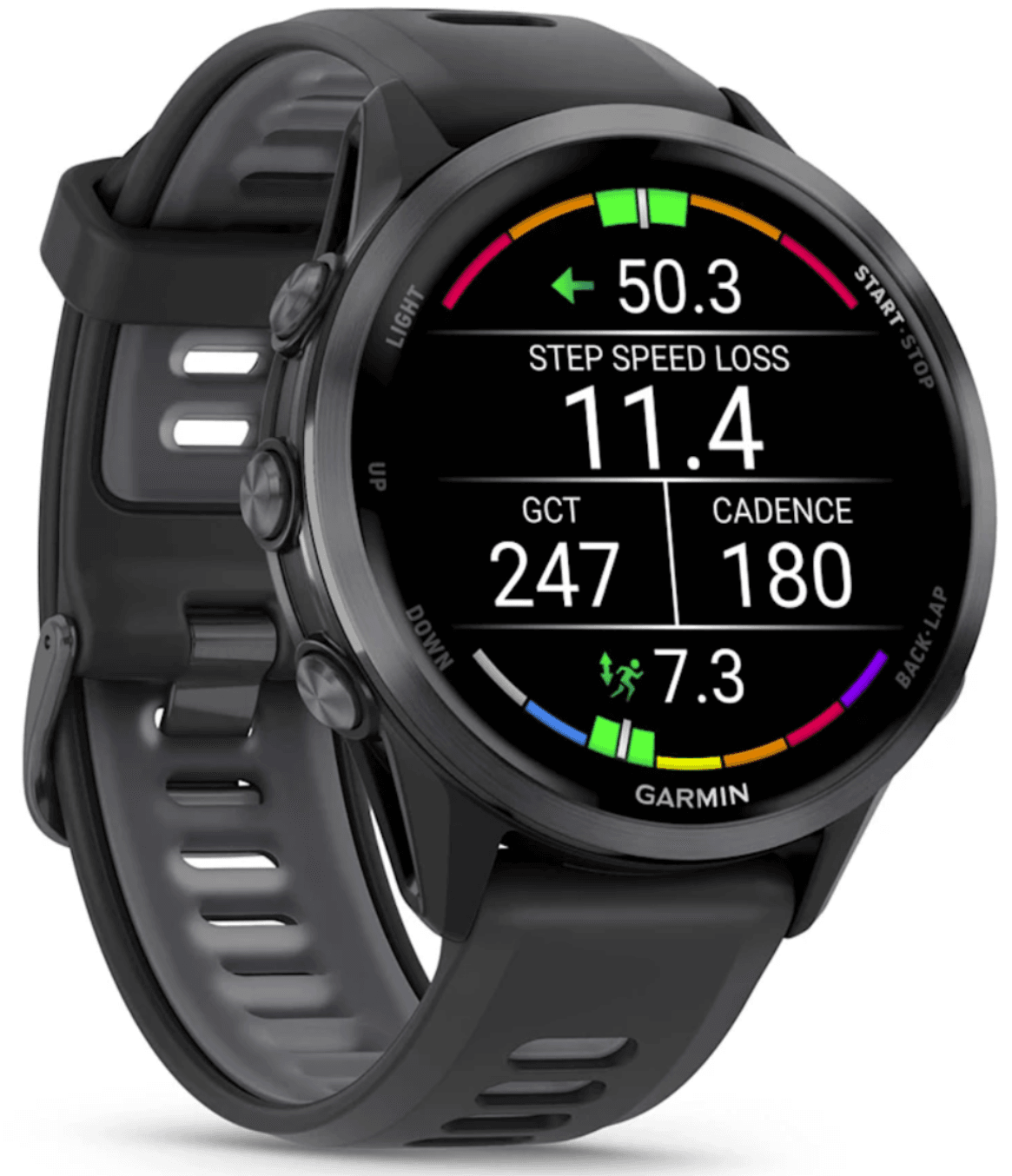
Garmin Forerunner 970
Premium GPS triathlon smartwatch. Features a bright AMOLED touch screen and a built-in LED flashlight.

Best budget Garmin marathon watch: Forerunner 70 and 170
The Forerunner 70 ($249) and Forerunner 170 ($299) both deliver the full adaptive marathon coaching experience from the wrist, including beginner-friendly run/walk plans, daily suggested workouts, HRV Status, Body Battery, and Training Readiness. The FR170 adds a barometric altimeter, Garmin Pay, open-water swimming and cycling power meter support; none of these affects the core ability to execute a complete marathon plan. Both watches use single-frequency GPS rather than the dual-frequency found further up the range, which is the one thing that counts against them on a city-centre course. For runners who want Garmin’s coaching without the FR570’s price, either model is fully capable. Read the full Forerunner 70 review and the Forerunner 170 review. Buy Forerunner 70 or 170.
Best Coros marathon watch: Coros Pace Pro
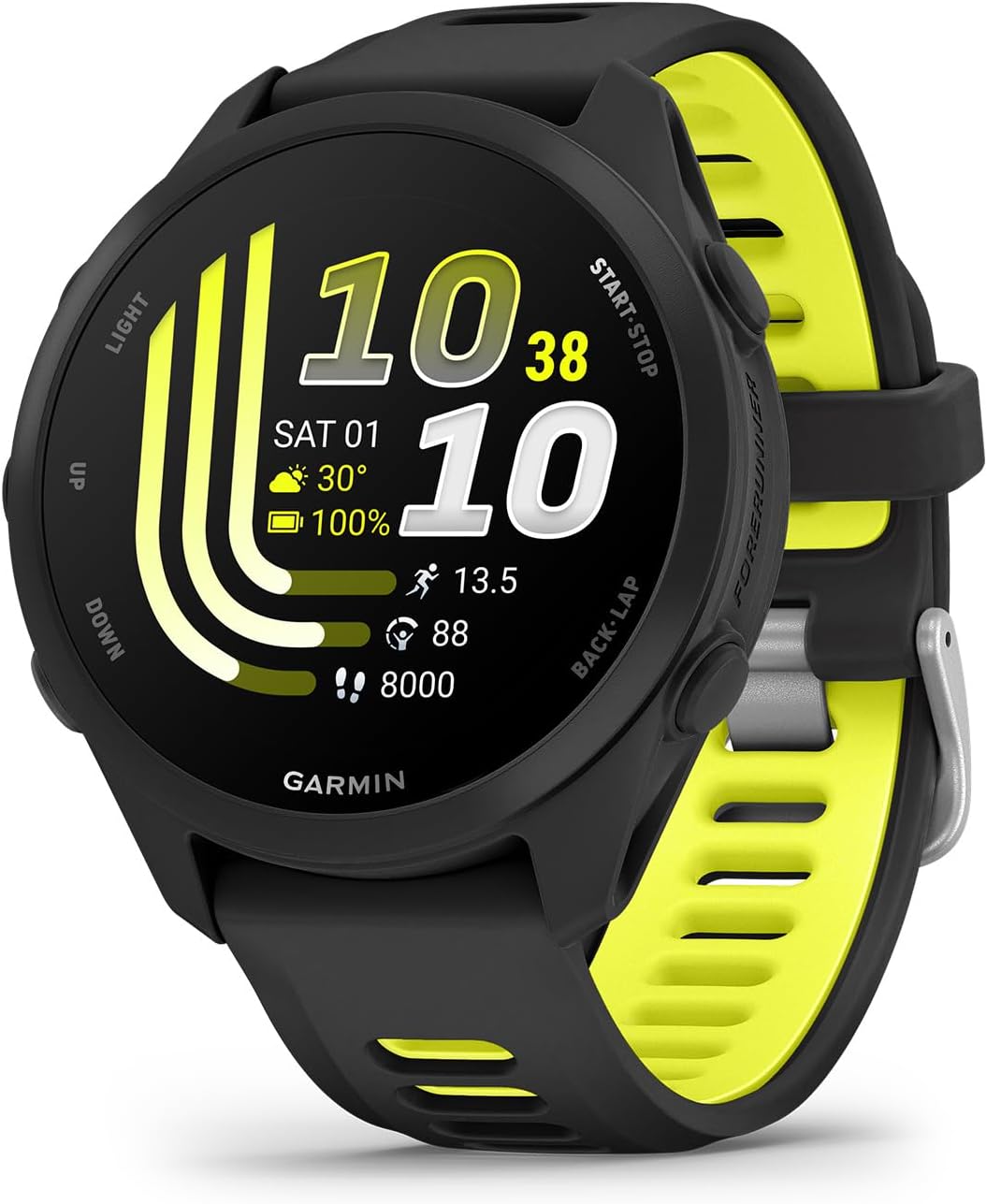
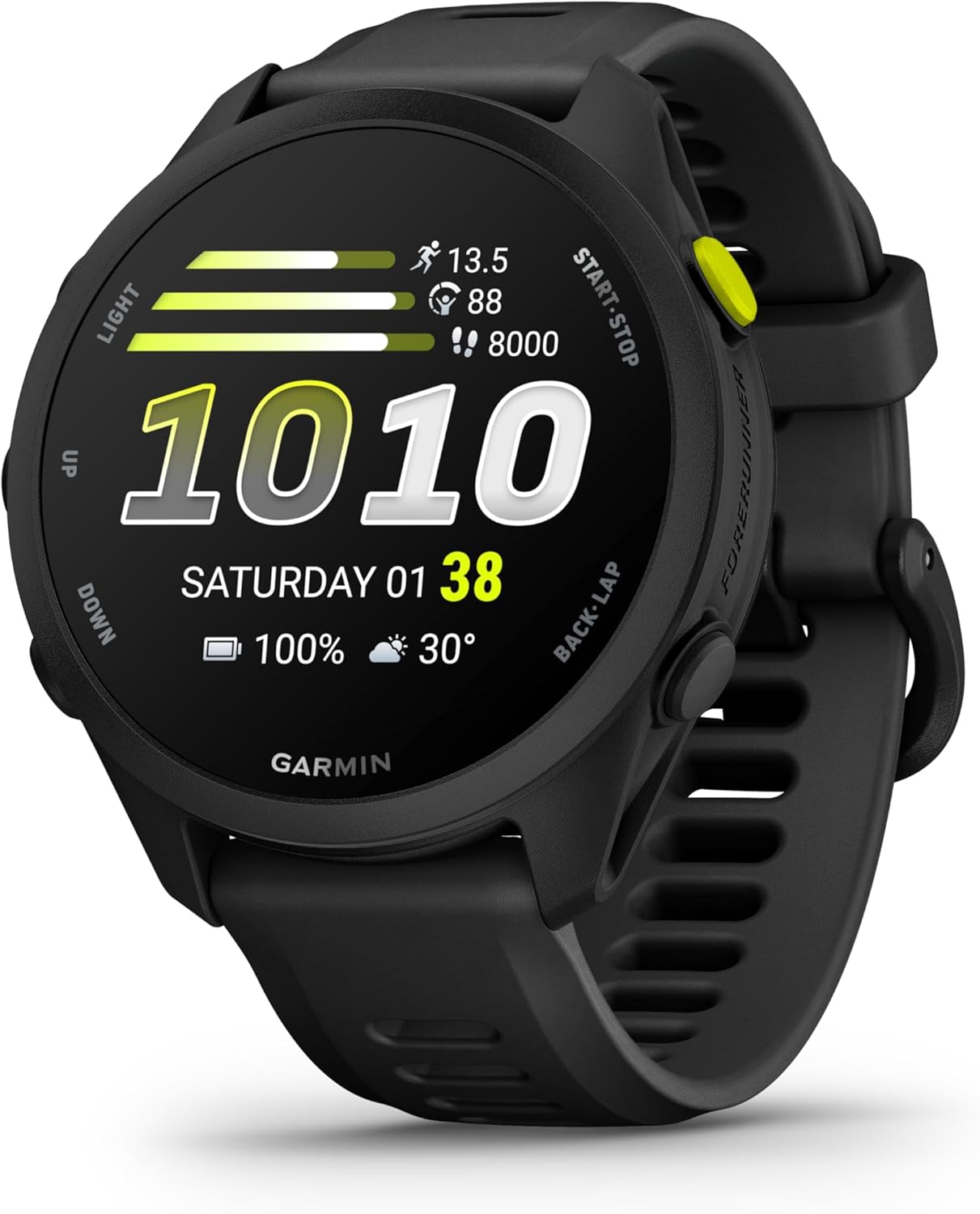
The Coros Pace Pro weighs 37g with the nylon strap and delivers 38 hours of GPS battery life, dual-frequency GPS, native Stryd running power support, offline maps, and track mode. Coros EvoLab covers training load and race prediction. The platform is narrower than Garmin Connect and does not support streaming music services, but for runners who want a featherlight watch with serious GPS credentials and offline maps, the Pace Pro is the clearest alternative to Garmin at this price tier. Buy Coros Pace Pro.
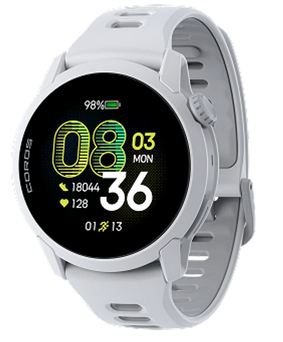
For runners who want Coros at a lower price, the Coros Pace 4 at $249 delivers dual-frequency GPS, multisport, an AMOLED display, and Stryd support. The Coros Pace 3 has been discontinued and is no longer available new. Buy Coros Pace 4.
Best Polar marathon watch: Polar Vantage V3
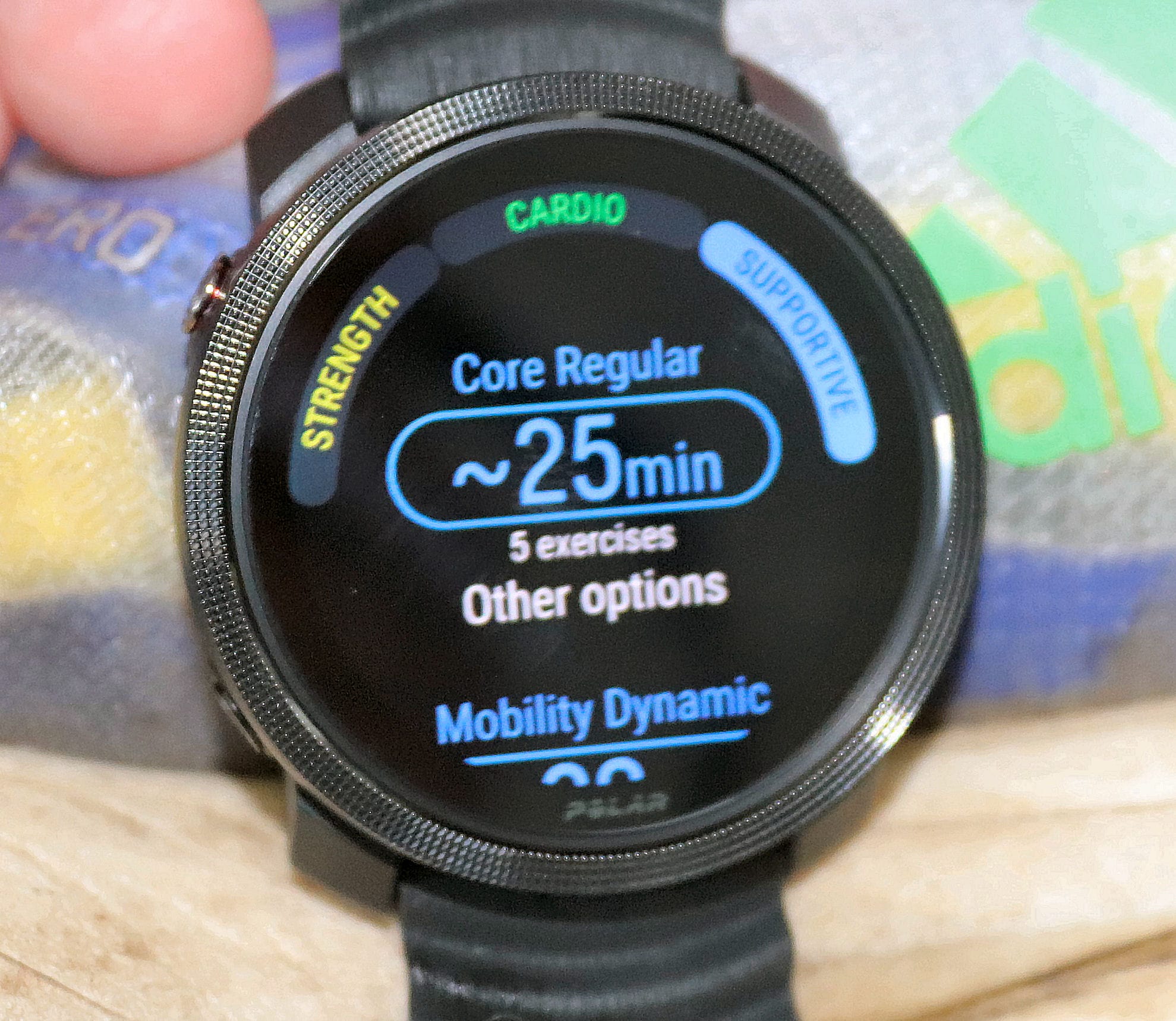
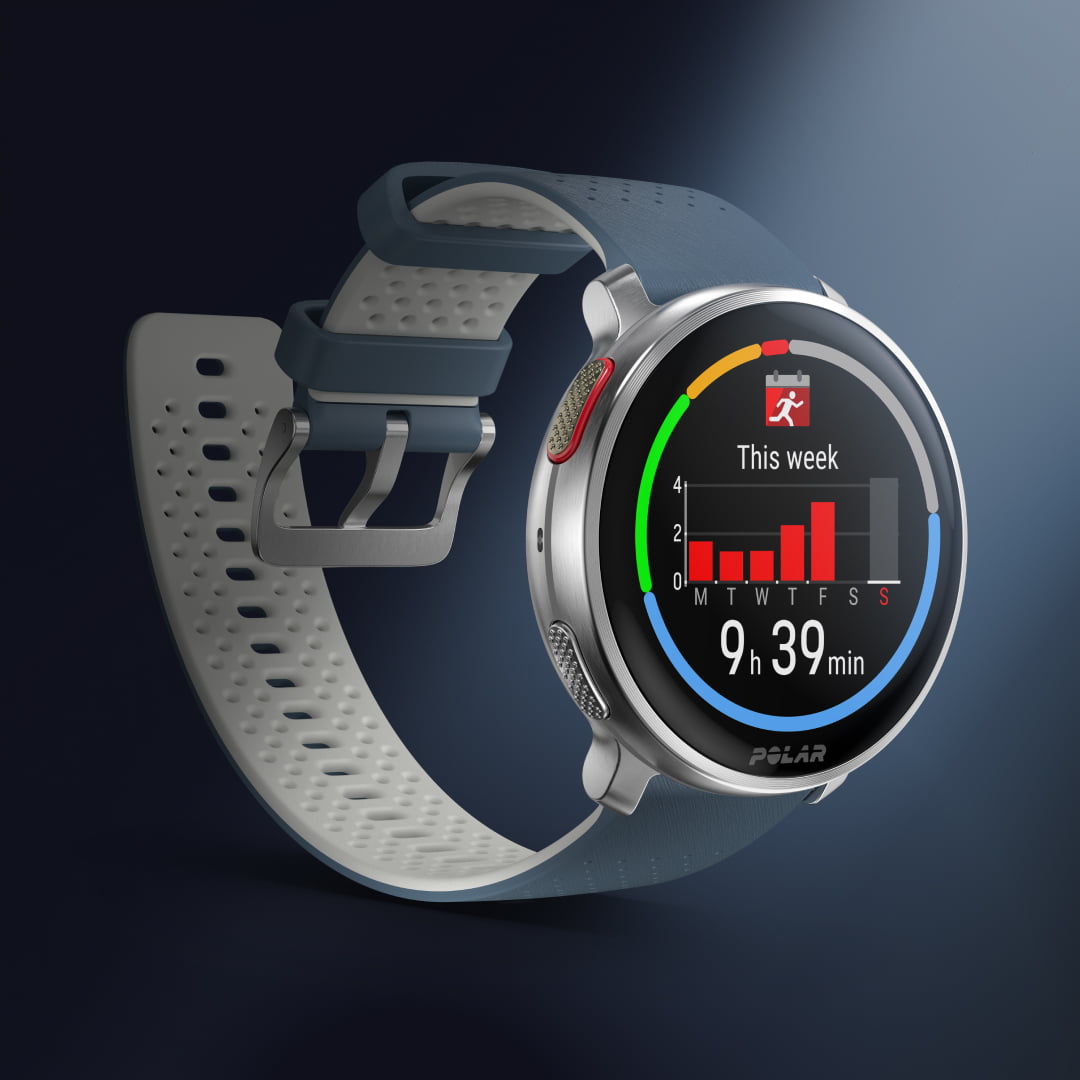
The Polar Vantage V3 has the deepest training science stack of any Polar watch: Training Load Pro, Recovery Pro, running power, and the most complete structured workout execution Polar has built. Dual-frequency GPS performs well. The AMOLED touchscreen is excellent. For runners who prefer Polar Flow’s training presentation and Polar’s long heritage in heart rate science, the V3 is the strongest choice. The Vantage M3 is lighter and less expensive with a smaller feature gap than the price difference suggests. Buy from a local retailer.
Best Huawei marathon watch: Huawei Watch GT Runner 2
The Huawei Watch GT Runner 2 was co-designed with Eliud Kipchoge and carries an Intelligent Marathon Mode that builds a personalised digital pacer based on your training history and target finish time. In testing on this site, the Runner 2 produced the best GPS results of any watch in tunnel and tall-building conditions, outperforming the Garmin Forerunner 970 and Apple Watch Ultra 3 in those specific environments. Dual-frequency GPS with sensor fusion, a titanium front case, 32 hours GPS battery, and Huawei’s AI running coach that generates personalised marathon training plans are its standout credentials. The smartphone app and wider ecosystem are its main limitation outside China. Buy from a local retailer.
Best marathon watch with music
The FR570 supports Spotify, Amazon Music, and Deezer with onboard storage, so no phone is needed on race day. The FR970 and Fenix 8 also support streaming music. The Coros Pace Pro supports offline MP3 playback only. For runners who want streaming music in open-wave city marathons and on long training runs, the FR570 is the value entry point to Garmin’s music-capable lineup.
Best lightweight marathon watch
The Coros Pace Pro at 37g (nylon strap) and the Huawei Watch GT Runner 2 at 34.5g are the lightest serious marathon watches. The Coros Pace 4 at 40g, the FR570 at 42g, and the Polar Vantage M3 at 45g follow.
Best marathon watch for coaching plans
Garmin leads across the entire Forerunner range. The FR70 and FR170 are fully capable of executing a complete adaptive marathon plan from the wrist, including run/walk plans for first-timers. The FR570 and FR970 add advanced metrics, maps, and deeper physiological analysis but are not required for the plan itself. TrainingPeaks structured workout execution is also supported on the FR570 and above. Coros EvoLab generates load-based training guidance and race predictions. Polar’s structured workout tools are strong but require more manual setup than Garmin’s automated suggestions. Huawei’s Intelligent Marathon Mode is the most direct non-Garmin competitor for automated race-day pacing.
GPS accuracy in urban canyons
Every watch recommended above except the Forerunner 70 and Forerunner 170 uses dual-frequency L1+L5 GPS, which substantially reduces the multipath errors that cause distance drift in city centre marathon routes. In testing on this site, the Huawei Watch GT Runner 2 produced the best results in tunnel and tall-building conditions of any watch tested, with the FR570, Coros Pace Pro, and Polar Vantage V3 all producing consistent splits within 0.5% of measured course distance on standard urban routes. In large downtown environments I have not tested at marathon distance, single-band GPS watches could accumulate errors of 2-3%, which is why the Forerunner 70 and 170 are recommended above for their coaching rather than for city-centre racing. Dual-frequency improves precision in urban areas, but the reliable answer on any city course is a footpod: pace and distance then come from the pod rather than from satellites.
Detailed reviews and buy links
- Garmin Forerunner 570 overview | Buy
- Garmin Forerunner 970 review | Buy
- Coros Pace Pro review | Buy
- Coros Pace 4 review | Buy
- Polar Vantage V3 review | Buy
- Polar Vantage M3 review | Buy
- Garmin Forerunner 70 review | Buy
- Garmin Forerunner 170 review | Buy
- Huawei Watch GT Runner 2 review
- Garmin Forerunner hub
- Running watches hub
- Best running watch
Best-of guides
Explore the full resource library
This site covers endurance sport technology across a range of dedicated reference sections. Each one collects the most relevant articles, tests, and analysis on its topic in one place.
Buyer guides
- Best sports watch: tested recommendations by sport and athlete type (triathlon, running, marathon, cycling, hiking, and women)
- Best Garmin watch: Forerunner versus Fenix by series, sport, and budget
- Best wearables: fitness trackers, recovery trackers, heart rate monitors, running power meters, and female athlete tech
- Best cycling products: computers, smart trainers, power meters, and cycling heart rate monitors
- Gear I use: the watches, bikes, sensors, fuel and sleep kit tfk actually trains and races with, and what his partner uses
Brand and product guides
- Amazfit: the full Amazfit range from Balance to Cheetah to T-Rex, accuracy tests, HYROX partnership, and Zepp Health analysis
- Apple Watch: athlete-first coverage of Apple Watch across running, cycling, and triathlon
- COROS: watches, features, and firmware across the full COROS range
- Garmin: the company, the platform and the full range, and the starting point for choosing across every Garmin product line
- Garmin Edge: bike computers from entry-level navigation to flagship endurance and mountain biking
- Garmin Fenix: every model, feature, and firmware development for Garmin's flagship outdoor watch
- Garmin Fenix 8 Series: which variant to buy, upgrade advice, accuracy data, and the full Fenix 8 review and firmware coverage
- Garmin Forerunner: the full Forerunner line covered from entry level to triathlon flagship
- Garmin Instinct: rugged GPS watches for endurance and adventure athletes
- Garmin Features Explained: how Garmin's metrics work, from Training Load and Body Battery to Race Predictor and HRV Status
- Google Fitbit: Fitbit Edge, Fitbit Air, Google Health, Pixel Watch and the Wear OS platform
- Polar: watches, sensors, Polar Flow and training science across the full Polar range
- Runna: coach-written running plans that adapt as you train
- Suunto: Race, Vertical, Run and the SuuntoPlus ecosystem
- Strava: features, privacy, segments, and how Strava fits into a serious training setup
- Ride with GPS: route planning, navigation and how it works alongside Strava
- Wahoo: KICKR trainers, ELEMNT bike computers, and the Wahoo ecosystem
- WHOOP: strain, recovery, sleep and the full WHOOP ecosystem
Specifications database
- Full Specifications Database: detailed spec sheets, battery life, sensor lists and generation-on-generation comparisons for current Garmin, COROS, Amazfit, Samsung, Google Fitbit, Huawei, Polar, Suunto, Wahoo and Apple Watch models
Glossary
- Sports Technology Glossary: non-branded terminology across running, cycling, swimming, triathlon, hiking, strength training, HYROX, sensors, ecosystems, and brands
Sport and topic guides
- Running Watches: how to choose by discipline (road racing, trail, track, beginner, and multisport)
- Triathlon and Multisport Technology: watches, sensors, and race-day tools for swimmers, cyclists, and runners
- HYROX: training science, race analysis, and technology for the functional fitness race format
- parkrun: technology, training, and performance for the weekly 5K
- Hiking Technology: navigation, safety, and trail tech for walkers and hikers
- Heart Rate Monitoring: optical sensors, chest straps, accuracy comparisons, and how to set training zones
- Optical Sensors (PPG): the 40 things a wrist optical sensor could measure, from heart rate to glucose, ranked by evidence
- GPS Accuracy: how satellite systems perform across brands, terrains, and conditions
- Sports Watch Battery Life: battery claims, real-world tests, and how to manage battery life across Garmin, Apple, Amazfit and COROS
- Recovery Trackers: WHOOP, Oura, and the science of readiness scoring
- Muscle Oxygen Sensors: SmO2 and NIRS explained, Train Red and Moxy compared, and the category from BSX and Humon to Garmin and WHOOP
- Female Athlete Tech: wearables, physiology, and performance for female endurance athletes, covering cycle-synced training, RED-S, HR accuracy, and VO2max
- Sports Science: peer-reviewed research on HRV, VO2max, lactate threshold, running power, wearable accuracy, and supplementation
- Testing Methodology: how this site tests GPS accuracy, heart rate, battery life, and other performance claims
Content series
- Release Radar: confirmed launches, leaks, and rumours across Garmin, Apple, COROS, Polar, Suunto, and Wahoo
- Deep Dive Feature Files: weekly firmware feature updates across all brands (bug fixes excluded)
- Fix Files: weekly firmware bug fix tracking across all brands
