COROS Pace 3 Discontinued: Out of Stock, Not Coming Back
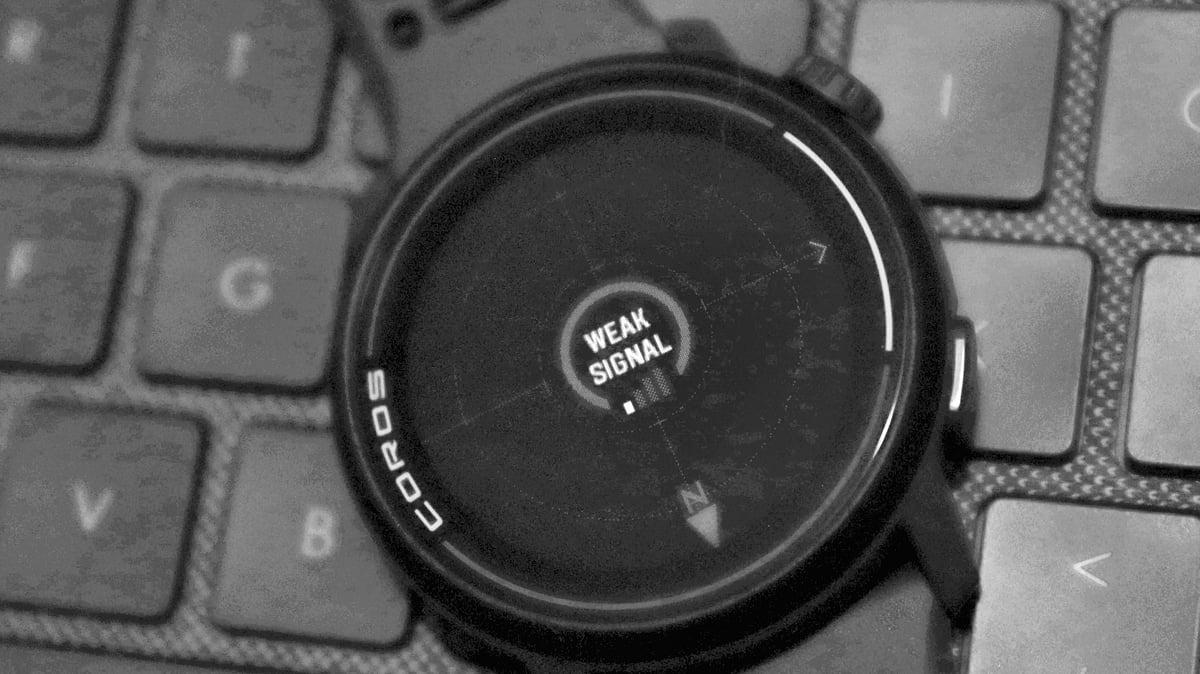
COROS confirmed the Pace 3 is effectively discontinued, but don’t panic, it’s still supported. The watch is out of stock on COROS’s regional websites in the USA and UK and won’t be replenished. The company hasn’t officially stated why, but newer models such as Pace 4 and Pace Pro are likely the reason.
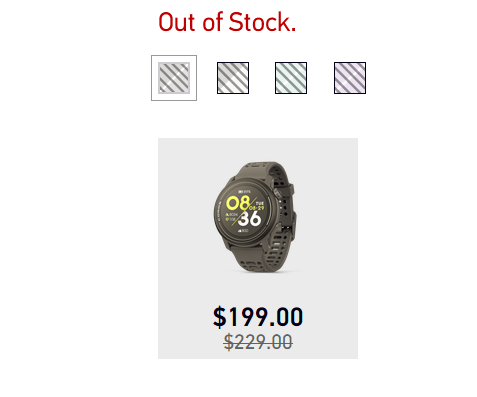
The Pace 3 launched at $229 and frequently sold for under $200. The cheapest COROS running watch is now $249.
It’s the end of an era. That era was “obviously cheap and good”. Newer pricing levels are clearly taking the company in a different direction from what originally made it successful.
What Discontinued Actually Means
The Pace 3 is still supported with firmware updates and bug fixes. It’s not at End Of Life (EOL). If you own one, it’ll continue to receive fixes for the foreseeable future. COROS is no longer producing them and likely won’t add new features to those owned by customers.
If you find Pace 3 stock at third-party retailers, it’s legit remaining inventory. Once that’s gone, it’s gone. I suspect those low price levels will never return (inflation + Coros strategy)
Why COROS Killed It
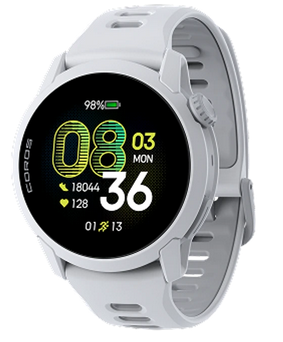
The Pace 4 launched five months ago. Both watches target very similar market segments: runners who want serious training features without spending $500+. Having two similar watches at $200 and $249 creates confusion and cannibalises sales of the newer model.
COROS spent years positioning the Pace 3 as a Garmin Forerunner alternative, specifically targeting the Forerunner 165 ($249.99 with GPS+music, $299.99 for Music version) and the Forerunner 265 ($449.99). The Pace 3 significantly undercuts both models while delivering comparable GPS accuracy and training features.
That positioning worked. The Pace 3 became the default recommendation for runners who wanted data-driven training without paying Garmin prices. Now COROS is betting the Pace 4 can hold that position at a higher price point. So far, it seems to be doing that successfully.
What You Lose: The Last MIP Display
The Pace 3 used a transflective memory-in-pixel (MIP) display. The Pace 4 switched to AMOLED. MIP is definitely heading in the same direction as the dinosaurs – extinction.
MIP advantages:
- Always-on visibility in direct sunlight without backlight
- Lower power consumption in bright conditions
- Matte finish reduces glare
- No screen burn-in risk over years of use
AMOLED advantages:
- Brighter, more colourful interface
- Better low-light visibility
- Smoother animations
- Touch screen responsiveness
- (The newer generation of AMOLED has excellent battery lives)
COROS claims the Pace 4’s battery life matches the Pace 3 despite the AMOLED screen (up to 26 days smartwatch mode, 32 hours GPS). This negates MIP’s traditional battery advantage; if there were significant demand for MIP display tech, it would likely also become more energy-efficient.
But not everyone wants AMOLED. Garmin discovered this during the transition of the Forerunner line: some runners certainly prefer MIP readability in bright sunlight and don’t care about vivid colour displays. The Pace 3 served that market, but now it’s gone, and there is no MIP option in COROS’s lineup.
Market Impact
The Pace 3’s discontinuation raises COROS’s entry price from ~$200 (sale price) to $249. This is quite an important distinction at this part of the market:
- Budget runners lose what was widely considered their best option. The Pace 3 was the most cost-effective way to access legitimate training metrics, structured workouts, and accurate GPS without compromising core features. Now the door has been left open to AMAZFIT, which makes excellent watches at the old price levels Coros once dominated. AMAZFIT watches offer all the features Coros does.
- Garmin’s budget dominance strengthens. The Forerunner 55 ($199.99) and Forerunner 165 ($249.99) now face less direct competition in the sub-$250 segment. However, Garmin will likely replace those models in 2026, so the situation is likely to change. Most likely, Garmin will also push prices up a tad.
- No MIP alternative remains. Runners who specifically want transflective displays are pushed elsewhere. At this end of the market, I suspect that’s not a major factor. MIP will likely remain available for more capable devices that require ultra-long battery life. Let’s see how this pans out over the next few years.
- Coros repositioning. Coros bill of materials is likely similar to what it always was. Raising retail prices by a notch makes sense for profitability. However, it is abandoning its unique selling point (value) and moving into far more expensive, feature-rich segments of the market, often targeting informed buyers. For Coros to survive here, it will likely need to adopt a similar overall pricing strategy as Garmin with periodic discounting (Coros rarely discounts).
What to Do If You Want a Pace 3
Check third-party retailers. Amazon, REI, speciality running stores—anyone who stocked Pace 3 inventory before discontinuation might still have units available. Once the current stock sells out, it’s over. Always be mindful of buying second-hand watches, as their batteries will have degraded.
The Bigger Picture
COROS appears to see itself as a wannabe Garmin, pushing loyal customers toward newer models, and standardising on AMOLED across the range. This simplifies manufacturing and increases the average selling price.
For buyers, this means fewer choices but better products. Pace 4 is genuinely improved over Pace 3. Whether those improvements set coros apart from its new, higher-priced competition remains to be seen.
The Pace 3 was (is) a great watch. It was transformational for the company and probably also for the market as a whole, redefining the value equation.
If you’re considering a COROS watch now, it’s Pace 4 ($249), Apex 2 ($399), Apex 2 Pro ($499), or Vertix 2 ($699). No more budget entry point. That’s the trade-off for better screens and updated sensors across the lineup.

Last Updated on 3 October 2026 by tfk the5krunner
Small things I always use
- Garmin 90-degree charging adapter: Charges your Garmin from any USB-C cable. Essential when travelling. I use one.
- Body Glide: The blue anti-chafe stick swimmers and runners carry. I use it.
- Speedo earplugs: Fewer ear infections and no cold-water dizziness. I use them.
- Dryrobe Advance: My winter changing robe for open-water swims. I use one. A cheaper option is the AONYIYI changing robe.
- Maurten: Race fuel that stays easy on the stomach. I use them.
- Beet It Sport nitrate shots: Beetroot shots I take in the days before a race. I use them.
- Garmin charging puck: The quickest way to top up before a session. I use one.
- Injinji: Toe socks that stop rubbing, so you run more. I use them.
- Ultimate toe protectors: Stop black toenails on long runs. They work. I use them.
- Compressport R2 v2 calf sleeves: My calf sleeves of choice. I use them.
- Cellucor C4: My pre-workout before hard sessions.
- TPU tubes: Schwalbe Aerothan, Tubolito and Pirelli SmarTube. Light, tiny spares. I use all three.
- G8 insoles: Adjustable insoles that are good. I use them.
- Cycplus Cube: A 97g electric pump that gets a road tyre rideable in two minutes. I carry one. 5% off with code THE5KRUNNER.
Watches and sensors
- Polar H10: My daily driver for waking HRV.
- Polar Verity Sense: My backup arm-worn HR sensor.
- Nomad bedside charger: Charges my iPhone and Apple Watch overnight. I use it, and many of their bands.
- Train.Red: The best muscle oxygen sensor I’ve used.
- Tymewear: Accurate heart rate and reliable ventilatory zones. I use it to pace endurance rides over an hour.
- Garmin Forerunner 970: A pro-grade triathlon watch. I use this.
- Apple Watch Ultra 4: My daily smartwatch. No phone needed on rides.
- Garmin Fenix 9 Pro: I’ve just bought one.
On the bike
- Continental GP5000 for everyday riding, and Aero 111 on the front for special occasions.
- Helmets: Specialized S-Works Evade 3 for road riding, and Rudy Project Wing for TT-style races. I use both.
- Ravemen FR300: A front light that mounts under your Garmin or Wahoo. I use one.
- Wahoo TRACKR Radar: I use it on one bike and Varia on the other. They perform the same.
- Garmin Varia RTL515: Radar that warns you of cars from behind. I use this model.
- Wahoo ELEMNT Roam 3: The bike computer that’s easy to use. I use mine on most rides.
- Favero Assioma Pro RS2: Accurate power pedals that swap easily between bikes. I use this model.
Home and indoor training
- NPE Runn: Makes my basic treadmill smart, sending more accurate speed and distance to my watch and Zwift. I use it.
- Google Wifi: Keeps Zwift connected in my pain cave. I use it.
- Apple TV 4K: Zwift on the big screen. I use two.
- Google Nest Doorbell (wired, 2nd gen): My video doorbell, running in both Google Home and Apple Home. I use it.
Health, recovery and sleep
- FreeStyle Libre 3 Plus: Shows how my blood sugar responds to diet.
- hDrop: Measures my sweat loss in summer and indoors.
- Fourth Frontier Zone: Checks my heart under load in hard sessions.
- Oura Ring 5: My partner’s recovery tracker of choice.
- Eight Sleep: A cooling mattress cover my partner and I use nightly.
Reader-Powered Content

This content is not sponsored. It’s mostly me behind the labour of love, which is this site, and I appreciate everyone who supports it.
Support the site: Follow (free, fewer ads) · Subscribe (paid, ad-free) · Buy Me A Coffee
Written by real people, with AI assistance. Fact-checked and verified for originality. See the Editorial Policy. FTC: Affiliate Disclosure — some links pay commission. As an Amazon Associate, I earn from qualifying purchases.
tfk is the founder and author of the5krunner, an independent endurance sports technology publication. With 20 years of hands-on testing of GPS watches and wearables, and competing in triathlons at an international age-group level, tfk provides in-depth expert analysis of fitness technology for serious athletes and endurance sport competitors. See the gear tfk uses. ID
