CurraNZ Expands Into Strength and Cognition: New Study Shows 13% Leg Press Gains and Executive Function Improvements
A randomized controlled trial published in Nutrients has found that short-term supplementation with CurraNZ New Zealand blackcurrant extract improved lower-body strength, barbell power output, and cognitive performance in healthy, resistance-trained adults. The findings extend CurraNZ’s evidence base beyond endurance and recovery into strength sports and mental sharpness, supported by a major meta-analysis confirming the supplement’s consistent effects on fat oxidation across 15 controlled human trials.
The Study: Strength Gains in 20 Trained Adults
The trial, led by Dr Majid S. Koozehchian at Jacksonville State University in Alabama, enrolled 20 resistance-trained adults who completed four seven-day conditions in sequence. Each condition was separated by a seven-day washout period: a no-capsule control, a matched maltodextrin placebo, a low dose of 250 mg/day CurraNZ, and a high dose of 600 mg/day CurraNZ. The supplement is standardised to 35% anthocyanins.
The study design was rigorous. Testing included bench press and leg press one-repetition maximum (1RM), total lifting volume across multiple sets, barbell power output measured by linear position transducer, a 30-second Wingate anaerobic sprint, and the Stroop Color–Word Test, a validated measure of executive function and cognitive control.
Bench Press Strength
Both doses produced statistically significant increases in bench press strength relative to the control and placebo conditions. The low dose improved bench press 1RM by 3.33 kg, an increase of approximately 5 per cent. The high dose improved it by 2.34 kg, roughly 4 per cent. Both doses outperformed both the no-supplement control and the placebo.
These gains are meaningful in competitive lifting contexts where 2-5 kg improvements translate into measurable performance shifts. What stands out is that the low dose often matched or exceeded the high dose, a finding consistent with earlier research suggesting anthocyanin efficacy is not simply linear with dose.
Lower-Body Strength: The Large Effect
For leg press 1RM, the effects were substantially larger. Low-dose supplementation increased leg press 1RM by 37.2 kg versus control, approximately 13 per cent. The high dose produced a 25.8 kg increase, around 9 per cent. Total leg press volume, a measure of sustained strength capacity across multiple sets, was also substantially higher with both doses, indicating that CurraNZ improved not just peak strength but also the ability to maintain force production across a training session.
This distinction matters. Single-rep maximum strength can reflect technique, leverage, and neural efficiency on any given day. Volume capacity requires metabolic and neuromuscular resilience across repeated efforts. The fact that both improved together suggests CurraNZ is working at multiple physiological levels.
Barbell Power Output
On peak barbell power output measured by linear position transducer, the high dose exceeded placebo by approximately 79.5 watts, a 26 per cent increase. Mean power output across the lift increased by 46.2 watts, approximately 22 per cent. This is particularly relevant to strength sports where explosive force production—the rate of force development—determines competitive outcomes.
Executive Function Under Fatigue
Performance on the Stroop Color–Word Test improved meaningfully with both doses relative to placebo. The interference section, which is the most demanding component and the hardest to improve through expectancy alone, showed a moderate-to-large improvement with the low dose and a moderate improvement with the high dose. Notably, the placebo itself did not outperform the no-capsule control on this hardest section. This detail is crucial: it suggests the gains observed with CurraNZ represent a genuine effect rather than expectancy or non-specific capsule responses.
The low dose also improved performance across all three Stroop sections, with the largest overall gains of any condition. This pattern indicates that CurraNZ’s cognitive effect is not marginal but reproducible and consistent across the difficulty spectrum of the test.
Why This Matters for Resistance Training
Lifting weights is not purely a physical act. It is also a cognitive one. Resistance training places significant demands on the nervous system: coordinating muscle recruitment, maintaining focus and technique under fatigue, and sustaining output across multiple sets all require the brain and body to work in close concert.
This is why the cognitive tests in the study were not an afterthought. They were directly relevant to the resistance training context. The Stroop test measures exactly the kind of mental sharpness, filtering distraction, and making fast accurate decisions under pressure, that deteriorates when athletes are fatigued. This is the mental quality that separates consistent performers from those who fade.
The findings are most relevant to resistance-trained adults, serious recreational lifters, and athletes in strength or power-dependent sports who train regularly and rely on repeated high-force efforts. Rugby players, combat-sport athletes, CrossFit competitors, sprinters, and team-sport athletes all fit this profile.
Mechanisms: Multiple Pathways
The honest answer is that the strength study does not yet tell us exactly how CurraNZ produces these effects. The researchers are clear that the mechanisms behind the resistance exercise improvements cannot be established from this trial alone. The study did not measure blood flow, muscle oxygenation, or fuel use directly.
What is known from the wider CurraNZ evidence base is that anthocyanin compounds have been linked to improved vascular and endothelial function, better blood flow to working muscles, and enhanced fat burning during exercise. All of these are relevant to sustaining repeated high-force efforts across a training session.
For the cognitive effects, however, a more developed mechanistic story is emerging. Earlier New Zealand research provides two distinct, plausible pathways. Watson et al. (2015), in a randomised double-blind crossover trial with 36 young adults, demonstrated that acute blackcurrant supplementation produced a clinically significant inhibition of monoamine oxidase-B (MAO-B), the enzyme responsible for breaking down dopamine in the brain. By slowing dopamine turnover, blackcurrant bioactives may help preserve the neurotransmitter availability that underpins attention, motivation, and executive control.
A subsequent Watson et al. 2018 study using EEG brain wave monitoring found that blackcurrant juice altered prefrontal cortex activity in ways consistent with reduced anxiety and greater alertness, with improvements in sustained attention and psychomotor speed.
The Jacksonville resistance training trial adds a new dimension: these cognitive effects appear to hold up not just at rest or under routine cognitive demand, but during and after a physically challenging training session. That matters. Cognitive fatigue and physical fatigue are intertwined. The fact that the hardest section of the Stroop test—the interference condition requiring active mental control under pressure—improved specifically with CurraNZ and not with the placebo is consistent with the MAO-B inhibitory and cerebral blood flow mechanisms proposed in the earlier work.
In short, the cognition evidence base is now building across multiple study designs, populations, and conditions. A coherent mechanistic framework is beginning to emerge. The resistance training study is the latest, and most physically demanding, context in which that framework has been tested.
The Meta-Analysis: Placing Strength Effects Into a Broader Context
The strength and cognition study lands in the context of broader evidence confirming CurraNZ’s metabolic effects. A major new systematic review and meta-analysis, published in the Journal of Dietary Supplements, pooled data from 15 controlled human trials involving 226 participants. All studies used the same proprietary, standardised New Zealand blackcurrant extract across cycling and treadmill-based exercise in active men and women.
The analysis showed that the 35% blackcurrant anthocyanin extract increases fat oxidation during exercise by 0.042 g/min and decreases carbohydrate oxidation by 0.099 g/min compared with control. Over a training week of five 60–90 minute sessions, that translates to an extra 15–20 grams of fat your body is choosing to burn rather than store.
Individual studies report 20–30% higher exercise fat oxidation versus placebo in cycling and running protocols at moderate intensities, and up to 27% higher mean fat oxidation in a 120-minute cycling test in trained females. These are not theoretical gains. They are measurable, repeated changes in how the body uses fuel during exercise.
The response is not one-size-fits-all. Women with higher body fat mass show larger increases in fat oxidation, up to 200 per cent. Individuals who are more carbohydrate-dependent during exercise tend to experience bigger shifts toward fat use with CurraNZ. For both athletes and everyday exercisers, that is a powerful signal: if you naturally burn more carbohydrate and carry more body fat, CurraNZ is exactly the kind of targeted support the data say you are likely to respond to.
The meta-analysis also notes that mechanistic work shows blackcurrant anthocyanins up-regulate genes involved in energy expenditure and promote greater use of intramuscular triglycerides in type I muscle fibres, providing a biological explanation for the repeatedly observed increases in fat oxidation. For endurance athletes, this translates into better preservation of limited glycogen stores, stronger late-race performance, and more efficient use of internal fat reserves during long events.
Heat Resilience: A Safety Consideration
A often-overlooked strength of CurraNZ evidence is that the supplement has been tested in thermally demanding conditions. A University of Chichester study found that blackcurrant extract produced a 30% increase in fat oxidation during prolonged running in both men and women at 34°C and 40% humidity. The study also found that CurraNZ had no detrimental effects on thermoregulation and is safe to use in both temperate and warm conditions.
This is not a trivial detail. Beetroot juice, for example, raises core temperature in hot conditions by 11% and is not advisable in the heat. CurraNZ does the opposite. It enhances fat oxidation in the heat without compromising thermal stability. For ultra-endurance athletes, obstacle course racers, and anyone competing in summer conditions, this is a material advantage.
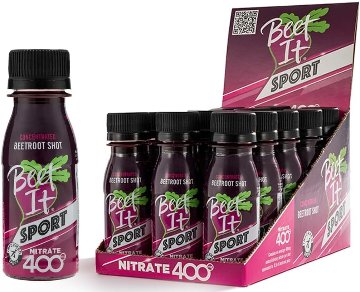
Beet It Sport Nitrate 400
Concentrated beetroot shots that lift blood nitrate for a few hours, so hard efforts feel a touch easier. One or two a day for the two to three days before a race.
RRP £30.00
Pack of 15 shots, UK stock
- use code:
Get it nowOrder now – Beet It Sport Nitrate 400 Also sold direct byIndustry Recognition: A Second Grand Slam
CurraNZ has achieved a history-making clean sweep in the NutraIngredients Awards, winning titles in Asia, Europe and the USA. The supplement is the only product to win this award twice in every region, achieving two Grand Slams. This recognition reflects the strength of CurraNZ’s science and product across three major regions and stands out against some of the biggest brands in sports nutrition.
While industry awards are not research, they signal that the evidence base is substantial and that the product is being held to high standards by independent reviewers who assess dozens of competitors annually.
Standard Dosing: Single-Capsule Serving Holds Up
A notable feature of the findings is that the low dose, 250 mg/day, slightly less than a standard single-capsule serving of CurraNZ, matched or outperformed the 600 mg high dose across the majority of strength and cognitive outcomes. The high dose held a specific advantage for barbell power output. This dose-response pattern supports use of a single serving of CurraNZ for this exercise application, practical for daily supplementation.
What Did Not Change: Anaerobic Sprint Performance
The 30-second Wingate anaerobic sprint test showed no significant differences across any condition. This finding is consistent with the existing literature, which has more consistently documented effects on sustained aerobic and resistance exercise than on maximal short-burst anaerobic power. This is an important negative finding: CurraNZ is not a universal performance enhancer. It targets specific physiological qualities.
Building on Existing Evidence
CurraNZ significantly shifts the body’s fuel use towards fat during exercise, preserving glycogen for stronger late-session and race performance. Earlier research has shown CurraNZ accelerates glycogen resynthesis by over 10% and produces measurable gains in 5K running times.
This new trial on strength and cognition expands the supplement’s application profile. It is no longer data confined to endurance athletes. Strength athletes, combat sports competitors, and any discipline where repeated high-force efforts and mental acuity matter are now part of the evidence picture.
What Is Next
CurraNZ and research collaborators have a caffeine by CurraNZ interaction study underway, with results expected in 2027. The combination may offer distinct advantages for high-intensity training, where both caffeine’s central stimulation and CurraNZ’s metabolic effects could compound. Until those results arrive, the current evidence is clear: one of the most comprehensively researched natural supplements on the market, backed by over 60 published studies spanning endurance, strength, recovery, metabolic health, and cognitive function.
Study Reference:
Koozehchian MS, Bonness FM, Rafajlovska R, Horton SN, Mabrey G, Naderi A, Newton AT. Effects of Short-Term Low- and High-Dose New Zealand Blackcurrant Supplementation on Exercise and Cognitive Performance in Resistance-Trained Adults: A Randomized, Double-Blind, Placebo-Controlled Crossover Study. Nutrients. 2026;18(12):1929. DOI: https://doi.org/10.3390/nu18121929
Meta-Analysis Reference:
Cook, M. D., Bateman, J. J., & Willems, M. E. T. (2026). Blackcurrant Anthocyanin Supplementation Alters Exercise-Induced Substrate Utilization – A Systematic Review and Meta-Analysis. Journal of Dietary Supplements, 23(2), 290–305. https://doi.org/10.1080/19390211.2026.2624114
If you want to try some
Promotional Discount Code is 5KRUNNER on the curranz website (not affiliated); this should give you 10% off. Sometimes, Curranz offers a 25% discount for first-time customers.
This article is part of the site’s sports science reference for endurance athletes.
Last Updated on 17 October 2026 by tfk the5krunner
Small things I always use
- Garmin 90-degree charging adapter: Charges your Garmin from any USB-C cable. Essential when travelling. I use one.
- Body Glide: The blue anti-chafe stick swimmers and runners carry. I use it.
- Speedo earplugs: Fewer ear infections and no cold-water dizziness. I use them.
- Dryrobe Advance: My winter changing robe for open-water swims. I use one. A cheaper option is the AONYIYI changing robe.
- Maurten: Race fuel that stays easy on the stomach. I use them.
- Beet It Sport nitrate shots: Beetroot shots I take in the days before a race. I use them.
- Garmin charging puck: The quickest way to top up before a session. I use one.
- Injinji: Toe socks that stop rubbing, so you run more. I use them.
- Ultimate toe protectors: Stop black toenails on long runs. They work. I use them.
- Compressport R2 v2 calf sleeves: My calf sleeves of choice. I use them.
- Cellucor C4: My pre-workout before hard sessions.
- TPU tubes: Schwalbe Aerothan, Tubolito and Pirelli SmarTube. Light, tiny spares. I use all three.
- G8 insoles: Adjustable insoles that are good. I use them.
- Cycplus Cube: A 97g electric pump that gets a road tyre rideable in two minutes. I carry one. 5% off with code THE5KRUNNER.
Watches and sensors
- Polar H10: My daily driver for waking HRV.
- Polar Verity Sense: My backup arm-worn HR sensor.
- Nomad bedside charger: Charges my iPhone and Apple Watch overnight. I use it, and many of their bands.
- Train.Red: The best muscle oxygen sensor I’ve used.
- Tymewear: Accurate heart rate and reliable ventilatory zones. I use it to pace endurance rides over an hour.
- Garmin Forerunner 970: A pro-grade triathlon watch. I use this.
- Apple Watch Ultra 4: My daily smartwatch. No phone needed on rides.
- Garmin Fenix 9 Pro: I’ve just bought one.
On the bike
- Continental GP5000 for everyday riding, and Aero 111 on the front for special occasions.
- Helmets: Specialized S-Works Evade 3 for road riding, and Rudy Project Wing for TT-style races. I use both.
- Ravemen FR300: A front light that mounts under your Garmin or Wahoo. I use one.
- Wahoo TRACKR Radar: I use it on one bike and Varia on the other. They perform the same.
- Garmin Varia RTL515: Radar that warns you of cars from behind. I use this model.
- Wahoo ELEMNT Roam 3: The bike computer that’s easy to use. I use mine on most rides.
- Favero Assioma Pro RS2: Accurate power pedals that swap easily between bikes. I use this model.
Home and indoor training
- NPE Runn: Makes my basic treadmill smart, sending more accurate speed and distance to my watch and Zwift. I use it.
- Google Wifi: Keeps Zwift connected in my pain cave. I use it.
- Apple TV 4K: Zwift on the big screen. I use two.
- Google Nest Doorbell (wired, 2nd gen): My video doorbell, running in both Google Home and Apple Home. I use it.
Health, recovery and sleep
- FreeStyle Libre 3 Plus: Shows how my blood sugar responds to diet.
- hDrop: Measures my sweat loss in summer and indoors.
- Fourth Frontier Zone: Checks my heart under load in hard sessions.
- Oura Ring 5: My partner’s recovery tracker of choice.
- Eight Sleep: A cooling mattress cover my partner and I use nightly.
Reader-Powered Content

This content is not sponsored. It’s mostly me behind the labour of love, which is this site, and I appreciate everyone who supports it.
Support the site: Follow (free, fewer ads) · Subscribe (paid, ad-free) · Buy Me A Coffee
Written by real people, with AI assistance. Fact-checked and verified for originality. See the Editorial Policy. FTC: Affiliate Disclosure — some links pay commission. As an Amazon Associate, I earn from qualifying purchases.
tfk is the founder and author of the5krunner, an independent endurance sports technology publication. With 20 years of hands-on testing of GPS watches and wearables, and competing in triathlons at an international age-group level, tfk provides in-depth expert analysis of fitness technology for serious athletes and endurance sport competitors. See the gear tfk uses. ID
