Jump to: What’s new | Specifications | Battery | Features | Activities | Further reading
Expert opinion
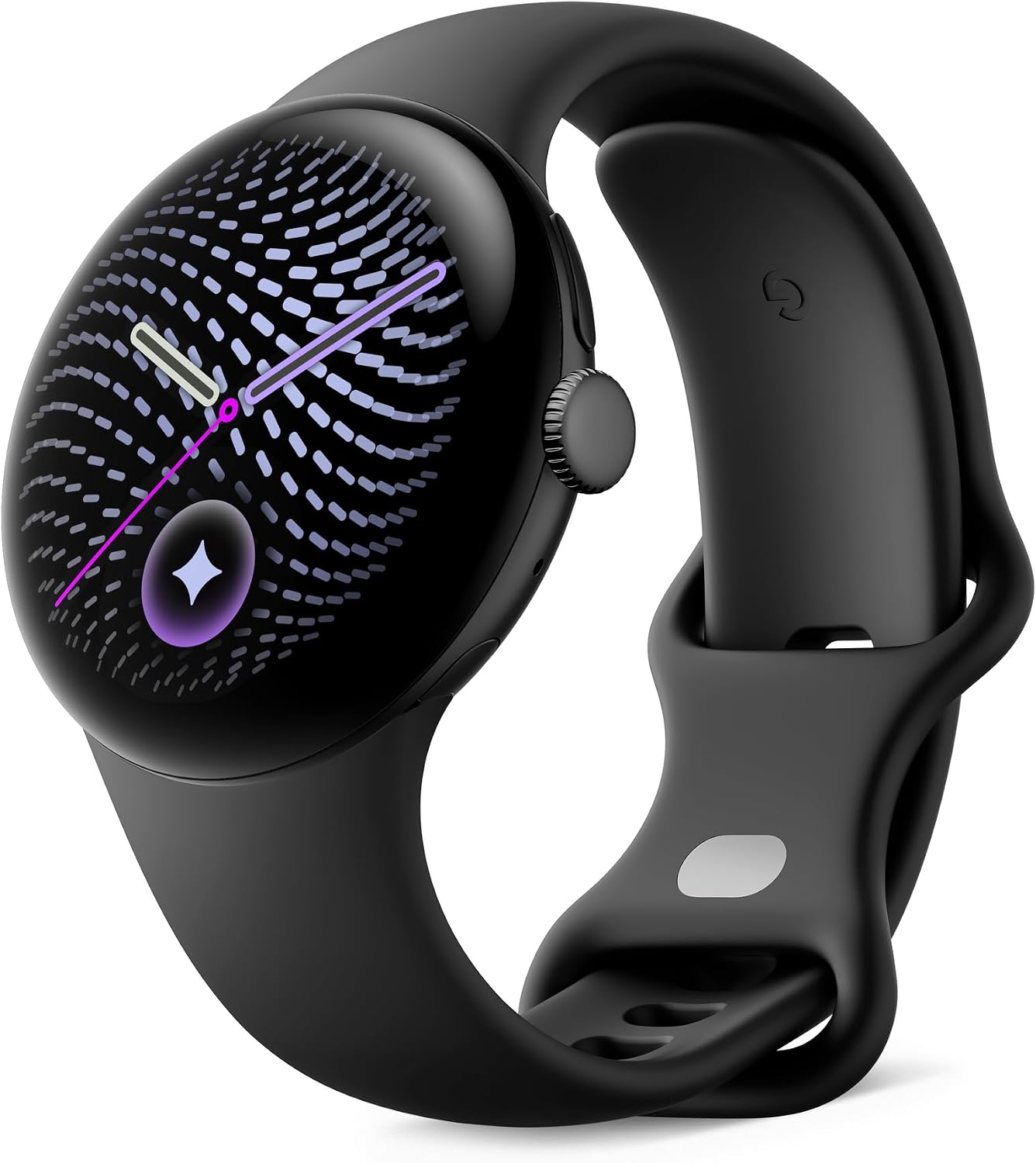
The Pixel Watch 5 is the same watch as the Pixel Watch 4 with better software inside it. Same case, same screen, same two days of battery. The processor is faster, and there is more memory and storage, none of which you will notice day to day.
What you will notice is the GPS. Google now reprocesses your track in the cloud after a run using its 3D map of every building on the planet, and claims the result is twice as accurate as the Pixel Watch 4 in difficult conditions.
The health features are where the money went. Blood pressure and insulin resistance trends arrive in autumn, both giving you trends rather than clinical readings. Sleep tracking is better and now wakes you at the right moment in your sleep cycle rather than by a manual alarm. Gemini does more without asking.
It costs $50 more than last year. If you own a Pixel Watch 4, keep it. If you are buying your first proper Android smartwatch, or upgrading from a Watch 3 or older, this is the one to get.
What’s new versus Pixel Watch 4
| Feature | Pixel Watch 4 | Pixel Watch 5 |
|---|---|---|
| Processor | Snapdragon W5 Gen 2 | Snapdragon W5 Gen 2 Accelerated |
| Storage | 32GB / 2GB RAM | 64GB / 3GB RAM (estimated) |
| Battery 41mm | 325mAh, up to 30h AOD | 332mAh, up to 30h AOD |
| Battery 45mm | 455mAh, up to 40h AOD | 465mAh, up to 40h AOD |
| Band material | Fluoroelastomer | HNBR rubber (2nd gen Active Band) |
| OS | Wear OS 6.0 | Wear OS 7.0 |
| GPS constellations | GPS, Galileo, GLONASS | GPS, Galileo, Glonass, Beidou, QZSS |
| Warranty | One year | Two years |
| Satellite SOS | LTE models only, free 2 years from launch | Free 2 years from activation |
| Android compatibility | Android 11.0 or newer | Android 12.0 or newer |
| GPS post-processing | No | Yes: 3D building models, GNSS reference network, atmospheric and reflection corrections |
| Workout builder | No | Yes: custom reps, weights, intervals, audio cues, rest timers |
| Strength rep tracking | No | Yes |
| Breathing Emergency Detection | No | Yes |
| Daily Readiness Score | Premium only | Yes, from day one |
| Blood pressure trends | No | Coming autumn 2026 |
| Insulin resistance trends | No | Coming autumn 2026 |
| Smart wake alarm | No | Yes |
| Sleep breathing quality | No | Yes |
| Colours | Polished Silver, Champagne Gold, Matte Black (41mm); Satin Moonstone, Polished Silver, Matte Black (45mm) | Matte Black, Polished Silver, Satin Pyrite (both sizes); Champagne Gold (41mm only) |
| UK price (Wi-Fi) | From £349 | From £369 |
Specifications
| Feature | 41mm | 45mm |
|---|---|---|
| Case diameter | 41mm | 45mm |
| Height | 12.3mm | 12.3mm |
| Weight (without band) | 31.0g | 36.7g |
| Case material | 100% recycled aluminium | 100% recycled aluminium |
| Display | Actua 360, 320ppi AMOLED LTPO, 3000 nits peak, 1 nit AOD, 1-60Hz, Gorilla Glass 5 | Identical |
| Processor | Qualcomm Snapdragon W5 Gen 2 Accelerated + Cortex-M55 co-processor | Identical |
| Storage | 64GB eMMC | 64GB eMMC |
| OS | Wear OS 7.0 | Wear OS 7.0 |
| GPS | Dual-frequency: GPS, Galileo, Glonass, Beidou, QZSS | Identical |
| GPS post-processing | Yes | Yes |
| Connectivity | Bluetooth 6.0, Wi-Fi 6 (2.4/5GHz), NFC, UWB, 4G LTE (LTE models), Satellite SOS | Identical |
| Sensors | Optical HR (multi-path), ECG, SpO2, cEDA (skin conductance), skin temperature, barometer, altimeter, compass, magnetometer, gyroscope, accelerometer, ambient light | Identical |
| Interaction | Touchless one-handed gestures, side button, haptic crown, Gen 3 Premium haptics | Identical |
| Water resistance | 5ATM, IP68 | 5ATM, IP68 |
| Band (included) | Active Band 2nd gen, HNBR rubber, S+L sizes | Active Band 2nd gen, HNBR rubber, S+L sizes |
| Band fit | Small 130-175mm, large 165-210mm | Small 150-185mm, large 165-215mm |
| Android compatibility | Android 12.0 or newer (not Android Go) | Identical |
| Warranty | Two years | Two years |
| Security updates | 3 years | 3 years |
| Repairability | User-replaceable battery and display | Identical |
| In box | Watch, Active Band 2nd gen (S+L), Quick Charge Dock | Identical |
| UK price (Wi-Fi / LTE) | £369 / £449 | £399 / £499 |
| US price (Wi-Fi / LTE) | $399 / $499 | $429 / $529 |
| Announced | 12 August 2026 | 12 August 2026 |
| On sale | 20 August 2026 | 20 August 2026 |
Battery life
| Mode | 41mm | 45mm |
|---|---|---|
| Always-on display | Up to 30 hours | Up to 40 hours |
| Battery Saver | Up to 48 hours | Up to 72 hours |
| Capacity | 332mAh | 465mAh |
| Charge to 50% | ~15 minutes | ~15 minutes |
| Charge to 80% | ~25 minutes | ~30 minutes |
| Charge to 100% | ~45 minutes | ~60 minutes |
| 15 min charge yields | ~15 hours use | ~15 hours use |
| Charger | Quick Charge Dock (USB-C, 30W adapter sold separately) | Identical |
Key features
GPS post-processing
The Pixel Watch 5 reprocesses GPS tracks in the cloud after a workout. Google describes the system as combining Android Location technology with 3D building models, a GNSS reference station network, atmospheric corrections, and building-reflection corrections. Google claims 2x more accurate route mapping in challenging environments versus previous generations, and states the watch outperforms the Apple Watch Ultra 3 and Garmin Fenix 8 Pro. That comparison comes from an internal Google study using pre-production hardware in July 2026, evaluating route map accuracy in challenging urban environments for outdoor running, walking and biking workouts on sessions of three hours or less.
Health Guardian
An umbrella feature covering new and existing health monitoring capabilities. Breathing Emergency Detection monitors oxygen saturation and can prompt an emergency call if a persistent drop is detected and the wearer is unresponsive. Loss of Pulse Detection can detect a loss of pulse and prompt a call to emergency services. Both carry extensive medical caveats and neither is FDA-cleared. Blood pressure trend analysis and insulin resistance trend analysis are listed as coming autumn 2026 via the Google Health app across Pixel and Fitbit devices. Both give pattern insights rather than clinical readings.
Workout builder
New in Wear OS 7.0. Users can build custom sessions in the Google Health app, setting specific exercises, reps, weights, and rest timers for strength training, or warmups and intervals for HIIT, cycling and running. The watch delivers audio and visual cues for every set and rest period.
Gemini Intelligence
Wear OS 7.0 integrates Gemini as the primary assistant, accessible by raising the wrist. The watch face surfaces proactive contextual information such as flight updates and estimated arrival times. Gemini coaching features, including personalised run coaching, require a Google Health Premium subscription.
Sleep tracking
Google claims improved sleep stage accuracy versus the previous generation, based on clinical validation of its sleep algorithm against gold-standard measurements. New features include a Smart Wake alarm that identifies the optimal moment to wake within a set window based on sleep stage, a bedtime watch face, and an overnight sleep breathing quality metric.
Activities
The Pixel Watch 5 supports 50+ tracked activities via the Google Health app. Google names running, swimming, biking, pickleball, basketball, HIIT, strength training and hiking among them. Google has not published a complete list.
Further reading
- Google Pixel Watch 4 review: the predecessor in full, 9 cons and 5 pros, GPS score 83%
- Pixel Watch 4 specifications
- Pixel Watch 5: confirmed specs and pricing
- Wear OS 7: impact on sport and fitness tracking
- Google Fitbit and Wear OS hub
- Official spec sheet: Google Store UK
- Google announcement: Made by Google 2026

Explore the full resource library
This site covers endurance sport technology across a range of dedicated reference sections. Each one collects the most relevant articles, tests, and analysis on its topic in one place.
Buyer guides
- Best sports watch — tested recommendations by sport and athlete type: triathlon, running, marathon, cycling, hiking, and women
- Best Garmin watch — Forerunner versus Fenix by series, sport, and budget
- Best wearables — recovery trackers, heart rate monitors, running power meters, and female athlete tech
- Best cycling products — computers, smart trainers, power meters, and cycling heart rate monitors
Brand and product guides
- Amazfit — the full Amazfit range from Balance to Cheetah to T-Rex, accuracy tests, HYROX partnership, and Zepp Health analysis
- Apple Watch — athlete-first coverage of Apple Watch across running, cycling, and triathlon
- COROS — watches, features, and firmware across the full COROS range
- Garmin — the company, the platform and the full range, and the starting point for choosing across every Garmin product line
- Garmin Edge — bike computers from entry-level navigation to flagship endurance and mountain biking
- Garmin Fenix — every model, feature, and firmware development for Garmin's flagship outdoor watch
- Garmin Fenix 8 Series — which variant to buy, upgrade advice, accuracy data, and the full Fenix 8 review and firmware coverage
- Garmin Forerunner — the full Forerunner line covered from entry level to triathlon flagship
- Garmin Instinct — rugged GPS watches for endurance and adventure athletes
- Garmin Features Explained — how Garmin's metrics work, from Training Load and Body Battery to Race Predictor and HRV Status
- Google Fitbit — Fitbit Air, Google Health, Pixel Watch and the Wear OS platform
- Polar — watches, sensors, Polar Flow and training science across the full Polar range
- Suunto — Race, Vertical, Run and the SuuntoPlus ecosystem
- Strava — features, privacy, segments, and how Strava fits into a serious training setup
- Wahoo — KICKR trainers, ELEMNT bike computers, and the Wahoo ecosystem
- WHOOP — strain, recovery, sleep and the full WHOOP ecosystem
Specifications database
- Full Specifications Database — detailed spec sheets, battery life, sensor lists and generation-on-generation comparisons for current Garmin, COROS, Amazfit, Samsung, Google Fitbit, Huawei, Polar, Suunto, Wahoo and Apple Watch models
Glossary
- Sports Technology Glossary — non-branded terminology across running, cycling, swimming, triathlon, hiking, strength training, HYROX, sensors, ecosystems, and brands
Sport and topic guides
- Running Watches — how to choose by discipline: road racing, trail, track, beginner, and multisport
- Triathlon and Multisport Technology — watches, sensors, and race-day tools for swimmers, cyclists, and runners
- HYROX — training science, race analysis, and technology for the functional fitness race format
- parkrun — technology, training, and performance for the weekly 5K
- Hiking Technology — navigation, safety, and trail tech for walkers and hikers
- Heart Rate Monitoring — optical sensors, chest straps, accuracy comparisons, and how to set training zones
- GPS Accuracy — how satellite systems perform across brands, terrains, and conditions
- Sports Watch Battery Life — battery claims, real-world tests, and how to manage battery life across Garmin, Apple, Amazfit and Coros
- Recovery Trackers — WHOOP, Oura, and the science of readiness scoring
- Female Athlete Tech — wearables, physiology, and performance for female endurance athletes, covering cycle-synced training, RED-S, HR accuracy, and VO2max
- Sports Science — peer-reviewed research on HRV, VO2max, lactate threshold, running power, wearable accuracy, and supplementation
- Testing Methodology — how this site tests GPS accuracy, heart rate, battery life, and other performance claims
Content series
- Release Radar — confirmed launches, leaks, and rumours across Garmin, Apple, COROS, Polar, Suunto, and Wahoo
- Deep Dive Feature Files — weekly firmware feature updates across all brands (bug fixes excluded)
- Fix Files — weekly firmware bug fix tracking across all brands
