Shimano invents a new cleat type: all the details of the new pedal system
Shimano has introduced SPD-SLR, a new road cleat that replaces SPD-SL across its Dura-Ace and Ultegra lines.
The cleat is part of a new pedal system that also includes new SPD-SLR pedals. Shimano released new S-PHYRE shoes alongside it, but the cleat itself is the core change: a redesigned interface that sits closer to the pedal axle, engages faster and weighs less than the outgoing SPD-SL cleat. It isn’t Shimano’s first new cleat in recent memory: its off-road XTR M9220 pedal launched with the new CL-MT001 cleat in 2025, which stayed backward compatible with existing SPD pedals.
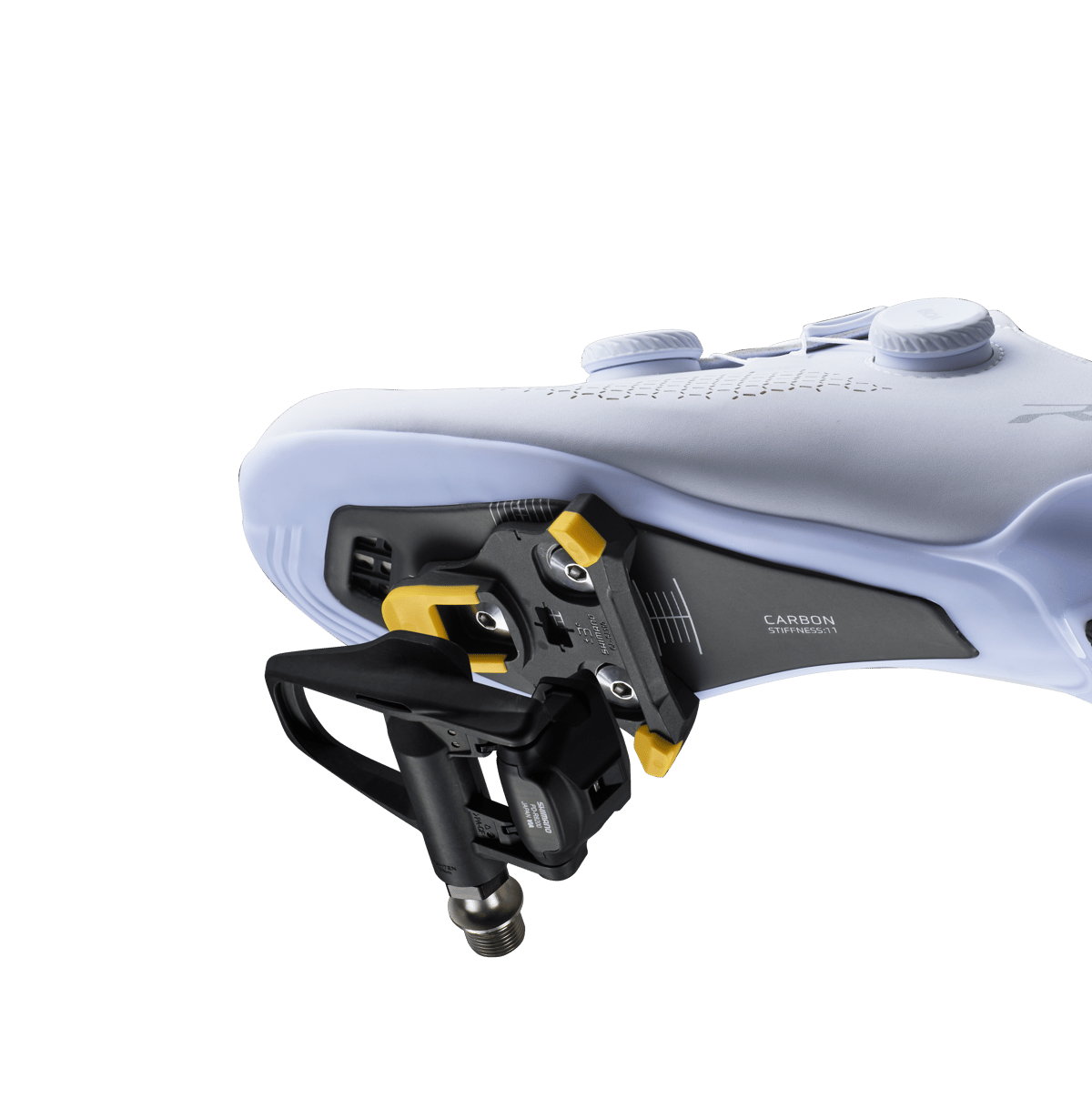
What’s better than the old cleat and pedals
- 2.3mm lower stack height, bringing the foot closer to the pedal axle
- Engagement angle narrowed from 15.5° to 10.5°, with a wider catch zone for clipping in
- Up to 22% lighter than the equivalent SPD-SL cleat
- High-contrast alignment markings for faster, more repeatable fore-aft and lateral setup
- Four float options instead of a fixed SPD-SL float pattern, covering zero float through to three degrees of rotational movement
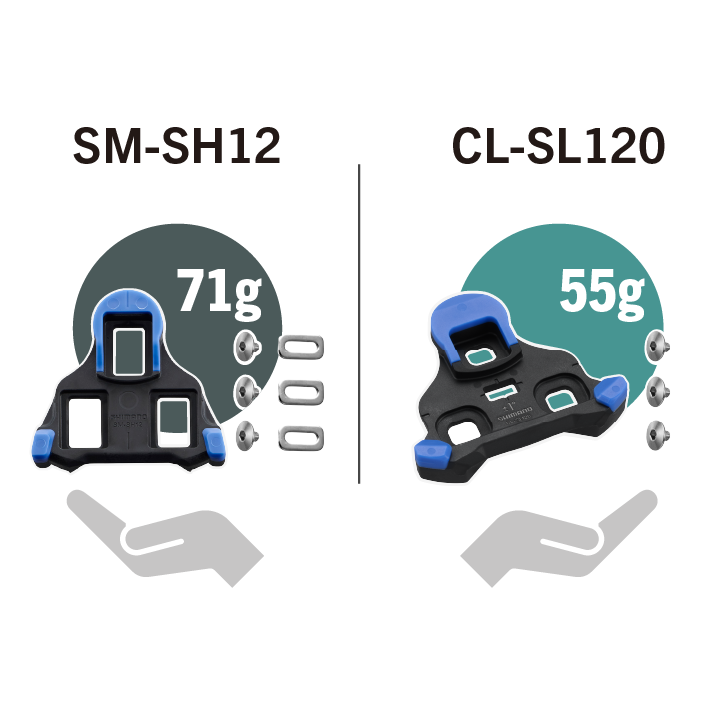
Four cleats, four amounts of float
SPD-SLR ships in four versions:
- CL-SL100 (red): zero float, for riders who want the most direct, locked-in power transfer
- CL-SL110 (yellow): three degrees of rotational float, for riders who want more comfort and less joint stress
- CL-SL120 (blue): one degree of float, balancing stability with limited movement
- CL-SL130 (grey): built for riders moving to SPD-SLR pedals from most non-Shimano three-bolt road shoes
The CL-SL130 doesn’t deliver the lower stack height or weight savings of the other three cleats, since it has to accommodate a wider range of shoe adjustment slots. It lets riders adopt the new pedal system without replacing their shoes immediately.
Compatibility and what it means in practice
SPD-SLR cleats work with existing Shimano SPD-SL road shoes, including the RC703 and RC503, though fore-aft adjustment on those shoes stays limited to whatever range the shoe itself offers, as Shane Miller found when he measured it. Riders get the full benefit of the lower stack height and faster engagement only when they run SPD-SLR shoes, cleats and pedals together.
The pedal side is stricter. Shimano confirms SPD-SLR cleats are designed exclusively for SPD-SLR pedals and are not backwards compatible with SPD-SL pedals. Shimano’s own power meter is crank-based rather than pedal-based, so that product isn’t affected. Third-party pedal-based power meters built to the SPD-SL cleat pattern face a different problem. Garmin’s Rally RS and Favero’s Assioma PRO RS-2 both mount on SPD-SL cleats, so moving to SPD-SLR means giving up whichever one you run, unless Garmin or Favero brings out an SPD-SLR-compatible cleat of its own. The release doesn’t address third-party pedal compatibility, so anyone running either power meter pedal should check with the manufacturer before assuming SPD-SLR will drop straight in.
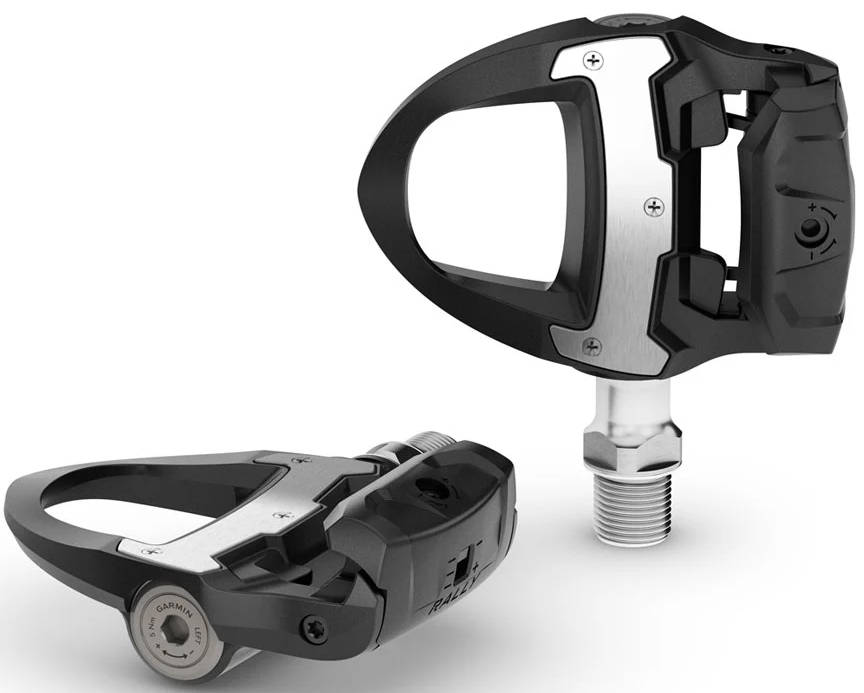

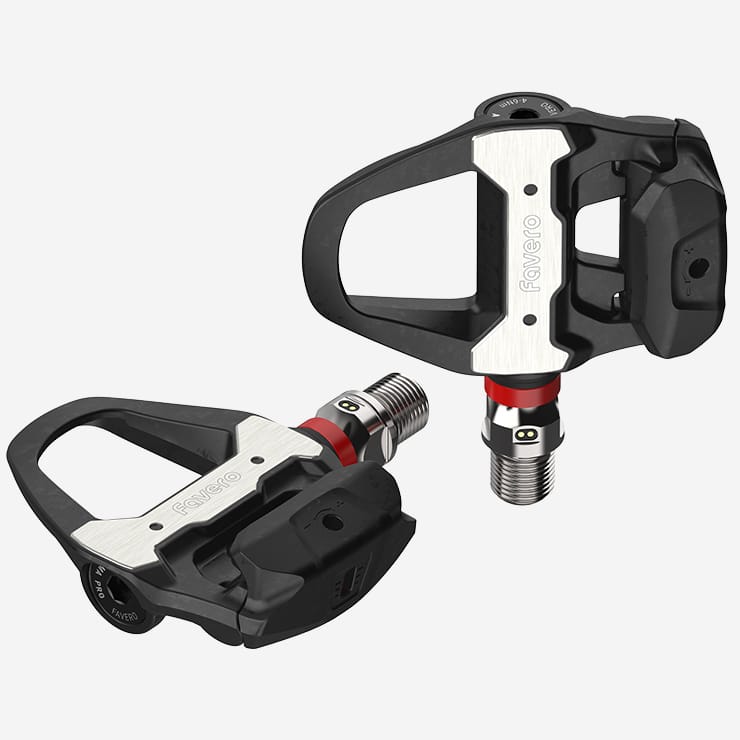
Not every third-party power meter pedal is affected. Favero’s Look Kéo-compatible variant, the Assioma PRO RL-2, uses a completely different cleat standard and sits outside this compatibility question entirely, as does Garmin’s own Look Kéo-pattern Rally RK.
Also released today
Pedal System: Shimano launched two new pedals built around SPD-SLR: the Dura-Ace PD-R9300, its top road racing pedal, and the Ultegra PD-R8200, which carries the same pedal architecture at a lower price point. Shimano quotes an 11% stiffness increase and a 47% cut in rotational resistance for the PD-R9300 compared with the PD-R8200. The PD-R9300 shares its generation number with the 13-speed Dura-Ace R9300 groupset spotted at the Vuelta a España last month, suggesting the pedal and groupset are part of the same wider Dura-Ace refresh.
Shimano also introduced two S-PHYRE shoes released alongside the new system: the flagship SH-RC910, with a carbon fibre heel cup, carbon hollow-core midsole and Shimano’s Dynalast 2.0 last shape, and the SH-RC810, which uses dual BOA Li2 dials, an external heel stabiliser and a rigid hollow-channel carbon midsole. The SH-RC910 replaces the SH-RC903, Shimano’s S-PHYRE flagship since 2023.
Video
More details on Shane’s site
Quick answers
Will Shimano SPD-SLR cleats work with my current SPD-SL pedals?
Shimano says no, but hands-on testing shows it clips in loosely, with a noticeable gap under the cleat. Rideable in a pinch, not recommended long-term.
Will my old SPD-SL cleats work with a new SPD-SLR pedal?
No. Hands-on testing confirms an old SPD-SL cleat won’t clip into a new SPD-SLR pedal at all.
Can I use SPD-SLR cleats with a power meter pedal like Garmin's Rally RS?
Not as things stand. Rally RS pedals use the SPD-SL cleat pattern, and Shimano hasn’t said whether third-party pedal makers will get an SPD-SLR-compatible cleat.
Is Shimano's own power meter affected by the SPD-SLR cleat change?
No. Shimano’s power meter is crank-based rather than pedal-based, so it sits outside this cleat and pedal system entirely.
What shoes work with the new SPD-SLR cleat?
Existing Shimano SPD-SL road shoes, including the RC703 and RC503, plus the new S-PHYRE SH-RC910 and SH-RC810, released alongside SPD-SLR.
How much lighter is the new cleat than SPD-SL?
Up to 22% lighter, according to Shimano.
What's the difference between the four SPD-SLR cleats?
The CL-SL100 (red) has zero float, the CL-SL110 (yellow) has three degrees of rotational float, the CL-SL120 (blue) has one degree of float, and the CL-SL130 (grey) is designed for riders moving to SPD-SLR pedals from most non-Shimano three-bolt shoes.
Does clipping in feel different with SPD-SLR?
Yes. The engagement angle narrows from 15.5° on SPD-SL to 10.5° on SPD-SLR, and a wider catch zone is meant to make clipping in faster.
Last Updated on 17 September 2026 by the5krunner
My favourite kit and nutrition
- Garmin Fenix 9 Pro — I’ve just bought one.
- Injinji – Runners protect your toes. Avoid discomfort and minor injury. Run more. Run faster. I use them.
- Garmin 90-degree charging adapter — A small keyring adapter you can use anywhere. Essential when away. I use one.
- Garmin charging puck — the fastest and most reliable way to top up your Garmin before a session. I use one.
- Ravemen FR300 — Front light that mounts directly under your Garmin or Wahoo head unit. Keeps your bars clean and your beam pointed where it matters. I use one.
- Body Glide – The blue anti-chafe stick that all swimmers and many runners use. I use it.
- Maurten — The race nutrition trusted by elite athletes. Gels and drink mixes engineered to be easy on the stomach. I use them.
- Garmin Varia RTL515 — A radar rear light that alerts you to vehicles approaching from behind. Pairs with your Edge or Wahoo. I use this model.
- Favero Assioma Pro RS2 — The power-meter pedals most serious cyclists choose. Accurate, easy to move between bikes. I use this model.
- Garmin Forerunner 970 — A serious choice for a pro-grade triathlon watch. I use this.
- Polar H10 — My daily driver for accurate, waking HRV readings.
- Wahoo ELEMNT Roam 3 — The bike computer that has the feature Garmin lacks: usability. I use mine on most rides.
Reader-Powered Content

This content is not sponsored. It’s mostly me behind the labour of love, which is this site, and I appreciate everyone who supports it.
Support the site: Follow (free, fewer ads) · Subscribe (paid, ad-free) · Buy Me A Coffee ❤️
All articles are written by real people, fact-checked, and verified for originality. See the Editorial Policy. FTC: Affiliate Disclosure — some links pay commission. As an Amazon Associate, I earn from qualifying purchases.
tfk is the founder and author of the5krunner, an independent endurance sports technology publication. With 20 years of hands-on testing of GPS watches and wearables, and competing in triathlons at an international age-group level, tfk provides in-depth expert analysis of fitness technology for serious athletes and endurance sport competitors. ID
