Three questions decide which of these watches suits you, and ultra runners have a fourth, which is weight. Can it get you there and back when the plan changes? Can it call for help when off-grid? Will it last the whole trip without a charger? Surprisingly, none of these watches wins all three.
- Best navigator: Garmin Fenix 9, with the Amazfit T-Rex Ultra 2 close behind at about half the price.
- Best for calling for help off-grid: Garmin Fenix 9 Pro inReach and Apple Watch Ultra 4. They are the only two with satellite messaging.
- Best for multi-day trips without a charger: Suunto Vertical 2 and COROS Vertix 4, then the T-Rex Ultra 2 and the 51mm Fenix 9. The Apple Watch Ultra 4 does not belong on this list.
COROS Vertix 4 would also edge it as best for climbers. There are some serious trade-offs to be had taking those best-ofs at face value – the true answer lies in your precise use case.
Which watch meets which need
| Reroutes you on the map | Off-grid messaging and calls | Records a multi-day trip | |
|---|---|---|---|
| COROS Vertix 4 | No | No | Yes |
| Suunto Vertical 2 | In the phone app | No | Yes |
| Garmin Fenix 9 | Yes | No | 51mm only |
| Garmin Fenix 9 Pro inReach | Yes | Yes, with a subscription | 51mm only |
| Apple Watch Ultra 4 | With an app | Yes, free for two years | No |
| Polar Grit X2 Pro | No | No | Two days |
| Amazfit T-Rex Ultra 2 | Yes | No | Yes |
The standard Fenix 9 and the Fenix 9 Pro inReach are treated as two watches here, because satellite messaging changes who the watch is for.
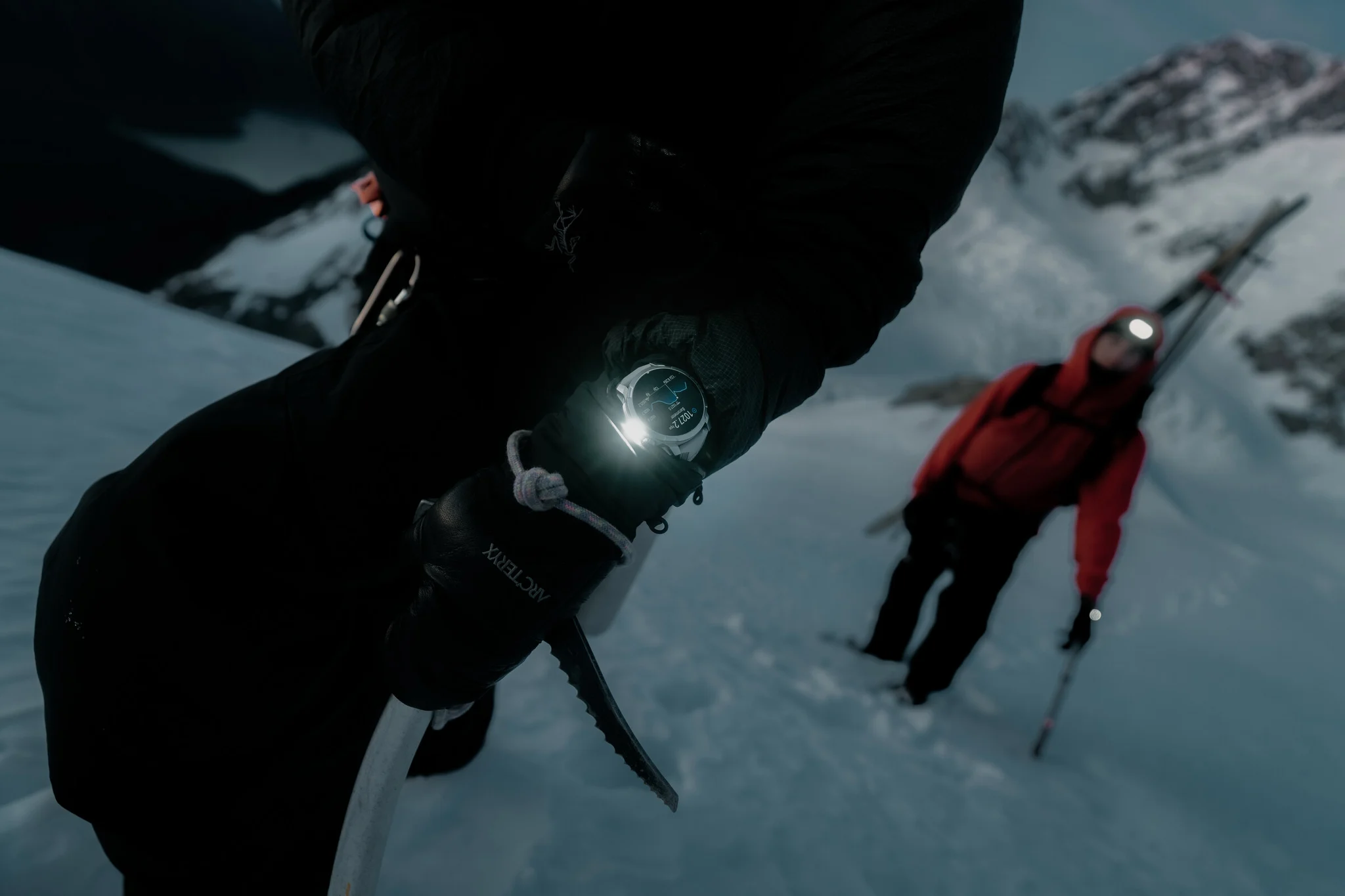
Maps and navigation
All seven show an offline map on a bright screen. What separates them is what the map can do for you.
Seeing where you are
The Vertix 4 has the most readable maps of the group, with trail and street names on a 3,500-nit screen, and COROS will add free satellite imagery in early 2027. Garmin’s maps carry the most detail and points of interest, with advanced map layers available for purchase. The T-Rex Ultra 2 comes with base maps and adds contour and ski resort maps, which I found clear and easy to use. The Suunto Vertical 2 draws, pans and zooms its maps faster than the Garmin, and it now shows names for roads, water and peaks along with contour lines. The Grit X2 Pro has topographic maps for Europe and North America. The Apple Watch Ultra 4 relies on an app such as WorkOutDoors for detailed offline maps.
Making a route on the watch
The Fenix 9 and the T-Rex Ultra 2 both create a route on the wrist, either point-to-point or as a round trip from where you stand, and both search for points of interest such as water or shelter. The Vertix 4, the Vertical 2 and the Grit X2 Pro follow routes you planned beforehand on a phone or computer.
Recovering from a wrong turn
The Fenix 9 and the T-Rex Ultra 2 recalculate and send you on a new line. The Vertix 4 warns you that you have left the route. The Vertical 2 does not reroute on the watch, so you replan in the Suunto app on your phone or use track back. The Grit X2 Pro points back to the route as a straight-line bearing or retraces your steps. On unfamiliar ground with complex route options, rerouting is the feature that matters most, and it puts the Garmin and the Amazfit ahead.
Following a planned route
All six dedicated watches give turn prompts on a loaded route. The Vertical 2 lets you swap to a different route mid-activity and shows each climb on a colour-coded profile. The Vertix 4 and the T-Rex Ultra 2 both mark checkpoints, and the Amazfit speaks its directions through the speaker. Polar’s turn-by-turn prompts come from Komoot. The T-Rex Ultra 2 also has a climb-by-climb view, but it did not work reliably in my testing.
Getting routes onto the watch
Garmin is the easiest: a route saved in Strava or Komoot simply appears on the watch. COROS takes routes from AllTrails, Wikiloc, Komoot and Strava, but each one lands in the COROS app first and needs a tap to send it to the watch, as I explained in “COROS AllTrails integration: useful catch-up, behind Garmin“. The Grit X2 Pro takes routes from Komoot and Strava through Polar Flow, and the Vertical 2 takes them from the same two services through the Suunto app. When I reviewed the T-Rex Ultra 2 in March, a Strava route had to be exported as a GPX file and imported through the Zepp app. The Apple Watch Ultra 4 has no GPX import in its own Workout app.
Winner: Fenix 9. The T-Rex Ultra 2 does almost as much on the watch for about half the price. The Vertix 4 is the best choice for anyone who plans routes in advance and follows them.
Calling for help with no phone signal
Only two watches here can do it, and they suit a different buyer: someone who travels alone or goes beyond phone coverage.
The Apple Watch Ultra 4 has satellite Emergency SOS, two-way messaging and Find My built in, free for two years after activation, plus an 86dB siren, fall detection and 5G. It needs an iPhone to set up and run.
The Fenix 9 Pro inReach adds LTE and satellite messaging to the Fenix 9 Pro, with SOS handled by Garmin’s 24/7 Response centre, satellite weather and location sharing. It needs a subscription from day one, starting at £1,029.99 for the Solar model and £1,119.99 for the 47mm AMOLED.
The other five rely on your phone having a signal. If you carry a separate satellite messenger, that may not matter.
Winner: Apple Watch Ultra 4 for cost, Fenix 9 Pro inReach for anyone who also needs the battery and the maps.
Multi-day battery life
| Most accurate GPS | Longest GPS mode | Daily use | |
|---|---|---|---|
| Suunto Vertical 2 | 65 hours | 250 hours | 20 days |
| COROS Vertix 4 | 60 hours | 105 hours | 30 days |
| Amazfit T-Rex Ultra 2 | 50 hours | 177 hours | 30 days |
| Garmin Fenix 9 (51mm) | 45 hours | 145 hours | 29 days |
| Polar Grit X2 Pro | 43 hours | 139 hours | 10 days |
| Garmin Fenix 9 (47mm) | 25 hours | 81 hours | 16 days |
| Apple Watch Ultra 4 | 18 hours | 45 hours | 50 hours |
| © the5krunner. Link required. | |||
A serious expedition watch has to record for several long days between charges, and that rules out the Apple Watch Ultra 4, which needs charging every two days even when you are not recording. The Vertical 2 and the Vertix 4 last the longest in the accurate mode you want in the mountains, at 65 and 60 hours. The Suunto also has the longest low-power mode, though its 250-hour Tour mode turns heart rate off and lowers GPS accuracy. The Vertix 4 goes longer between charges in daily use, at 30 days against 20. The T-Rex Ultra 2 is close behind both, and its 177-hour mode works only for hiking and climbing. Polar’s 43 hours excludes navigation. On the Fenix 9, only the 51mm case competes.
Winner: Suunto Vertical 2 by five hours, with the Vertix 4 close behind and longer-lasting in daily use.
Ultra runners: battery is rarely the problem; weight is
An ultra is different from an expedition. You record for over a day without stopping, and then you are back near a charger. Five of these watches cover a 100-mile race in their most accurate GPS mode, so the question becomes how much you want on your wrist for 30 hours.
| Weight | Most accurate GPS | |
|---|---|---|
| Apple Watch Ultra 4 | 63g | 18 hours |
| Polar Grit X2 Pro Titan | 64g | 43 hours |
| COROS Vertix 4, nylon strap | 68g | 60 hours |
| Suunto Vertical 2 Titanium | 74g | 65 hours |
| Garmin Fenix 9 (47mm) | 75g | 25 hours |
| Polar Grit X2 Pro | 79g | 43 hours |
| COROS Vertix 4, silicone strap | 84g | 60 hours |
| Suunto Vertical 2 Steel | 87g | 65 hours |
| Amazfit T-Rex Ultra 2 | 89g | 50 hours |
| Garmin Fenix 9 (51mm) | 91g | 45 hours |
The Vertix 4 on its nylon strap is the pick: 68g with enough battery for any single-stage ultra. The Grit X2 Pro Titan is lighter still and covers 43 hours. The titanium Vertical 2 weighs 74g and covers 65 hours. The watches that reroute you are the heavy ones, at around 90g, and the 47mm Fenix 9 and the Apple Watch Ultra 4 need a reduced GPS mode to finish a 100-miler. All of these are large watches, so a runner who does not need maps on a mountain will be better served by a lighter running watch such as the COROS Apex 4.
Winner: Vertix 4 on the nylon strap.
Climbers and mountaineers
Climbers want different things again: a watch that records pitches and ascent properly, works with gloves and a harness, copes with cold and altitude, and stays out of the way.
COROS has built the Vertix for climbers for years. I rated the Vertix 2S the best climbing watch on the market, ahead of the Fenix, for its climb recording, climbing workouts and bouldering mode. The Vertix 4 adds recessed buttons that gloves and a harness are less likely to press, an Altitude Mode that tracks blood oxygen and acclimation above 2,500 metres, and a carabiner accessory to follow, so the watch can hang from a harness or pack. It has four climbing modes: Outdoor Climb, which uses vertical GPS algorithms for multi-pitch and big-wall routes; Indoor Climb, which covers lead, top rope, and bouldering and automatically counts routes and falls; Mountain Climb; and Bouldering.
The Fenix 9 has Indoor Climbing, Bouldering and Mountaineering profiles, altitude acclimation and ClimbPro, which shows each climb on a planned route. The T-Rex Ultra 2 has climbing, rock climbing, bouldering and indoor climbing modes, prompts you to check blood oxygen above 3,000 metres, keeps working down to -30 °C, and saves its longest battery modes for hiking and climbing. The Grit X2 Pro records indoor and outdoor climbing and shows your ascent speed. The Vertical 2 has a full set of buttons that work with gloves, shows each ascent on a planned route and works down to -20C.
Winner: Vertix 4 with the Fenix 9 for mountaineers with the most complex mapping and navigation needs.
Outdoor tools
The Vertix 4, the Vertical 2, both Fenix 9 models and the T-Rex Ultra 2 have a built-in LED torch. The Suunto’s includes a red light and the Amazfit adds a green mode, both of which protect night vision, while the Vertix 4’s torch is white only. The Grit X2 Pro and the Apple Watch Ultra 4 light the screen instead. The T-Rex Ultra 2 is certified for scuba to 45 metres and the Fenix 9 and Apple Watch Ultra 4 to 40 metres. The T-Rex Ultra 2 keeps working down to -30C in its Low Temperature Mode.
Daily life
The Apple Watch Ultra 4 is the best everyday smartwatch here for an iPhone owner. The Fenix 9 comes next, with Garmin Pay, streaming services such as Spotify, Connect IQ apps and ANT+ sensors. The T-Rex Ultra 2 has calls and Zepp Pay in the UK and Europe but no streaming music and a small app store. The Vertix 4 takes calls and plays offline music, with no streaming services. The Vertical 2 has the SuuntoPlus app store and controls the music on your phone, but it stores no music and has no payments. The Grit X2 Pro stores no music.
Test results
In my 10-mile GPS accuracy test, Garmin’s best current watches score 92 per cent and the Apple Watch Ultra 3 scored 90 per cent. The two newest flagships disappoint: the Fenix 9 Pro and the Apple Watch Ultra 4 both scored 79 per cent, which is decidedly average by today’s standards. The T-Rex Ultra 2 scored 83 per cent, ahead of both. I have not yet tested the Vertix 4. The Vertical 2’s GPS and altimeter are among the best, but its optical heart rate is unreliable, so pair it with a chest strap.
The brand behind each watch
- Garmin: financially secure, with the widest set of connected services, but no written promise on how long it supports a watch, and the Fenix 9 launched with many bugs.
- COROS: the clearest repair deal, a 2-year warranty and no subscription. It is a private company with no public financials.
- Apple: the best support and no subscription for core features, but the watch works only with an iPhone.
- Polar: a written five-year support promise and the best-documented science, with an auditor’s warning over its finances.
- Suunto: premium materials, an open app store and no subscription. It trails Garmin on features.
- Amazfit: the lowest prices and no subscription, from a parent company that is still losing money.
More detail is on the brand comparison page.
Prices
| UK | US | Ongoing cost | |
|---|---|---|---|
| Suunto Vertical 2 | From £529 | From $599 | None |
| Amazfit T-Rex Ultra 2 | £549.90 | $549.99 | None |
| Polar Grit X2 Pro | £650 | $750 | None |
| COROS Vertix 4 | £699 | $799 | None |
| Apple Watch Ultra 4 | £749 | $799 | Satellite free for two years |
| Garmin Fenix 9 | From £859.99 | From $999.99 | Connect+ optional |
| Garmin Fenix 9 Pro inReach | From £1,029.99 | From $1,199.99 | inReach subscription |
These are launch prices. Full details are on the spec pages for the Vertix 4, Fenix 9, Fenix 9 Pro, Apple Watch Ultra 4, Grit X2 Pro, Vertical 2 and T-Rex Ultra 2.
Which one to buy
- Multi-day expeditions without a charger: COROS Vertix 4, or the Suunto Vertical 2 for £170 less if you can live without calls and music on the watch.
- Climbing and mountaineering: COROS Vertix 4.
- Ultras of a day or two: COROS Vertix 4 on the nylon strap, or the lighter Polar Grit X2 Pro Titan.
- Exploring unfamiliar ground and changing plans on the move: Garmin Fenix 9, in 51mm if the trip is longer than two days.
- The same navigation on a budget: Amazfit T-Rex Ultra 2.
- Travelling alone beyond phone coverage for days: Garmin Fenix 9 Pro inReach in 51mm.
- Day trips and weekends with an iPhone, with satellite SOS as a backup: Apple Watch Ultra 4.
- Training first, with maps for the occasional mountain day: Polar Grit X2 Pro.
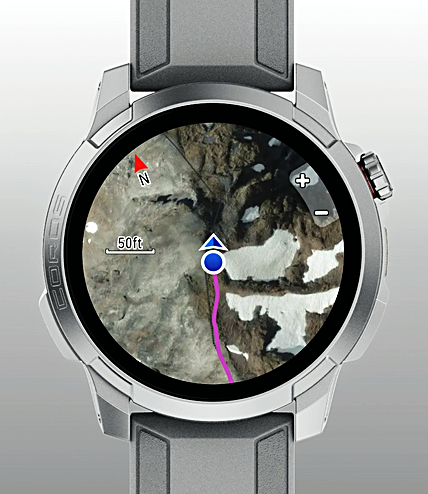
Coros Vertix 4
Expedition GPS watch with an AMOLED screen, offline maps and a built-in LED torch
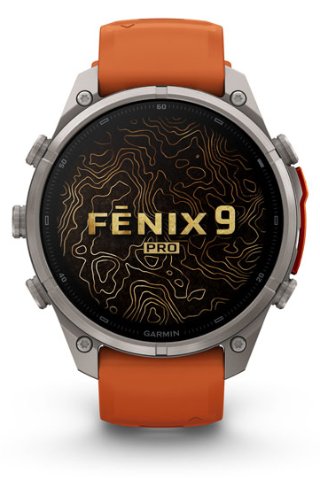
Garmin Fenix 9 range
Every Fenix 9 and Fenix 9 Pro model, including AMOLED, Solar, and inReach variants across all sizes. One link to the full range.
RRP from $999 / €999 / £859
- use code:
Get it nowOrder now – Garmin Fenix 9 range Also sold direct by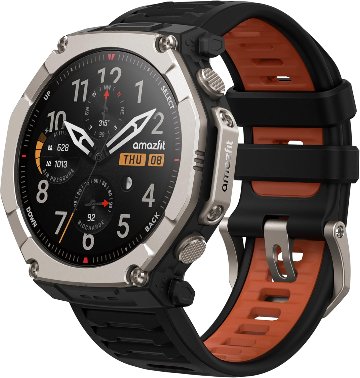
Amazfit T-Rex Ultra 2
GPS adventure watch
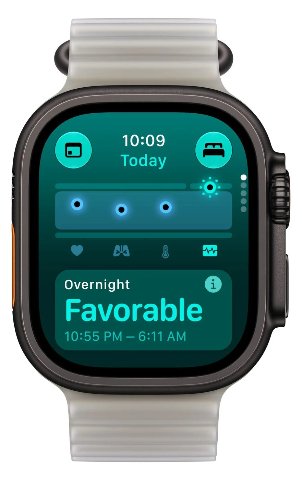
Apple Watch Ultra 4
GPS adventure watch
Polar Grit X2 Pro
Outdoor adventure and sports GPS watch
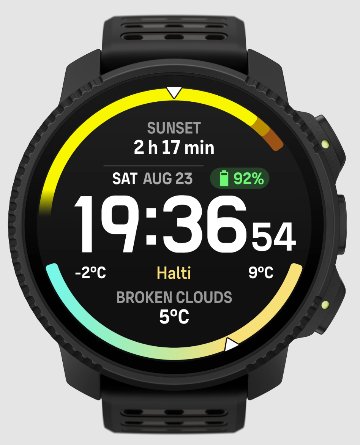
Suunto Vertical 2
GPS adventure watch
Quick answers
Which expedition watch has the best maps?
The Garmin Fenix 9. It creates routes on the watch and reroutes you after a wrong turn. The Amazfit T-Rex Ultra 2 does the same for about half the price.
Which of these watches has satellite messaging?
The Apple Watch Ultra 4 and the Garmin Fenix 9 Pro inReach. Apple’s is free for two years, and Garmin’s needs a subscription.
Which has the longest battery life?
The Suunto Vertical 2 lasts 65 hours in its most accurate GPS mode and the COROS Vertix 4 lasts 60 hours. The Amazfit T-Rex Ultra 2 lasts 50 hours and the 51mm Garmin Fenix 9 lasts 45 hours.
Is the Apple Watch Ultra 4 good enough for an expedition?
For a day or a weekend, yes. It records 18 hours of GPS and has satellite SOS, but it needs charging every two days.
Which is the cheapest?
In the UK, the steel Suunto Vertical 2 at £529. In the US, the Amazfit T-Rex Ultra 2 at $549.99.
Further reading
- COROS Vertix 4 vs Garmin Fenix 9 and 9 Pro
- Garmin Fenix 9 vs Apple Watch Ultra 4
- Amazfit T-Rex Ultra 2 review
- Suunto Vertical 2 buyer’s guide
- Which COROS Vertix to buy
- Sports watch battery life
Last Updated on 24 November 2026 by tfk the5krunner
2026 Seasonal Gifts
- Garmin CIRQA: Garmin’s screenless band, which uses your phone as the display. I tested it and sometimes use it as a backup on the site.
- HoloSwim 3 Pro: Swim goggles with GPS and your pace in the lens, so you can swim without a watch. Code THE5KRUNNER takes 10% off. I tested them.
- Kineon MOVE+: Red and infrared light for sore knees, Achilles and other joints after hard training. I use it.
- Fitbit Air: A screenless band for steps, sleep and heart rate, with no subscription needed. It was closest to a manual 9,000-step test. I use it as a backup sometimes.
Small things I always use
- Garmin 90-degree charging adapter: Charges your Garmin with any USB-C cable. Essential when travelling. I use one.
- Body Glide: The blue anti-chafing stick swimmers and runners carry. I use it.
- Speedo earplugs: Fewer ear infections and no cold-water dizziness. I use them.
- Dryrobe Advance: My winter changing robe for open-water swims. I use one. A cheaper option is the AONYIYI changing robe.
- Maurten: Race fuel that stays easy on the stomach. I use them.
- Beet It Sport nitrate shots: Beetroot shots I take in the days before a race. I use them.
- Garmin charging puck: The quickest way to top up before a session. I use one.
- Injinji: Toe socks that stop rubbing, so you run more. I use them.
- Ultimate toe protectors: Stop black toenails on long runs. They work. I use them.
- Compressport R2 v2 calf sleeves: My calf sleeves of choice. I use them.
- Cellucor C4: My pre-workout before hard sessions.
- TPU tubes: Schwalbe Aerothan, Tubolito and Pirelli SmarTube. Light, tiny spares. I use all three.
- G8 insoles: Adjustable arches, perfect position. I use them.
- Cycplus Cube: A 97g electric pump that gets a road tyre rideable in two minutes. I carry one. 5% off with code THE5KRUNNER.
Health, recovery and sleep
- FreeStyle Libre 3 Plus: Shows how my blood sugar responds to diet. Occasional use.
- hDrop: Measures my sweat loss in summer and indoors. I use it.
- Fourth Frontier Zone: Checks my heart under load in hard sessions.
- Oura Ring 5: My partner’s recovery tracker of choice.
- Eight Sleep: A cooling mattress cover my partner and I use nightly (see next).
- Chilipad 2.0: Cools or heats your side of the bed on a schedule, with no subscription. US only. I am testing it; it seems pretty good.
Watches and sensors
- Polar H10: My daily driver for waking HRV.
- Polar Verity Sense: My backup arm-worn HR sensor.
- Nomad bedside charger: Charges my iPhone and Apple Watch overnight. I use it, and many of their bands.
- Train.Red: The best muscle oxygen sensor I’ve used. Occasional use.
- Tymewear: Accurate heart rate and reliable ventilatory zones. I use it to pace endurance rides over an hour.
- Garmin Forerunner 970: A pro-grade triathlon watch. I use this.
- Apple Watch Ultra 4: My daily smartwatch. No phone needed on rides.
On the bike
- Continental GP5000 for everyday riding, and Aero 111 on the front for special occasions. I use both.
- Helmets: Specialized S-Works Evade 3 for road riding, and Rudy Project Wing for TT-style races. I use both.
- Ravemen FR300: A front light that mounts under your Garmin or Wahoo. I use one.
- Ravemen FR1000: The light and the computer mount in one unit, so nothing else goes on the bars. Better than mine.
- Ravemen FR1500SE: 1,500 lumens hanging under your Garmin, for proper night rides.
- Ravemen FR1100SE: 1,100 lumens under your Garmin, and up to 46 hours on slow flash.
- Ravemen FR500: A brighter FR300 with the same mount.
- Wahoo TRACKR Radar: I use it on one bike and Varia on the other. They perform the same.
- Garmin Varia RTL515: Radar that warns you of cars from behind. I use this model.
- Wahoo ELEMNT Roam 3: The bike computer that’s easy to use. I use mine on most rides.
- Favero Assioma Pro RS2: Accurate power pedals that swap easily between bikes. I use this model.
Home and indoor training
- NPE Runn: Makes my basic treadmill smart, sending more accurate speed and distance to my watch and Zwift. I use it.
- Google Wifi: Keeps Zwift connected in my pain cave. I use it.
- Apple TV 4K (4th generation): Zwift on the big screen. I use two.
- Google Nest Doorbell (wired, 2nd gen): My video doorbell, running in both Google Home and Apple Home via Starling. I use it.
Reader-Powered Content

This content is not sponsored. It’s mostly me behind the labour of love, which is this site, and I appreciate everyone who supports it.
Support the site: Follow (free, fewer ads) · Subscribe (paid, ad-free) · Buy Me A Coffee
Written by real people, with AI assistance. Fact-checked and verified for originality. See the Editorial Policy. FTC: Affiliate Disclosure — some links pay commission. As an Amazon Associate, I earn from qualifying purchases.
tfk is the founder and author of the5krunner, an independent endurance sports technology publication. With 20 years of hands-on testing of GPS watches and wearables, and competing in triathlons at an international age-group level, tfk provides in-depth expert analysis of fitness technology for serious athletes and endurance sport competitors. See the gear tfk uses. ID
