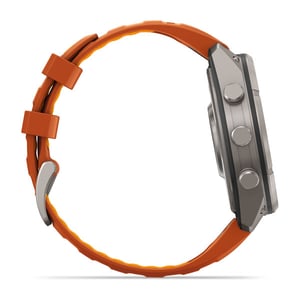
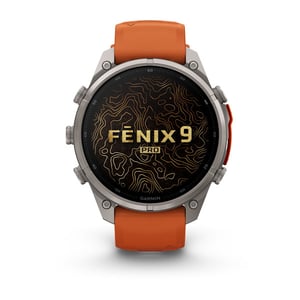
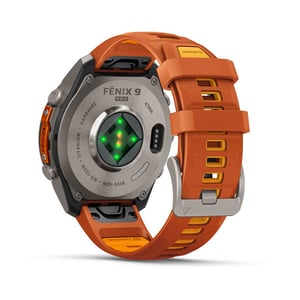
There are a lot of Fenix 9 models to choose from, and the names don’t make it obvious what you are choosing between. Before a detailed review, here are some initial thoughts on what separates them, so the early adopters amongst you can decide which one to buy. Owners have reported 94 bugs in the first month, so check the Fenix 9 bug list before you buy.
For the full specification tables, see the Fenix 9 specs page and the Fenix 9 Pro specs page.
What changed since the Fenix 8
If you are coming from a 2-year-old Fenix 8, whether the Fenix 9 is worth it depends on what you want from a watch. Here are the changes that actually matter, grouped by what you are likely to care about.
- Suppose you use the watch to navigate. This is the change most people will feel day to day. The maps engine is new and noticeably quicker to pan around and to build routes, so the awful map lag is less awful. The large (51mm) Fenix also has the biggest screen Garmin has ever sold, and storage has doubled to 64GB, so there is far more room for rich maps. Every Fenix 9 uses a sapphire lens, the most scratch-resistant Garmin fits, where the Fenix 8 dropped to Gorilla Glass on its cheaper versions.
- If you head off-grid, this is the big one for adventurers. The small (43mm) size now has satellite messaging for the first time, so you no longer have to size up if you have small wrists. On the Pro inReach models, satellite weather is new, and so is Garmin Locate, which lets a chosen contact ask for your position.
- Suppose you train by the numbers. New stamina tools show how much you have left in the tank during an effort, and indoor rowing now records proper data such as VO2 max and a power curve.
- If you share your adventures. Garmin Epic pulls a whole trip, across days, weeks or months, into one story.
- If you just want it to last. Battery life is nicely improved on the sizes most people buy.
| Fenix 9 | Fenix 8 | |
|---|---|---|
| Everyday (45mm, medium) | 18 days | 16 days |
| GPS tracking (45mm, medium) | 87 hours | 81 hours |
| Everyday (51mm, large) | 31 days | 29 days |
| GPS tracking (51mm, large) | 151 hours | 145 hours |
The heart rate sensor is disappointingly the same one as the Fenix 8, and the standard Fenix 9 keeps most of the Fenix 8’s core hardware while adding all of the new software above.
Your first choice is simple: the plain Fenix 9 or the Pro. This table shows what each one offers.
| Fenix 9 | Fenix 9 Pro | |
|---|---|---|
| Sizes | Three | Three |
| Case | Polymer | Titanium |
| Screen | AMOLED | AMOLED, brighter |
| Solar option | No | Yes (medium and large) |
| Satellite messaging | No | Yes (optional) |
Base Fenix 9 or Fenix 9 Pro
Both watches run the same software and share the same core features and sensors. The Pro costs more for the materials, display options, and connectivity.
The Pro has a titanium case. The base model uses a tougher fibre-reinforced polymer case with a titanium bezel. Both screens are brighter than the Fenix 8: the base is about twice as bright as before, and the Pro goes brighter still, up to 3,000 nits, so it stays easy to read in strong sunlight. Only the Pro lets you add solar charging or satellite messaging.
So the base Fenix 9 is the one to get if you want the latest watch but don’t need satellite, don’t care about solar, and would rather not pay for titanium. If you want any of those things, you are looking at a Pro.
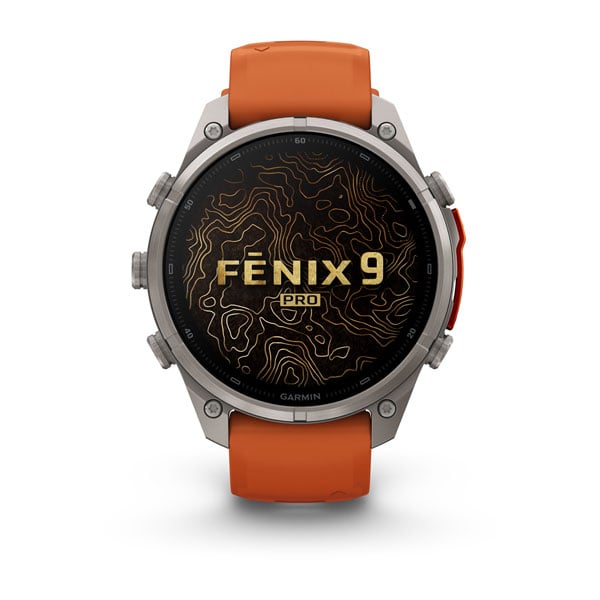
Garmin Fenix 9 range
Every Fenix 9 and Fenix 9 Pro model, including AMOLED, Solar, and inReach variants across all sizes. One link to the full range.

Which size
The Pro comes in three sizes: small (43mm), medium (47mm) and large (51mm). They all do the same things. The size only changes the screen, the battery, and how it sits on your wrist. If you are not sure, the medium suits most wrists.
The large is the one to get if you want the biggest, sharpest screen and the longest battery. It has the biggest display Garmin has ever put on a Fenix and lasts up to a month between charges. The medium is the sensible middle: a good screen and around two and a half weeks of battery. The small is easiest to wear on a slimmer wrist and lasts around ten days, and it is the first small Fenix you can get with satellite messaging, which was never an option before.
| Size | Screen | Battery (everyday) |
|---|---|---|
| Small (43mm) | Smallest | Up to 10 days |
| Medium (47mm) | Standard | Up to 18 days |
| Large (51mm) | Biggest, sharpest | Up to 31 days |
Normal screen or solar
You can have the Pro with a normal AMOLED screen or an older-style solar MIP screen. Solar is not made in the 43mm size.
The AMOLED screen is bright, sharp, and easy to read indoors. The solar MIP screen isn’t as sharp or as bright, but it reads well in direct sun and, more importantly, lasts far longer.
The battery difference is the whole reason to pick solar. Take the 47mm: the base model lasts 18 days, the solar version lasts 21, or 34 if you are out in the sun enough. In GPS tracking, the jump is bigger, from 87 hours to well over 100, and into the hundreds if you are getting sun.
| 47mm normal | 47mm solar (with sun) | 51mm normal | 51mm solar (with sun) | |
|---|---|---|---|---|
| Everyday use | 18 days | 21 days (34) | 31 days | 30 days (57) |
| GPS tracking | 87 hours | 132 hours (740) | 151 hours | 186 hours (1,000) |
Those solar numbers assume you are outside about three hours a day in bright sun. If you spend long days outdoors and want a screen that never washes out, get the solar. If you want the nicest-looking screen and you charge it regularly anyway, get the normal one.
Do you need the satellite version?
Some Pro models add satellite and mobile messaging, sold as the inReach versions. They let you send messages, make calls, and send SOS alerts without your phone, using a mobile network (LTE) or satellite depending on what is available where you are. You can get inReach in any size and with either screen. It needs a paid subscription to work, and the other person you communicate with must also use Garmin Messenger.
The plain Pro is the same watch without those extras. If you go somewhere with no phone signal, hiking, sailing, remote travel, the inReach version is worth it. If you are always in phone range, skip it and save the subscription.
Garmin Fenix 9 price: where to buy
The Garmin Fenix 9 launched on 25 August 2026 at $999.99 / £859.99 / €999.99 for the 43mm and 47mm, and $1,099.99 / £949.99 / €1,099.99 for the 51mm. The Fenix 9 Pro AMOLED starts at $1,099.99 / £949.99 / €1,099.99, the Pro Solar at the same price in 47mm, and the Pro inReach models from $1,299.99 / £1,119.99 / €1,299.99 for the 47mm. In the UK, buy from Amazon UK or Garmin.com. In the US, buy from Amazon or Garmin.com. In Europe, buy from your local Amazon store or Garmin.com. The buy box below shows the current price in your market.
Garmin Fenix 9 range
Every Fenix 9 and Fenix 9 Pro model, including AMOLED, Solar, and inReach variants across all sizes. One link to the full range.
Quick answers
Where can I buy the Garmin Fenix 9?
Amazon and Garmin.com sell the full Fenix 9 range in the UK, US and Europe. The base Fenix 9 starts at $999.99 / £859.99 / €999.99 and the Fenix 9 Pro at $1,099.99 / £949.99 / €1,099.99. The buy box above shows the current price in your market.
Is the Garmin Fenix 9 on sale?
Amazon and Garmin.com were selling at full launch price a month after the 25 August 2026 launch. Garmin rarely discounts a Fenix in its first few months, so check the buy box above for the current price rather than waiting for a cut.
What is the difference between the Fenix 9 and Fenix 9 Pro?
The Pro has a titanium case, brighter AMOLED screens, and the option of solar charging or satellite messaging. The base Fenix 9 is the plainer version, with a fibre-reinforced polymer case and no solar or satellite option. Both run the same software and share the same core features.
Which Fenix 9 has the biggest screen?
The 51mm Pro. It has a 1.5-inch screen, the biggest Garmin has put on a Fenix. The 47mm and 43mm are smaller.
Is the solar Fenix 9 worth it?
If you spend a lot of time outdoors, yes, because it lasts much longer between charges and reads well in sunlight. The trade-off is a less sharp screen. Solar only comes in 47mm and 51mm.
Do I need the inReach Fenix 9?
Only if you go where there is no phone signal. It lets you send messages and SOS alerts without your phone, using a mobile network or satellite where supported, but it needs a paid subscription. In normal phone range, you do not need it.
Is the 43mm Fenix 9 Pro new?
Yes. There was no small Fenix 8 Pro, so this is the first time you can get the small size with satellite messaging. It does everything the bigger ones do, but there is no solar option in 43mm.
Further reading
- Garmin Fenix 9 specifications
- Garmin Fenix 9 Pro specifications
- Fenix 9: new features explained
- Fenix 9 features will pass to existing Garmin watches
- Garmin Rucking update explained
- Garmin ArcheryX explained
- Garmin Fenix 8 specifications
- Garmin Fenix hub
- Garmin hub
- Release Radar: latest Garmin updates
- Is the Fenix 9 Pro really Garmin’s fastest watch?
- Garmin Fenix 9 vs Apple Watch Ultra 4: which to buy
Last Updated on 30 September 2026 by tfk the5krunner
Small things I always use
- Garmin 90-degree charging adapter: Charges your Garmin from any USB-C cable. Essential when travelling. I use one.
- Body Glide: The blue anti-chafe stick swimmers and runners carry. I use it.
- Speedo earplugs: Fewer ear infections and no cold-water dizziness. I use them.
- Dryrobe Advance: My winter changing robe for open-water swims. I use one. A cheaper option is the AONYIYI changing robe.
- Maurten: Race fuel that stays easy on the stomach. I use them.
- Garmin charging puck: The quickest way to top up before a session. I use one.
- Injinji: Toe socks that stop rubbing, so you run more. I use them.
- Ultimate toe protectors: Stop black toenails on long runs. They work. I use them.
- Compressport R2 v2 calf sleeves: My calf sleeves of choice. I use them.
- Cellucor C4: My pre-workout before hard sessions.
- TPU tubes: Schwalbe Aerothan, Tubolito and Pirelli SmarTube. Light, tiny spares. I use all three.
- G8 insoles: Adjustable insoles that are good. I use them.
- Cycplus Cube: A 97g electric pump that gets a road tyre rideable in two minutes. I carry one. 5% off with code THE5KRUNNER.
Watches and sensors
- Polar H10: My daily driver for waking HRV.
- Polar Verity Sense: My backup arm-worn HR sensor.
- Nomad bedside charger: Charges my iPhone and Apple Watch overnight. I use it, and many of their bands.
- Train.Red: The best muscle oxygen sensor I’ve used.
- Tymewear: Accurate heart rate and reliable ventilatory zones. I use it to pace endurance rides over an hour.
- Garmin Forerunner 970: A pro-grade triathlon watch. I use this.
- Apple Watch Ultra 4: My daily smartwatch. No phone needed on rides.
- Garmin Fenix 9 Pro: I’ve just bought one.
On the bike
- Continental GP5000 for everyday riding, and Aero 111 on the front for special occasions.
- Helmets: Specialized S-Works Evade 3 for road riding, and Rudy Project Wing for TT-style races. I use both.
- Ravemen FR300: A front light that mounts under your Garmin or Wahoo. I use one.
- Wahoo TRACKR Radar: I use it on one bike and Varia on the other. They perform the same.
- Garmin Varia RTL515: Radar that warns you of cars from behind. I use this model.
- Wahoo ELEMNT Roam 3: The bike computer that’s easy to use. I use mine on most rides.
- Favero Assioma Pro RS2: Accurate power pedals that swap easily between bikes. I use this model.
Home and indoor training
- NPE Runn: Makes my basic treadmill smart, sending more accurate speed and distance to my watch and Zwift. I use it.
- Google Wifi: Keeps Zwift connected in my pain cave. I use it.
- Apple TV 4K: Zwift on the big screen. I use two.
- Google Nest Doorbell (wired, 2nd gen): My video doorbell, running in both Google Home and Apple Home. I use it.
Health, recovery and sleep
- FreeStyle Libre 3 Plus: Shows how my blood sugar responds to diet.
- hDrop: Measures my sweat loss in summer and indoors.
- Fourth Frontier Zone: Checks my heart under load in hard sessions.
- Oura Ring 5: My partner’s recovery tracker of choice.
- Kineon MOVE+: Red light therapy for niggles. It works.
- Eight Sleep: A cooling mattress cover my partner and I use nightly.
Reader-Powered Content

This content is not sponsored. It’s mostly me behind the labour of love, which is this site, and I appreciate everyone who supports it.
Support the site: Follow (free, fewer ads) · Subscribe (paid, ad-free) · Buy Me A Coffee ❤️
Written by real people, with AI assistance. Fact-checked and verified for originality. See the Editorial Policy. FTC: Affiliate Disclosure — some links pay commission. As an Amazon Associate, I earn from qualifying purchases.
tfk is the founder and author of the5krunner, an independent endurance sports technology publication. With 20 years of hands-on testing of GPS watches and wearables, and competing in triathlons at an international age-group level, tfk provides in-depth expert analysis of fitness technology for serious athletes and endurance sport competitors. ID

Do you know if the pro versions will upload activities to Garmin Connect via the LTE connection? It’s kind of weird that the 945LTE did it, but the 8 pro didn’t.
Of course it does. I have an active subscription and it sends it to me. By the time I get home, there’s already activity.
At the moment I don’t see much innovation compared to the F8 A 51 mm (that I still own). Ok, 64 gb, 1,5“ display/3000 nits for the F 9 Pro – but that offers also my Amazfit C2U for half the price of F9 Pro and even the cheaper Balance 3. LTE is still castrated (I think so) – you can call only people who have installed the Garmin Messenger app and it isn’t the same inReach functionality for the Pro that the Garmin iR handheld offer (I know what I am talking about: I have owned a F8 Pro and I still use my Garmin Mini 3+ iR handheld). Maybe if you own an older Garmin device (not an F8) it is an upgrade, but Fenix owners of a Fenix 6/7 will be “ surprised” about the F8/9 UI (still hate the F8 UI).
Man I feel sorry for DC Rainmaker and other sanctioned reviewers today… huge buzz around the announcement of the Fenix 9, and they’re not even allowed to talk about it or acknowledge that it exists for 3 more days. Seems unfair that Garmin pushed the media embargo out 3 days beyond their official announcement.
Anyways, personally I’ll be choosing the Fenix 9 Pro 51mm, because it’s basically the successor to my Epix Pro 51mm. I am on the fence about getting InReach or not, because I already have an InReach Mini, and my cell phone also has free texting over starlink worldwide. But I’m wondering if it might be worth the extra $100 to have a backup SOS option available on my wrist. Apparently you can activate and cancel an InReach plan the same day and then get free SOS coverage for the whole next year, and just keep doing that each year to avoid monthly ongoing costs, if you only ever want SOS coverage and don’t care about texting and LTE.
It will probably hurt the hit counts those reviewers get being under an embargo while large numbers of people get their initial information somewhere else which will hurt their income which is unfair. But it might also mean better reviews if they read the comments others make discussing the Fenix 9 so they can address areas people are questioning and talking about.
ha ha, and the garmin site went down!! i had huge traffic yesterday (best ever for this kind of thing).
The catching of the satellites for messaging (and SOS) of my former F8 Pro was a big pain and big disadvantage (for me) compared to the “fire and forget” functionality for that on my Mini 3+. It should even work smoother on you iR Mini. But your choice…
Perfect time to buy F8. The only “feature” to be missed would be bugs in early versions of F9’s firmware.
Man, or maybe just an F7. To me F8 is still not polished enough.
Even F7 (and Enduro 2) is optimal with not the latest sw, but with ver. 16.22 or 17.28
What an absolute snoozefest of a release. Was hoping for something interesting but they seem out of ideas.
Big one would be solar amoled.
or proper comms.
I guess Garmin won’t offer a battery replacement on the Fenix 9 either, correct?!
Sad, that at this price point, a watch with a dying battery gets thrown away and replaced by Garmin by a refurbished model.
Brave new world.
I wonder if that means we’ll get a Fenix 10 next year with yearly number increments from now on. Shame they released both the Standard and Pro editions in the same year, I do understand what they’ve done though.
I’m guessing the shareholders wouldn’t like the premium model being released every two years, even if that’s what Apple does with the Ultra.
There have been multiple versions of Fenix for most generations. Sometimes larger differences like this 9 vs 9 pro like the 6 vs 6 pro. But even the 7 had differences between the base and the sapphire (dual band GPS and 16gb vs 32gb storage). Every version of the Fenix since the 3 had a mid cycle update 3->3HR, 5->5 Plus, 6->6 solar, 7->7 pro, 8->8 pro
Words used may change so probably won’t be called the 9 pro pro but will probably have some mid cycle update before the 10
yeah i was thinking the same. i assume that f10 is next year too
Had to say I’m underwhelmed, from both functionality and price perspective. Not enough innovation to justify the price. I’ll look to get an F8 on discount to replace my aging and faulty Epix 2.
I wait first for Enduro and Tactix and then for the first 9 sold on eBay or marketplace.
I wonder if this release spells the end of the Marq! The full Ti case on the Fenix takes pretty much all the Marq had to offer.
By the way DesFit has an unboxing video out!
No one really mentions that the Solar variants only have 64-colour displays – I guess that’s part of the power saving or technology in the screen (same as Fenix8). Anyone expecting the same 65k colours as the rest of the device series won’t find that info readily available as the tech specs just list AMOLED and Colour displays.
Reference: https://developer.garmin.com/connect-iq/device-reference/