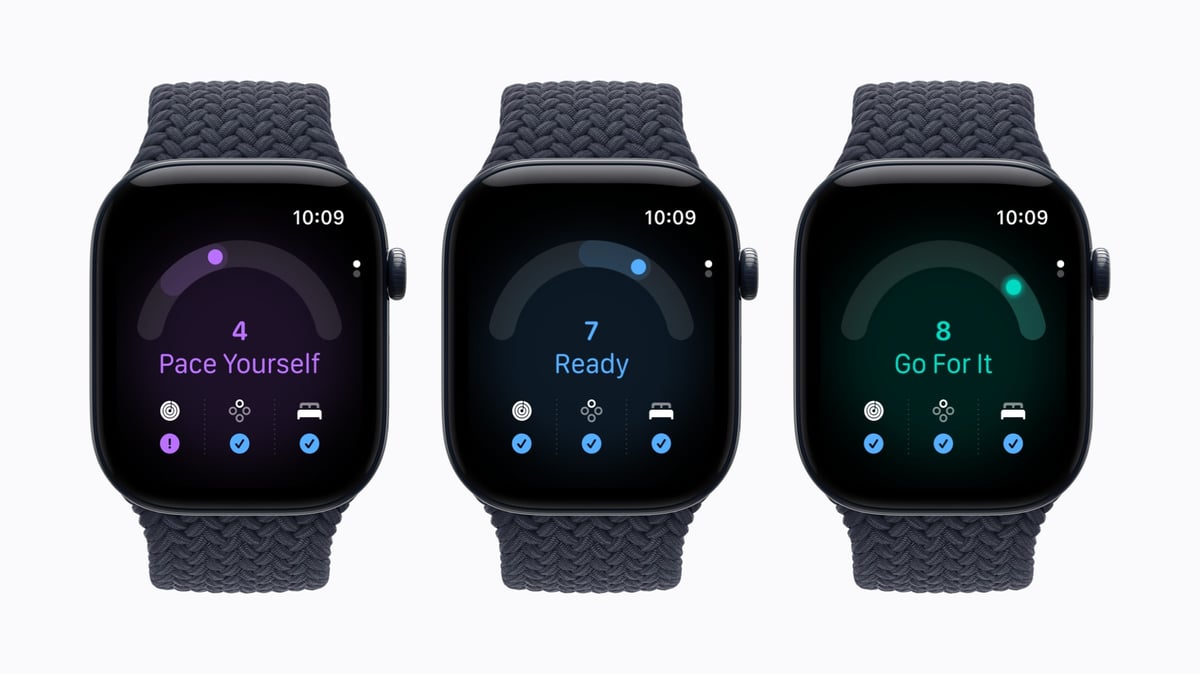
Apple’s 2026 heart rate accuracy white paper is one of the best-designed manufacturer studies I’ve seen in the wearables industry. It uses a large sample, a rigorous comparator, a pre-specified statistical model, and a genuinely challenging activity mix. I’m testing an Apple Watch Series 12 and Ultra 4 next week, and I’m excited to see whether the data holds up in independent testing. But a well-designed study is not the same as a complete one. Here’s what it proves, where the gaps are, and what independent testing still needs to answer.
What the study actually is
Apple conducted a head-to-head heart rate accuracy study comparing Apple Watch Series 12 and Ultra 4 against six other devices: the Garmin Forerunner 970, Google Pixel Watch 4, Huawei Watch 5, Samsung Galaxy Watch 8, WHOOP 5, and Oura Ring 5. The study used a Polar H10 ECG chest strap as the reference standard, the established benchmark for this type of evaluation. The study enrolled 1,460 participants across five sites in California, Texas and Malaysia, with 1,254 contributing at least one paired measurement to the final analysis. Activities covered outdoor running, indoor interval treadmill running, cycling, HIIT, strength training, and a Daily Living protocol covering rest, desk work, meal preparation and walking.
Apple Watch demonstrated statistically significantly better accuracy than all six devices on overall workout and overall Daily Living metrics, for both RMSE and MAE. The one indeterminate result was Pixel Watch 4 in cycling, where Apple Watch showed better numeric accuracy that did not reach statistical significance. Those are strong results by any standard.
The good
- 1,460 participants is large for this type of study. Most manufacturer HR accuracy claims rest on far smaller samples.
- Polar H10 as reference is the correct choice. It is well validated in peer-reviewed literature and is the standard comparator in academic wearable HR studies.
- Randomised wrist assignment (Apple Watch on dominant hand approximately 50% of the time) eliminates dominant-hand bias.
- Pre-specified sample size with a formal statistical power calculation. The authors did not reverse-engineer the conclusions from the results.
- 99% confidence intervals with Bonferroni adjustment for multiple comparisons. This is a more conservative threshold than the 95% CI used in most industry studies.
- Both RMSE and MAE are reported. RMSE is more sensitive to infrequent large errors, which MAE smooths over. Reporting both gives a more complete picture of accuracy.
- The activity mix was deliberately chosen to include the hardest conditions for optical heart rate sensing: cadence lock in running, loaded forearm grip in strength training and cycling, and rapid HR transitions in HIIT.
- Five sites across three countries, with a third-party CRO managing two, adds meaningful independence and environmental variability to data collection.
The gaps
No overnight or sleep data
Important. The study covers only workout and waking Daily Living activities. It does not evaluate overnight HR or HRV accuracy. This is a significant gap because the Readiness app on Series 12 and Ultra 4 depends primarily on overnight data: it requires seven nights of sleep of at least four hours each to establish the baseline, and overnight HRV drives the Recovery HRV metric. The study proves the Apple Watch is more accurate during waking activity. It says nothing about whether it is more accurate while you sleep, which is when Readiness is actually built.
HR accuracy is not HRV accuracy
This is the most important gap. The study measures heart rate accuracy expressed as mean absolute error in beats per minute. HRV accuracy is a different and considerably harder problem. HRV is derived from the timing between individual heartbeats (RR intervals), measured in milliseconds. A small systematic error in beat detection timing that produces negligible HR error in bpm can produce large HRV error. The study makes no claims about HRV accuracy, and the paper includes no HRV data. Yet Readiness depends entirely on HRV. A follow-on study measuring overnight RR interval accuracy against a validated reference would be the meaningful next step.
Conflict of interest
Apple sponsored, designed, and ran the study. The CRO managed two of five sites, but Apple controlled the protocol, device selection, inclusion and exclusion criteria, and data analysis. This is not unusual for manufacturer studies, but it is the foundational limitation everything else sits on. An independent replication with a different sponsor is the only way to resolve it.
Apple had privileged data access
Apple Watch HR data was captured using an internal logging application that records a single value every five seconds, the same data surfaced to the user but inaccessible via HealthKit at that frequency (HealthKit receives background data only every 30 seconds). Competitor devices were captured via BLE streams, manufacturer app exports, or HealthKit at varying frequencies. Apple’s justification is reasonable: they selected the highest-frequency source per device. But Apple had access to its own internals in a way no third party could replicate on Apple Watch.
Dropout rates not disclosed
If Apple Watch detects a low-confidence signal and drops that measurement rather than recording a potentially bad value, while other devices record all values regardless of signal quality, Apple has a systematic accuracy advantage that the paper does not disclose. Previous Apple Watch heart rate algorithms were known to drop readings when signal quality fell below a threshold. Whether Series 12 does the same in this context, and whether competitor devices were penalised for recording low-confidence values that Apple Watch would have excluded, is not addressed in the paper. This could meaningfully affect the headline accuracy numbers, particularly in strength training where the Apple Watch shows the largest margin over competitors.
Tattoo and mole exclusion
The authors excluded participants with device-site tattoos or large moles. Tattoos, particularly dark-ink tattoos over the sensor site, are a known weakness of green-LED optical HR sensors. The exclusion is methodologically understandable but means the study population is not representative of real-world users with significant skin markings. Results for that group remain unknown.
Samsung timestamping inconsistency
The Samsung Galaxy Watch 8 background activity export lacked proper timestamping, requiring a different comparison method for that device in Daily Living conditions. The paper acknowledges this and explains the workaround, but it introduces a methodological inconsistency for that one device.
Hot climate testing
One of the five study sites was in Selangor, Malaysia. Warm ambient temperatures increase peripheral blood flow and skin perfusion, which generally makes optical HR sensing easier. The study does not report results broken out by site or ambient temperature. Athletes who train in cold weather, where peripheral vasoconstriction reduces blood flow to the wrist and degrades optical HR signal, may see different results from those implied by the aggregate data.
Wear position not standardised beyond fit
Moderators ensured each device was worn snug and per manufacturer recommendations. The study does not specify wrist position (proximal vs distal to the wrist bone) or whether it controlled this across participants. Wear position materially affects optical HR accuracy during exercise, particularly for devices with smaller sensor footprints.
Twenty minutes per activity may not be enough
Each activity ran for 15 to 20 minutes. For HR accuracy during sustained endurance effort, 20 minutes misses conditions that emerge over longer durations: progressive HR drift, fatigue-related movement artefact, and prolonged cadence-lock. For the endurance athletes who are the target audience for a watch at this price point, a 20-minute run interval is the warm-up, not the test.
Running protocol not fully specified
The study describes outdoor runs at various speeds and indoor interval treadmill runs but does not specify whether it performed true high-low intervals. Rapid and variable transitions between low and high heart rate, held long enough for HR to fully stabilise at each level, are the most demanding test for optical HR accuracy. Whether the protocol achieved this is not clear from the paper.
The questions independent testing needs to answer
The study answers one question well: is Apple Watch Series 12 more accurate than competing wrist-worn devices during waking exercise and daily activity? The answer appears to be yes, with high statistical confidence. What it does not answer:
- Is HRV accuracy good enough to make Readiness meaningful?
- How does Series 12 perform in cold weather, against tattooed skin, or after two hours rather than twenty minutes?
- How does the VO2 max estimate hold up alongside the improved HR data?
- Does overnight HR and HRV accuracy match the waking results?
Those are the questions this site will work through once devices ship on 18 September. The white paper sets a high bar. Independent data will show whether it holds in the real world.
For full specifications, see the Apple Watch Series 12 specifications and Apple Watch Ultra 4 specifications. For the broader launch context, see four unexpected changes in Series 12 and Ultra 4. For HR accuracy testing methodology, see the GPS accuracy guide, heart rate guide, and testing methodology. For comparison posts, see Ultra 4 vs Ultra 3 and Series 12 vs Series 11.
Apple Watch Series 12
Smart sport watch
RRP from $399
£369, €449
- use code:
Get it nowOrder now – Apple Watch Series 12 Also sold direct by
Apple Watch Ultra 4
GPS adventure watch
Quick answers
What did Apple's heart rate accuracy study find?
Apple Watch Series 12 and Ultra 4 showed statistically significantly better heart rate accuracy than the Garmin Forerunner 970, Google Pixel Watch 4, Huawei Watch 5, Samsung Galaxy Watch 8, WHOOP 5, and Oura Ring 5 across workout and Daily Living activities. A Polar H10 chest strap was used as reference. The one indeterminate result was Pixel Watch 4 in cycling.
Is Apple's heart rate accuracy study independent?
Apple sponsored, designed, and ran the study. A third-party CRO managed two of the five study sites. The protocol, device selection, and analysis were controlled by Apple. An independent replication with a different sponsor would be the meaningful validation.
Does the study prove Apple Watch HRV accuracy?
No. The study measures heart rate accuracy in beats per minute. HRV accuracy requires accurate beat-to-beat timing in milliseconds, where small errors in beat detection produce large HRV errors. The study makes no claims about HRV accuracy. Since Readiness depends on overnight HRV, this is the most important gap in the paper.
Why does it matter that the study excluded tattoos?
Tattoos over the sensor site, particularly dark-ink tattoos, absorb light before it can reflect back to the photodiodes, degrading optical HR accuracy. Excluding tattooed participants removes a known weakness from the test population. Results for tattooed users remain unknown from this study.
Which devices were compared in Apple's study?
Apple Watch Series 12 and Ultra 4 were compared against the Garmin Forerunner 970, Google Pixel Watch 4, Huawei Watch 5, Samsung Galaxy Watch 8, WHOOP 5, and Oura Ring 5. All comparisons used a Polar H10 ECG chest strap as reference.
When will independent heart rate accuracy testing be available?
Apple Watch Series 12 and Ultra 4 ship on 18 September 2026. Independent accuracy testing by this site will follow once devices are in hand. The white paper sets a strong baseline; independent data will show whether the results hold across a wider range of conditions.
What is the Readiness app and why does HRV accuracy matter for it?
Readiness is a new feature on Series 12 and Ultra 4 that produces a daily 0 to 10 score based on recent activity, overnight vitals and sleep. The score depends heavily on overnight HRV data. If HRV accuracy is lower than HR accuracy, the Readiness score will be less reliable than the headline HR figures suggest.
How does this study compare with other manufacturer HR studies?
Most manufacturer heart rate accuracy studies use samples of 20 to 100 participants at a single site. Apple’s study enrolled 1,460 participants across five sites in three countries, used a pre-specified power calculation, 99% confidence intervals, and Bonferroni adjustment for multiple comparisons. By industry standards it is exceptionally well-designed.
Last Updated on 8 October 2026 by tfk the5krunner
Small things I always use
- Garmin 90-degree charging adapter: Charges your Garmin from any USB-C cable. Essential when travelling. I use one.
- Body Glide: The blue anti-chafe stick swimmers and runners carry. I use it.
- Speedo earplugs: Fewer ear infections and no cold-water dizziness. I use them.
- Dryrobe Advance: My winter changing robe for open-water swims. I use one. A cheaper option is the AONYIYI changing robe.
- Maurten: Race fuel that stays easy on the stomach. I use them.
- Beet It Sport nitrate shots: Beetroot shots I take in the days before a race. I use them.
- Garmin charging puck: The quickest way to top up before a session. I use one.
- Injinji: Toe socks that stop rubbing, so you run more. I use them.
- Ultimate toe protectors: Stop black toenails on long runs. They work. I use them.
- Compressport R2 v2 calf sleeves: My calf sleeves of choice. I use them.
- Cellucor C4: My pre-workout before hard sessions.
- TPU tubes: Schwalbe Aerothan, Tubolito and Pirelli SmarTube. Light, tiny spares. I use all three.
- G8 insoles: Adjustable insoles that are good. I use them.
- Cycplus Cube: A 97g electric pump that gets a road tyre rideable in two minutes. I carry one. 5% off with code THE5KRUNNER.
Watches and sensors
- Polar H10: My daily driver for waking HRV.
- Polar Verity Sense: My backup arm-worn HR sensor.
- Nomad bedside charger: Charges my iPhone and Apple Watch overnight. I use it, and many of their bands.
- Train.Red: The best muscle oxygen sensor I’ve used.
- Tymewear: Accurate heart rate and reliable ventilatory zones. I use it to pace endurance rides over an hour.
- Garmin Forerunner 970: A pro-grade triathlon watch. I use this.
- Apple Watch Ultra 4: My daily smartwatch. No phone needed on rides.
- Garmin Fenix 9 Pro: I’ve just bought one.
On the bike
- Continental GP5000 for everyday riding, and Aero 111 on the front for special occasions.
- Helmets: Specialized S-Works Evade 3 for road riding, and Rudy Project Wing for TT-style races. I use both.
- Ravemen FR300: A front light that mounts under your Garmin or Wahoo. I use one.
- Wahoo TRACKR Radar: I use it on one bike and Varia on the other. They perform the same.
- Garmin Varia RTL515: Radar that warns you of cars from behind. I use this model.
- Wahoo ELEMNT Roam 3: The bike computer that’s easy to use. I use mine on most rides.
- Favero Assioma Pro RS2: Accurate power pedals that swap easily between bikes. I use this model.
Home and indoor training
- NPE Runn: Makes my basic treadmill smart, sending more accurate speed and distance to my watch and Zwift. I use it.
- Google Wifi: Keeps Zwift connected in my pain cave. I use it.
- Apple TV 4K: Zwift on the big screen. I use two.
- Google Nest Doorbell (wired, 2nd gen): My video doorbell, running in both Google Home and Apple Home. I use it.
Health, recovery and sleep
- FreeStyle Libre 3 Plus: Shows how my blood sugar responds to diet.
- hDrop: Measures my sweat loss in summer and indoors.
- Fourth Frontier Zone: Checks my heart under load in hard sessions.
- Oura Ring 5: My partner’s recovery tracker of choice.
- Eight Sleep: A cooling mattress cover my partner and I use nightly.
Reader-Powered Content

This content is not sponsored. It’s mostly me behind the labour of love, which is this site, and I appreciate everyone who supports it.
Support the site: Follow (free, fewer ads) · Subscribe (paid, ad-free) · Buy Me A Coffee
Written by real people, with AI assistance. Fact-checked and verified for originality. See the Editorial Policy. FTC: Affiliate Disclosure — some links pay commission. As an Amazon Associate, I earn from qualifying purchases.
tfk is the founder and author of the5krunner, an independent endurance sports technology publication. With 20 years of hands-on testing of GPS watches and wearables, and competing in triathlons at an international age-group level, tfk provides in-depth expert analysis of fitness technology for serious athletes and endurance sport competitors. See the gear tfk uses. ID

First think I thought when I saw the Garmin result was it was not on actively and three second they didn’t test current Apple Watch.
It reminds me of the old das advertising, new das so much better than the previous market leading detergent, wait wasn’t that meant to be das?
If I understand correctly, even the latest Apple Watch isn’t capable of recording a 1 Hz heart rate, not even during a workout. Based on that, even a ten-year-old sports watch outperforms the AW12. Not to mention that using the H10 makes optical heart rate monitoring unnecessary.
during workouts: one data point every 1 to 2 seconds by ohr, 1hz with a strap i believe is the answer.
check my recent reviews using dcr’s latest tool. it reports the n value of hr samples. they are usually the same from AW ie per second with ohr, except for the dropouts!
Full disclosure: I develop Heart Analyzer, a third-party Apple Watch heart data app. On your overnight questions, I’ve been wearing an Ultra 4 and Ultra 2 together and comparing what each writes to Apple Health.
Overnight heart rate isn’t any denser on the Ultra 4. From 23:00 to 06:00 (when I have my sleep focus set) it saved 108 readings, against 132–159 from the Ultra 2 across three nights, and on the night I wore both the Ultra 2 was ahead in every hour. So the denser daytime readings follow when the sleep focus isn’t enabled.
On an overnight RR-interval study: none of the new Recovery HRV readings come with beat-to-beat data in Apple Health. That still only arrives with the older one-minute checks, so the new overnight values can’t be checked at RR level from Health data.
And from my testing, AFib History changes how big the HRV upgrade looks. With it on, older watches take one-minute HRV checks far more often than the default every couple of hours. Over the same period, the default checks averaged 59.5 ms, AFib History checks 82.5 ms, and the Ultra 4’s five-minute Recovery HRV 84.5 ms. This makes an upgrade from a previous Apple Watch look less significant for overnight HRV if the user already used the AFib history feature.
Happy to share the full write-up with charts if it’s useful.
last night awu4 gave a 1-minute hrv reading once every 2-4 minutes, which is more frequent than AWU3.
i never checked the afib history setting which used to make a difference. i previously had that enabled and it probably still is.