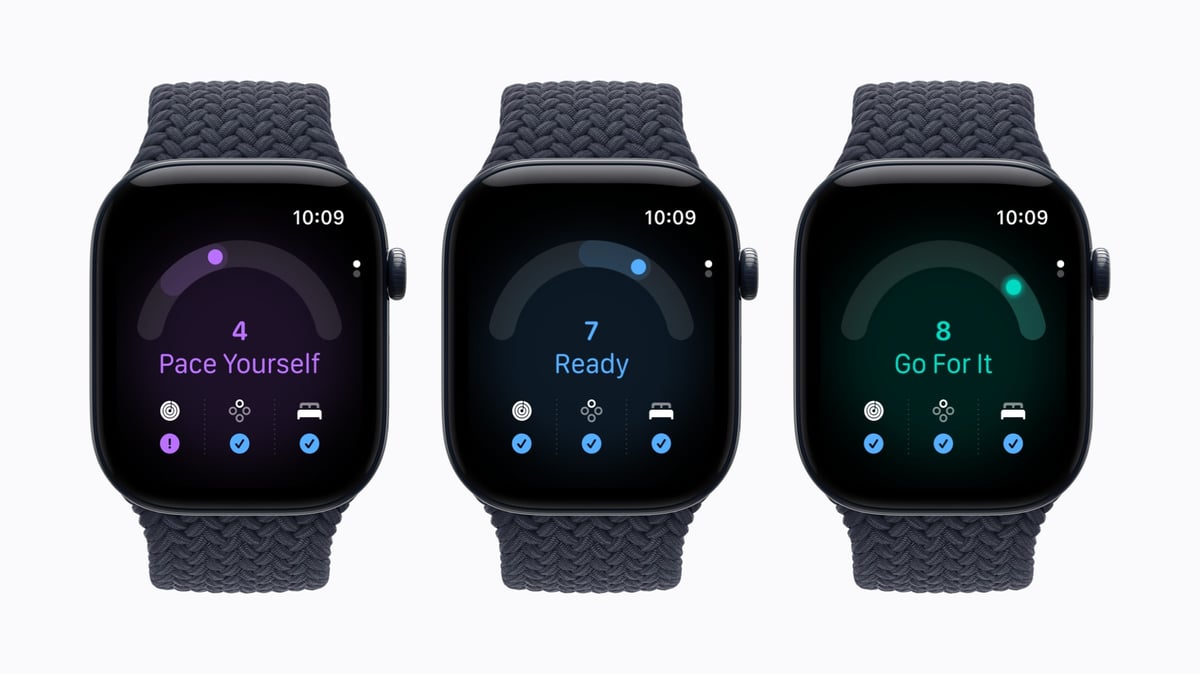
The launch of the Apple Watch Series 12 and Ultra 4 is one of the most satisfying Apple Watch updates in years. At least it was for me. Four changes have finally arrived that this site has been asking for, testing, or predicting for a long time.
1. HRV is now measured much more often
In June 2026, this site found that Apple Watch took HRV readings opportunistically when the wearer was still, with a gap of around 15 minutes between readings. That produced roughly four minutes of HRV data per hour in testing. The actual frequency varied depending on movement, and any reading rejected due to motion pushed the next attempt further out.
That is insufficient data for readiness scores, training-load adjustments, and recovery recommendations.
| Previous Apple Watch | Series 12 | |
|---|---|---|
| HRV measurement frequency | Opportunistic when still; ~15 min gap between readings in testing | As often as every 5 minutes |
| Data collected per hour | ~4 minutes (site testing; varies by movement) | Up to 12 minutes |
| Risk of missed readings | High (movement rejects reading, extending wait until next attempt) | Lower (more opportunities per hour) |
| Background HR frequency | Once every 5 minutes | Every 5 seconds |
| HRV metrics exposed | RMSSD only | RMSSD and SDNN |
| Readiness score | Not available | Daily 0–10 score (Series 12 / Ultra 4 only) |
Other devices from Whoop, Oura, and Garmin collect much more HRV data overnight.
Bevel has also wanted Apple to collect HRV more frequently, but there was no way for a third-party app to make Apple Watch do that.
Apple has now fixed the problem at the hardware level. Series 12 can measure HRV as often as every five minutes, up to 24 times more frequently than before. Background heart rate recording also changed dramatically: previously measured once every five minutes, it is now measured every five seconds all day. For those who care about the detail, Apple now exposes both RMSSD and SDNN HRV values depending on the data source, which makes comparisons with third-party platforms much easier. Apple has published a full heart rate accuracy white paper comparing Series 12 and Ultra 4 against the Garmin Forerunner 970, Google Pixel Watch 4, Huawei Watch 5, Samsung Galaxy Watch 8, WHOOP 5 and Oura Ring 5, using a Polar H10 chest strap as reference.
The Readiness score requires Series 12 or Ultra 4 — it is not available on older models. Establishing a baseline takes seven nights of sleep, each at least four hours long. Once the baseline is set, the score updates throughout the day as new data arrives.
2. The sensors are more efficient, which helps battery life
Series 12 increases outdoor workout battery life from 8 hours to 10 hours. That is a 25% improvement, even though everyday battery life is still rated at 24 hours and the sensors now run continuously throughout the day.
| Series 11 | Series 12 | Ultra 3 | Ultra 4 | |
|---|---|---|---|---|
| Everyday use | 24 hrs | 24 hrs | 42 hrs | 50 hrs |
| Outdoor workout | 8 hrs | 10 hrs | 14 hrs | 18 hrs |
| Low Power Mode | 36 hrs | 38 hrs | 72 hrs | 84 hrs |
| 15-min charge | 8 hrs use | 12 hrs use | 12 hrs use | 18 hrs use |
Independent estimates suggest the battery itself is only about 7 to 10% larger, which doesn’t explain the full 25% improvement during workouts. The new sensor uses larger, more power-efficient green LEDs that produce more light with less power, along with improved signal-processing software.
The Ultra 4’s 18-hour outdoor workout figure covers a full Ironman for most competitors without using any low power mode. For longer events, two new modes extend this further.
| Mode | Ultra 3 | Ultra 4 | Trade-offs |
|---|---|---|---|
| Standard | 14 hrs GPS | 18 hrs GPS | Full fidelity |
| Extended | 20 hrs GPS | 25 hrs GPS | Always-on display off, running metrics off, cellular batched |
| Max Extended | n/a | 45 hrs GPS | L1+L5 drops to L1 only; HR recorded at full rate but displayed as 5-min rolling average; no splits, alerts, or custom workouts |
In Max Extended, the GPS recording interval stays at one second. The multiband downgrade to single-band is the meaningful accuracy trade-off. Heart rate data is still recorded at full fidelity in the background.
Apple has positioned the Ultra as an endurance watch since 2022, but this is the first generation that genuinely delivers on that promise. See the Ultra 4 vs Ultra 3 full comparison for the complete details.
What actually changed in the sensor?
Apple describes the new sensor as having a “ring photodiode layout,” which makes it sound like the physical layout is new. It’s not.
| Ultra 3 | Ultra 4 | |
|---|---|---|
| Photodiodes | 4 (confirmed in Apple documentation) | Arranged in a ring (Apple white paper; count not specified by Apple) |
| LEDs | 4 green/red/infrared (confirmed in Apple documentation) | Larger, more power-efficient green LEDs (Apple confirmed; count not specified) |
| Background HR sensor | Infrared | Green |
| ECG electrode surface area | Baseline | +24% |
Apple’s documentation for Ultra 3 confirms 4 photodiodes and 4 LEDs arranged in a circle. Ultra 4 moves the photodiodes to a ring formation and uses larger, more power-efficient green LEDs. Apple has not specified exact counts for Ultra 4. The switch from infrared to green LEDs for background heart rate is what enables continuous all-day sampling at lower power draw.
3. Apple dropped GLONASS from Ultra 4
Apple’s Ultra 4 specifications list GPS, Galileo, QZSS, and BeiDou, but it no longer includes GLONASS. Ultra 3 supported GLONASS, and the single-frequency Series 12 still does. This follows a similar move by Garmin with the Fenix 9 Pro just five days earlier. For more background on how satellite constellations affect accuracy, see the GPS accuracy guide.
| Constellation | Ultra 3 | Ultra 4 | Series 12 |
|---|---|---|---|
| GPS | ✓ | ✓ | ✓ |
| GLONASS | ✓ | ✗ | ✓ |
| Galileo | ✓ | ✓ | ✓ |
| QZSS | ✓ | ✓ | ✓ |
| BeiDou | ✓ | ✓ | ✓ |
| Frequency | L1+L5 dual | L1+L5 dual | L1 only |
| Label | Precision dual-frequency | Precision dual-frequency | Precision L1 |
GLONASS uses a different signal architecture from GPS, Galileo, and BeiDou, requiring separate hardware channels and adding receiver complexity. Removing it simplifies the silicon without a meaningful loss in positioning quality for most users.
Series 12 still supports GLONASS but carries Apple’s new “Precision” L1 label. The name is new, but the underlying hardware isn’t. The “Precision” part refers to Apple’s GNSS sensor fusion, which combines GPS data with accelerometer and gyroscope data to improve positioning, e.g. when going through a tunnel.
4. The chip is finally genuinely new
The S11 is Apple’s new Apple Watch chip, used in both Series 12 and Ultra 4, which incorporates A20 Pro-derived CPU, GPU and Neural Engine elements. Apple does confirm that S11 ends a three-year period in which the watch chip was built around the same basic architecture derived from the A16.
| Model | Chip | Architecture |
|---|---|---|
| Series 9 / Ultra 2 | S9 | Sawtooth (A16-derived) |
| Series 10 | S10 | Sawtooth (A16-derived) |
| Series 11 / Ultra 3 | S10 | Sawtooth (A16-derived) |
| Series 12 / Ultra 4 | S11 | A20 Pro-derived (per 9to5Mac) |
The S11 introduces two efficiency cores, a single-core GPU, a four-core Neural Engine, and a dedicated always-on processor that runs background tasks without draining the battery. The always-on processor lets the sensor collect heart rate and HRV data continuously throughout the day. Audio Intelligence (Sound Recognition, Live Rewind, Siri Recap, and always-on Shazam) runs on a dedicated secure exclave within the S11, separate from the Neural Engine.
What this means for Bevel and Correlate
The biggest winner here may actually be third-party apps. More frequent HRV measurements and a continuously running optical sensor give apps like Bevel and Correlate much more useful data. Their algorithms can only be as good as the data Apple gives them, and that data has now improved significantly.
Both apps also have a downside. Apple’s new Readiness feature now handles the basic recovery and readiness scoring that previously drove people to third-party apps. Bevel still has an important advantage with strength training and gym-focused readiness, areas that Apple’s Readiness feature does not cover. Correlate’s advantage is its ability to work across platforms and devices Apple doesn’t make.
Apple has now added a free built-in feature that users previously needed a third-party subscription to access. For a full breakdown of how Series 12 compares with Series 11, see the Series 12 vs Series 11 comparison. For triathlon-specific battery considerations, see the best triathlon watch guide and the Apple Watch Ultra 3 review.
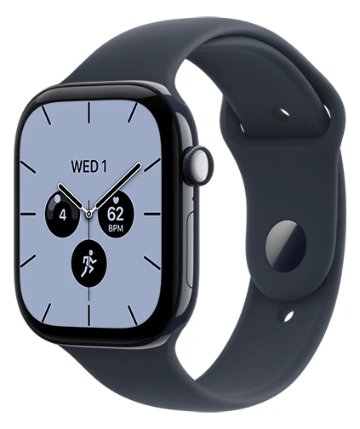
Apple Watch Series 12
Smart sport watch
RRP from $399
£369, €449
- use code:
Get it nowOrder now – Apple Watch Series 12 Also sold direct by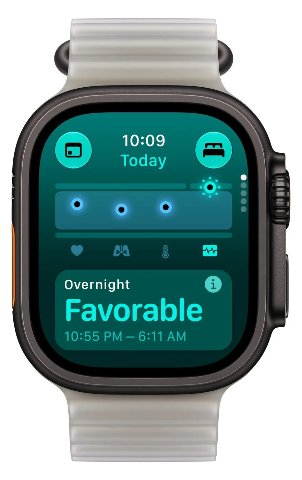
Apple Watch Ultra 4
GPS adventure watch
Quick answers
Why does Apple Watch Series 12 have better battery life during workouts?
Outdoor workout battery life increases from 8 to 10 hours. The battery is estimated to be only about 7 to 10% larger, so that doesn’t explain the full 25% improvement. The new, more efficient LEDs can produce a stronger signal while using less power, and improved software can process that signal more efficiently. Apple has not provided a detailed breakdown.
What changed in the Apple Watch Series 12 optical sensor?
The optical sensor uses larger, more power-efficient green LEDs that produce more light with less power, with photodiodes now arranged in a ring formation. ECG electrode surface area increased by 24%. Apple has also improved the signal processing algorithms.
What does Precision L1 GPS mean on Apple Watch Series 12?
Precision L1 is Apple’s new name for the single-frequency, multi-constellation GPS system in Series 12. The underlying receiver hardware is unchanged from previous Series models. Precision refers to Apple’s software, which combines GPS data with accelerometer and gyroscope information to improve positioning.
Why did Apple drop GLONASS from Ultra 4?
Apple has not confirmed the reason. GLONASS uses a different signal system from the other major satellite constellations, which adds hardware complexity. Removing it simplifies the GPS hardware without meaningfully affecting positioning quality for most users. Garmin made a similar decision with the Fenix 9 Pro shortly before Apple’s announcement.
How often does Apple Watch Series 12 measure HRV?
Series 12 can measure HRV as often as every five minutes. Previous Apple Watch models took readings opportunistically when the wearer was still, with gaps of around 15 minutes between readings in testing, giving roughly four minutes of HRV data per hour overnight. The higher sampling rate provides significantly more data for features such as Readiness and recovery tracking.
For full specs, see the Apple Watch Series 12 specifications and Apple Watch Ultra 4 specifications. For a broader view of recovery tracking options, see the recovery trackers guide and the Whoop guide. For the best Apple Watch for sport, see the buyer’s guide.
Last Updated on 8 October 2026 by tfk the5krunner
Small things I always use
- Garmin 90-degree charging adapter: Charges your Garmin from any USB-C cable. Essential when travelling. I use one.
- Body Glide: The blue anti-chafe stick swimmers and runners carry. I use it.
- Speedo earplugs: Fewer ear infections and no cold-water dizziness. I use them.
- Dryrobe Advance: My winter changing robe for open-water swims. I use one. A cheaper option is the AONYIYI changing robe.
- Maurten: Race fuel that stays easy on the stomach. I use them.
- Beet It Sport nitrate shots: Beetroot shots I take in the days before a race. I use them.
- Garmin charging puck: The quickest way to top up before a session. I use one.
- Injinji: Toe socks that stop rubbing, so you run more. I use them.
- Ultimate toe protectors: Stop black toenails on long runs. They work. I use them.
- Compressport R2 v2 calf sleeves: My calf sleeves of choice. I use them.
- Cellucor C4: My pre-workout before hard sessions.
- TPU tubes: Schwalbe Aerothan, Tubolito and Pirelli SmarTube. Light, tiny spares. I use all three.
- G8 insoles: Adjustable insoles that are good. I use them.
- Cycplus Cube: A 97g electric pump that gets a road tyre rideable in two minutes. I carry one. 5% off with code THE5KRUNNER.
Watches and sensors
- Polar H10: My daily driver for waking HRV.
- Polar Verity Sense: My backup arm-worn HR sensor.
- Nomad bedside charger: Charges my iPhone and Apple Watch overnight. I use it, and many of their bands.
- Train.Red: The best muscle oxygen sensor I’ve used.
- Tymewear: Accurate heart rate and reliable ventilatory zones. I use it to pace endurance rides over an hour.
- Garmin Forerunner 970: A pro-grade triathlon watch. I use this.
- Apple Watch Ultra 4: My daily smartwatch. No phone needed on rides.
- Garmin Fenix 9 Pro: I’ve just bought one.
On the bike
- Continental GP5000 for everyday riding, and Aero 111 on the front for special occasions.
- Helmets: Specialized S-Works Evade 3 for road riding, and Rudy Project Wing for TT-style races. I use both.
- Ravemen FR300: A front light that mounts under your Garmin or Wahoo. I use one.
- Wahoo TRACKR Radar: I use it on one bike and Varia on the other. They perform the same.
- Garmin Varia RTL515: Radar that warns you of cars from behind. I use this model.
- Wahoo ELEMNT Roam 3: The bike computer that’s easy to use. I use mine on most rides.
- Favero Assioma Pro RS2: Accurate power pedals that swap easily between bikes. I use this model.
Home and indoor training
- NPE Runn: Makes my basic treadmill smart, sending more accurate speed and distance to my watch and Zwift. I use it.
- Google Wifi: Keeps Zwift connected in my pain cave. I use it.
- Apple TV 4K: Zwift on the big screen. I use two.
- Google Nest Doorbell (wired, 2nd gen): My video doorbell, running in both Google Home and Apple Home. I use it.
Health, recovery and sleep
- FreeStyle Libre 3 Plus: Shows how my blood sugar responds to diet.
- hDrop: Measures my sweat loss in summer and indoors.
- Fourth Frontier Zone: Checks my heart under load in hard sessions.
- Oura Ring 5: My partner’s recovery tracker of choice.
- Eight Sleep: A cooling mattress cover my partner and I use nightly.
Reader-Powered Content
This content is not sponsored. It’s mostly me behind the labour of love, which is this site, and I appreciate everyone who supports it.
Support the site: Follow (free, fewer ads) · Subscribe (paid, ad-free) · Buy Me A Coffee
Written by real people, with AI assistance. Fact-checked and verified for originality. See the Editorial Policy. FTC: Affiliate Disclosure — some links pay commission. As an Amazon Associate, I earn from qualifying purchases.
tfk is the founder and author of the5krunner, an independent endurance sports technology publication. With 20 years of hands-on testing of GPS watches and wearables, and competing in triathlons at an international age-group level, tfk provides in-depth expert analysis of fitness technology for serious athletes and endurance sport competitors. See the gear tfk uses. ID
