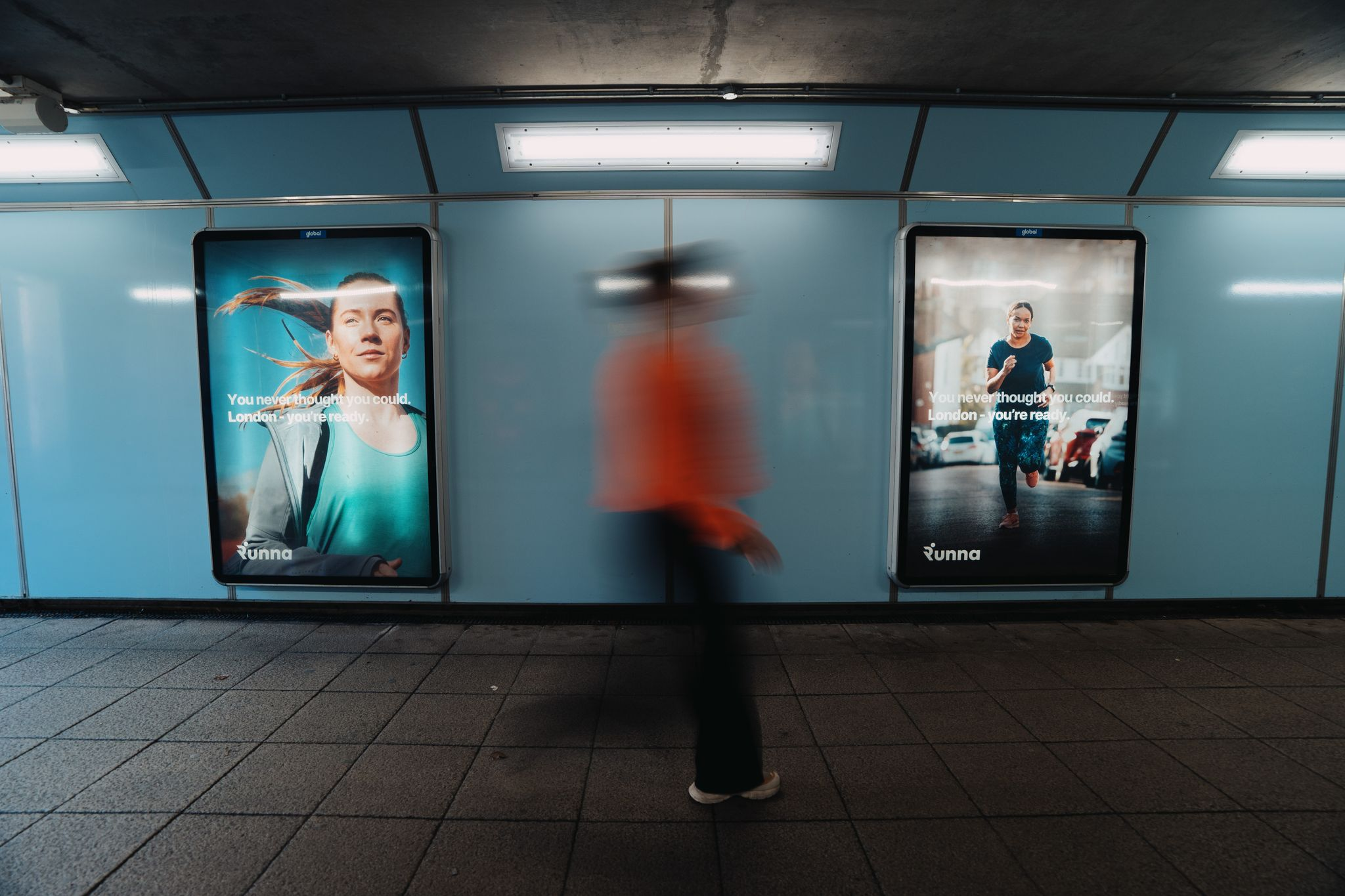
Runna says its training plans are not created by AI. In a statement to TechRadar, the company said experienced coaches design the plans and an algorithm then tailors and adapts them to each runner’s progress, feedback and performance. The app also has a feature called Runna AI. The accurate description is coach-written plans, adjusted by an algorithm, with AI features added on top.
Runna’s own description is narrower than earlier reporting, which described a combination of human coach inputs, machine learning and generative AI. Runna has not published how its algorithm works, so it is not public which decisions come from fixed rules and which learn from runner data.
Strava bought Runna in April 2025. The Runna guide covers pricing, supported watches, and plan types.
What sets your plan
A plan starts from what you tell Runna: your current ability, your experience, how many days a week you can run, and your race distance and date. You set training volume and difficulty at the start, and you can change both at any point in the plan.
Your estimated race time is a key input. Runna uses a single estimated time and applies that fitness level across every distance, so updating your 5K time also changes your 10K and half marathon estimates. That estimate sets the pace target for every workout.
Runna does not train you to a specific goal time. To train for a faster time than it predicts, you raise your estimated race time, which makes every pace target harder.
What makes the plan adapt
The main adaptive mechanism is pace analysis on tempo and interval sessions. Runna may change your pace targets if you are repeatedly missing or beating them overall, even when you hit the targets in your latest workout. It ignores reps that look wrong. A single fast session is not enough; the adjustment follows a consistent pattern.
Runners can use Runna AI to review those pace adjustments over time. A Not Feeling 100% option adapts training when a runner is unwell, managing an ache or short on time, then returns them to the plan in a structured way.
Adapt for Heat adds a weather adjustment. It changes pace targets for hot and humid runs using forecast data rather than measured heat strain.
Race time prediction
Runna’s race time prediction is based on the ability and schedule you enter, plus data from runners like you. It assumes good conditions and a relatively flat road course, and Runna says it aims to be conservative. Hills, heat and wind are not part of the predicted range.
Runna, Garmin Coach and other plan apps
Garmin Coach is free and adapts its plans using data from Garmin watches. Runna costs $119.99 a year in the US on its own, or $149.99 (£119.99) a year bundled with a Strava subscription. Every Garmin watch that supports Garmin Coach also runs Runna plans, so a Garmin owner can try both on the same watch.
Garmin acquired TrainingPeaks in July 2026. Adaptive plans now sit on both sides of the market: Runna with Strava, and Garmin Coach and TrainingPeaks with Garmin. The independent coaching platforms are a shrinking group.
Other apps take a more conversational approach. Type to Run asks how each session felt and adjusts the following week from your answers, whereas Runna’s pace adjustments come mainly from the paces you record.
Injuries and strength work
Runna plans include strength sessions, warm-up routines, and stretch and stability work alongside the running. In February, the Wall Street Journal reported physical therapists seeing multiple Runna-related injury cases each week, and Runna has since added ways to dial back plan intensity. Its review with Loughborough University covers pace progression, intensity distribution and recovery, the three areas linked to those injuries.
Quick answers
Is Runna AI?
Runna says its plans are not created by AI. Experienced coaches design them, and an algorithm then tailors and adapts them to each runner’s progress, feedback and performance. Runna also has a feature called Runna AI, which runners can use to review pace adjustments over time.
How does Runna adjust your paces?
Runna may change your pace targets if you repeatedly miss or beat them across your workouts, even if you hit them in your latest session. It ignores outlier reps. Your estimated race time sets the paces for every workout, and you can change it at any point in the plan.
Does Runna work with Garmin watches?
Yes. Every Garmin watch that supports Garmin Coach also supports Runna plans. Runna also works with Apple Watch, COROS, Suunto and Amazfit.
Last Updated on 28 September 2026 by the5krunner
Small things I always use
- Garmin 90-degree charging adapter: Charges your Garmin from any USB-C cable. Essential when travelling. I use one.
- Body Glide: The blue anti-chafe stick swimmers and runners carry. I use it.
- Speedo earplugs: Fewer ear infections and no cold-water dizziness. I use them.
- Maurten: Race fuel that stays easy on the stomach. I use them.
- Garmin charging puck: The quickest way to top up before a session. I use one.
- Injinji: Toe socks that stop rubbing, so you run more. I use them.
- Cellucor C4: My pre-workout before hard sessions.
- TPU tubes: Schwalbe Aerothan, Tubolito and Pirelli SmarTube. Light, tiny spares. I use all three.
Watches and sensors
- Polar H10: My daily driver for waking HRV.
- Polar Verity Sense: My backup arm-worn HR sensor.
- Nomad bedside charger: Charges my iPhone and Apple Watch overnight. I use it, and many of their bands.
- Train.Red: The best muscle oxygen sensor I’ve used.
- Garmin Forerunner 970: A pro-grade triathlon watch. I use this.
- Apple Watch Ultra 4: My daily smartwatch. No phone needed on rides.
- Garmin Fenix 9 Pro: I’ve just bought one.
On the bike
- Continental GP5000 for everyday riding, and Aero 111 on the front for special occasions.
- Ravemen FR300: A front light that mounts under your Garmin or Wahoo. I use one.
- Wahoo TRACKR Radar: I use it on one bike and Varia on the other. They perform the same.
- Garmin Varia RTL515: Radar that warns you of cars from behind. I use this model.
- Wahoo ELEMNT Roam 3: The bike computer that’s easy to use. I use mine on most rides.
- Favero Assioma Pro RS2: Accurate power pedals that swap easily between bikes. I use this model.
Home and indoor training
- Google Wifi: Keeps Zwift connected in my pain cave. I use it.
- Apple TV 4K: Zwift on the big screen. I use two.
- Google Nest Doorbell (wired, 2nd gen): My video doorbell, running in both Google Home and Apple Home. I use it.
Health, recovery and sleep
- FreeStyle Libre 3 Plus: Shows how my blood sugar responds to diet.
- hDrop: Measures my sweat loss in summer and indoors.
- Fourth Frontier Zone: Checks my heart under load in hard sessions.
- Oura Ring 5: My partner’s recovery tracker of choice.
- Kineon MOVE+: Red light therapy for niggles. It works.
- Eight Sleep: A cooling mattress cover my partner and I use nightly.
Reader-Powered Content
This content is not sponsored. It’s mostly me behind the labour of love, which is this site, and I appreciate everyone who supports it.
Support the site: Follow (free, fewer ads) · Subscribe (paid, ad-free) · Buy Me A Coffee ❤️
Written by real people, with AI assistance. Fact-checked and verified for originality. See the Editorial Policy. FTC: Affiliate Disclosure — some links pay commission. As an Amazon Associate, I earn from qualifying purchases.
tfk is the founder and author of the5krunner, an independent endurance sports technology publication. With 20 years of hands-on testing of GPS watches and wearables, and competing in triathlons at an international age-group level, tfk provides in-depth expert analysis of fitness technology for serious athletes and endurance sport competitors. ID
