Beetroot juice can potentially make a runner or cyclist 1-3% faster over a time trial and let them hold a hard effort up to 16% longer before exhaustion. This article sets out the evidence for beetroot juice for athletes, explains why the effect goes well beyond widening blood vessels, and shows why blood pressure drugs that also relax arteries do not deliver the same gains.
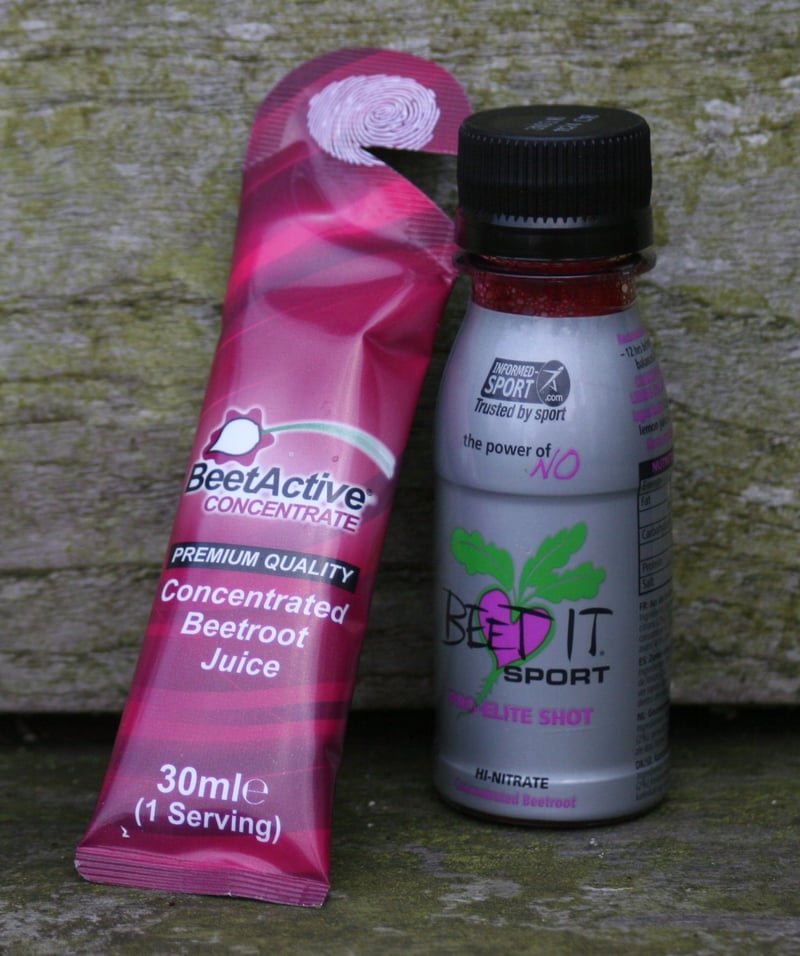
What the studies show for runners and cyclists
The Australian Institute of Sport rates beetroot juice as a “high level of evidence” supplement, alongside caffeine, creatine, beta-alanine and sodium bicarbonate. The UCI reached the same conclusion in its first cycling nutrition position statement, which backs dietary nitrate as one of six supplements with real evidence behind it.
A 2017 systematic review in Nutrients by Domínguez and colleagues pulled together 23 trials in trained cyclists, triathletes, runners, kayakers and swimmers. The standout results were these:
- Trained cyclists rode a 16.1 km time trial 2.7% faster and a 4 km time trial 2.8% faster after 500 ml of beetroot juice (Lansley 2011).
- Over 50 miles, well-trained cyclists were 0.8% faster, with the gain coming in the final 10 miles (Wilkerson 2012).
- Time to exhaustion at 90% of VO2max rose by 16% (Thompson 2014), and at 60% to 80% of peak power it rose by 12-17% (Kelly 2013).
- International kayakers were 1.7% faster over 500 m on a 9.6 mmol dose, while a 4.8 mmol dose did nothing over 1,000 m (Peeling 2015).
- Runners covered the last 1.1 miles of a 5K 5% faster after eating whole beetroot (Murphy 2012).
In competitive sport, a 0.5-1.5% improvement is the difference between finishing positions. My own experience matches the lab numbers: I’m convinced beetroot juice takes 20-30 seconds off a 20-minute 5K, which is a 2% gain.
Not every study is positive. Elite 1,500 m runners saw no benefit (Boorsma 2014), and a 2019 crossover trial of 20 recreationally trained men found no change in VO2max after a week of shots (Perez 2019). An umbrella review of 20 meta-analyses (Poon 2025), covered in my earlier meta-science piece on beetroot juice, found the clearest gains in time-to-exhaustion, muscular endurance and peak power, with fixed-distance time trials less consistent. Highly trained athletes tend to respond less than recreational ones.
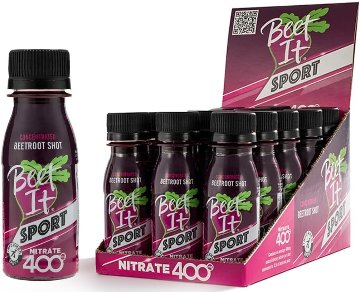
Beet It Sport Nitrate 400
Concentrated beetroot shots that lift blood nitrate for a few hours, so hard efforts feel a touch easier. One or two a day for the two to three days before a race.
RRP £30.00
Pack of 15 shots, UK stock
- use code:
Get it nowOrder now – Beet It Sport Nitrate 400 Also sold direct byMore than vasodilation
Beetroot is rich in inorganic nitrate. Bacteria on the tongue convert it to nitrite, and the body then turns nitrite into nitric oxide. Nitric oxide relaxes the smooth muscle in artery walls, which is why beetroot juice lowers resting blood pressure. That alone would not make anyone faster.
The performance effect comes from what nitric oxide does inside the working muscle:
- Nitrite converts to nitric oxide most readily where oxygen is scarce and the tissue is acidic, so it targets the muscle fibres working hardest.
- Muscles need less ATP to produce the same force. Bailey and colleagues measured improved contractile efficiency in the quadriceps (Bailey 2010).
- Mitochondria extract more energy per unit of oxygen. Larsen and colleagues reported improved mitochondrial efficiency in humans (Larsen 2011).
- Oxygen cost at a given power falls. Whitfield and colleagues found whole-body oxygen use 3% lower at 70% of VO2max after a week of supplementation (Whitfield 2016).
- Animal work points to stronger calcium handling in fast-twitch fibres, which may explain the gains in short, hard efforts (Hernández 2012).
Professor Nicholas Hopkinson of Royal Brompton Hospital put it simply after his team’s 12-week trial in people with COPD (Alasmari 2024): nitric oxide “helps blood vessels relax. It also increases the efficiency of muscles, meaning they need less oxygen to do the same work.” His patients walked about 30 metres further in six minutes as well as seeing lower blood pressure.
The clearest sign that blood flow is not the main story came from that 2019 crossover trial. Beetroot juice did not lower blood pressure during exercise at all, yet the oxygen-cost benefits in other studies appear at exactly those intensities. If you track muscle oxygen with an SmO2 sensor, lower oxygen extraction at the same power is the change to look for.
Why blood pressure drugs don’t do the same
Several classes of blood pressure medication also widen blood vessels. None of them makes a muscle use less oxygen for the same work. A review of hypertension management in athletes in American Family Physician (Niedfeldt 2002) sets out how each class behaves in exercise:
- ACE inhibitors and angiotensin receptor blockers lower vascular resistance without changing heart rate or VO2max. Their appeal for athletes is that they leave exercise capacity alone.
- Calcium channel blockers lower pressure at rest and during exercise and preserve exercise capacity. Both they and ACE inhibitors can cause a sharp drop in blood pressure straight after a hard session, so a proper cool-down matters.
- Beta-blockers cap heart rate, make efforts feel harder and reduce endurance. They also make max heart rate formulas and heart rate zones meaningless, and WADA prohibits them in precision sports such as archery and shooting.
- Diuretics increase fluid and electrolyte loss in hot or long sessions, and WADA bans them at all times as masking agents.
The size of the blood pressure effect is also different. Pooled trials show beetroot juice lowers resting systolic pressure by about 4 mmHg (Siervo 2013, 16 trials). In 68 people with hypertension, 250 ml a day for four weeks lowered it by 7.7 mmHg (Kapil 2015), and the researchers described it as an add-on to treatment. A 2024 meta-analysis of 11 trials in hypertensive patients (Grönroos 2024) found a 5.3 mmHg drop in clinic readings but no significant change in 24-hour readings. A drug is designed to bring pressure down hard and keep it there; beetroot juice gives a modest, short-lived nudge alongside the muscle effects. Anyone on blood pressure medication should check with their GP before taking concentrated shots every day, as the British Heart Foundation advises (Taylor 2024). A blood pressure watch is one way to see what it does to your own readings.
How much beetroot juice to take, and when
Beet It Sport Nitrate 400
Concentrated beetroot shots that lift blood nitrate for a few hours, so hard efforts feel a touch easier. One or two a day for the two to three days before a race.
RRP £30.00
Pack of 15 shots, UK stock
- use code:
Get it nowOrder now – Beet It Sport Nitrate 400 Also sold direct by- Most positive studies used 6-8 mmol of nitrate, about 370-500 mg. One 70 ml Beet It Sport Nitrate 400 shot holds about 6.4 mmol. Bigger or upper-body efforts, such as kayaking, may need more.
- Plasma nitrite peaks two to three hours after a dose, and the trials that worked mostly dosed 150-180 minutes before the start. I find 2.5-3 hours works for me.
- For longer events, six or more days of daily shots before race day appears to give more than a single dose.
- Antibacterial mouthwash wipes out the mouth bacteria that start the conversion, so skip it on dosing days (Govoni 2008).
- Choose concentrated shots with a stated nitrate content. Big bottles of everyday beetroot juice are dilute, and the nitrate in powders and capsules is rarely stated or tested.
- Caffeine and beetroot together did no better than caffeine alone in two cycling studies (Glaister 2015, Lane 2014), so stacking may not add much. Sodium bicarbonate is another evidence-backed option for shorter, harder events.
- Expect pink urine. It is harmless.
More of the supporting physiology is collected on the site’s sports science page.
Author Note
I use beetroot juice extensively and, personally, can feel a difference. I would say I feel that difference around 2.5 hours after ingestion. Perhaps like the studies this indicates effective use range 2-3 hours after taking.
Quick answers
How much beetroot juice should I take before a race?
Most studies that improved performance used 6-8 mmol of nitrate, about 370-500 mg. One concentrated 70 ml shot such as Beet It Sport Nitrate 400 provides about 6.4 mmol.
When should I drink beetroot juice before exercise?
Take it two to three hours before the start, because nitrite in the blood peaks two to three hours after a dose. Loading for six days or more before an event may add to the effect.
Does beetroot juice increase VO2max?
Most studies found no change in VO2max. Beetroot juice lowers the oxygen cost of a given pace or power, so you can hold that effort for longer.
Do beetroot powders and capsules work as well as juice?
Almost all the positive research used juice with a known nitrate content. Powders and capsules rarely state or test their nitrate content, and some contain very little.
Can I take beetroot juice if I am on blood pressure medication?
Beetroot juice lowers resting blood pressure by a few mmHg, so it adds to the effect of the medication. Check with your GP before taking concentrated shots every day.
Does caffeine stop beetroot juice working?
Two cycling studies found that caffeine and beetroot juice together performed no better than caffeine alone. There is no evidence that caffeine makes performance worse.
Should I take a beetroot shot before running?
Yes, if you want a measurable edge. Runners in one study covered the last 1.1 miles of a 5K 5% faster, and trained cyclists rode time trials 2-3% faster. Take one concentrated shot two to three hours before the start.
Does beetroot juice lower blood pressure?
Yes, by about 4-8 mmHg systolic at rest in pooled trials and in a four-week study of people with hypertension. The effect is modest and short-lived compared with medication.
Does mouthwash affect beetroot juice?
Antibacterial mouthwash kills the mouth bacteria that convert nitrate to nitrite and largely blocks the rise in blood nitrite, so avoid it on the days you take beetroot juice.
Scientific sources
- Alasmari AM, Alsulayyim AS, Alghamdi SM, et al. Oral nitrate supplementation improves cardiovascular risk markers in COPD: ON-BC, a randomised controlled trial. Eur Respir J. 2024;63(2):2202353. doi:10.1183/13993003.02353-2022
- Bailey SJ, Fulford J, Vanhatalo A, et al. Dietary nitrate supplementation enhances muscle contractile efficiency during knee-extensor exercise in humans. J Appl Physiol. 2010;109(1):135-148. doi:10.1152/japplphysiol.00046.2010
- Boorsma RK, Whitfield J, Spriet LL. Beetroot juice supplementation does not improve performance of elite 1500-m runners. Med Sci Sports Exerc. 2014;46(12):2326-2334. doi:10.1249/MSS.0000000000000364
- Domínguez R, Cuenca E, Maté-Muñoz JL, et al. Effects of beetroot juice supplementation on cardiorespiratory endurance in athletes. A systematic review. Nutrients. 2017;9(1):43. doi:10.3390/nu9010043
- Glaister M, Pattison JR, Muniz-Pumares D, Patterson SD, Foley P. Effects of dietary nitrate, caffeine, and their combination on 20-km cycling time trial performance. J Strength Cond Res. 2015;29(1):165-174. doi:10.1519/JSC.0000000000000596
- Govoni M, Jansson EA, Weitzberg E, Lundberg JO. The increase in plasma nitrite after a dietary nitrate load is markedly attenuated by an antibacterial mouthwash. Nitric Oxide. 2008;19(4):333-337. doi:10.1016/j.niox.2008.08.003
- Grönroos R, Eggertsen R, Bernhardsson S, Praetorius Björk M. Effects of beetroot juice on blood pressure in hypertension according to European Society of Hypertension Guidelines: a systematic review and meta-analysis. Nutr Metab Cardiovasc Dis. 2024;34(10):2240-2256. doi:10.1016/j.numecd.2024.06.009
- Hernández A, Schiffer TA, Ivarsson N, et al. Dietary nitrate increases tetanic [Ca2+]i and contractile force in mouse fast-twitch muscle. J Physiol. 2012;590(15):3575-3583. doi:10.1113/jphysiol.2012.232777
- Kapil V, Khambata RS, Robertson A, Caulfield MJ, Ahluwalia A. Dietary nitrate provides sustained blood pressure lowering in hypertensive patients: a randomized, phase 2, double-blind, placebo-controlled study. Hypertension. 2015;65(2):320-327. doi:10.1161/HYPERTENSIONAHA.114.04675
- Kelly J, Vanhatalo A, Wilkerson DP, Wylie LJ, Jones AM. Effects of nitrate on the power-duration relationship for severe-intensity exercise. Med Sci Sports Exerc. 2013;45(9):1798-1806. doi:10.1249/MSS.0b013e31828e885c
- Lane SC, Hawley JA, Desbrow B, et al. Single and combined effects of beetroot juice and caffeine supplementation on cycling time trial performance. Appl Physiol Nutr Metab. 2014;39(9):1050-1057. doi:10.1139/apnm-2013-0336
- Lansley KE, Winyard PG, Bailey SJ, et al. Acute dietary nitrate supplementation improves cycling time trial performance. Med Sci Sports Exerc. 2011;43(6):1125-1131. doi:10.1249/MSS.0b013e31821597b4
- Larsen FJ, Schiffer TA, Borniquel S, et al. Dietary inorganic nitrate improves mitochondrial efficiency in humans. Cell Metab. 2011;13(2):149-159. doi:10.1016/j.cmet.2011.01.004
- Murphy M, Eliot K, Heuertz RM, Weiss E. Whole beetroot consumption acutely improves running performance. J Acad Nutr Diet. 2012;112(4):548-552. doi:10.1016/j.jand.2011.12.002
- Niedfeldt MW. Managing hypertension in athletes and physically active patients. Am Fam Physician. 2002;66(3):445-452.
- Peeling P, Cox GR, Bullock N, Burke LM. Beetroot juice improves on-water 500 m time-trial performance, and laboratory-based paddling economy in national and international-level kayak athletes. Int J Sport Nutr Exerc Metab. 2015;25(3):278-284. doi:10.1123/ijsnem.2014-0110
- Perez JM, Dobson JL, Ryan GA, Riggs AJ. The effects of beetroot juice on VO2max and blood pressure during submaximal exercise. Int J Exerc Sci. 2019;12(2):332-342. PMC6413851
- Poon ET, Iu JC, Sum WM, et al. Dietary nitrate supplementation and exercise performance: an umbrella review of 20 published systematic reviews with meta-analyses. Sports Med. 2025;55(5):1213-1231. doi:10.1007/s40279-025-02194-6
- Siervo M, Lara J, Ogbonmwan I, Mathers JC. Inorganic nitrate and beetroot juice supplementation reduces blood pressure in adults: a systematic review and meta-analysis. J Nutr. 2013;143(6):818-826. doi:10.3945/jn.112.170233
- Taylor V. Can beetroot juice lower blood pressure? Heart Matters, British Heart Foundation. 14 May 2024.
- Thompson KG, Turner L, Prichard J, et al. Influence of dietary nitrate supplementation on physiological and cognitive responses to incremental cycle exercise. Respir Physiol Neurobiol. 2014;193:11-20. doi:10.1016/j.resp.2013.12.015
- Whitfield J, Ludzki A, Heigenhauser GJ, et al. Beetroot juice supplementation reduces whole body oxygen consumption but does not improve indices of mitochondrial efficiency in human skeletal muscle. J Physiol. 2016;594(2):421-435. doi:10.1113/JP270844
- Wilkerson DP, Hayward GM, Bailey SJ, et al. Influence of acute dietary nitrate supplementation on 50 mile time trial performance in well-trained cyclists. Eur J Appl Physiol. 2012;112(12):4127-4134. doi:10.1007/s00421-012-2397-6
Last Updated on 29 October 2026 by tfk the5krunner
Small things I always use
- Garmin 90-degree charging adapter: Charges your Garmin from any USB-C cable. Essential when travelling. I use one.
- Body Glide: The blue anti-chafe stick swimmers and runners carry. I use it.
- Speedo earplugs: Fewer ear infections and no cold-water dizziness. I use them.
- Dryrobe Advance: My winter changing robe for open-water swims. I use one. A cheaper option is the AONYIYI changing robe.
- Maurten: Race fuel that stays easy on the stomach. I use them.
- Beet It Sport nitrate shots: Beetroot shots I take in the days before a race. I use them.
- Garmin charging puck: The quickest way to top up before a session. I use one.
- Injinji: Toe socks that stop rubbing, so you run more. I use them.
- Ultimate toe protectors: Stop black toenails on long runs. They work. I use them.
- Compressport R2 v2 calf sleeves: My calf sleeves of choice. I use them.
- Cellucor C4: My pre-workout before hard sessions.
- TPU tubes: Schwalbe Aerothan, Tubolito and Pirelli SmarTube. Light, tiny spares. I use all three.
- G8 insoles: Adjustable insoles that are good. I use them.
- Cycplus Cube: A 97g electric pump that gets a road tyre rideable in two minutes. I carry one. 5% off with code THE5KRUNNER.
Watches and sensors
- Polar H10: My daily driver for waking HRV.
- Polar Verity Sense: My backup arm-worn HR sensor.
- Nomad bedside charger: Charges my iPhone and Apple Watch overnight. I use it, and many of their bands.
- Train.Red: The best muscle oxygen sensor I’ve used.
- Tymewear: Accurate heart rate and reliable ventilatory zones. I use it to pace endurance rides over an hour.
- Garmin Forerunner 970: A pro-grade triathlon watch. I use this.
- Apple Watch Ultra 4: My daily smartwatch. No phone needed on rides.
- Garmin Fenix 9 Pro: I’ve just bought one.
On the bike
- Continental GP5000 for everyday riding, and Aero 111 on the front for special occasions.
- Helmets: Specialized S-Works Evade 3 for road riding, and Rudy Project Wing for TT-style races. I use both.
- Ravemen FR300: A front light that mounts under your Garmin or Wahoo. I use one.
- Wahoo TRACKR Radar: I use it on one bike and Varia on the other. They perform the same.
- Garmin Varia RTL515: Radar that warns you of cars from behind. I use this model.
- Wahoo ELEMNT Roam 3: The bike computer that’s easy to use. I use mine on most rides.
- Favero Assioma Pro RS2: Accurate power pedals that swap easily between bikes. I use this model.
Home and indoor training
- NPE Runn: Makes my basic treadmill smart, sending more accurate speed and distance to my watch and Zwift. I use it.
- Google Wifi: Keeps Zwift connected in my pain cave. I use it.
- Apple TV 4K: Zwift on the big screen. I use two.
- Google Nest Doorbell (wired, 2nd gen): My video doorbell, running in both Google Home and Apple Home. I use it.
Health, recovery and sleep
- FreeStyle Libre 3 Plus: Shows how my blood sugar responds to diet.
- hDrop: Measures my sweat loss in summer and indoors.
- Fourth Frontier Zone: Checks my heart under load in hard sessions.
- Oura Ring 5: My partner’s recovery tracker of choice.
- Eight Sleep: A cooling mattress cover my partner and I use nightly.
Reader-Powered Content

This content is not sponsored. It’s mostly me behind the labour of love, which is this site, and I appreciate everyone who supports it.
Support the site: Follow (free, fewer ads) · Subscribe (paid, ad-free) · Buy Me A Coffee
Written by real people, with AI assistance. Fact-checked and verified for originality. See the Editorial Policy. FTC: Affiliate Disclosure — some links pay commission. As an Amazon Associate, I earn from qualifying purchases.
tfk is the founder and author of the5krunner, an independent endurance sports technology publication. With 20 years of hands-on testing of GPS watches and wearables, and competing in triathlons at an international age-group level, tfk provides in-depth expert analysis of fitness technology for serious athletes and endurance sport competitors. See the gear tfk uses. ID
