Best Garmin watch for triathlon 2026: FR570, FR970 or Fenix 8?
The best Garmin watch for triathlon for most athletes is the Forerunner 970. It carries every triathlon-specific feature Garmin makes, is built to a higher hardware standard than the FR570, and costs only $50 more. The case for spending less on the FR570 is real but narrow. The sections below work through the decision directly.
What is a triathlon mode?
A triathlon watch has a single mode that records a swim, a bike leg, and a run in sequence, displaying sport-appropriate data for each and logging the transitions. Without this, a watch is not a triathlon watch.
Any waterproof sports watch can be used in a triathlon by manually switching between sport profiles at each transition. The three disciplines are saved as separate activity files, transition time is not captured, and the athlete stops the timer between legs. For a first-timer or leisure triathlete who is not concerned with transition splits or a unified activity record, this works adequately. For any competitive athlete it is too cumbersome mid-race and loses transition data entirely.
Which Garmin watches have a triathlon mode?
The current Garmin watches with a true triathlon mode are:
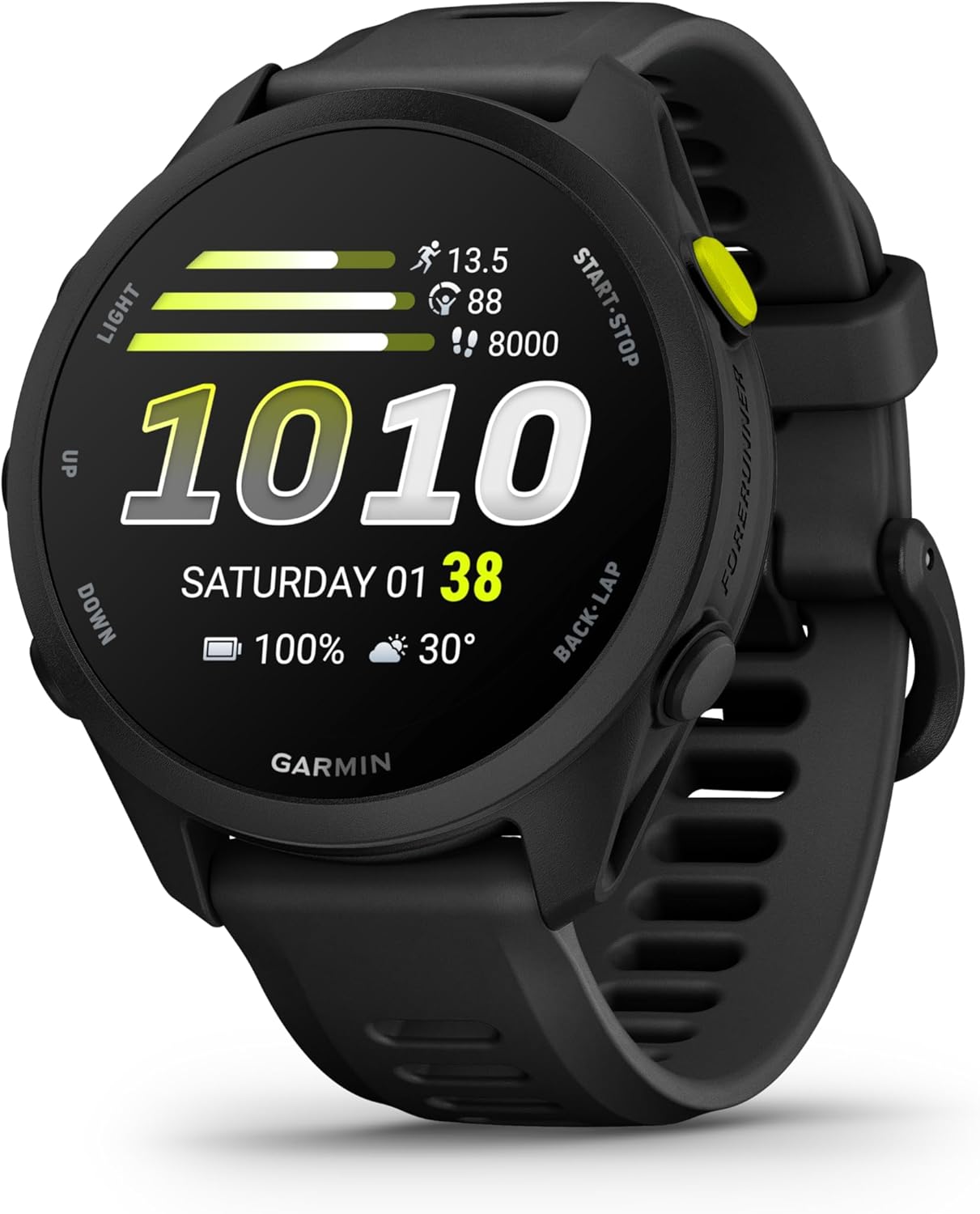
- Forerunner 570 ($549): triathlon, duathlon, brick, swimrun, pool triathlon. Polymer bezel, chemically strengthened glass. No maps.
- Forerunner 970 ($599): identical triathlon software. Titanium bezel, sapphire crystal lens. Full topographic maps.
- Fenix 8 ($999+): identical triathlon software in a heavier, more durable case with solar and larger size options.
The FR70 and FR170 have no triathlon mode. They are good running watches. An athlete can use them in a triathlon by manually switching sport profiles, which is workable for a leisure event but not suitable for competitive racing.
FR570 or FR970: the honest case
The triathlon software platform is identical across both models. Training Readiness, HRV Status, Garmin Triathlon Coach, race predictor, structured workout execution with TrainingPeaks sync, power meter support, and Firstbeat physiology metrics all run the same way on both. Both carry automatic transition detection and manual transition support.
Automatic transition detection works by reading movement pattern changes when you exit the water or dismount the bike. In practice it is not perfectly reliable and many experienced triathletes disable it, pressing manually for accuracy. A manual press is always precise; automatic is not always. Auto-transition is a convenience feature, not a performance one.
The genuine case for the FR970 over the FR570 is hardware quality. The FR970 carries a titanium bezel and sapphire crystal lens. The FR570 uses a polymer bezel and chemically strengthened glass. Over two to three years of daily wear — a triathlon watch is typically worn all day, not just during training — the construction difference is visible. Sapphire resists scratching from rock, gravel, poolside concrete, and everyday abrasion in a way that chemically strengthened glass does not.
The FR970 also adds full topographic maps and 26 hours GPS against the FR570’s 18 hours. For sprint and Olympic distance racing, neither difference matters. For Ironman athletes who train on unfamiliar bike routes or whose finish time approaches the FR570’s battery ceiling, both are relevant.
At $549 vs $599 the gap is $50. For most triathletes who train daily and wear the watch continuously, the FR970’s build quality alone justifies the difference.
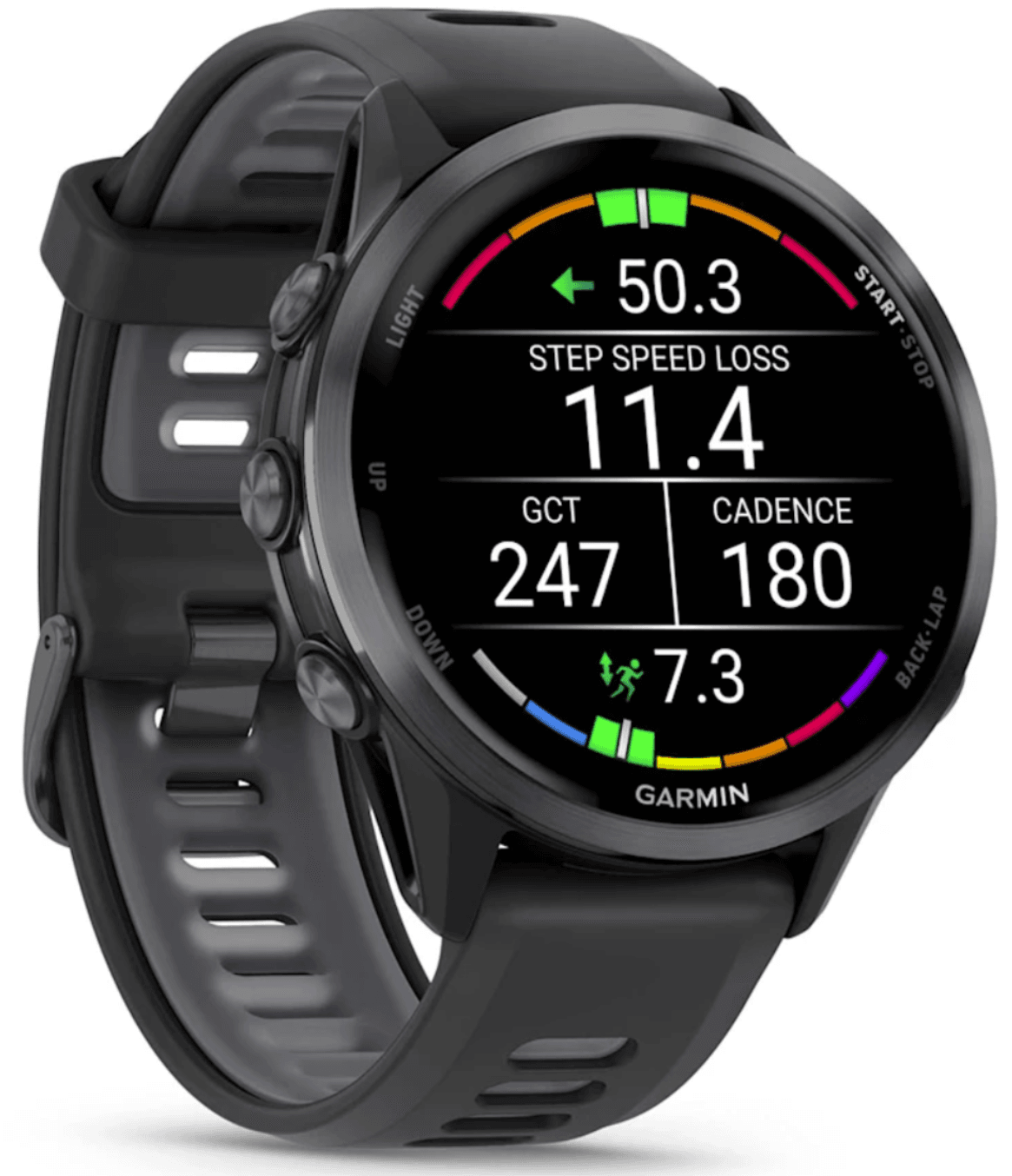
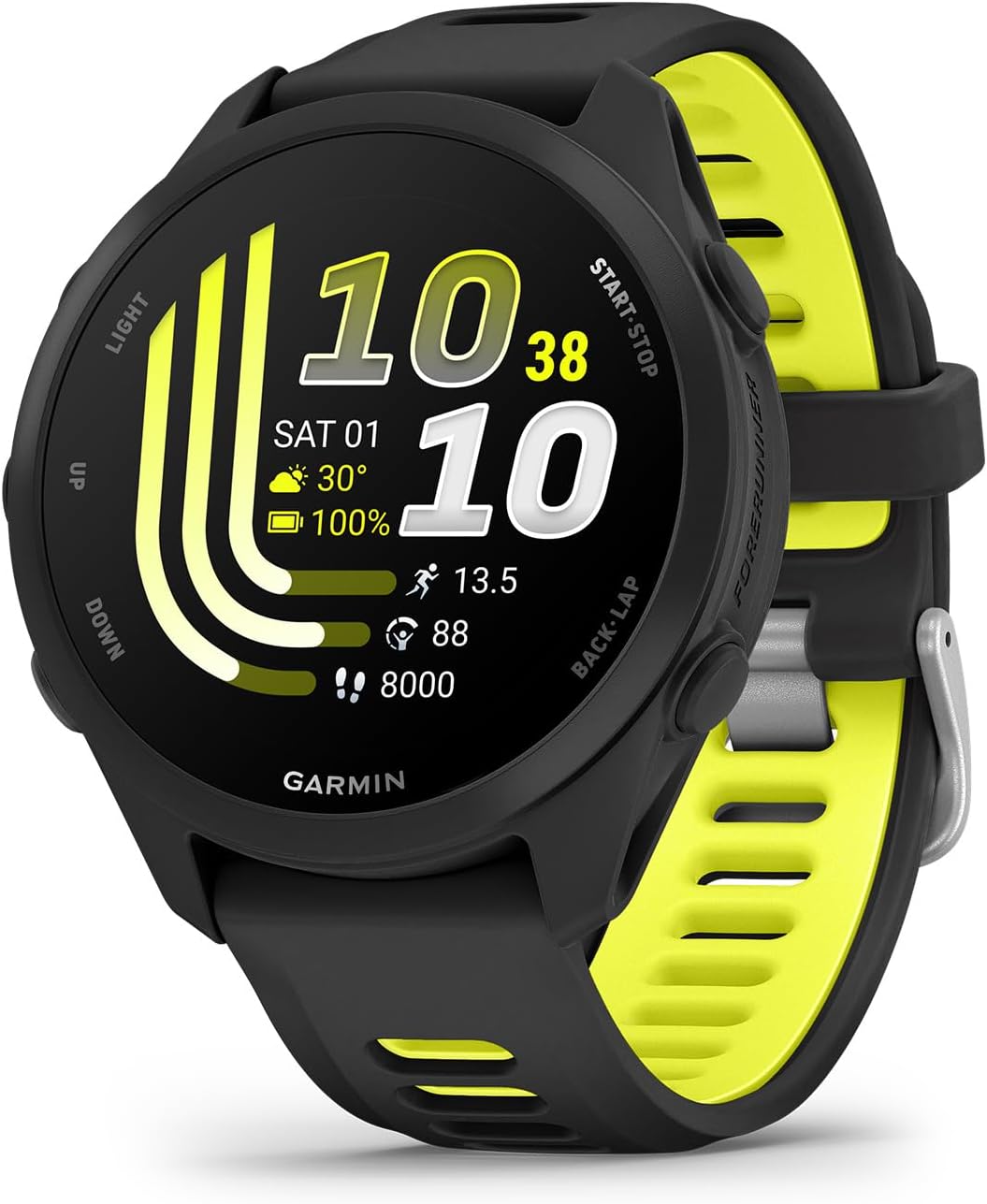
Garmin Forerunner 970
Premium GPS triathlon smartwatch. Features a bright AMOLED touch screen and a built-in LED flashlight.

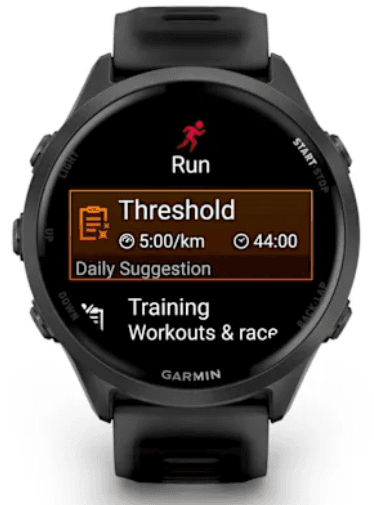
Is the Fenix 8 better than the FR970 for triathlon?
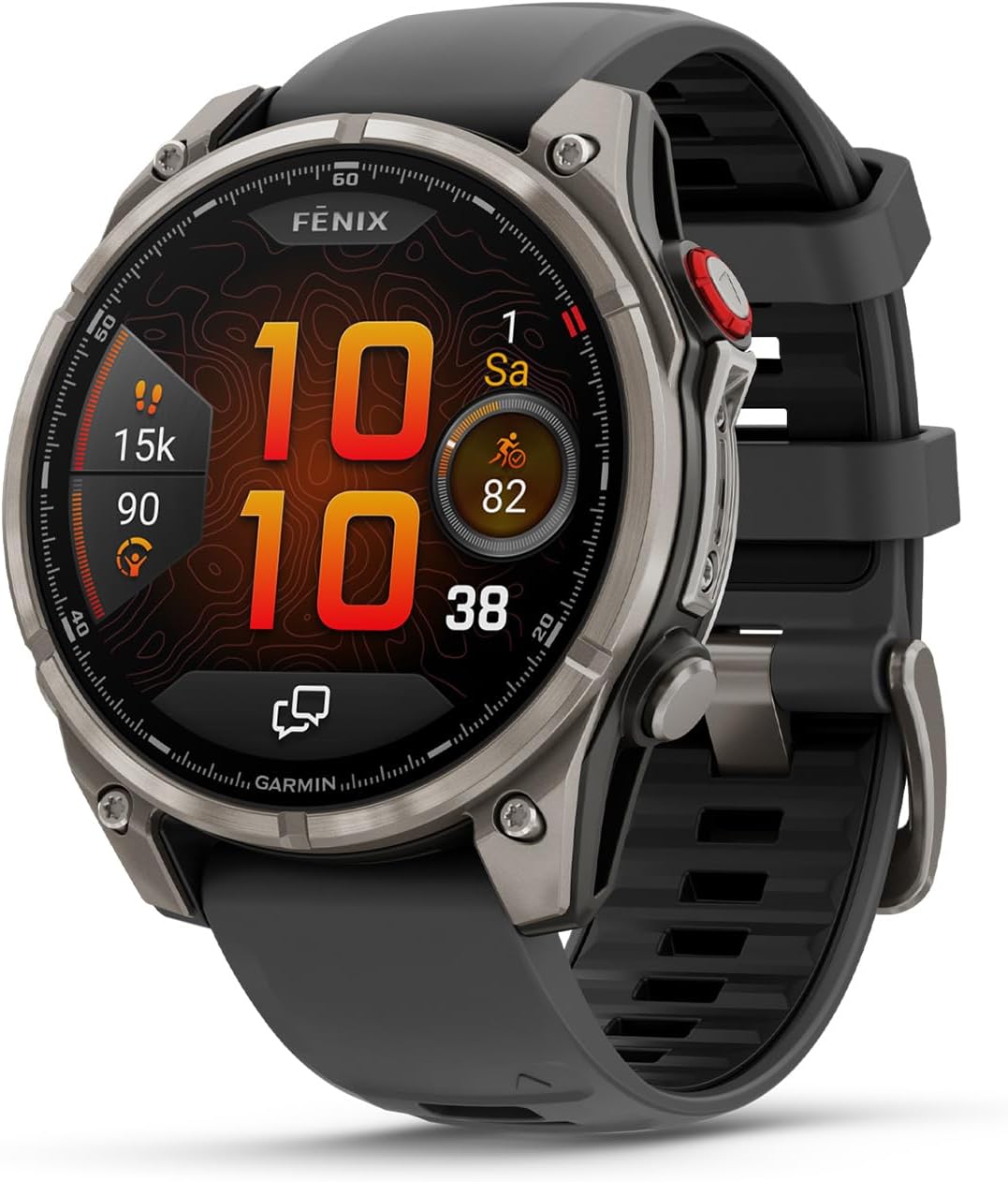
No, for most triathletes. The Fenix 8 runs the same triathlon software as the FR970 and carries the same sensors. What it adds is a heavier case (73g vs 56g for the 47mm AMOLED), a 10ATM dive rating, solar charging variants, and a larger size range up to 51mm. For a triathlete who primarily runs, rides, and swims those additions carry weight without matching value. The Fenix 8 is the right Garmin triathlon watch for athletes who also use the watch extensively for hiking, mountaineering, or events requiring more than 26 hours of GPS. For triathlon as a primary sport, the FR970 is lighter, equally capable on software, and significantly less expensive.
Battery life for Ironman
The FR970 reaches 26 hours in GPS mode with heart rate, power meter, and data screens active. A full Ironman at any realistic age-group finish time falls within that window with margin. The FR570 reaches 18 hours — sufficient for athletes finishing under 17 hours. For slower finishers or athletes who want a larger margin, the FR970 is the correct choice. The Fenix 8 Solar extends GPS battery further but requires accepting a MIP transflective display: solar and AMOLED are mutually exclusive in the current Garmin lineup, a meaningful daily wear trade-off.
Training platform
Garmin Triathlon Coach generates a personalised adaptive training plan based on your goal race, distance, and available weekly training hours. It executes sessions directly on the watch and updates daily based on how training is going. TrainingPeaks structured workouts sync bidirectionally. Power target alerts, heart rate zone alerts, and interval execution work identically on the FR570 and FR970. The FR970 adds the ability to incorporate course elevation data into the race predictor when a course file is loaded.
Which Garmin for triathlon: the short version
- Best for most triathletes: Forerunner 970. Titanium bezel, sapphire lens, maps, 26 hours GPS. The $50 premium over the FR570 is justified by daily wear hardware quality.
- Best budget Garmin triathlon watch: Forerunner 570. Full triathlon mode, same software and sensors as the FR970, polymer case, $549.
- Best for athletes who also need expedition hardware or extended battery: Fenix 8 AMOLED. Same triathlon software, heavier case, higher price.
- Not triathlon watches, but usable in a leisure triathlon: FR70 and FR170. No triathlon mode. Manual sport switching between disciplines works adequately for a first-timer or non-competitive event.
For the full cross-brand triathlon watch comparison including Coros, Polar, Suunto, and Apple Watch, see the best triathlon watch guide. For the complete Forerunner lineup comparison, see the best Garmin Forerunner guide. For Garmin’s full triathlon coverage including race-day setup and brick workout configuration, see the triathlon hub.
Best-of guides
Explore the full resource library
This site covers endurance sport technology across a range of dedicated reference sections. Each one collects the most relevant articles, tests, and analysis on its topic in one place.
Buyer guides
- Best sports watch — tested recommendations by sport and athlete type: triathlon, running, marathon, cycling, hiking, and women
- Best Garmin watch — Forerunner versus Fenix by series, sport, and budget
- Best wearables — recovery trackers, heart rate monitors, running power meters, and female athlete tech
- Best cycling products — computers, smart trainers, power meters, and cycling heart rate monitors
Brand and product guides
- Amazfit — the full Amazfit range from Balance to Cheetah to T-Rex, accuracy tests, HYROX partnership, and Zepp Health analysis
- Apple Watch — athlete-first coverage of Apple Watch across running, cycling, and triathlon
- COROS — watches, features, and firmware across the full COROS range
- Garmin — the company, the platform and the full range, and the starting point for choosing across every Garmin product line
- Garmin Edge — bike computers from entry-level navigation to flagship endurance and mountain biking
- Garmin Fenix — every model, feature, and firmware development for Garmin's flagship outdoor watch
- Garmin Fenix 8 Series — which variant to buy, upgrade advice, accuracy data, and the full Fenix 8 review and firmware coverage
- Garmin Forerunner — the full Forerunner line covered from entry level to triathlon flagship
- Garmin Instinct — rugged GPS watches for endurance and adventure athletes
- Garmin Features Explained — how Garmin's metrics work, from Training Load and Body Battery to Race Predictor and HRV Status
- Google Fitbit — Fitbit Air, Google Health, Pixel Watch and the Wear OS platform
- Polar — watches, sensors, Polar Flow and training science across the full Polar range
- Suunto — Race, Vertical, Run and the SuuntoPlus ecosystem
- Strava — features, privacy, segments, and how Strava fits into a serious training setup
- Ride with GPS - how Strava fits into a routing
- Wahoo — KICKR trainers, ELEMNT bike computers, and the Wahoo ecosystem
- WHOOP — strain, recovery, sleep and the full WHOOP ecosystem
Specifications database
- Full Specifications Database — detailed spec sheets, battery life, sensor lists and generation-on-generation comparisons for current Garmin, COROS, Amazfit, Samsung, Google Fitbit, Huawei, Polar, Suunto, Wahoo and Apple Watch models
Glossary
- Sports Technology Glossary — non-branded terminology across running, cycling, swimming, triathlon, hiking, strength training, HYROX, sensors, ecosystems, and brands
Sport and topic guides
- Running Watches — how to choose by discipline: road racing, trail, track, beginner, and multisport
- Triathlon and Multisport Technology — watches, sensors, and race-day tools for swimmers, cyclists, and runners
- HYROX — training science, race analysis, and technology for the functional fitness race format
- parkrun — technology, training, and performance for the weekly 5K
- Hiking Technology — navigation, safety, and trail tech for walkers and hikers
- Heart Rate Monitoring — optical sensors, chest straps, accuracy comparisons, and how to set training zones
- GPS Accuracy — how satellite systems perform across brands, terrains, and conditions
- Sports Watch Battery Life — battery claims, real-world tests, and how to manage battery life across Garmin, Apple, Amazfit and Coros
- Recovery Trackers — WHOOP, Oura, and the science of readiness scoring
- Female Athlete Tech — wearables, physiology, and performance for female endurance athletes, covering cycle-synced training, RED-S, HR accuracy, and VO2max
- Sports Science — peer-reviewed research on HRV, VO2max, lactate threshold, running power, wearable accuracy, and supplementation
- Testing Methodology — how this site tests GPS accuracy, heart rate, battery life, and other performance claims
Content series
- Release Radar — confirmed launches, leaks, and rumours across Garmin, Apple, COROS, Polar, Suunto, and Wahoo
- Deep Dive Feature Files — weekly firmware feature updates across all brands (bug fixes excluded)
- Fix Files — weekly firmware bug fix tracking across all brands
