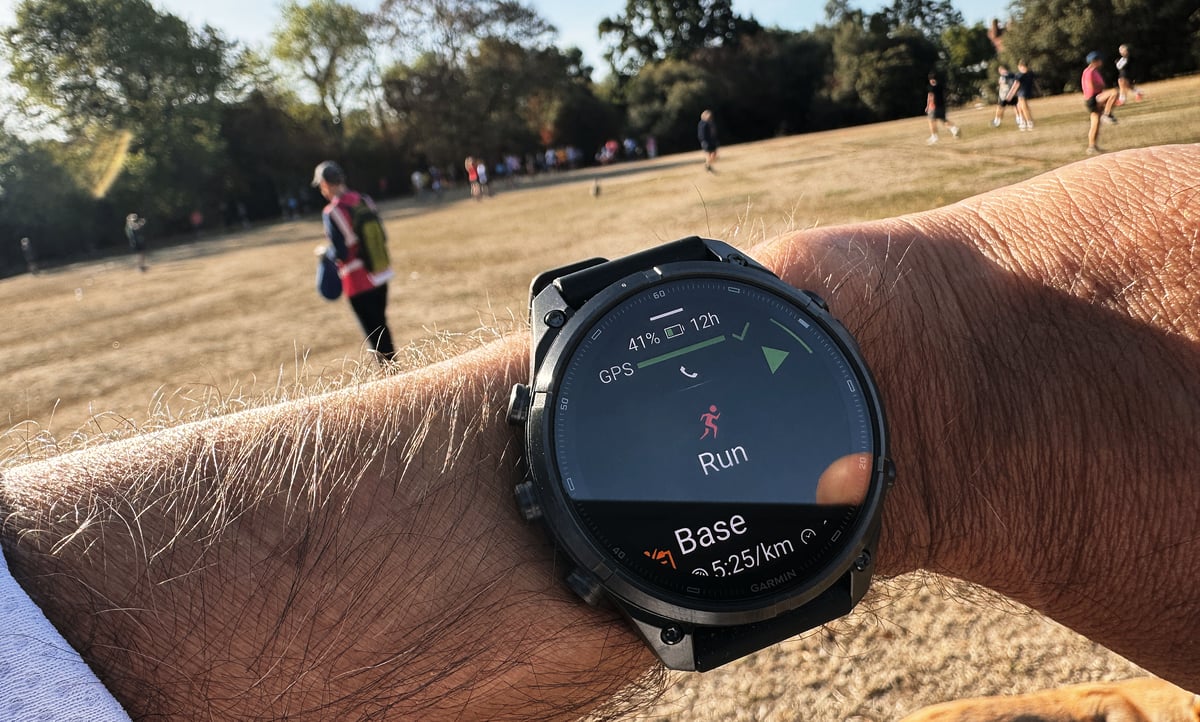
Why the Fenix 9 Pro Skipped MicroLED
In September, Garmin launched the Fenix 8 Pro MicroLED smartwatch, described as the world’s first smartwatch to use a microLED display. The watch features AUO’s 1.4-inch, 454x454px display with a peak brightness of 4,500 nits.
Garmin has since introduced its next-generation Fenix 9 Pro range, but this time there is no microLED model. Instead, the watches use AMOLED displays with a peak brightness of 3,000 nits.
Until recently, it was unclear whether Garmin planned to stick with microLED technology in the new range. However, the company recently said:
“MicroLED is an exciting emerging technology that continues to evolve. While it played an important role in the Fenix 8 Pro 51mm lineup, we’re excited for the opportunity to bring our brightest and largest 1.5″ AMOLED screen to Fenix 9 Pro 51mm. We will always monitor advancements in display technology and will look to bring those to the Fenix lineup when they make sense”.
The statement suggests that Garmin currently sees AMOLED as capable of meeting the needs of its Fenix watches, including brightness requirements. For microLED to become more competitive with OLED, AUO may need to develop panels that are thinner, far more power-efficient and less expensive.
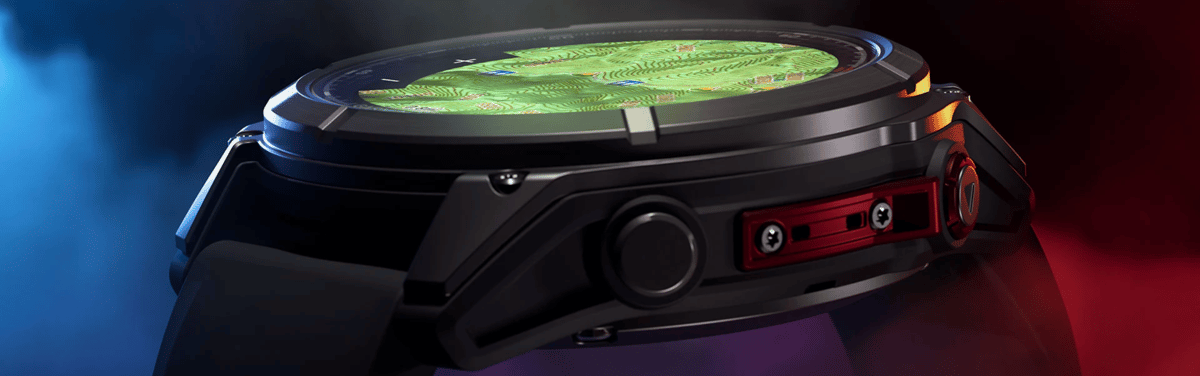
Brightness alone is also becoming less of a clear advantage for microLED. Samsung recently launched Galaxy Watch Ultra 2 with a 5,000-nit OLED display, which is brighter than the 4,500-nit microLED panel used in the Fenix 8 Pro.
The Fenix 8 Pro MicroLED was generally well received, with reviewers highlighting its very bright screen and strong viewing angles. However, the technology also brought a critical drawback. The watch is considerably thicker than the AMOLED version because it doesn’t integrate the touch layer into the display; worse still, it uses more power, cutting smartwatch-mode battery life from 27 days to 10 and adding a $700 premium.
Garmin has since cut the price of the Fenix 8 Pro MicroLED, quietly reducing it by $300 in February 2026. It now sells for $1,699, compared with its original launch price of $1,999.
the5krunner’s Take
Garmin’s quote seems like a sensible defence of its actions. The company likely invested significant internal resources in developing microLED and deserves applause for experimenting with new technology. Indeed, it may still consider it for other products and accessories.
However, the component suppliers, in this case AUO, just haven’t been able to live up to their earlier claims, including claims on their websites, that microLED will result in power savings over AMOLED. That is clearly some way off. That is the real reason that Garmin isn’t going forward with microLED…at least for now.
If you’re weighing a Fenix 9 Pro against an existing Fenix 8, our buying guide covers where the real differences lie.
Quick answers
Why doesn't the Fenix 9 Pro have a microLED display?
Garmin says its 3,000-nit AMOLED already meets the Fenix range’s brightness needs. The company calls microLED an “exciting emerging technology” it may revisit once it makes more sense.
How much brighter is the Fenix 8 Pro MicroLED than the Fenix 9 Pro's AMOLED?
The Fenix 8 Pro MicroLED peaks at 4,500 nits against 3,000 nits on the Fenix 9 Pro’s AMOLED, though Garmin’s own comments suggest the real-world gap is small.
How much does the Fenix 8 Pro MicroLED cost now?
$1,699, down $300 from its original $1,999 launch price, still a $400 premium over the equivalent AMOLED model.
Last Updated on 21 September 2026 by the5krunner
My favourite kit and nutrition
- Garmin Fenix 9 Pro — I’ve just bought one.
- Injinji – Runners protect your toes. Avoid discomfort and minor injury. Run more. Run faster. I use them.
- Garmin 90-degree charging adapter — A small keyring adapter you can use anywhere. Essential when away. I use one.
- Garmin charging puck — the fastest and most reliable way to top up your Garmin before a session. I use one.
- Ravemen FR300 — Front light that mounts directly under your Garmin or Wahoo head unit. Keeps your bars clean and your beam pointed where it matters. I use one.
- Body Glide – The blue anti-chafe stick that all swimmers and many runners use. I use it.
- Maurten — The race nutrition trusted by elite athletes. Gels and drink mixes engineered to be easy on the stomach. I use them.
- Garmin Varia RTL515 — A radar rear light that alerts you to vehicles approaching from behind. Pairs with your Edge or Wahoo. I use this model.
- Favero Assioma Pro RS2 — The power-meter pedals most serious cyclists choose. Accurate, easy to move between bikes. I use this model.
- Garmin Forerunner 970 — A serious choice for a pro-grade triathlon watch. I use this.
- Polar H10 — My daily driver for accurate, waking HRV readings.
- Wahoo ELEMNT Roam 3 — The bike computer that has the feature Garmin lacks: usability. I use mine on most rides.
Reader-Powered Content

This content is not sponsored. It’s mostly me behind the labour of love, which is this site, and I appreciate everyone who supports it.
Support the site: Follow (free, fewer ads) · Subscribe (paid, ad-free) · Buy Me A Coffee ❤️
All articles are written by real people, fact-checked, and verified for originality. See the Editorial Policy. FTC: Affiliate Disclosure — some links pay commission. As an Amazon Associate, I earn from qualifying purchases.
tfk is the founder and author of the5krunner, an independent endurance sports technology publication. With 20 years of hands-on testing of GPS watches and wearables, and competing in triathlons at an international age-group level, tfk provides in-depth expert analysis of fitness technology for serious athletes and endurance sport competitors. ID
