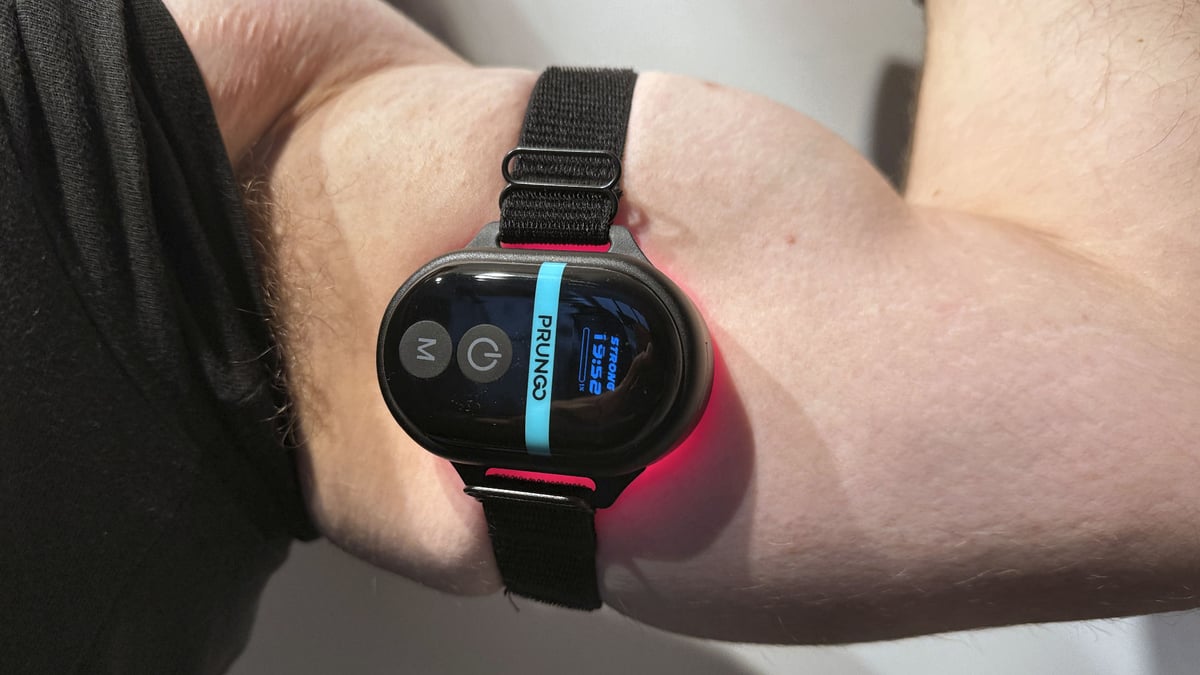
PRUNGO Review (FluxGo Lite): Dual-Wavelength RLT for Chronic Pain, DOMS & Recovery Tested.
I have used Red Light Therapy (RLT) for a month with PRUNGO’s FluxGo (RTL300) and FluxGo Lite devices, and the results for my chronic pain relief were noticeable almost immediately. Here is a detailed, hands-on review explaining how the dual-light system (LED + Polarised IR Laser) delivers a faster, deeper recovery and gives targeted pain relief.
Verdict
PRUNGO FluxGo is a versatile, portable RLT device that uniquely combines a 660nm LED and an 850nm polarised laser. It provided good relief for chronic lower back pain and is recommended for pain relief, DOMS, and soft-tissue repair.
Advanced, simple-to-use alternative to bulky panels. Delivers real relief, especially for spot therapy.
PRUNGO FluxGo Summary Review
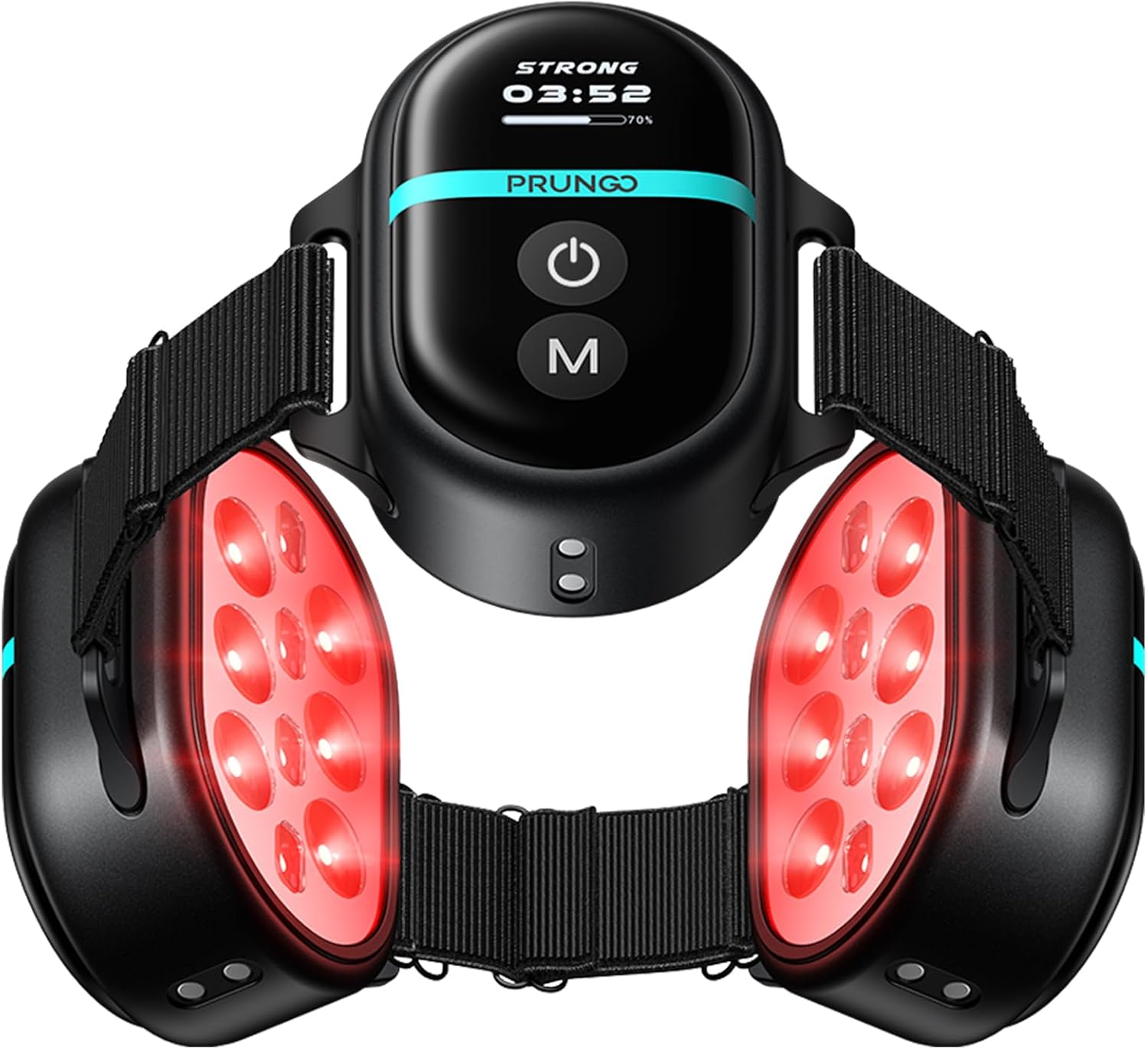
The PRUNGO FluxGo is a genuinely portable, effective and advanced red light therapy device. It uniquely combines 660nm deep red LEDs and a proprietary 850nm polarised infrared laser to achieve superior tissue penetration of 3–5 cm, specifically targeting stubborn pain in joints, tendons, and muscles.
I noticed modest improvement in DOMS (QUADS) and excellent reduction of chronic inflammation (PSOAS – lower back) and calf pain.
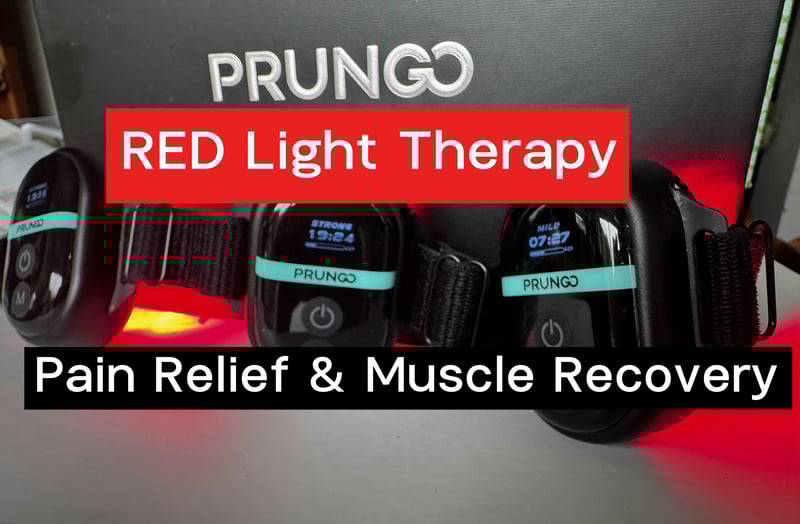
The product format is suitable for portability and hands-free, app-free use at home. I’ve used it a lot as a result. The only real downsides are that the strap can move when you move around, and it’s expensive when not on sale. That said, the price compares well to a few visits to a costly physio.
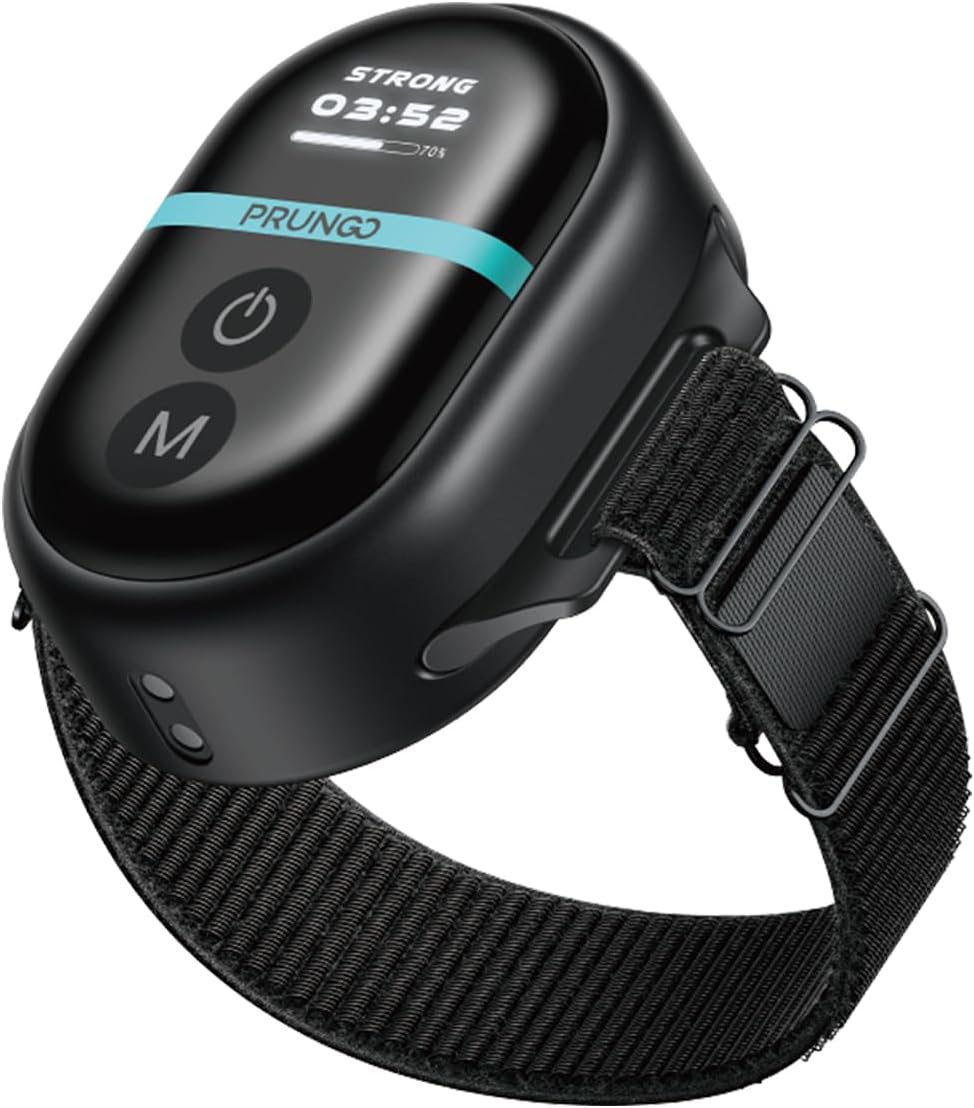
PRUNGO FluxGo Lite
Red light therapy works: sale bargains
 +other retailers
Pros
- Dual Wavelengths: surface-level recovery and inflammation, plus deep, joint-level relief.
- Deep Penetration: to 3–5 cm into muscles, tendons, and joint tissue.
- Pain and Inflammation Relief: A significant reduction in chronic inflammation.
- Speedier Muscle Recovery: Improves DOMS.
- Zero electromagnetic interference (EMF) emissions
- Pre-configured Modes: covers different use-cases
- Portability: easy to carry and encourages consistent use.
- Targeted Spot Therapy: 3 modules fit the body better than traditional, larger panels
- Hands-Free Use: Recovery while watching TV
- Portable: Charging case has 5 re-charges
- Simple “press-and-go” usage; finally, a product with no app!
Cons
- Not a Full-Body Solution: Built for spot therapy.
- Straps Can Slip: Sometimes awkward when using.
- Magnetic Charging Cable: Can detach
- Strap Storage: Modules need to be detached before storage.
- Recharging: 75 minutes per module.
Key Specifications & Differentiating Technology
What sets the PRUNGO devices apart is the dual-light approach. The technology focuses on three key benefits:
- Dual Wavelengths: 660nm deep red LED for surface recovery (e.g., skin, mild inflammation) and 850nm infrared laser for deep-tissue penetration (3–5 cm).
- Polarised Laser: The 850nm light is a laser with a polarised filter, which the manufacturer claims ensures maximum depth and focus—ideal for joint and tendon tissues. Research confirms that polarised light can penetrate up to 5 cm, making this a genuine technology differentiator.
- Zero App Philosophy: Simple device-only controls avoid overcomplicating the experience. As I learned with my TENS device, apps can overcomplicate life rather than simplify it.
The USB-C charging case features a 5000 mAh battery, providing hours of use on the go.
The PRUNGO FluxGo Portable Red Light Therapy Device Specifications
The key specifications for the PRUNGO FluxGo portable red light therapy device cover its physical design, treatment parameters, and battery performance:
Core Specifications and Design
The Fluxgo model has one RLT300 module, and the RLT300 has three. Each comes with an adjustable band which easily unclips and stows in the charging case. One point of note is the manufacturer’s claim of zero EMF emissions.
| Feature | Detail |
|---|---|
| Product Model | FluxGo, |
| Configuration | 3-module system with quick-release connectors. Comes with 6 straps (or connection bands) for fixation. |
| Weight | 115g per module; 970g total with charging case. |
| Dimensions (Module) | 2.83 x 1.15 x 1.14 Inches. |
| Waterproof Rating | IP65 |
| EMF | Zero EMF emissions at a 6-inch distance. |
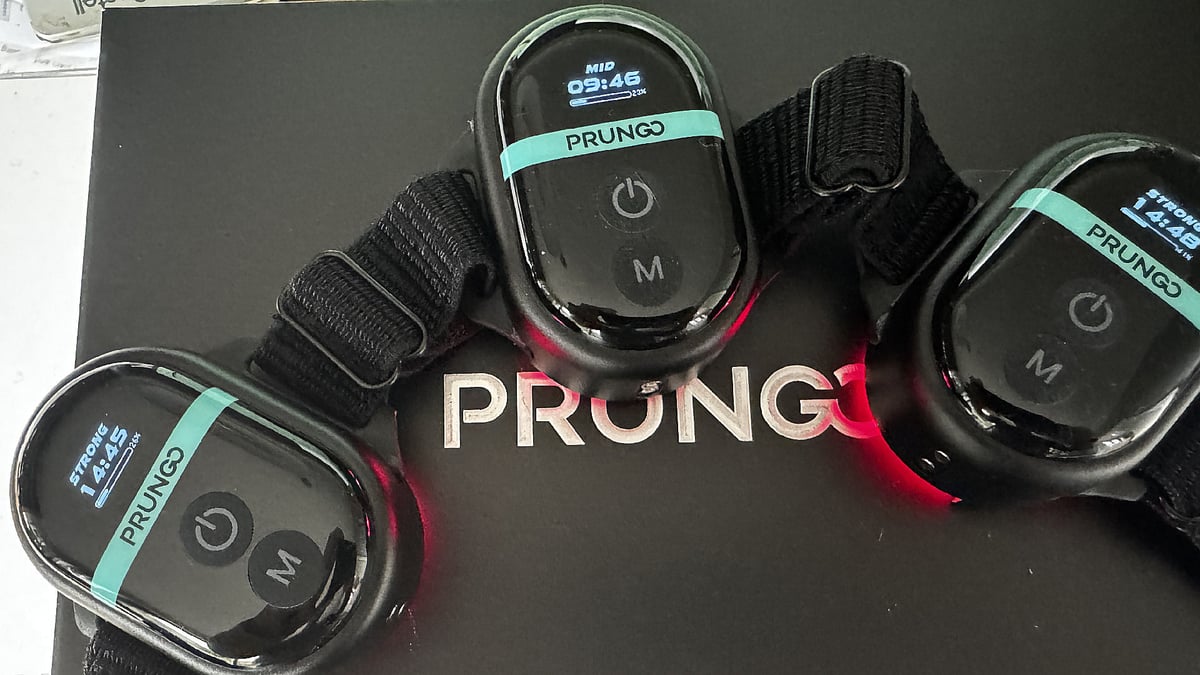
Light Therapy Parameters and Specs
Each module emits two wavelengths and incorporates proprietary technology that, according to the manufacturer, enables deeper penetration through polarisation and focusing effects.
| Parameter | Detail |
|---|---|
| Wavelengths Used | 660nm deep red LEDs (for surface-level recovery) and 850nm polarised infrared lasers (for deeper relief). |
| Light Source per Module | 6x 650nm red light LEDs and 4x 850nm infrared lights. |
| Special Technology | Focusing lens for the LEDs. Polarised filter for the infrared lasers. |
| Treatment Depth | 3–5 cm, intended for joint-level penetration. |
Operating Modes and Light Output
The device has three modes that control dose and intensity.
| Mode Name (Purpose) | Session Length | Specific Output (Laser/LED) |
|---|---|---|
| Mode 1 (Mild/Warm-up) | 8 minutes | LED: 65mW/cm² (900mW total/unit); Laser: 50mW/cm² (48mW total/unit) |
| Mode 2 (Mid/Relaxation) | 15 minutes | LED: 70mW/cm² (990mW total/unit); Laser: 75mW/cm² (48mW total/unit) |
| Mode 3 (Strong) | 20 minutes | LED: 80mW/cm² (1080mW total/unit); Laser: 100mW/cm² (48mW total/unit) |
The Strong mode corresponds to a 12-15 J/cm² dose, targeting the deeper therapeutic window cited in the scientific literature.
Battery and Charging
The device is highly portable and includes a dedicated charging case (FluxGo model only).
| Battery Component | Capacity | Battery Life |
|---|---|---|
| Module | 700mAh (Rechargeable Lithium-ion) | ~75 minutes per module |
| Charging Case | 5000mAh | 5 charge cycles |
| Power Input | Charging Case: 5V 2A; Module: 5V 0.3A. Power input required is 5V 3A. |
Prungo History and Industry Timeline
The Prungo fluxgo models we review here are the first models the company sold.
- 1960s: Non-consumer-grade products developed.
- 2000-2001: Consumer-grade RLT begins
- October 2021: Kineon MOVE+ Pro launch, Prungo’s closest competitor
- April 17, 2024: Prungo RLT300 – Core Module launches
- November 21, 2024: Prungo FluxGo Lite & FluxGo
Hands-On Results: Chronic Pain, DOMS, and Recovery
After four weeks of testing and several hours a week, I was pretty surprised at how effective Prungo was, with obviously positive results coming quickly, particularly for chronic pain. This observation was based on how quickly it noticeably improved my long-term lower back pain.
Test 1: A slight calf twinge
My right gastrocnemius (upper calf) experienced a slight twinge after a relatively fast-running interval session. It’s a recurring problem for me, and I usually take it easy for a while when it develops. This time, I used a single PRUNGO module for 20 minutes at max before going to sleep.
- Result: In the morning, my twinge felt 80-90% recovered.
- Interpretation: That was better/quicker than usual.
Test 2: Chronic Lower Back Pain
I have a painful lower back linked to my PSOAS muscle, brought on by changes in my training (less rotation from swimming, more cycling/running). I used the triple PRUNGO for 3 nights on max, with a 2×20-minute double session on the first day (one in the morning and one at night – don’t overdose…it won’t work).
- Result: The pain is at least 70% better, and some improvement was noticeable the morning after the first treatment.
- Added: Interpretation: Impressive.
Test 3: Quad – DOMS
I did a very hard bike interval session. My ‘wobbly legs’ at the end indicated how hard it was!
As I’ve got older, I tend to get DOMS two days after a hard workout for some reason, maybe I don’t try as hard as I used to. Either way, this was a very hard workout, so I expected some DOMS the next day.
I used PRUNGO on one quad and my PowerDot TENS/NMES machine on the other, a few hours before going to bed.
- Result: in the morning, I had mild DOMS. Interestingly, both legs felt very similar. I would say the PowerDot leg (left, my strongest) felt like it had less DOMS.
- Interpretation: Powerdot/PRUNGO act differently, so I expected some more noticeable difference. However, both have DOMS-eliminating aspects. Perhaps neither worked at all, or both worked in different ways for a similar effect. If I had three legs, I could have tried a combination treatment on the third!
Test 4: Two Injuries
I recently bought a table saw and inadvertently tried it out on my finger. This is not recommended. I have 9 stitches. I couldn’t really use PRUNGO on the end of my finger, which presents too small an area for Prungo. I guess I could have manually held it there, but I didn’t.
Handily, my partner had a minor skin operation on the very top of the gastrocnemius. This required 8 stitches (whimp, 9 is best!). The wound was kept very clean and showed no kind of inflammation over the first week. We used PRUNGO in the second week and ensured it was thoroughly cleaned with alcohol wipes. It didn’t seem to affect the speed or efficacy of the healing process. It might have done. We just couldn’t tell.
Test 5: Post Half Marathon
After a half-marathon on Sunday, my calves still ached a lot on Tuesday. I used Prungo on the right calf I nteh evening as a controlled test. The next morning, the right side was noticeably more recovered – I’d say it felt 25% better than the left. As far as I can see, this proves it works, and there’s no other explanation.
How to Use & Versatility: A Guide
Prungo was easy to use, but the straps are the weakest part of the design. The straps are a tad too thin and slightly awkward to attach and get to the correct length. OK though.
The device does its job whilst you are doing something else, saving time and not interfering with other tasks.
- Ease of Assembly: At first, it was hard to fasten the straps to the modules; the fit was very tight, but it became noticeably easier after a few uses.
- Strap Design: The two-sided velcro straps are less than 2cm wide. While they didn’t dig into my body, I did find it hard to get a good, tight, grippy fit, especially on my lower back and calves. The modules are light, but some movement occurred when walking around, though this did not seem to affect treatment efficacy. I would prefer a wider strap solution.
- Operation: Each module has two buttons. Button one turns it on. Button two toggles through the three intensity/duration modes. Then, Button One starts the chosen mode. Simple. Very Simple.
- Charging/Portability: I thought the charging carry case was perfectly fine, providing 5 charge cycles per module. The optional USB charging cable isn’t great; it’s held on magnetically and can come off easily. It’s a slight faff to remove the straps and pack away into the carry case, taking about a minute.
Video Demonstration: Use on Lower Back, Quads and Calf
I’ve got a couple of videos here showing Prungo in use on the lower back, calves and quads. The room is dimmed, and the red light is easily visible. One of the things to look for is how well the device adapts to the contours of the body – something you won’t get from a large, flat-panel red light therapy device. This shows exceptionally well on the quads.
Here is the more expensive Prungo with 3 modules looped together over my lower back. The deep 850nm polarised laser helps target my chronic lower back pain.
This second video shows how you can adjust the distances between the modules to skew the central module to the left or right of the spine, as preferred (my pain is on the left side, so I have two devices there).
This third video shows positioning on the quads, the three modules wrapping around the leg, potentially treating the target area from multiple angles.
Finally, two videos showing the PRUNGO FluxGo Lite on the calf, the first video shows starting the device
and this one showing it in use.
Comparison to Powerdot (TENS/NMES)
Powerdot, one of my favourites, and Prungo are different technologies but have overlapping effects on soft-tissue work. Here is a side-by-side comparison video showing the placement of each side on the quads.
| Technology Feature | PRUNGO (RLT) | Powerdot (TENS/NMES) |
|---|---|---|
| Core Technology | Red Light & Polarised Laser (Photobiomodulation) | Electrical Muscle Stimulation (TENS/NMES) |
| Penetration | Deep tissue (3–5 cm) to promote cellular energy (ATP). | Stimulates the entire muscle via an electrical signal (surface-to-muscle). |
| Cleaning/Maintenance | Wipe-clean modules. | Pads require replacement; their life is reduced by sweat/hair. |
| App Use | No App. Place-and-go simple operation. | App required (advanced features and guidance). |
| Portability/Wearability | Very portable (in the case); noticeable under tight clothing. | Extremely light; easily worn under all clothing. |
| Battery Life | ~75 mins per module; 5 recharges in case. | Multiple hours of use on a single charge. |
Competitors to Prungo
I mention Powerdot elsewhere in this review, but that is a TENS/NMES device rather than RLT. These are PRUNGO’s direct competitors.
- Kineon Labs – similar format and capability. Superior strap. Slightly more expensive. Kineon is also a dual-light device, pairing eight 660nm LEDs with ten 808nm class 1 laser diodes per module. Bulkier, older design.
- NovaaLab – large flat pad format, similar or slightly lower pricing. Red Light only
- FlexBeam – similar format, bulkier than Kineon, more expensive.
- VEVOR – non-contact panel format.
Deep Dive: The Science & Scientific Citations
TL;DR – The science says Red Light Therapy works.
The dosing science is set out in full in the red light therapy guide, covering wavelength, fluence, duty cycle and the biphasic dose response.
Understanding Photobiomodulation
RLT’s mechanism is Photobiomodulation, which increases ATP (cellular energy) to support faster repair, reduced inflammation, and improved circulation. It’s considered safe, and PRUNGO has zero EMF emissions at a 6-inch distance. Note: Overdosing stops cellular repair – don’t do it.
I don’t want to delve too deeply into the science of Red Light Therapy (RLT) in this article, so I’ve created an audio podcast (Spotify/YouTube) that comprehensively discusses the body of scientific literature in a way that’s accessible and understandable for non-scientists.
Listen to an accessible discussion of the science
Photobiomodulation Science
There is a good body of supporting science, and here are some key papers with a quick one-liner for each.
- Skin Health – A double-blind randomised controlled trial in 137 women reported a 30 per cent reduction in periocular wrinkle volume from 660nm light at 3.8 J/cm2 across ten sessions. Photobiomodulation, Photomedicine and Laser Surgery, 2023.
- Wound Healing – A 2026 meta-analysis of 56 trials covering 4,920 patients found near-infrared light improved surgical wound healing and reduced postoperative pain, though heterogeneity was high and the certainty of evidence was rated very low. International Wound Journal, 2026.
- Pain & Musculoskeletal Inflammation – Randomised trials and meta-analyses show reduced pain and improved function in conditions such as osteoarthritis and tendinopathy. Systematic review, BMJ / medical literature.
- Muscle Recovery & DOMS – Photobiomodulation before or after exercise can reduce DOMS and improve functional recovery. Meta-analysis, Journal of Strength & Conditioning Research, 2023.
- Hair Growth (AGA) – In androgenetic alopecia, multiple clinical trials and FDA-cleared consumer devices demonstrate increased hair density. Meta-analysis, Dermatologic Surgery, 2022.
- Therapeutic Wavelength Window – ~630/660 nm (surface tissue/skin) and ~810/850 nm (deeper tissue) are described as effective penetration wavelengths. PlatinumLED Therapy Lights.
- Dose = Power Density × Time (J/cm²) – Comprehensive explanation of dosing math and the biphasic (too much = less benefit) response. Red Light Man – Complete Guide.
- Optimal Dose Range (4–10 J/cm²) – Article explains penetration depth, mitochondrial action, and typical effective dose ranges. Optimal Health.
- Target Irradiance Guidelines – ~20–50 mW/cm² for skin-level use; ~100–200 mW/cm² recommended for deeper tissues such as muscle. BestQool – Dosage Guide.
- Common Clinical Dose Ranges – 2–10 J/cm² commonly used for superficial tissues; 10–70 J/cm² for deeper structures. the5krunner red light therapy guide.
- Biphasic Dose Importance (0.1–10 J/cm², often most effective) – Underscores that too little or too much light reduces results.
The Science Summarised
The application and dosage, taken from the general scientific literature, not PRUNGO, are summarised in this table. Use this as a handy look-up table.
| Target Area | Optimal Wavelength | Dose Range (J/cm²) | Purpose | Duration (per session) | Frequency |
|---|---|---|---|---|---|
| Skin / Superficial Tissue | 630–680 nm | 2–10 J/cm² (commonly 4–6) | Collagen, anti-ageing, wrinkles, acne, surface inflammation, wound healing | 3–5 minutes | 3–5× per week |
| Hair / Scalp | 630–680 nm | 1.5–70 J/cm² | Increased follicle activity and hair density in AGA | 5–20 minutes | 3–7× per week |
| Muscle / Recovery / DOMS | 810–850 nm | 10–70 J/cm² | Reduced DOMS, improved recovery and mitochondrial output | 5–10+ minutes | 3–7× per week |
| Joints / Tendons / Deep Tissue | 810–850 nm | 10–70 J/cm² | Reduced inflammation and pain, improved function and structural repair | 5–10+ minutes | 3–7× per week |
| Neurological / Brain | 810–850 nm | 10–70 J/cm² | Cognitive and neuroprotective effects, inflammation reduction | 3–8 minutes | 3–7× per week |
| General Cellular / Maintenance | 600–1000 nm | 0.1–6 J/cm² | Base-level mitochondrial activation and cellular improvement | Short sessions | 2–7× per week |
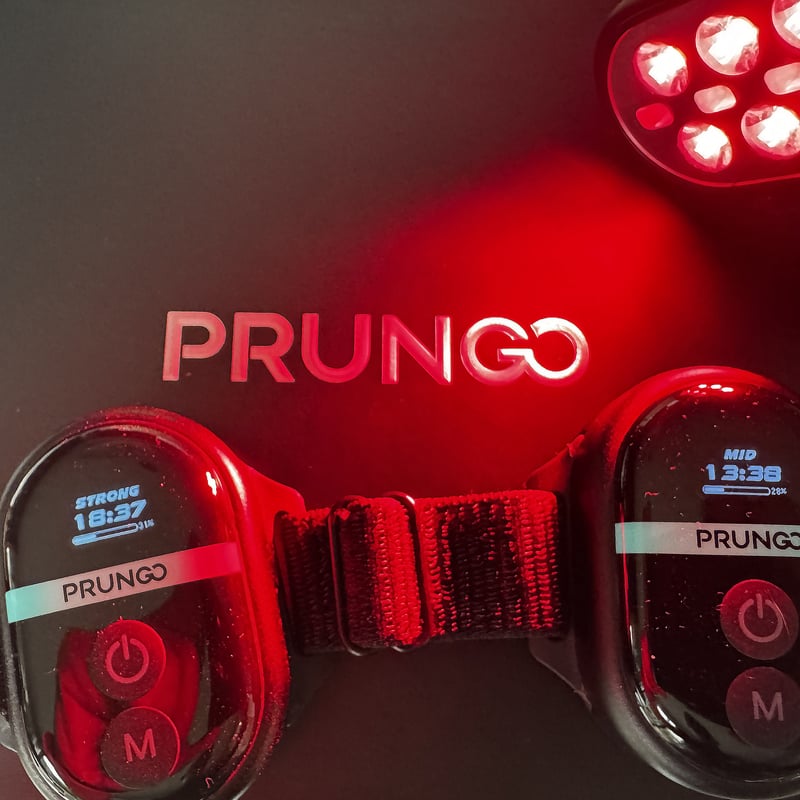
Truspilot Buyer Reviews
Here are 5 buyer reviews from Trustpilot, almost all of which are highly positive.
★ ★ ★ ★
‘I feel it is very helpful… My aching knee is missing it desperately.’ – Heather, July 1, 2025 More— Trustpilot verified review
★ ★ ★ ★ ★
‘PRUNGO has a fantastic product… exceeded my expectations.’ – David R., March 13, 2025 More— Trustpilot verified review
★ ★ ★ ★ ★
‘Since starting the treatments, I’ve noticed a significant improvement in her activity levels and alertness… cutting the total treatment time down to just 40 minutes.’ – Krystal, December 30, 2024 More— Trustpilot verified review
★ ★ ★ ★ ★
‘After just two weeks I’ve started to notice a difference. It’s so easy to use & only takes 20 minutes per day.’ – Leon Brookes, October 3, 2025 More— Trustpilot verified review
★ ★ ★ ★ ★
‘The quality of the product is excellent and the customer service is superb.’ – Anonymous, November 10, 2025 More— Trustpilot verified review
PRUNGO FluxGo – Areas for Improvement
The strap mechanism needs improvement, though. Both in how the straps are attached and in their width and stretch.
Perhaps if the modules could be engineered to be lighter, they would move less as you walk around.
Finally, the charging cable is non-standard, so getting a replacement could be tricky if you lose it, especially with the Lite version, which doesn’t include a charging case. I would also like it to be more magnetically ‘sticky’.
PRUNGO FluxGo Lite
Red light therapy works: sale bargains
+other retailersPRUNGO FluxGo (Lite) Review Summary & Purchase Options
Red Light Therapy has been trending in wellness communities for several years, and the scientific literature supports its use as an aid to soft-tissue repair. PRUNGO Fluxgo and Fluxgo Lite share the same RLT300 light modules, which are designed to operate at a specific location with optional treatment depths, in line with the science.
Science Tidbit: Overdosing, using Prungo too much, stops the mechanism that boosts cellular energy.
FluxGo combines a 660nm LED with an 850nm polarised laser, and this wavelength combination sets it apart from competitor products, making it applicable to a broader range of treatments, including those that require greater penetration/depth. The higher depths are claimed to be aided by a focusing method the brand uses.
My tests covered acute (short-term) and chronic (long-standing) issues, plus exercise muscle soreness (DOMS). I had some expectations of success after reading the scientific literature, but I was pleasantly surprised by noticeable positive effects, especially in chronic pain treatment. I could sensationalise the latter as ‘life-changing’, but it’s not quite that good; it’s close. I’m happy!
My suggestion for getting this product is to think carefully about the one- or three-module alternatives. For the lower legs and arms, the single module is perhaps the best option. The single module is also the cheapest way in.
It’s a good product.
PRUNGO FluxGo price: where to buy
Buy the PRUNGO FluxGo or FluxGo Lite from the retailer below:
Last Updated on 3 October 2026 by tfk the5krunner
Small things I always use
- Garmin 90-degree charging adapter: Charges your Garmin from any USB-C cable. Essential when travelling. I use one.
- Body Glide: The blue anti-chafe stick swimmers and runners carry. I use it.
- Speedo earplugs: Fewer ear infections and no cold-water dizziness. I use them.
- Dryrobe Advance: My winter changing robe for open-water swims. I use one. A cheaper option is the AONYIYI changing robe.
- Maurten: Race fuel that stays easy on the stomach. I use them.
- Garmin charging puck: The quickest way to top up before a session. I use one.
- Injinji: Toe socks that stop rubbing, so you run more. I use them.
- Ultimate toe protectors: Stop black toenails on long runs. They work. I use them.
- Compressport R2 v2 calf sleeves: My calf sleeves of choice. I use them.
- Cellucor C4: My pre-workout before hard sessions.
- TPU tubes: Schwalbe Aerothan, Tubolito and Pirelli SmarTube. Light, tiny spares. I use all three.
- G8 insoles: Adjustable insoles that are good. I use them.
- Cycplus Cube: A 97g electric pump that gets a road tyre rideable in two minutes. I carry one. 5% off with code THE5KRUNNER.
Watches and sensors
- Polar H10: My daily driver for waking HRV.
- Polar Verity Sense: My backup arm-worn HR sensor.
- Nomad bedside charger: Charges my iPhone and Apple Watch overnight. I use it, and many of their bands.
- Train.Red: The best muscle oxygen sensor I’ve used.
- Tymewear: Accurate heart rate and reliable ventilatory zones. I use it to pace endurance rides over an hour.
- Garmin Forerunner 970: A pro-grade triathlon watch. I use this.
- Apple Watch Ultra 4: My daily smartwatch. No phone needed on rides.
- Garmin Fenix 9 Pro: I’ve just bought one.
On the bike
- Continental GP5000 for everyday riding, and Aero 111 on the front for special occasions.
- Helmets: Specialized S-Works Evade 3 for road riding, and Rudy Project Wing for TT-style races. I use both.
- Ravemen FR300: A front light that mounts under your Garmin or Wahoo. I use one.
- Wahoo TRACKR Radar: I use it on one bike and Varia on the other. They perform the same.
- Garmin Varia RTL515: Radar that warns you of cars from behind. I use this model.
- Wahoo ELEMNT Roam 3: The bike computer that’s easy to use. I use mine on most rides.
- Favero Assioma Pro RS2: Accurate power pedals that swap easily between bikes. I use this model.
Home and indoor training
- NPE Runn: Makes my basic treadmill smart, sending more accurate speed and distance to my watch and Zwift. I use it.
- Google Wifi: Keeps Zwift connected in my pain cave. I use it.
- Apple TV 4K: Zwift on the big screen. I use two.
- Google Nest Doorbell (wired, 2nd gen): My video doorbell, running in both Google Home and Apple Home. I use it.
Health, recovery and sleep
- FreeStyle Libre 3 Plus: Shows how my blood sugar responds to diet.
- hDrop: Measures my sweat loss in summer and indoors.
- Fourth Frontier Zone: Checks my heart under load in hard sessions.
- Oura Ring 5: My partner’s recovery tracker of choice.
- Kineon MOVE+: Red light therapy for niggles. It works.
- Eight Sleep: A cooling mattress cover my partner and I use nightly.
Reader-Powered Content

This content is not sponsored. It’s mostly me behind the labour of love, which is this site, and I appreciate everyone who supports it.
Support the site: Follow (free, fewer ads) · Subscribe (paid, ad-free) · Buy Me A Coffee ❤️
Written by real people, with AI assistance. Fact-checked and verified for originality. See the Editorial Policy. FTC: Affiliate Disclosure — some links pay commission. As an Amazon Associate, I earn from qualifying purchases.
tfk is the founder and author of the5krunner, an independent endurance sports technology publication. With 20 years of hands-on testing of GPS watches and wearables, and competing in triathlons at an international age-group level, tfk provides in-depth expert analysis of fitness technology for serious athletes and endurance sport competitors. ID

Nice review, thanks for pointing at such devices.
Some medical large scale tests seem to point to the same conclusion as you: no miracle, but some nice results.
Ordered one for me and the wife, we’ll see how t goes for our little pains 🙂