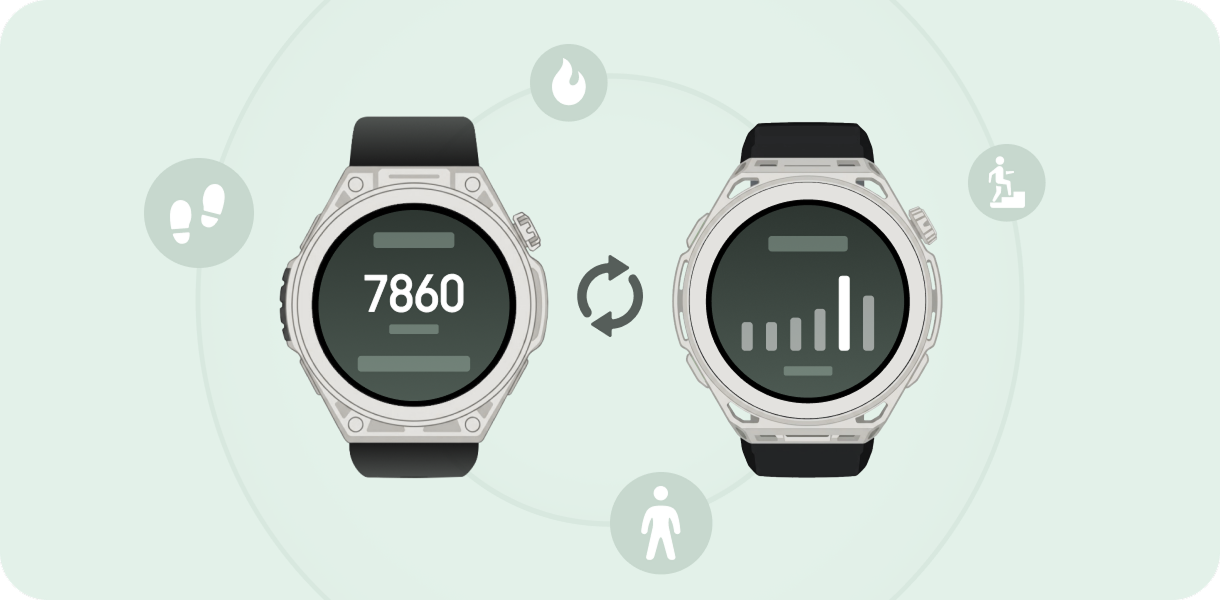
Garmin solved multi-device sync in 2023, starting its journey in 2016. Amazfit has just taken the first step onto the same ladder with its Activity Sync feature, part of the new Zepp OS6, which adds some new features but is mostly a consolidation of several recent additions.
What Multi-Device Activity Sync does
The Amazfit Balance 3 and Amazfit Balance Ultra are the only watches that support OS 6 so far. When an Amazfit owner has more than one device, the Zepp app merges daily activity data across both and keeps the totals consistent. The metrics listed are steps, calories, standing, and distance. Zepp Health mysteriously adds "other activity metrics" without specifying what those cover.
The sync runs via the Zepp app, not device-to-device, a standard architecture used across the industry, pioneered by Garmin. Most features in Zepp OS 6 are consolidations of capabilities that have been rolling out to OS 5 devices over the past year. Multi-Device Activity Sync is the exception, as it is genuinely new to the platform.
What Garmin TrueUp does — and when it launched
Garmin’s sync features were the best part of 7 years in the making. A long time, considering that Garmin’s best customers owned more than one device but suffered from a fragmented, inconsistent mosaic when looking at their data.
- Garmin introduced TrueUp in November 2016. It solved the same problem that Amazfit addresses today, i.e. steps, distance, calories, stairs, and intensity minutes scattered across multiple devices. The Garmin Connect app acted as the intermediary, favouring a Preferred Activity Tracker.
- In 2018, Garmin extended the feature with Physio TrueUp, which added physiological data to the sync: VO2 max, recovery time, training load, training load focus, FTP and power zones, and heat and altitude acclimation. Thus, a cycling session on an Edge computer counted toward recovery time on a Forerunner.
- Finally, in 2023, Garmin went further with Unified Training Status, introducing Primary Training Device and Primary Wearable designations and extending ecosystem consistency for training status and load focus across the full device range.
The gap: training load and HybridCharge
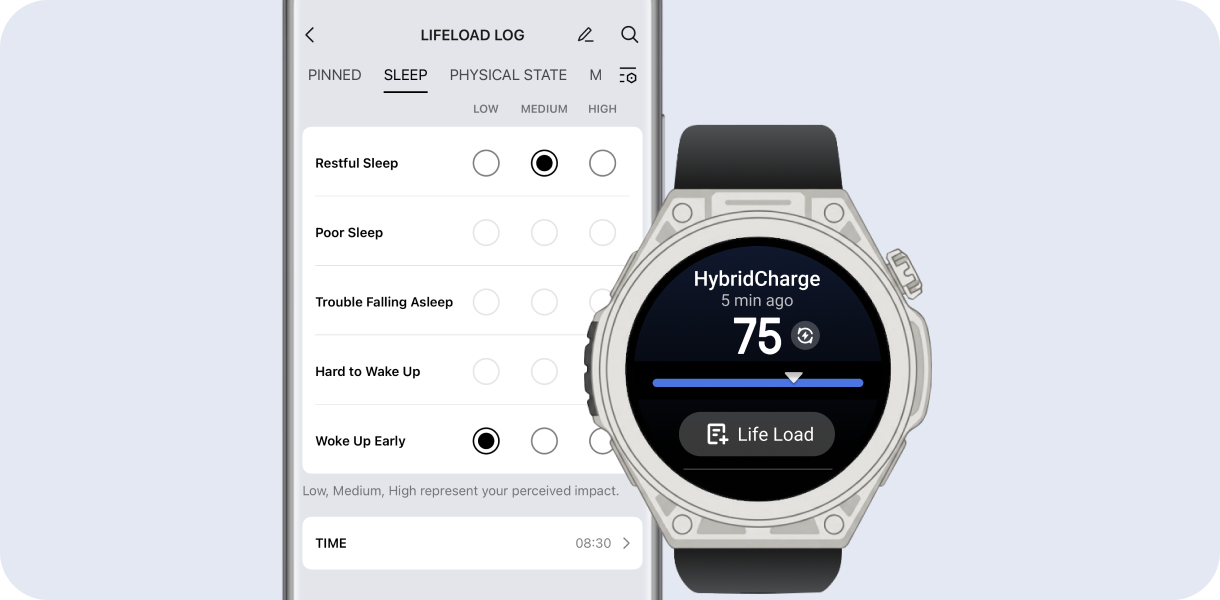
Amazfit’s readiness score is the latest HybridCharge. It builds on BioCharge by adding user-reported context — stress, illness, alcohol, jet lag — alongside Rate of Perceived Exertion logged after each session. The idea is to provide a fuller picture of load and recovery than biometrics alone can.
That premise depends on HybridCharge seeing all the training. The most obvious gap is the Helio Strap. Amazfit markets the Strap as a companion sensor for gym sessions when a wrist-worn watch is impractical or inaccurate. If a Helio Strap strength session does not feed the Balance 3’s HybridCharge score, the hybrid readiness metric is wrong.
Zepp Health has not confirmed whether training load, recovery time, or HybridCharge score crosses device boundaries. Garmin closed that gap in 2018 after 2 years of work. Let’s hope Amazfit can turn it around faster than that.
What else is new in Zepp OS 6
The platform release brings several features new to the Amazfit range, as well as others already available on OS 5 devices via firmware updates over the past year.
The following are new to the platform.
HybridCharge replaces BioCharge as the primary readiness score. It adds three inputs: LifeLoad, which lets users log external stressors including illness, alcohol, and jet lag; Rate of Perceived Exertion, logged after each session; and Boundary Reminders, which alert the user when readiness drops below a personal threshold before or during a workout.
Training Library brings official Zepp Training courses directly onto the watch.
HYROX Virtual Pace extends existing HYROX support with structured templates built toward a user-specified target race time (also works for sims).
Recovery Time has been tweaked from its earlier incarnation as an indicator of the hours required to wait until readiness to a textual cue – easy, moderate, and hard readiness states.
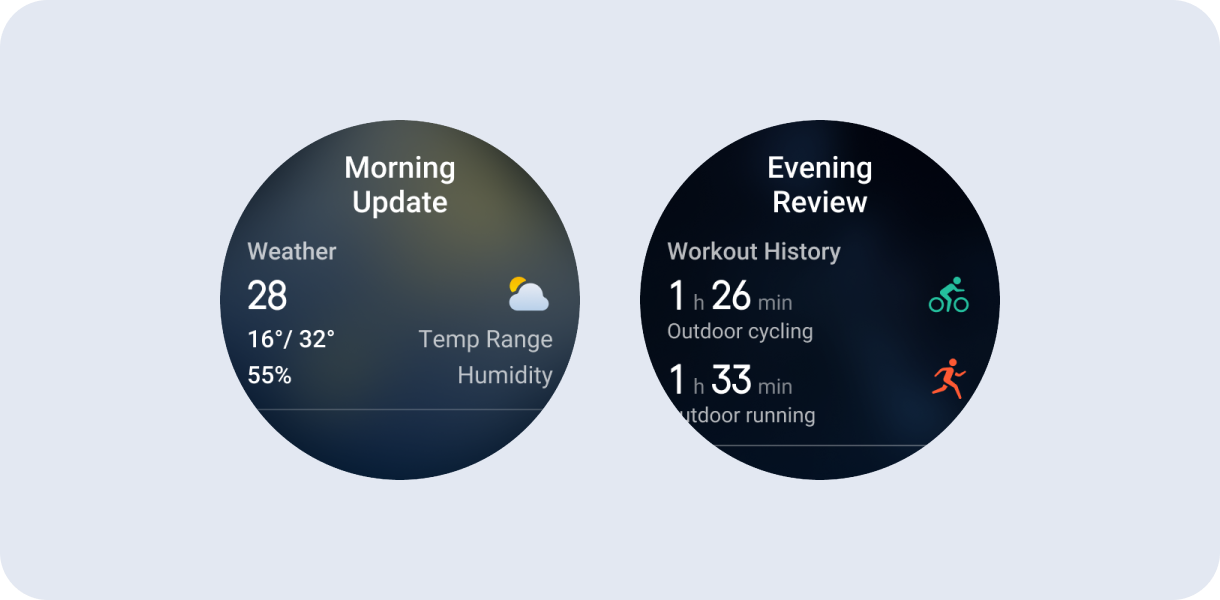
Daily Briefing extends and replaces Morning Update with: a morning briefing covering weather, sleep, schedule, training, and recovery, and an evening review of workouts, activity, and health trends.
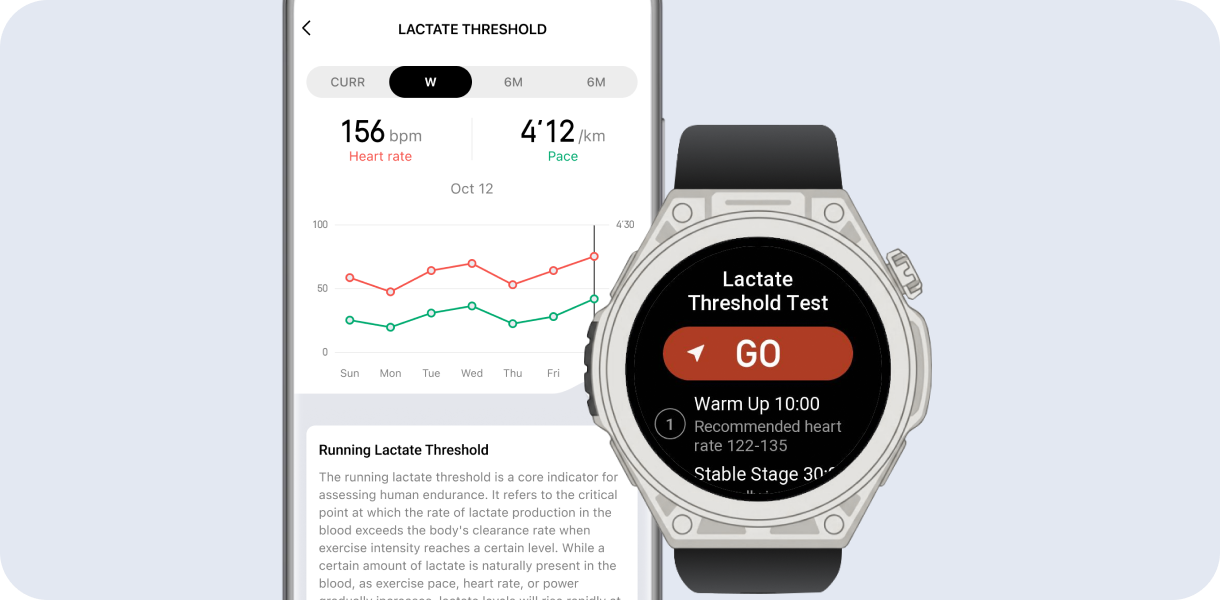
Three performance metrics arrive with OS 6 that have already reached some OS 5 devices via firmware. Grade-Adjusted Pace accounts for the gradient, reflecting actual effort on variable terrain. Running Lactate Threshold can be estimated via a guided test or automatic detection during supported runs. LTHR-Based Heart Rate Zones anchor the zone structure to lactate threshold rather than maximum heart rate. Assuming the LTHR detection gets a sensible value, this is a superior method.
The following are also new to the platform:
- Training Calendar: training plan and workout history in a single on-watch view
- Rowing machine connectivity: real-time distance, pace, and power from supported machines
- Indoor cycling sensor support: speed, cadence, and power sensors plus compatible smart trainers
- Gear Management: automatic mileage tracking for shoes and bikes with replacement reminders
- Motion UI: revised design language with tighter hierarchy and vertical navigation
- New Launcher: unified swipe and button patterns across watch face, workouts, apps, and notifications
- Unified Notification Management: system-level switch to silence all notifications at once
The takeout
Amazfit owners have been waiting and asking for this for some time. I suspect the initial euphoria will wear off once the realisation sets in that there are a lot more things that need to be synced to catch up with Garmin. Still, the basics are there, and Amazfit had to start somewhere. The company is pretty good at developing features quickly, so the next more meaningful update might even make its way to watches this year. Let’s see.
The strategic picture implies that a bit more urgency is needed.
Amazfit is rumoured to be releasing a Helio Strap 2 later this year, suggesting it is taking the Whoop and Fitbit Air band market very seriously. With seriousness comes the need to properly integrate the strap’s syncing capabilities with the full ecosystem. This will require syncing load and readiness.
We explore what this means for the Helio Strap 2 in Amazfit Helio Strap 2: What to Expect & When in 2026.
Quick answers
What is Amazfit Multi-Device Activity Sync?
It is a feature in Zepp OS 6 that consolidates daily activity data — steps, calories, standing, and distance — across multiple Amazfit devices via the Zepp app. Previously, owning more than one Amazfit device meant fragmented totals. The sync resolves that by combining data from all connected devices into a single daily figure.
How does Amazfit Activity Sync compare to Garmin TrueUp?
Amazfit’s sync covers daily activity totals, which is equivalent to what Garmin’s original TrueUp did in 2016. Garmin extended that in 2018 with Physio TrueUp, which added syncing of training load, recovery time, and VO2 max across devices. Amazfit has not yet confirmed whether equivalent physiological data cross device boundaries.
Does the Helio Strap feed into HybridCharge on the Balance 3?
Zepp Health has not confirmed this. It is the key unanswered question. HybridCharge needs to see all training load to produce a credible readiness score. If a Helio Strap gym session does not feed the Balance 3’s score, the readiness metric is incomplete for users who train across both devices.
Which devices support Zepp OS 6?
Balance 3 and Balance Ultra launched with OS 6. Cheetah 2 Ultra and Bip Max follow in June, with Balance 2, T-Rex Ultra 2, T-Rex 3 Pro, T-Rex 3, Cheetah 2 Pro and Active 3 Premium scheduled for July. Active Max follows in August. No dates have been confirmed for Balance 1, Active 2 Round, Active 2 Square or Bip 6.
For the full Amazfit range, accuracy data and Zepp Health analysis: Amazfit sports watch guide.
Last Updated on 3 October 2026 by tfk the5krunner
Small things I always use
- Garmin 90-degree charging adapter: Charges your Garmin from any USB-C cable. Essential when travelling. I use one.
- Body Glide: The blue anti-chafe stick swimmers and runners carry. I use it.
- Speedo earplugs: Fewer ear infections and no cold-water dizziness. I use them.
- Dryrobe Advance: My winter changing robe for open-water swims. I use one. A cheaper option is the AONYIYI changing robe.
- Maurten: Race fuel that stays easy on the stomach. I use them.
- Beet It Sport nitrate shots: Beetroot shots I take in the days before a race. I use them.
- Garmin charging puck: The quickest way to top up before a session. I use one.
- Injinji: Toe socks that stop rubbing, so you run more. I use them.
- Ultimate toe protectors: Stop black toenails on long runs. They work. I use them.
- Compressport R2 v2 calf sleeves: My calf sleeves of choice. I use them.
- Cellucor C4: My pre-workout before hard sessions.
- TPU tubes: Schwalbe Aerothan, Tubolito and Pirelli SmarTube. Light, tiny spares. I use all three.
- G8 insoles: Adjustable insoles that are good. I use them.
- Cycplus Cube: A 97g electric pump that gets a road tyre rideable in two minutes. I carry one. 5% off with code THE5KRUNNER.
Watches and sensors
- Polar H10: My daily driver for waking HRV.
- Polar Verity Sense: My backup arm-worn HR sensor.
- Nomad bedside charger: Charges my iPhone and Apple Watch overnight. I use it, and many of their bands.
- Train.Red: The best muscle oxygen sensor I’ve used.
- Tymewear: Accurate heart rate and reliable ventilatory zones. I use it to pace endurance rides over an hour.
- Garmin Forerunner 970: A pro-grade triathlon watch. I use this.
- Apple Watch Ultra 4: My daily smartwatch. No phone needed on rides.
- Garmin Fenix 9 Pro: I’ve just bought one.
On the bike
- Continental GP5000 for everyday riding, and Aero 111 on the front for special occasions.
- Helmets: Specialized S-Works Evade 3 for road riding, and Rudy Project Wing for TT-style races. I use both.
- Ravemen FR300: A front light that mounts under your Garmin or Wahoo. I use one.
- Wahoo TRACKR Radar: I use it on one bike and Varia on the other. They perform the same.
- Garmin Varia RTL515: Radar that warns you of cars from behind. I use this model.
- Wahoo ELEMNT Roam 3: The bike computer that’s easy to use. I use mine on most rides.
- Favero Assioma Pro RS2: Accurate power pedals that swap easily between bikes. I use this model.
Home and indoor training
- NPE Runn: Makes my basic treadmill smart, sending more accurate speed and distance to my watch and Zwift. I use it.
- Google Wifi: Keeps Zwift connected in my pain cave. I use it.
- Apple TV 4K: Zwift on the big screen. I use two.
- Google Nest Doorbell (wired, 2nd gen): My video doorbell, running in both Google Home and Apple Home. I use it.
Health, recovery and sleep
- FreeStyle Libre 3 Plus: Shows how my blood sugar responds to diet.
- hDrop: Measures my sweat loss in summer and indoors.
- Fourth Frontier Zone: Checks my heart under load in hard sessions.
- Oura Ring 5: My partner’s recovery tracker of choice.
- Eight Sleep: A cooling mattress cover my partner and I use nightly.
Reader-Powered Content

This content is not sponsored. It’s mostly me behind the labour of love, which is this site, and I appreciate everyone who supports it.
Support the site: Follow (free, fewer ads) · Subscribe (paid, ad-free) · Buy Me A Coffee
Written by real people, with AI assistance. Fact-checked and verified for originality. See the Editorial Policy. FTC: Affiliate Disclosure — some links pay commission. As an Amazon Associate, I earn from qualifying purchases.
tfk is the founder and author of the5krunner, an independent endurance sports technology publication. With 20 years of hands-on testing of GPS watches and wearables, and competing in triathlons at an international age-group level, tfk provides in-depth expert analysis of fitness technology for serious athletes and endurance sport competitors. See the gear tfk uses. ID

It appears you are currently launching a major offensive regarding both new models (Cheetah 2 Pro/Ultra, Max Bip, Balance Ultra3) and software features (trail running mode, climbs, etc.). I hope you continue to stay on top of the software development; however, you should also refine certain existing elements that haven’t been executed quite as well yet—such as map management, more selectable data fields, and support for additional languages in turn-by-turn and activity value prompts.
ha no, not really. coincidence.
Should be “they” instead of “you “ in the post above at the beginning.