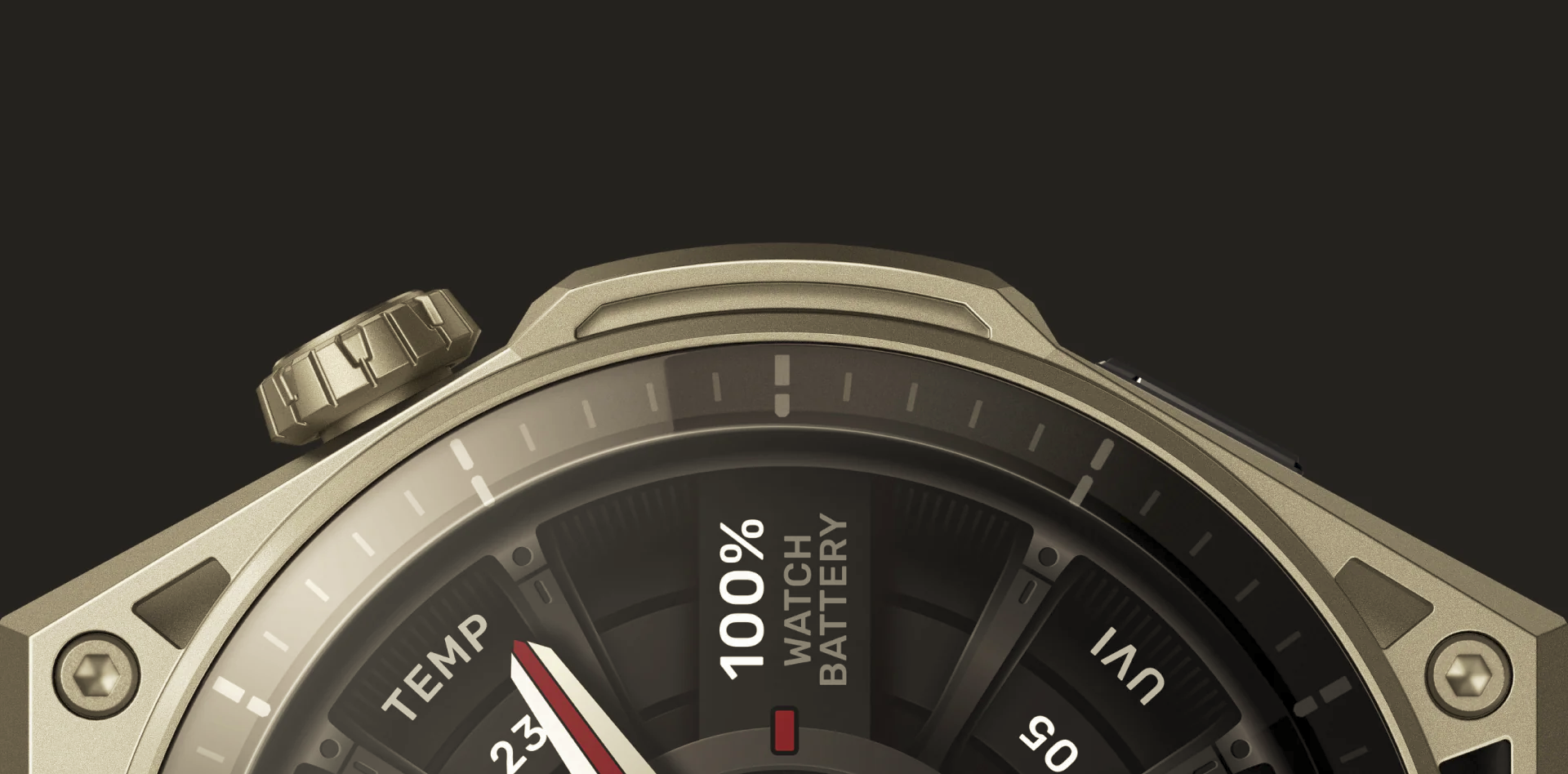
Amazfit Balance 3 and Balance Ultra: What Has Changed from Balance 2?
Amazfit is coming in hard and fast with new models, and this month it’s the Balance 3 and Balance Ultra, which were showcased at HYROX New York on 2 June 2026. I’m getting my hands on them next week in Stockholm, which is exciting. However, the release cadence is overwhelming; it only seems like yesterday that I briefly reviewed the Balance 2, and as soon as I’d finished reviewing the Cheetah 2 Pro, the 2 Ultra came out a few weeks later. I’m also ready to publish that review, and now here we have Balance 2. The circle is complete, but I need some sleep!
What keeps me going is the changes that have happened to the brand. A couple of years ago, they were popular, but I’d have classed them somewhere close to a could-do-much-better. That really is not the case now. Sure, they’re not taking on Garmin’s current generation, but they are easily on a par with Coros and Polar, maybe even Suunto.
What stands out for Amazfit here, and I’d deliberately say ‘stands out’ rather than ‘sets apart, is that they have pretty much all the features any sane person needs, maybe not quite always the detailed nuances of the features, and they have some pretty decent watch cases. They look good and are well-made. You pay a bit more and get top-end materials, and the components inside perform fairly well, but Garmin and Coros are still ahead. But not by much.
So this is not a review article. I’m simply setting out what’s changed from Balance 2 and how Balance 3 and Balance Ultra differ. There’s a compact table further down which explains it nicely. The great differentiator of all the models compared to Garmin is that the on-watch software is really easy to use, and all the Amazfit models share broadly the same software and get similar updates.
the Pitch
Amazfit grabbed the global licensing for HYROX. Perhaps too niche a sport for Garmin or too expensive for Coros. Either way, Amazfit got it. They are the Hyrox watch and the only brand allowed to use the name. So you won’t find a native HYROX sports profile on any other watch than an Amazfit. Well, you will, but they’ll be called hybrid sports or something like that.
The quid pro quo seems to be that Amazfit had to up its game, software-wise, and crack out reams of Hyrox-specific features. which they’ve done and which they continue to do.
As the Hyrox watch, Balance 3 starts at £369.90. A potentially decent entry-level tier that goes up to £599.90, where pricing gets a bit dicey as the company encroaches on the territory of my Forerunner 970, which is hard to beat. I’ll tell you why in the review later.
Who am I to have an opinion? I’ve done the sports tech stuff for 15 years. I’m an age-group GB triathlete (placed in the Top 5 at the Worlds in my glory days), and I’ve been doing Hyrox training and Hyrox sims for well over a year. You might see me at the Excel this year. Or Not. I commit most of my life to training, tech and typing, and I take sport seriously enough to care about how tech can help us all to do it just that little bit better.
What’s new: Balance 3 and Ultra vs Balance 2
Three areas separate the new models from the Balance 2.
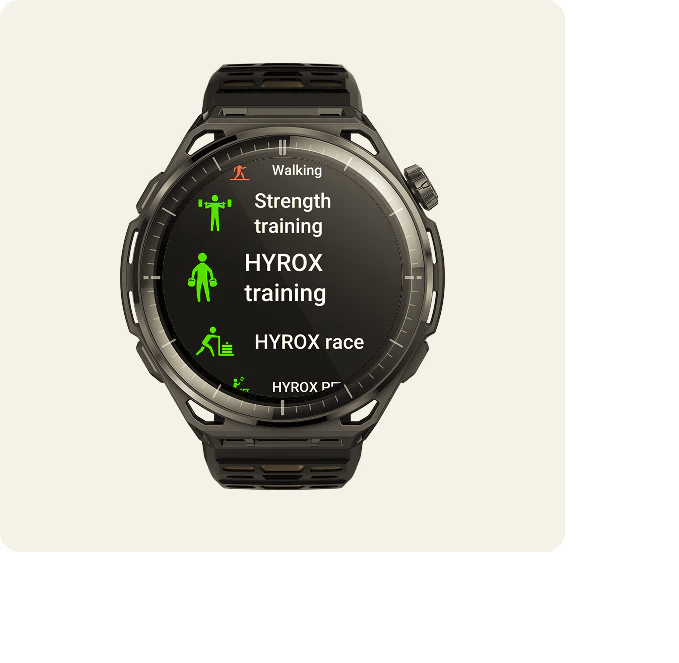
- HYROX-specific software. Balance 3 and Ultra include a HYROX training library, structured race plans built from venue-specific track lengths and ROX Zone layouts, a virtual pacer for race day, and post-race analysis that splits time spent running, in the ROX Zone, and on exercises. Other existing Amazfit models have Hyrox features; the Balance 2 has none of them and isn’t going to.
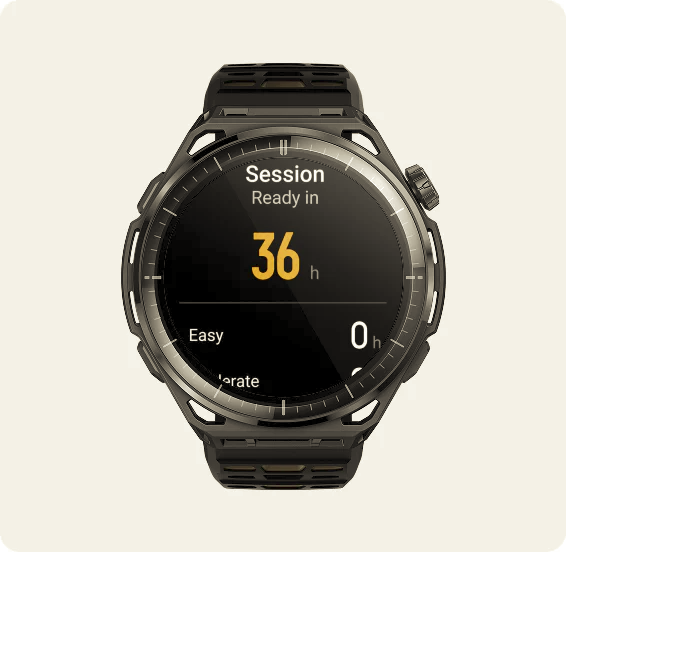
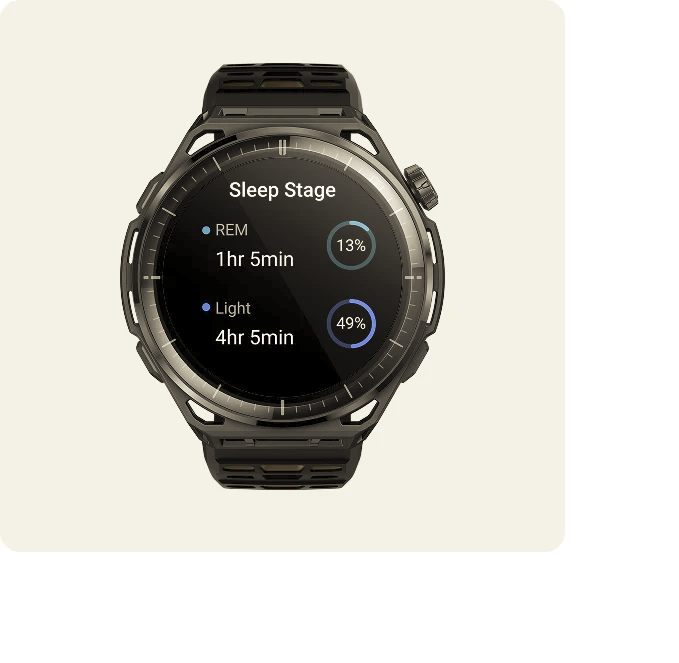
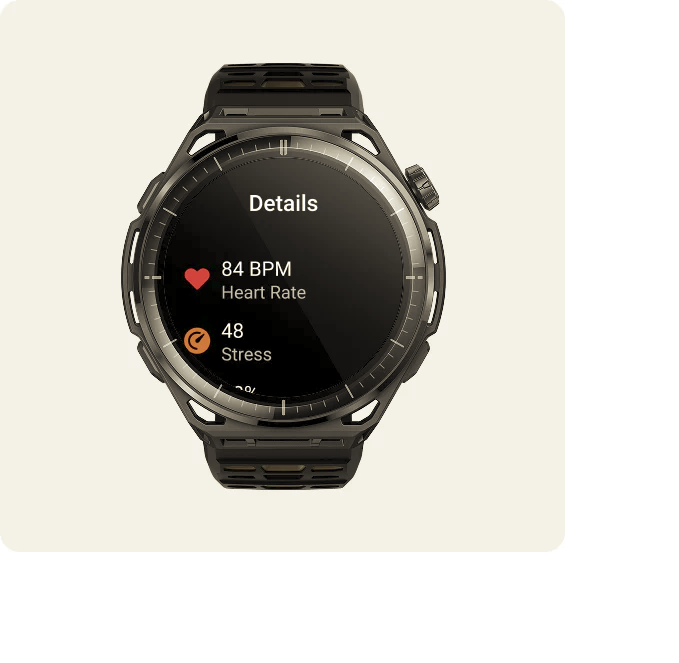
- A set of new features in sports physiology. HybridCharge, Amazfit’s recovery system, was introduced in the Zepp app v10.4.0 update a few weeks ago. It combines BioCharge energy levels, LifeLoad (subjective inputs including mood, stress, work intensity, and nutrition), and Training Load into a single, continuous recovery score. It’s like Garmin’s 24×7 Body Battery on steroids, or, if you like, it’s like Amazfit’s BioCharge on EPO. Then there’s Training Balance, which adds a strength-versus-endurance split with weekly focus recommendations (I have this on my cheetah – it’s cool). Both features are built into Balance 3 and Ultra from launch.
- Hardware. Both new models use the ZPS3044S processor, which Amazfit states delivers map rendering 2.5 times faster and map refresh 12 times faster than the ZPS3044 in the Balance 2. Storage doubles from 32GB to 64GB. Display brightness rises from 2,000 nits to 3,000 nits. Both new models add a dual-mode LED flashlight with white, red, and SOS modes that the Balance 2 lacks. Put another way, it can blind you if you look at either the display or the new flashlight, and it’ll blind you quickly because the processor is faster. Something like that.
The new software features are covered in a bit more detail here in Zepp OS 6.

Balance 3 versus Balance Ultra
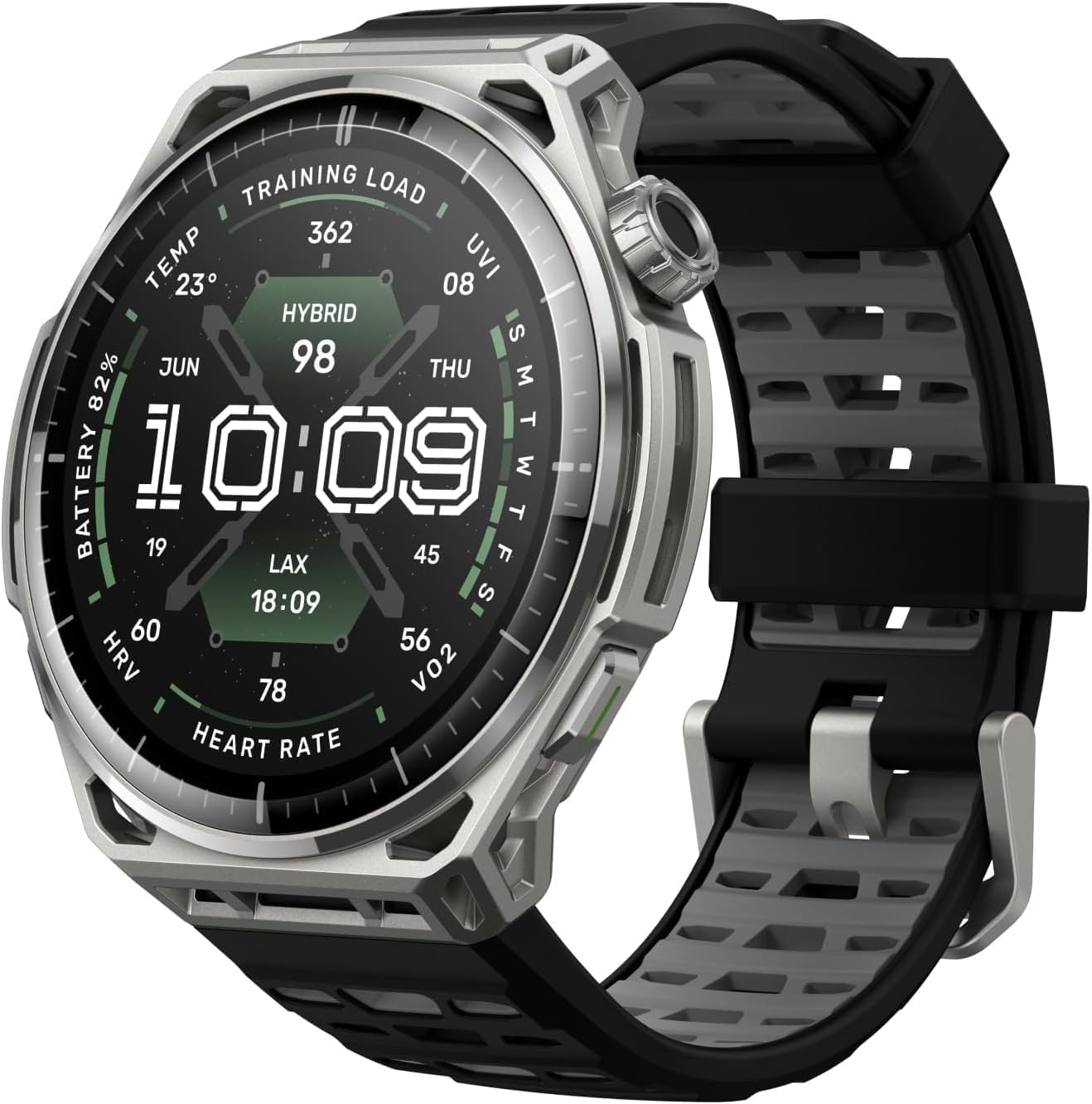
The two new Balance models run identical software. The differences are battery, materials, and case size. That’s it.
The Ultra carries a 780mAh cell against the Balance 3’s 658mAh, which translates to 30 days of typical use and 50 hours of GPS, compared to 21 days and 41 hours on the Balance 3. For most training cycles, 21 days is adequate; the Ultra’s longer GPS endurance becomes relevant for multi-day events and ultras.
In terms of materials, the Ultra and Balance 3 Ti use titanium for both the frame and the bottom case. The Balance 3 Stainless Steel uses a stainless steel frame but a plastic bottom shell. The £150 price gap between Balance 3 Titanium (£449.90) and the Ultra (£599.90) comes down largely to battery life and the Ultra’s slightly larger case.
The Ultra also ships with two straps in the box. The Balance 3 includes one.
Comparison table
| Feature | Balance 2 | Balance 3 / Ultra |
|---|---|---|
| Price | £299.90 | £369.90 (B3 Steel) / £449.90 (B3 Ti) / £599.90 (Ultra) |
| Battery (typical) | 21 days | 21 days (B3) / 30 days (Ultra) |
| GPS battery | 33 hours | 41 hours (B3) / 50 hours (Ultra) |
| Battery capacity | 668mAh | 658mAh (B3) / 780mAh (Ultra) |
| Display | 1.5″ AMOLED, 2,000 nits | 1.5″ AMOLED, 3,000 nits (both) |
| Processor | ZPS3044 | ZPS3044S (both) — 2.5x faster map generation |
| Storage | 32GB | 64GB (both) |
| Frame material | Aluminium alloy | Stainless steel (B3 Steel) / Grade 5 titanium (B3 Ti and Ultra) |
| Bottom case | Fibre-reinforced polymer | Plastic (B3 Steel) / Grade 5 titanium (B3 Ti and Ultra) |
| Weight (no strap) | 43g | 62g (B3 Steel) / 55g (B3 Ti) / 57g (Ultra) |
| Case size | 47.4 x 47.4 x 12.3mm | 51.4 x 51.4 x 12.5mm (B3) / 51.8 x 51.8 x 13.4mm (excl. sensor) |
| LED flashlight | No | Yes — white, red, SOS (both) |
| HYROX tools | No | Yes — training library, race strategy, virtual pacer, race analysis (both) |
| HybridCharge / Training Balance | Via app only (Zepp update) | Built in from launch (both) |
| Sports modes | 170+ | 180+ (both) |
| GNSS | Dual-band, 6 satellites | Dual-band, 6 satellites (both) |
| Water resistance | 10 ATM | 10 ATM (both) |
| NFC payments | Europe | Europe (both) |
| Straps in box | 2 | 1 (B3) / 2 (Ultra) |
| Platform integrations | Strava, TrainingPeaks, Intervals.icu, Apple Health, Google Health Connect | Same (both) |
Which model to buy
- Balance 2 (£299.90) — runners and cyclists who do not train for HYROX and do not need superior materials. Same GPS architecture and platform integrations as the new models, at £70 less than the cheapest Balance 3.
- Balance 3 Stainless Steel (£369.90) — the lowest-cost entry to the HYROX feature set and the new processor. The plastic bottom case is the visible trade-off. At 62g, it is the heaviest of the three models.
- Balance 3 Titanium (£449.90) — premium build without the Ultra’s extended battery. Grade 5 titanium throughout, 55g, and sufficient battery for all but multi-day use.
- Balance Ultra (£599.90) — 30-day battery, 50-hour GPS, the larger case, and two straps. At this price, it enters the territory occupied by the Garmin Forerunner 970 and Coros Vertix 2S. The case for it is battery life; the software is identical to the Balance 3.
Availability
Balance Ultra and Balance 3 Stainless Steel go on sale at the turn of June and July. Balance 3 Titanium follows a few weeks later. Amazfit notes that the sale date may vary in some European countries.
For the Balance 2 price and where to buy, see Amazfit Balance 2 price and where to buy.
Quick answers
What is the difference between Amazfit Balance 3 and Balance Ultra?
The software and display are identical on both models. The Ultra has a 30-day battery versus 21 days on the Balance 3, 50 hours of GPS versus 41 hours, and a slightly larger case. Both the Balance 3 Titanium and the Ultra use grade 5 titanium for the frame and bottom case. The Ultra ships with two straps; the Balance 3 with one. The Ultra costs £150 more than the Balance 3 Titanium.
Is the Amazfit Balance 2 still worth buying in 2026?
Yes, if you do not train for HYROX. The Balance 2 shares the same dual-band GPS architecture, platform integrations, and 21-day battery life as the Balance 3. The new models add HYROX tooling, a faster processor, a brighter display, and a flashlight. If none of those matter to your training, the Balance 2 at £299.90 remains the better-value option.
When do the Amazfit Balance 3 and Balance Ultra go on sale in the UK?
Balance Ultra and Balance 3 Stainless Steel go on sale at the turn of June and July 2026. Balance 3 Titanium follows a few weeks later. Amazfit notes that the date may vary in some European countries.
For the full Amazfit range, accuracy data and Zepp Health analysis: Amazfit sports watch guide.
Last Updated on 3 October 2026 by tfk the5krunner
Small things I always use
- Garmin 90-degree charging adapter: Charges your Garmin from any USB-C cable. Essential when travelling. I use one.
- Body Glide: The blue anti-chafe stick swimmers and runners carry. I use it.
- Speedo earplugs: Fewer ear infections and no cold-water dizziness. I use them.
- Dryrobe Advance: My winter changing robe for open-water swims. I use one. A cheaper option is the AONYIYI changing robe.
- Maurten: Race fuel that stays easy on the stomach. I use them.
- Beet It Sport nitrate shots: Beetroot shots I take in the days before a race. I use them.
- Garmin charging puck: The quickest way to top up before a session. I use one.
- Injinji: Toe socks that stop rubbing, so you run more. I use them.
- Ultimate toe protectors: Stop black toenails on long runs. They work. I use them.
- Compressport R2 v2 calf sleeves: My calf sleeves of choice. I use them.
- Cellucor C4: My pre-workout before hard sessions.
- TPU tubes: Schwalbe Aerothan, Tubolito and Pirelli SmarTube. Light, tiny spares. I use all three.
- G8 insoles: Adjustable insoles that are good. I use them.
- Cycplus Cube: A 97g electric pump that gets a road tyre rideable in two minutes. I carry one. 5% off with code THE5KRUNNER.
Watches and sensors
- Polar H10: My daily driver for waking HRV.
- Polar Verity Sense: My backup arm-worn HR sensor.
- Nomad bedside charger: Charges my iPhone and Apple Watch overnight. I use it, and many of their bands.
- Train.Red: The best muscle oxygen sensor I’ve used.
- Tymewear: Accurate heart rate and reliable ventilatory zones. I use it to pace endurance rides over an hour.
- Garmin Forerunner 970: A pro-grade triathlon watch. I use this.
- Apple Watch Ultra 4: My daily smartwatch. No phone needed on rides.
- Garmin Fenix 9 Pro: I’ve just bought one.
On the bike
- Continental GP5000 for everyday riding, and Aero 111 on the front for special occasions.
- Helmets: Specialized S-Works Evade 3 for road riding, and Rudy Project Wing for TT-style races. I use both.
- Ravemen FR300: A front light that mounts under your Garmin or Wahoo. I use one.
- Wahoo TRACKR Radar: I use it on one bike and Varia on the other. They perform the same.
- Garmin Varia RTL515: Radar that warns you of cars from behind. I use this model.
- Wahoo ELEMNT Roam 3: The bike computer that’s easy to use. I use mine on most rides.
- Favero Assioma Pro RS2: Accurate power pedals that swap easily between bikes. I use this model.
Home and indoor training
- NPE Runn: Makes my basic treadmill smart, sending more accurate speed and distance to my watch and Zwift. I use it.
- Google Wifi: Keeps Zwift connected in my pain cave. I use it.
- Apple TV 4K: Zwift on the big screen. I use two.
- Google Nest Doorbell (wired, 2nd gen): My video doorbell, running in both Google Home and Apple Home. I use it.
Health, recovery and sleep
- FreeStyle Libre 3 Plus: Shows how my blood sugar responds to diet.
- hDrop: Measures my sweat loss in summer and indoors.
- Fourth Frontier Zone: Checks my heart under load in hard sessions.
- Oura Ring 5: My partner’s recovery tracker of choice.
- Eight Sleep: A cooling mattress cover my partner and I use nightly.
Reader-Powered Content

This content is not sponsored. It’s mostly me behind the labour of love, which is this site, and I appreciate everyone who supports it.
Support the site: Follow (free, fewer ads) · Subscribe (paid, ad-free) · Buy Me A Coffee
Written by real people, with AI assistance. Fact-checked and verified for originality. See the Editorial Policy. FTC: Affiliate Disclosure — some links pay commission. As an Amazon Associate, I earn from qualifying purchases.
tfk is the founder and author of the5krunner, an independent endurance sports technology publication. With 20 years of hands-on testing of GPS watches and wearables, and competing in triathlons at an international age-group level, tfk provides in-depth expert analysis of fitness technology for serious athletes and endurance sport competitors. See the gear tfk uses. ID

What is the official size of the case? some websites say that’s 51.8 and other 48.6. Is there a difference in measurement method ?
51 is on the amazfit.com, the other figure was in a media kit (I transcribed it incorrectly and assume others did)
A great move with the HYROX license, but there are two major drawbacks:
1. At this size and price, Amazfit should be putting ~1000mAh batteries in these watches. This is the perfect time to implement this. Others are already doing it (e.g., the Honor Watch 6 Plus).
2. Amazfit is still afraid to try putting LTE modules in its watches. Why? After all, 4G connectivity in sports watches would only be for emergencies. That’s all.
good challenges.
why not 5g/redcap…lower power?
Nice watch
Thank you very much for the detailed article.
The Balance 2 will receive Hyrox support via an OTA update this month. The Balance 2 may have already received the update; I’m not sure. See: https://us.amazfit.com/pages/software-updates (since there will likely be a different updated spreadsheet on that page in July, here’s the direct link to the spreadsheet: https://docs.google.com/spreadsheets/d/e/2PACX-1vRSZpzZqnWA7v9Sxloc0ScAuK1P2rMqmd4zsZK0yAEuraaviHXjpGOaLitHRy2T01VKDXoaYMs_c-iP/pubhtml/sheet?headers=false&gid=0 )
There’s a mistake in the “the Pitch” section of your article. It says: “As the Hyrox watch, Balance 3 starts at £299.99. A potentially decent entry-level tier that goes up to £599.99, …” Of course, it should read £369.90 and £599.90 (See “Comparison table”).
Translated with DeepL.com (free version)
In German:
Vielen Dank für den ausführlichen Artikel.
Die Balance 2 wird diesen Monat Hyrox-Unterstützung per OTA-Update erhalten. Möglicherweise hat die Balance 2 das Update schon erhalten, ich weiß es nicht. Siehe: https://us.amazfit.com/pages/software-updates (weil auf der Seite der Spreadsheet im Juli vermutlich ein anderer (aktualisierter) sein wird, hier der direkte Link zu dem Spreadsheed: https://docs.google.com/spreadsheets/d/e/2PACX-1vRSZpzZqnWA7v9Sxloc0ScAuK1P2rMqmd4zsZK0yAEuraaviHXjpGOaLitHRy2T01VKDXoaYMs_c-iP/pubhtml/sheet?headers=false&gid=0 )
In deinem Artikel hat sich im Abschnitt “the Pitch” ein Fehler eingeschlichen. Dort steht: “As the Hyrox watch, Balance 3 starts at £299.99. A potentially decent entry-level tier that goes up to £599.99, …”. Es müsste natürlich £369.90 und £599.90 lauten (siehe “Comparison table”).
thank you!
Balance 2 has HYDROX in it’s workout lists, along with the ability to to (BP readings region specific) Seems to be within 2 beats of the garmin 600 strap .01 in distance with stryd pod, and almost dead on with time distance.