Garmin next-gen sensors: 2026 onwards

Garmin is seeking new opportunities to develop and sell high-value, novel sensors within its ecosystem. The company has the unique ability to lead with new sports sensors and closely follow behind the market’s leading innovators with wellness sensors. When done correctly, a novel sensor could justify a Connect+ subscription, expand an existing market, and boost sales of Garmin watches and bike computers needed to process and display the new data. There are many hurdles to overcome, not least of which are ease of use and the genuine need to improve training for a significant number of customers who typically own Garmin devices.
Where heart rate, cadence and speed were once the only metrics anyone thought could be widely used, we have seen the rise of running and cycling power used regularly or at least tried by over a million athletes (based on app downloads and known power meter sales).
More sensors are plausible. Garmin trademarked Muscle Battery in early 2026, referencing SmO2. Garmin first supported SmO2 metrics over ANT+ years ago and seems to be targeting sales to strength and hybrid strength (HYROX) sports. For once, two and two do make four here, but what other opportunities are there?
This article explores all current and plausible sensors that Garmin could adopt, develop or acquire.
What Garmin already sells
Garmin already sells or reads a wide range of sensors. The list covers the Tempe temperature sensor, HRM chest straps, running and foot pods, Rally power meter pedals with Cycling Dynamics, Varia radar and lights, Tacx trainers, fat and muscle using BIA on the Index scale. It also reads third-party muscle oxygen and, through a phone, continuous glucose over ANT+. Most of these will be familiar to anyone reading this.
External sensors that exist, made by others
Several categories have proven hardware that Garmin can read but does not make. Muscle oxygen sensors from Moxy and Train Red read oxygen saturation in working muscle, used to set intensity, find thresholds and time rest (Nitric Oxide is related).
Greenteg’s CORE 2 estimates core body temperature for heat acclimation, thereby raising plasma volume and increasing VO2max.
Flowbio and hDrop measure fluid and sodium loss during exercise. The reading replaces guessed hydration with a measured intake target. Tymewear’s VitalPro reads ventilation (breathing) rates per minute. It locates VT1 and VT2 without a laboratory metabolic cart. Aerosensor, Notio and Velocomp calculate real-time aerodynamic drag, the largest force a cyclist fights. Stryd measures running power directly at the foot, where Garmin derives it from the wrist.
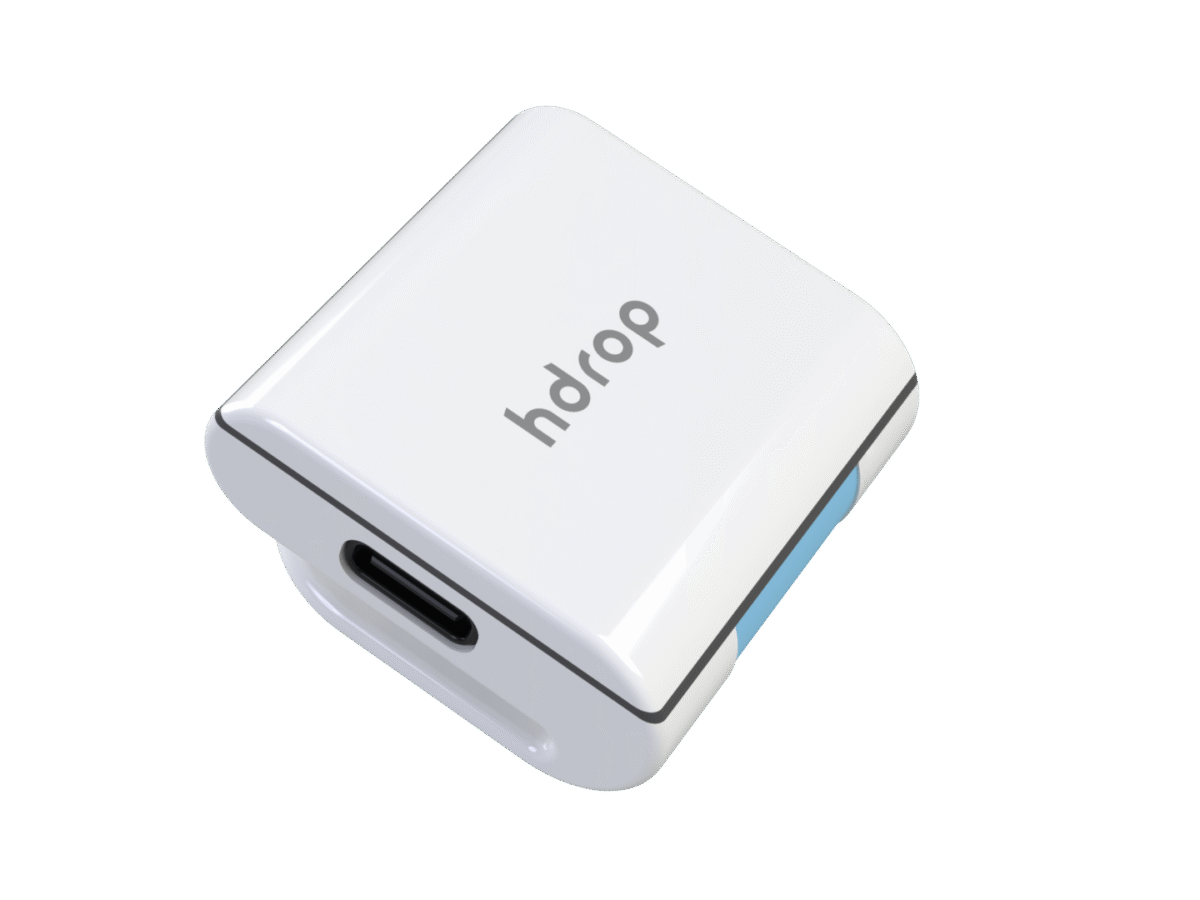
Sweat and Sodium Sweat Sensor
Garmin and Wahoo Compatible
 +other retailers
Sensors that barely exist yet
This group sits earlier in development. No mature consumer product exists that an endurance athlete can trust. Continuous glucose monitors read interstitial glucose, with Dexcom Stelo and Abbott Lingo the current consumer options after the athlete platform Supersapiens closed in 2024. Continuous lactate shipping is not in any consumer product, though PercuSense, Abbott and Dexcom are working on it. Real-time blood pressure is obtained using tiny wrist cuffs (Huawei, Wellue), and trended pressure is derived from the PPG pulse waveform.
Cortisol, the direct stress hormone, remains largely in research with no consumer product shipping. EDA senses skin conductance as an electrical proxy for stress, and Fitbit Sense shipped it in 2020.
Stress today is never measured directly but could prove groundbreaking if solved. Wearables read proxy physiological signals: heart rate, HRV, skin temperature and EDA. The chemical route measures sweat cortisol, sodium, lactate, and pH, and remains in the laboratory. Sweat cortisol runs at 1 to 10 per cent of blood levels, lags behind blood by 10 to 30 minutes, and rises with exercise, which is why a wrist cortisol reading remains hard. The realistic near-term use is for chemistry to calibrate a physiological estimate.
Multi-wavelength optical sensing targets glucose, hydration, and other biomarkers from a single sensor, yet no consumer wearable delivers reliable readings, and Rockley Photonics, once the leading name, filed for bankruptcy in 2023. The deepest biomarkers, haemoglobin, urea and creatinine, sit furthest out. ECG already runs on Garmin on demand.
What Garmin could realistically sell
Muscle oxygen
Muscle oxygen is the safest call. Garmin already displays SmO2 over ANT+, and the Muscle Battery trademark suggests a new branded score being added. The hardware, a near-infrared (NIRS) sensor, is understood, and the data standard exists. Whoop was granted a near-infrared muscle oxygen patent in April 2026. A Garmin sensor feeding a proprietary score follows the route Garmin took with Cycling Dynamics and Body Battery.
- Pros: Can take accurate readings, and the data really do provide useful insights for athletes.
- Cons: Requires one per muscle group and precise, repeated placement. Correct data is hard to get, understand and act on.
- Expert Assessment: This is an opportunity for Garmin to sell multiple devices to single athletes and teams. The market is proven to a degree and growing; the sensors would be cheap to make and highly profitable. I would say it’s very likely we will see a Garmin product here before the end of 2027.
Running power and aero drag
These are two categories Garmin will leave alone.
Stryd holds key patents on dedicated running power footpods and is understood to have defended them when Coros entered the space. The wrist-based workaround used by Garmin and its competitors is good enough for mass-market users who want to try the technology.
Aero drag has been tried, tested and shelved. Garmin bought Alphamantis in 2017 and showed a Vector Air prototype that never reached production. A product held that long signals hard engineering and a market too small to justify manufacture. CdA sensing remains in the realm of specialists, as evidenced by Body Rocket’s recent exit.
Hydration and breathing (strain gauge-based)
Sweat rates, sodium rates and breathing volumes have the widest appeal of the unbuilt categories. Every endurance athlete sweats and breathes, and both metrics are easy to understand. Flowbio, hDrop and Tymewear have proven the hardware, and all three already stream to Garmin. Garmin could build either sensor or acquire an incumbent. Sweat sensing would be the most difficult to replicate in-house.
- Pros: Useful and meaningful data points from independent vendors that have not quite proven a larger market exists. The fit of the metrics to the needs of endurance athletes is excellent.
- Cons: Heart rate and power are more accepted proxies for exertion, and most people who need one simply create and follow a hydration plan.
- Expert Assessment: These metrics attract the data-obsessed athlete, like the author. The larger, wider market would need a serious education drive, which I don’t think will overcome the existing, cheaper alternatives the majority already use.
Core temperature
Core temperature is plausible but narrow. Heat training works, and CORE has proven the sensor. The use case reaches professionals and serious age-groupers, not the mass base. That said, a niche accessory is possible and would easily take the entirety of GreenTEG Core‘s market.
- Pros: Heat training is a proven way to boost VO2max at low effort levels and in the sauna
- Cons: Heat training is uncomfortable, and saunas typically require club membership
- Expert Assessment: This will remain a niche area for committed amateurs and pros.
The biochemical frontier
Biochemical sensors are innovation-follower territory for Garmin.
Garmin added wrist PPG and wrist ECG after rivals, not before. Glucose, lactate and the optical platforms carry regulatory and accuracy risks that Garmin will quietly let others absorb first. Garmin has already patented non-invasive HbA1c estimation, aimed at long-term health trends rather than real-time fuelling. Blood pressure is the exception worth watching where BP trend readings clear a lower bar than a clinical figure using existing PPG waveform tech.
Muscle Battery is the only new sensor type Garmin has already named.
Quick answers
What is Garmin Muscle Battery?
Muscle Battery is a metric Garmin trademarked in early 2026 to process muscle oxygen data. Garmin has not confirmed what hardware it requires. A dedicated muscle oxygen sensor is the obvious route, though the score could also draw on EMG, load modelling, or existing heart rate and accelerometer data.
Does Garmin make a muscle oxygen sensor?
No. Garmin sells no muscle oxygen hardware. It reads SmO2 from third-party sensors such as Moxy and Train Red via the ANT+ muscle oxygen profile, then displays the values on compatible watches and Edge computers.
Will Garmin release a muscle oxygen sensor?
It is the most likely new Garmin sensor. The ANT+ profile already exists, the hardware is understood, and the Muscle Battery trademark points to a branded score on top. Whoop was granted a near-infrared muscle-oxygenation patent in April 2026, which puts pressure on Garmin to ship its own.
What sensors does Garmin already sell?
Garmin sells the Tempe temperature sensor, HRM chest straps, running and foot pods, Rally power meter pedals with Cycling Dynamics, Varia radar and lights, Tacx trainers, and the Index scale. It also reads many third-party ANT+ sensors, including muscle oxygen and, through a phone, continuous glucose monitors.
Does a Garmin watch work with Moxy or Train Red?
Yes. Both Moxy and Train Red transmit over the ANT+ muscle oxygen profile, which Garmin watches and Edge computers can read and record. The raw SmO2 reading appears as a data field. Any higher-level scoring remains within each brand’s app.
Does Garmin work with Stryd?
Yes. Stryd’s running power foot pod connects to Garmin watches through a Connect IQ data field. Garmin also calculates its own running power from the wrist or an HRM strap, so a Stryd pod is optional rather than required.
Will Garmin make a running power foot pod?
Unlikely. Stryd holds key patents around dedicated running power footpods, and Garmin already produces running power without one. There is no commercial reason for Garmin to build a pod it does not need.
Does Garmin make an aerodynamic drag sensor?
No. Garmin bought the aero firm Alphamantis in 2017 and built a Vector Air prototype that never shipped. Real-time CdA measurement is limited to specialists such as Aerosensor, Notio and Velocomp, whose sensors display on Garmin Edge computers via Connect IQ.
What was the Garmin Vector Air?
Vector Air was a Garmin cycling aerodynamics prototype shown after the 2017 Alphamantis acquisition. It was designed to calculate live aerodynamic drag on an Edge computer. Garmin never released it, which signals difficult real-world calibration and a market too small to justify production.
Could Garmin add a hydration or sweat sensor?
Yes, and it is one of the more feasible additions. Flowbio and hDrop have shown that wearable fluid and sodium sensors work, and both already stream to Garmin. Garmin could build its own sensor or acquire an incumbent to integrate the data natively.
Does Garmin work with hDrop or Flowbio?
Yes. hDrop streams sweat and sodium data to Garmin devices, and Flowbio has tested a real-time Garmin data field. Both measure fluid and sodium loss during exercise, so athletes replace what they lose rather than guess.
Does Garmin measure core body temperature?
Not with its own sensor. Garmin reads core temperature from the Greenteg CORE sensor through Connect IQ. Core temperature supports heat acclimation training, which raises plasma volume and can lift VO2max, but the use case is narrow, so a Garmin core temperature product would be a niche accessory at most.
Can a Garmin watch measure blood glucose?
Not directly. Garmin can display data from third-party continuous glucose monitors such as Dexcom Stelo through a phone bridge. The athlete-focused Supersapiens platform, which paired with Abbott’s sensor, closed in 2024.
Does Garmin have a glucose sensor patent?
Yes. A 2026 Garmin patent describes non-invasive HbA1c estimation using optical sensors, aimed at long-term blood sugar trends for health and diabetes management rather than real-time fuelling during workouts.
Does Garmin have ECG?
Yes. Several Garmin watches offer an on-demand ECG that records a single reading when you hold the watch. It is a spot check, not continuous monitoring, and Garmin added it after Apple and others.
Can a Garmin watch measure blood pressure?
No. Garmin offers no blood pressure feature. Cuffless trend estimates exist on some rival devices, and Whoop drew an FDA warning over its blood pressure feature in July 2025 before the agency closed the case in June 2026. If Garmin enters, expect a wellness trend rather than a clinical reading.
Will Garmin add a breathing or ventilation sensor?
Possibly. Tymewear’s VitalPro has shown that a chest strap can read breathing rate and minute ventilation and locate ventilatory thresholds without a laboratory metabolic cart, and it already streams to Garmin. Breathing has broad appeal, making it one of the more realistic Garmin builds.
Can Garmin measure lactate?
No. No consumer device offers continuous lactate measurement during exercise. PercuSense, Abbott and Dexcom are working on it. Until a validated sensor ships, Garmin has nothing to read.
Can a wearable measure cortisol?
Not yet as a consumer product. Cortisol, the direct stress hormone, remains largely in research, with university prototypes and a few niche devices but no validated mainstream wearable. This sits separate from electrodermal activity, which infers stress from skin conductance and shipped on the Fitbit Sense in 2020.
How do wearables measure stress?
No wearable measures stress directly. Devices read proxies. Garmin, Apple and Fitbit use physiological signals such as heart rate, HRV, skin temperature and electrodermal activity. Chemical methods that read sweat cortisol, sodium and lactate remain in research, held back by tiny sweat concentrations, lag, and exercise raising cortisol.
What is the most likely sensor Garmin will release next?
Muscle oxygen. Garmin already reads SmO2 over ANT+, the Muscle Battery trademark needs a sensor to feed it, and the approach follows the same pattern Garmin used with Cycling Dynamics and Body Battery: take a raw sensor reading and wrap it in a proprietary score.
Last Updated on 23 September 2026 by the5krunner
My favourite kit and nutrition
- Garmin Fenix 9 Pro — I’ve just bought one.
- Injinji – Runners protect your toes. Avoid discomfort and minor injury. Run more. Run faster. I use them.
- Garmin 90-degree charging adapter — A small keyring adapter you can use anywhere. Essential when away. I use one.
- Garmin charging puck — the fastest and most reliable way to top up your Garmin before a session. I use one.
- Ravemen FR300 — Front light that mounts directly under your Garmin or Wahoo head unit. Keeps your bars clean and your beam pointed where it matters. I use one.
- Body Glide – The blue anti-chafe stick that all swimmers and many runners use. I use it.
- Maurten — The race nutrition trusted by elite athletes. Gels and drink mixes engineered to be easy on the stomach. I use them.
- Garmin Varia RTL515 — A radar rear light that alerts you to vehicles approaching from behind. Pairs with your Edge or Wahoo. I use this model.
- Favero Assioma Pro RS2 — The power-meter pedals most serious cyclists choose. Accurate, easy to move between bikes. I use this model.
- Garmin Forerunner 970 — A serious choice for a pro-grade triathlon watch. I use this.
- Polar H10 — My daily driver for accurate, waking HRV readings.
- Wahoo ELEMNT Roam 3 — The bike computer that has the feature Garmin lacks: usability. I use mine on most rides.
Reader-Powered Content

This content is not sponsored. It’s mostly me behind the labour of love, which is this site, and I appreciate everyone who supports it.
Support the site: Follow (free, fewer ads) · Subscribe (paid, ad-free) · Buy Me A Coffee ❤️
All articles are written by real people, fact-checked, and verified for originality. See the Editorial Policy. FTC: Affiliate Disclosure — some links pay commission. As an Amazon Associate, I earn from qualifying purchases.
tfk is the founder and author of the5krunner, an independent endurance sports technology publication. With 20 years of hands-on testing of GPS watches and wearables, and competing in triathlons at an international age-group level, tfk provides in-depth expert analysis of fitness technology for serious athletes and endurance sport competitors. ID

Here’s one: a new oHR sensor based on Laser Doppler Flowmetry instead of photoplethysmography.
I’ve already written about this, and I’m not the only one, in the article I’d written about another sensor. There’s a sensor that shows lactic acid levels in real time, called Q-LAC. It’s an SMo2 sensor combined with a non-invasive lactate measurement.
I can’t see anything about lactate measurements with qlac other than an estimate of lactate based on NIRS information rather than true lactate measurements. If I’m wrong can you point me at the information.
No other company has managed accurate non invasive lactate monitoring yet, have a combination of HR, pace(run)/power(bike), SMO2 and lactate and building training around these is the dream.
I’d love to see better temperature and humidity sensor integration. They killed off the Tempe last year and the on device accuracy is less than great. Having a better understanding of the actual conditions could really help improve metrics like Training Effect, Stamina, Performance Condition, and improve the adaptive training plans. I’d also love to see a water temp sensor.
i think that ship has sailed.but i agree it would be nice
This estimate is based on NIRS and is supported by research, which the manufacturer of Q-LAC is happy to share and describe. The accuracy is high, at 90-95%, so it’s enough to convince me to consider this a lactic acid sensor. There’s no other way around it, because you can’t collect a sample through the skin. All such sensors that expose the skin are estimates. There’s no other way around it, and there never will be.
> When done correctly, a novel sensor could justify a Connect+ subscription
No, it couldn’t. Garmin’s whole selling point is their hardware. You pay once, get great software included in the package. Stop trying to justify a subscription service. It’s bad enough when Garmin does it, we don’t need the media also defending this scummy latestage capitalism bs.
“Stop trying to justify a subscription service.” I certainly don’t approve on the paywall that is Connect+ and never have. https://the5krunner.com/2025/03/27/garmin-connect-subscription-shit-storm-swearing-allowed/
“Garmin’s whole selling point is their hardware. You pay once, get great software included in the package.” inReach is a longstanding feature that disproves that statement. though what you say was typically true on the sports side of things for a very long time.
A novel physical sensor enables software features. some of those could be (and probably will be) put behind the paywall for smo2-related insights.
I’m describing my opinion on what I think will happen. Actually, it’s good if it provokes negative reactions like yours as Garmin needs to hear more of those kinds of reaction and we need to keep talking about it.
You are right there Marcin, the only problem I have with this is the LT1 measure of NIRS is even more subjective than via lactate measurement, but LT2 is good enough using NIRS, looking at QLAC they should of just given the three zones of Below LT1, Between LT1 & LT2, and above LT2, we don’t really need it any more precise as well as saying if it’s stable or lowering/raising rather than pseudo lactate measurement.
It’s certainly a better SMO2 field on garmins than most those