Samsung Adds Multi-Metric Vitals Alerts: Apple Got There First
Samsung just added multi-metric overnight health alerts. Apple has had them since 2024. Here is what both platforms are doing and what remains unsolved.
Clinical observation systems recognise that physiological deterioration is often reflected across multiple vital signs, moving together. While a single abnormal reading can warrant attention, combinations of abnormal observations carry greater predictive value and form the basis of systems such as the National Early Warning Score used across NHS trusts in the UK. Consumer wearables have been slow to apply the same logic, despite having the sensor data to do it.
Samsung’s new Health app update, rolling out from 8 June ahead of the next Galaxy Watch, closes that gap.
What are clinical vitals?
Hospital nursing staff record six observations at every patient check: respiratory rate, oxygen saturation, systolic blood pressure, pulse rate, temperature, and level of consciousness. These are the traditional clinical vital signs because they reflect the body’s core physiological state. A sustained deviation in any one of them warrants attention. A simultaneous deviation of more than one is formalised in systems such as the National Early Warning Score used across NHS trusts in the UK.
Wrist-based wearables can now passively measure four of the six overnight. Blood pressure and level of consciousness remain the exceptions.
An overnight passive read, taken with a stable baseline, is often more useful than a point-in-time clinical measurement during the day for detecting shifts in your body.
Samsung Vitals: the multi-metric alert
Samsung’s new Vitals feature reads heart rate, HRV, respiratory rate, skin temperature, and SpO2 during sleep and compares each against the individual’s personal baseline. The baseline requires seven nights of wear to establish, after which Samsung will send a notification when meaningful deviations are detected across multiple metrics simultaneously.
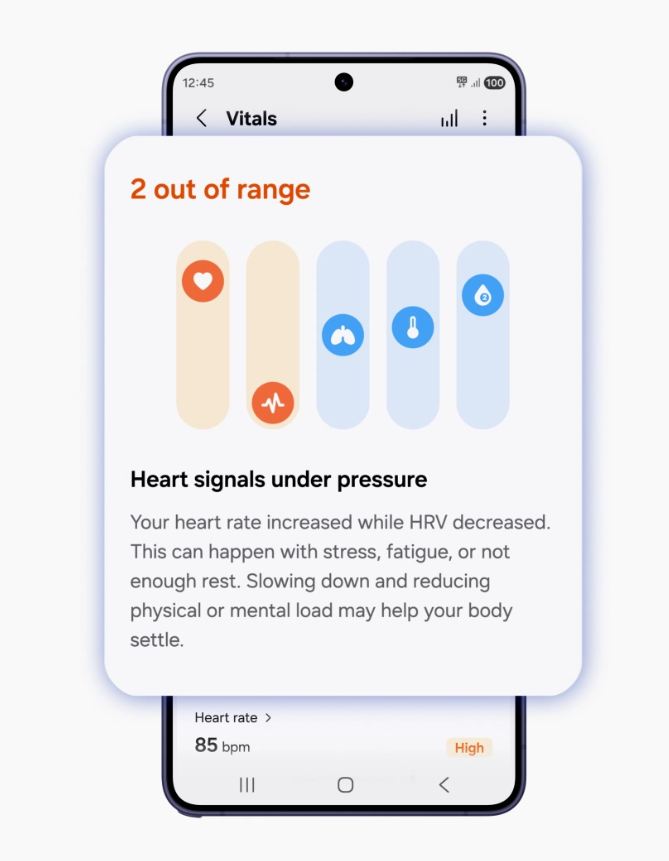
Oddly, Samsung has had a cuff-calibrated blood pressure trend feature since earlier in 2026. Yet this missing medical vital is not included among its Vitals measurements.
When? The Vitals feature arrives in the “second half of 2026.” It shipped on the Samsung Galaxy Watch 9, announced 22 July 2026.
Apple got there first.
Apple introduced the same concept with watchOS 11 in September 2024, following through with various updates to watchOS 27 in 2026. After establishing a personal baseline over seven nights, the Apple Vitals app alerts users when multiple overnight metrics simultaneously move outside their normal ranges.
The metrics differ slightly from Samsung’s: Apple includes sleep duration where Samsung includes HRV. Both omit blood pressure but Apple’s alert logic is the same.
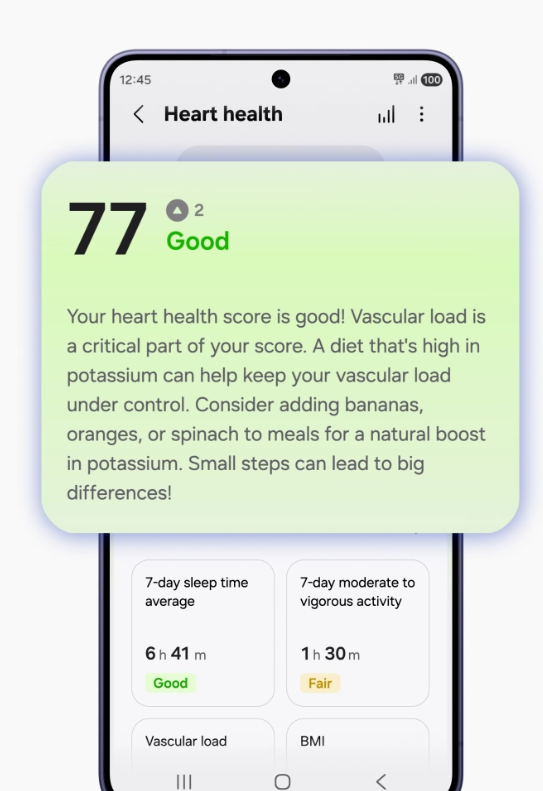
Samsung’s update also introduces Heart Health Score, a single daily metric that consolidates sleep, stress, activity, and body composition data. It is the evolution of Samsung’s existing Vascular Load feature, with body composition added.
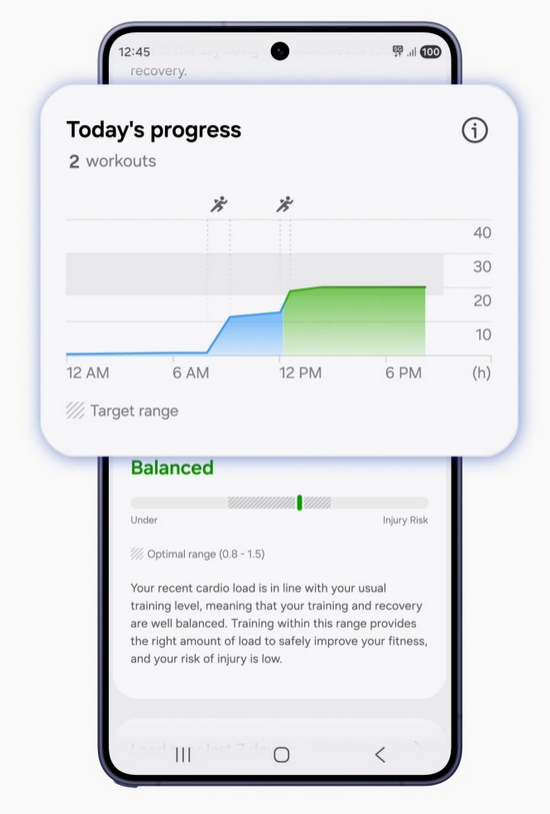
Daily Cardio Load tracks accumulated cardiovascular strain and recommends training targets, comparable in intent to Garmin’s Training Load.
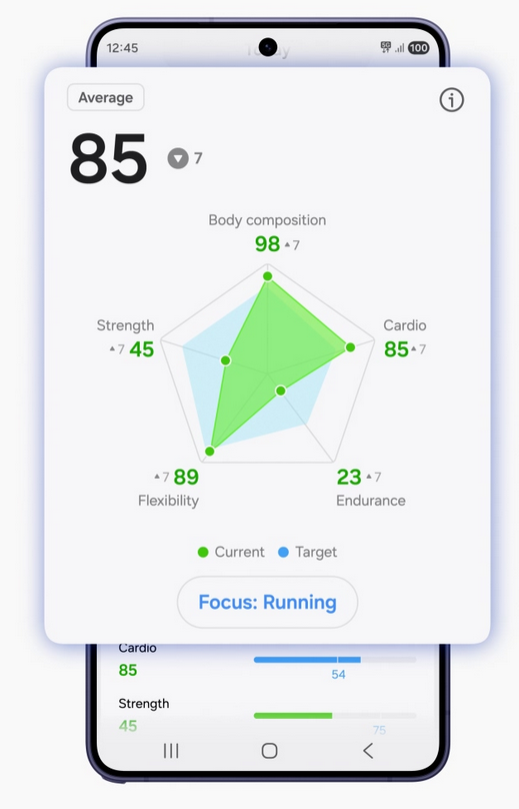
The Fitness Index benchmarks VO2 max and heart rate against peers, a weaker methodology than Garmin’s Fitness Age, which maps against validated population norms using Firstbeat’s physiological modelling.
The vital none of them has solved.
Blood pressure is the missing clinical vital sign. No mainstream consumer smartwatch currently provides clinically validated passive overnight blood pressure monitoring. Samsung’s cuff-calibrated implementation on the Galaxy Watch requires an on-demand manual reading and recalibration every 28 days. Samsung has indicated that passive overnight blood pressure trend monitoring is coming later in 2026, but it has not arrived. Every other major smartwatch platform has nothing comparable.
The limitations are technical difficulties and regulatory compliance. Optical sensors measure blood volume changes, not arterial pressure, which must be inferred from complex changes in the pulse wave. The closest available solution is the Hilo Band, formerly Aktiia, which became the first cuffless blood pressure monitor to receive FDA over-the-counter clearance. It uses PPG optical sensing to take up to 50 readings daily, including during sleep, with monthly calibration against a traditional cuff. It is a dedicated device and still requires periodic calibration.
The multi-metric alert is a good step forward in wellness management. The missing step for Blood Pressure remains a much harder problem.
Quick answers
Does Samsung Vitals work with any Android phone?
No. It requires a Samsung Galaxy phone running OneUI 9, Samsung Health app v7.0, and the upcoming Galaxy Watch. The watch model has not been named and is expected in the second half of 2026.
Which wrist devices measure blood pressure?
Samsung Galaxy Watch models from Watch 4 onwards support cuff-calibrated blood pressure estimation in selected regions. The Wellue BPW1 takes a different approach, using a real inflatable wrist cuff and oscillometric measurement, the same method as a clinical arm cuff. Huawei also has watch-based blood pressure products in certain markets. No major smartwatch ecosystem currently provides passive overnight blood pressure monitoring. That remains unsolved.
Last Updated on 3 October 2026 by tfk the5krunner
Small things I always use
- Garmin 90-degree charging adapter: Charges your Garmin from any USB-C cable. Essential when travelling. I use one.
- Body Glide: The blue anti-chafe stick swimmers and runners carry. I use it.
- Speedo earplugs: Fewer ear infections and no cold-water dizziness. I use them.
- Dryrobe Advance: My winter changing robe for open-water swims. I use one. A cheaper option is the AONYIYI changing robe.
- Maurten: Race fuel that stays easy on the stomach. I use them.
- Beet It Sport nitrate shots: Beetroot shots I take in the days before a race. I use them.
- Garmin charging puck: The quickest way to top up before a session. I use one.
- Injinji: Toe socks that stop rubbing, so you run more. I use them.
- Ultimate toe protectors: Stop black toenails on long runs. They work. I use them.
- Compressport R2 v2 calf sleeves: My calf sleeves of choice. I use them.
- Cellucor C4: My pre-workout before hard sessions.
- TPU tubes: Schwalbe Aerothan, Tubolito and Pirelli SmarTube. Light, tiny spares. I use all three.
- G8 insoles: Adjustable insoles that are good. I use them.
- Cycplus Cube: A 97g electric pump that gets a road tyre rideable in two minutes. I carry one. 5% off with code THE5KRUNNER.
Watches and sensors
- Polar H10: My daily driver for waking HRV.
- Polar Verity Sense: My backup arm-worn HR sensor.
- Nomad bedside charger: Charges my iPhone and Apple Watch overnight. I use it, and many of their bands.
- Train.Red: The best muscle oxygen sensor I’ve used.
- Tymewear: Accurate heart rate and reliable ventilatory zones. I use it to pace endurance rides over an hour.
- Garmin Forerunner 970: A pro-grade triathlon watch. I use this.
- Apple Watch Ultra 4: My daily smartwatch. No phone needed on rides.
- Garmin Fenix 9 Pro: I’ve just bought one.
On the bike
- Continental GP5000 for everyday riding, and Aero 111 on the front for special occasions.
- Helmets: Specialized S-Works Evade 3 for road riding, and Rudy Project Wing for TT-style races. I use both.
- Ravemen FR300: A front light that mounts under your Garmin or Wahoo. I use one.
- Wahoo TRACKR Radar: I use it on one bike and Varia on the other. They perform the same.
- Garmin Varia RTL515: Radar that warns you of cars from behind. I use this model.
- Wahoo ELEMNT Roam 3: The bike computer that’s easy to use. I use mine on most rides.
- Favero Assioma Pro RS2: Accurate power pedals that swap easily between bikes. I use this model.
Home and indoor training
- NPE Runn: Makes my basic treadmill smart, sending more accurate speed and distance to my watch and Zwift. I use it.
- Google Wifi: Keeps Zwift connected in my pain cave. I use it.
- Apple TV 4K: Zwift on the big screen. I use two.
- Google Nest Doorbell (wired, 2nd gen): My video doorbell, running in both Google Home and Apple Home. I use it.
Health, recovery and sleep
- FreeStyle Libre 3 Plus: Shows how my blood sugar responds to diet.
- hDrop: Measures my sweat loss in summer and indoors.
- Fourth Frontier Zone: Checks my heart under load in hard sessions.
- Oura Ring 5: My partner’s recovery tracker of choice.
- Eight Sleep: A cooling mattress cover my partner and I use nightly.
Reader-Powered Content
This content is not sponsored. It’s mostly me behind the labour of love, which is this site, and I appreciate everyone who supports it.
Support the site: Follow (free, fewer ads) · Subscribe (paid, ad-free) · Buy Me A Coffee
Written by real people, with AI assistance. Fact-checked and verified for originality. See the Editorial Policy. FTC: Affiliate Disclosure — some links pay commission. As an Amazon Associate, I earn from qualifying purchases.
tfk is the founder and author of the5krunner, an independent endurance sports technology publication. With 20 years of hands-on testing of GPS watches and wearables, and competing in triathlons at an international age-group level, tfk provides in-depth expert analysis of fitness technology for serious athletes and endurance sport competitors. See the gear tfk uses. ID

I might be wrong but I think Whoop was the first to have a “dashboard” with the 5 overnight metrics (probably with the app revamp for v4).
I got into a lot of trouble with this on Reddit last night and was too tired to argue it out. The crux is that Samsung pushes a notification only when a threshold is crossed. A Garmin Morning Report or WHOOP dashboard might show multi-metric info at the same time each morning, but you have to look at it. Samsung only tells you when something is wrong.